The definition of a tone is one of the most useful ideas in language, literature, and music, because tone describes attitude as much as content. In simple terms, the definition of a tone is the attitude, feeling, or quality that a speaker, writer, or musician conveys through word choice, pitch, rhythm, and style. A single sentence can sound warm, ironic, formal, or angry depending on its tone, even when the words themselves stay the same. This guide gives a clear definition of a tone, explains how tone works in literature and in music, shows how to identify it, and offers examples that make the concept easy to use in reading, writing, and listening.
Tone is often confused with mood, and the distinction is worth learning early. Tone is the attitude of the speaker or author, while mood is the feeling created in the reader or listener. A writer can use a sarcastic tone, for example, and create an uncomfortable mood, or use a gentle tone and create a calm mood. Keeping tone and mood separate helps students, readers, and writers analyse texts more precisely, and it is a standard distinction in English teaching. The definition of a tone therefore starts with attitude, and everything else follows from that starting point.
Definition of a Tone in Language
The definition of a tone in everyday language is the way something is said, not only what is said. When we speak, tone is carried by pitch, volume, pace, and emphasis. A question asked slowly and softly sounds different from the same question asked quickly and loudly, even though the words are identical. That vocal quality tells the listener whether the speaker is curious, impatient, playful, or serious, and it often matters more than the literal meaning of the words. In writing, where the voice cannot be heard, tone must be created through word choice, sentence length, punctuation, and structure.
Writers signal tone through diction, which means the specific words they choose. Formal words create a formal tone, while slang and contractions create an informal tone. Short, direct sentences can sound urgent or blunt, while long, flowing sentences can sound reflective or lyrical. Punctuation also plays a role. An exclamation mark can add excitement or alarm, a question mark can add doubt or curiosity, and a dash can add interruption or emphasis. Together, these choices build a consistent attitude that readers can recognise, even without hearing a voice.
For students, the definition of a tone becomes clearer when examples are compared side by side in the same paragraph.
Teachers often test the definition of a tone by asking students to quote words that prove an attitude, rather than merely naming it.
Definition of a Tone in Literature
The definition of a tone is also useful in professional and everyday communication. In an email, a polite tone can prevent misunderstanding, while a curt tone can create conflict even when the message is correct. In a speech, a confident tone can persuade an audience, while a hesitant tone can undermine the same argument. Learning to control tone is therefore a practical skill, not only an academic one, and it applies to school, work, and personal conversation alike.
In literature, the definition of a tone is the author’s attitude toward the subject, the characters, or the reader, as revealed through language and style. A novel can have a humorous tone, a tragic tone, an ironic tone, or a nostalgic tone, and that tone shapes how the reader experiences the story. For example, a story about a difficult journey told in a light, comic tone will feel very different from the same journey told in a sombre, reflective tone. The events may be similar, but the tone changes the meaning.
Common literary tones include formal, informal, serious, playful, satirical, sympathetic, detached, optimistic, pessimistic, and ironic. Irony deserves special attention, because an ironic tone says one thing while meaning another, and readers must recognise the gap to understand the passage. Satire uses irony and exaggeration to criticise a subject, often with humour, while a sympathetic tone invites the reader to feel compassion for a character. A detached tone, by contrast, reports events without obvious emotion, leaving the reader to form a judgement.
To identify tone in a text, readers should look for patterns rather than single words. One cheerful word does not make a cheerful tone, but a pattern of warm images, gentle verbs, and hopeful phrasing does. Readers should also consider the narrator. A first-person narrator may have a personal, confessional tone, while a third-person narrator may sound more distant or omniscient. Context matters too. A tone that seems harsh in isolation may be affectionate teasing within a friendship, and a tone that seems formal in one era may have been normal in another. The definition of a tone is therefore best applied through careful reading of the whole passage, not through a single line.
Definition of a Tone in Music
In practice, the definition of a tone is most useful when it is tied to quoted words, not to a guess about feelings.
A second way to practise the definition of a tone is to rewrite one paragraph in a formal style, then again in a playful style.
Students analysing literature often benefit from comparing tone across texts. Our guide to the meaning of Bildungsroman shows how a coming-of-age story can use tone to track growth, while our guide to the meaning of an epiphany explains a moment of sudden insight that often changes a story’s tone. Reading these guides together helps show how tone works in practice.
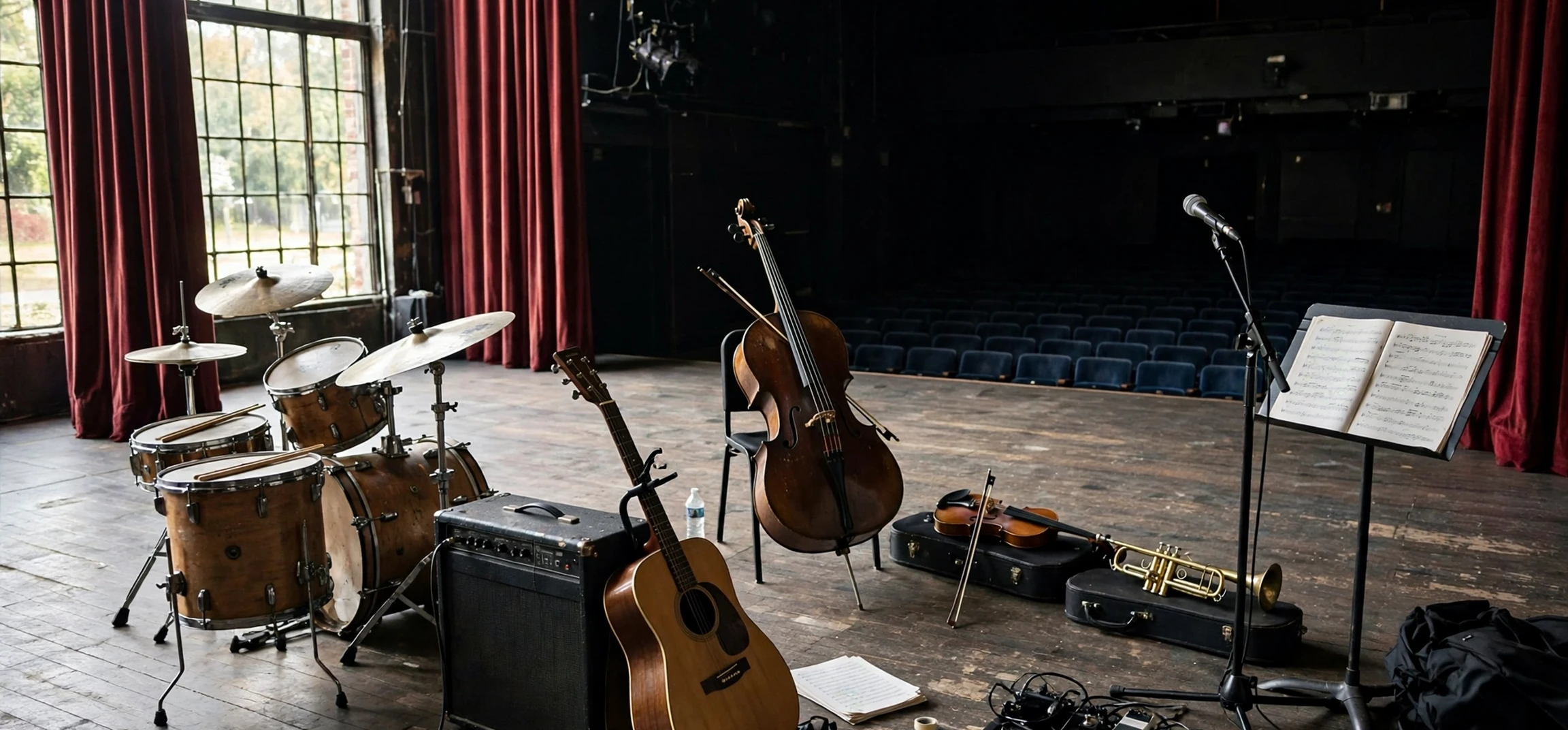
In music, the definition of a tone has a related but distinct meaning. A tone is a musical sound with a definite pitch, produced by a regular vibration, and it is the basic building block of melody and harmony. Musicians also use the word tone to describe timbre, which is the quality or colour of a sound. A violin and a flute can play the same pitch, for example, but they sound different because their tones, or timbres, differ. Tone in music therefore covers both pitch and sound quality, depending on context.
Musical tone is also described in terms of whole tones and semitones, which are the steps between notes in a scale. A whole tone is a larger step, while a semitone is a smaller step, and scales are built from patterns of these steps. This technical use of tone is essential in music theory, and it helps musicians understand keys, chords, and melodies. A major scale, for instance, follows a pattern of whole tones and semitones that gives it a bright, familiar sound, while a minor scale follows a different pattern that often sounds more sombre.
Tone, Mood, Voice, and Style: How They Differ
Beyond theory, musicians talk about tone as expression. A singer’s tone can be warm, bright, breathy, or powerful, and a guitarist’s tone can be clean, distorted, mellow, or sharp, depending on instrument, technique, and equipment. In this sense, musical tone is close to literary tone, because both describe an attitude or quality conveyed through style. A performance with a gentle tone feels different from the same notes played with an aggressive tone, just as a sentence feels different when its written tone changes. That parallel makes tone a bridge between language and music.
Remember that the definition of a tone covers attitude in speech, writing, and music, even though the details differ.
Writers who master the definition of a tone can shift a reader’s feeling with small changes in diction and sentence length.
The idea of tone also appears in discussions of theme music and soundtracks, where a short musical phrase can set the tone for a scene. Our guide to the Dallas TV show theme music offers a popular example of how a theme can instantly signal drama, glamour, and tension through musical tone alone.
Examples of Tone in Practice
Tone is often grouped with mood, voice, and style, and learners benefit from separating them clearly. Tone is attitude. Mood is the emotional atmosphere felt by the reader or listener. Voice is the distinctive personality of the writer or speaker, built over a whole work. Style is the broader set of language choices, including sentence structure, imagery, and rhythm, that creates both tone and voice. A writer with a witty voice, for example, may use an ironic tone in one passage and a tender tone in another, while keeping the same overall style.
Consider a simple example. A narrator who describes a rainy day as miserable, grey, and endless uses a gloomy tone, and the reader is likely to feel a gloomy mood. If the same narrator describes the rain as gentle, cleansing, and rhythmic, the tone becomes peaceful, and the mood becomes calm. The weather has not changed, but the language has, and with it the experience of reading. That is why teachers ask students to quote evidence for tone: the evidence is in the words, not in a guess about the author’s feelings.
In speech, tone is sometimes called tone of voice, and it includes pitch, stress, and intonation. In some languages, tone also has a grammatical role. In tonal languages such as Mandarin, the pitch pattern of a syllable can change the meaning of a word entirely, so tone is not only expressive but also lexical. In English, tone does not usually change word meaning in that way, but it still changes interpretation, emphasis, and social meaning, which is why misreading tone in a message is a common source of misunderstanding.
Types of Tone Table
| Tone Type | Typical Language | Effect on Reader |
|---|---|---|
| Formal | Precise, polite, full forms | Respect and distance |
| Informal | Contractions, slang, short sentences | Friendliness and ease |
| Humorous | Jokes, exaggeration, playfulness | Amusement and lightness |
| Ironic | Opposite of literal meaning | Surprise and critical insight |
| Sympathetic | Warm, caring, understanding words | Compassion and connection |
| Serious | Measured, careful, direct language | Gravity and importance |
How to Identify Tone Step by Step
Examples make the definition of a tone easier to remember. A formal tone might read: We regret to inform you that the meeting has been postponed until further notice. An informal tone for the same news might read: Sorry, we have to push the meeting back for now. Both convey the same fact, but the first sounds official and distant, while the second sounds friendly and casual. The difference lies in word choice, sentence structure, and level of politeness.
A humorous tone uses jokes, exaggeration, and playful language to entertain, while a serious tone uses measured language and careful reasoning to convey importance. A sarcastic tone says the opposite of what is meant, often with exaggerated praise, and it depends on the reader recognising the irony. A nostalgic tone looks back with fondness, using warm images and gentle rhythm, while a bitter tone looks back with resentment, using sharp words and short sentences. Each tone creates a different relationship between writer and reader.
In music, tone examples are equally clear. A lullaby uses a soft tone, slow tempo, and gentle melody to soothe, while a march uses a strong tone, steady beat, and bold brass to energise. A love song may use a warm vocal tone and smooth harmony, while a protest song may use a direct, forceful tone and driving rhythm. In each case, the tone tells the listener how to feel about the music, just as literary tone tells the reader how to feel about a text.
Identifying tone is a skill that improves with practice. Start by reading the passage twice: once for content, and once for attitude. On the second reading, underline words that carry feeling, such as adjectives, verbs, and images, and note whether they are positive, negative, or neutral. Then look at sentence length and punctuation. Short sentences often signal urgency or bluntness, while long sentences often signal reflection or complexity. Finally, consider the context: who is speaking, to whom, and for what purpose.
Next, test your conclusion. Ask whether another tone word would fit the evidence better, and check whether the tone stays consistent or shifts. Many texts shift tone deliberately, for example from humour to seriousness at a turning point, and noticing that shift is part of good analysis. If you are writing an essay, support your tone claim with short quotations and explain how the language creates the tone, rather than simply naming it. That evidence-based approach is what examiners and teachers look for.
Writers can also practise controlling tone by rewriting the same paragraph in three different tones. Try a formal version, an informal version, and a humorous version, and compare the word choices in each. This exercise shows how much tone depends on small decisions, and it builds the flexibility needed for different audiences. Over time, writers learn to choose tone deliberately, matching it to purpose, audience, and subject, rather than letting it happen by accident.
The simple definition of a tone is the attitude or feeling conveyed by a speaker, writer, or musician through language, voice, or sound quality.
Definition of a Tone: Frequently Asked Questions
What is the simple definition of a tone?
Tone is the attitude of the author or speaker, while mood is the feeling created in the reader or listener. Tone causes mood, but they are not the same thing.
What is the difference between tone and mood?
Can a text have more than one tone?
Yes. Many texts shift tone across sections, for example from light to serious, and recognising those shifts is an important part of analysis.
What does tone mean in music?
In music, tone can mean a pitched sound, a step in a scale, or the quality and colour of a sound, such as a warm vocal tone or a clean guitar tone.
Conclusion
The definition of a tone brings together language, literature, and music in one useful concept. In language, tone is how something is said. In literature, tone is the author’s attitude, revealed through word choice and style. In music, tone is a pitched sound and also the quality of that sound. In all three areas, tone shapes meaning, guides feeling, and affects how a message is received. Learning to identify tone, to distinguish it from mood, and to control it in your own writing and speaking will improve reading, analysis, and communication. The next time you read a passage, hear a speech, or listen to a song, pause and ask what tone you hear. The answer will tell you as much as the words themselves.



