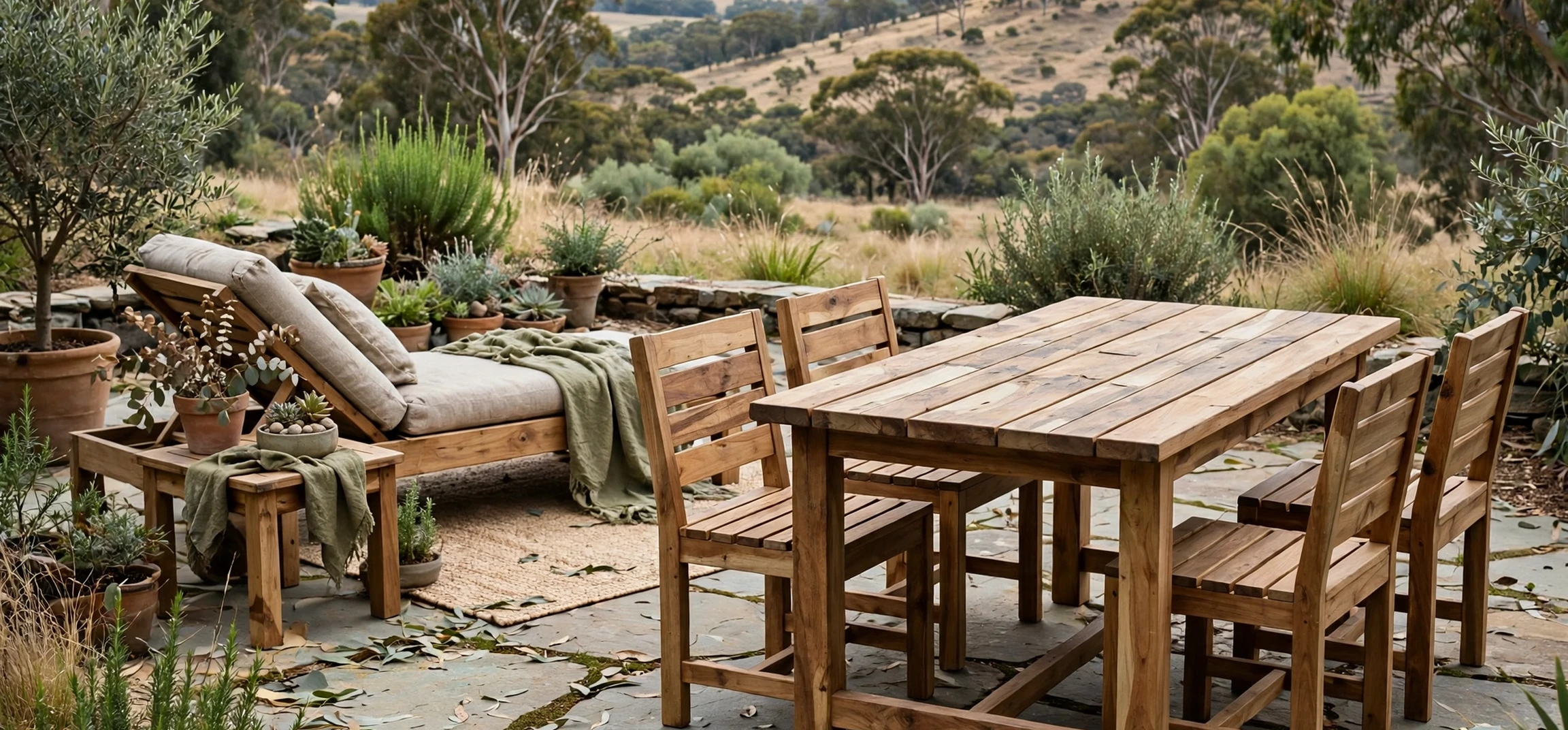
Choosing between hardwoods for the garden starts with one honest comparison, and this guide to eucalyptus vs teak for outdoor furniture walks through that choice without hype. Both woods are popular for patios, decks, and garden seating, both can look beautiful outdoors, and both will disappoint you if you buy the wrong piece for your climate, your maintenance habits, and your budget range. This eucalyptus vs teak for outdoor furniture comparison covers durability, weather resistance, appearance, upkeep, sustainability, and comfort, so you can judge each material on the factors that actually decide how long a chair, bench, or table lasts outside.
The short version is that teak is famous for exceptional natural weather resistance and a long outdoor life with relatively little fuss, while eucalyptus offers a similar warm hardwood look at a more accessible position in the market, provided you are willing to care for it properly. That summary is useful, but it hides the details that matter, because the real question in eucalyptus vs teak for outdoor furniture is not which wood wins in theory. It is which wood suits your rainfall, your sun exposure, your storage options, and how much maintenance you will genuinely do year after year.
Eucalyptus vs Teak for Outdoor Furniture: The Basics
Teak has been used for boats, decks, and outdoor furniture for generations because it contains natural oils that help it resist moisture, insects, and decay. Left untreated, teak weathers to a silvery grey, which many owners love, while oiled or sealed teak keeps more of its warm golden-brown colour. Eucalyptus is also a dense hardwood, and good-quality eucalyptus furniture can be strong, attractive, and durable outdoors. The key difference in eucalyptus vs teak for outdoor furniture is margin for error: teak tolerates neglect better, while eucalyptus rewards consistent care and punishes long periods of standing water, harsh sun without protection, and poor finishing.
Both woods come in many grades, and grade matters more than species alone. A well-made eucalyptus chair with thick sections, tight joinery, and a good finish will outperform a thin, poorly joined teak piece every time. When you compare eucalyptus vs teak for outdoor furniture in a shop or online, look past the species label and inspect the build: the thickness of the slats, the quality of the joints, whether hardware is rust-resistant, and whether the finish is even and complete, including on undersides and joints where moisture collects.
Appearance Over Time
Fresh teak is warm and golden, with a straight grain that suits both traditional and modern designs. Fresh eucalyptus can range from pale tan to reddish brown, sometimes with more varied grain and colour between boards. Some buyers prefer that variation because it looks natural and lively; others prefer teak’s more uniform tone. Outdoors, both woods will change colour without a protective finish, and both can be cleaned and re-oiled to refresh their appearance. Decide in advance whether you want the weathered silver look or the maintained golden look, because that preference shapes your maintenance routine for either wood.
Comfort and Design
Comfort depends less on species than on design. A well-shaped seat, a backrest at a comfortable angle, and armrests at the right height matter far more than whether the frame is eucalyptus or teak. Both woods can be shaped into chairs, loungers, benches, dining sets, and daybeds. If possible, sit in the piece before buying, or check the seat depth, seat height, and overall dimensions carefully. Outdoor cushions also change the equation: a good cushion makes either wood comfortable, but cushions need their own care, storage, and weather protection.
Eucalyptus vs Teak for Outdoor Furniture: Durability and Weather
Durability is where the eucalyptus vs teak for outdoor furniture debate is most serious. Teak’s natural oils give it an advantage in wet climates, coastal air, and situations where furniture stays outside all year. It is less likely to crack, warp, or rot when exposed to rain, and it resists many insects naturally. Eucalyptus is also a hardwood with good strength, but it is generally more sensitive to moisture extremes. In a dry climate with covered storage in winter, quality eucalyptus can last for many years. In a constantly damp, uncovered setting, it needs more attention to reach a similar lifespan.
Sun exposure matters too. Strong, direct sun dries wood, fades colour, and can cause surface checking, which means small cracks in the top layer of the wood. Teak handles sun well, though it will still silver without treatment. Eucalyptus can check and fade faster if left unprotected in intense sun, so shade, covers, or a regular oiling routine make a bigger difference for eucalyptus owners. In both cases, the worst combination is sun plus standing water: water pooling on flat surfaces, in joints, or under cushions accelerates wear for any outdoor wood.
Climate is therefore a deciding factor in eucalyptus vs teak for outdoor furniture. If you live somewhere with mild, dry summers, regular rain that drains well, and space to store or cover furniture in the harshest months, eucalyptus is a realistic, attractive option. If your furniture will face salty coastal air, heavy year-round rain, or long winters outside with no cover, teak’s extra resilience is worth weighing seriously. Neither wood is indestructible, and both benefit from being kept clean, dry between rains, and off saturated ground where possible.
What Damages Outdoor Wood Most
The most common causes of outdoor furniture failure are not dramatic. They are water sitting in joints, dirt and mould building up on damp surfaces, hardware rusting and staining the wood, and finishes wearing away unnoticed until bare wood is exposed. Checking your furniture a few times a year, cleaning it gently, tightening hardware, and refreshing the finish before it fails completely will extend the life of either wood far more than any single purchase decision.
Eucalyptus vs Teak for Outdoor Furniture: Maintenance Compared
Maintenance is the practical heart of eucalyptus vs teak for outdoor furniture. Teak can be left to weather naturally with only occasional cleaning, and many owners do exactly that. If you prefer the golden look, you will clean and oil it periodically, but skipping a season rarely causes disaster. Eucalyptus needs a more deliberate routine. Most manufacturers and experienced owners recommend cleaning it regularly, keeping it dry, and applying a suitable outdoor oil or sealant on a schedule suited to your climate, often more frequently than teak requires.
Cleaning both woods is straightforward. Brush off leaves and debris, wash with mild soap and water, rinse well, and let the piece dry fully before covering or storing it. Avoid harsh pressure washing at close range, which can damage the surface and force water into joints. For mould or mildew spots, a gentle wood cleaner made for outdoor furniture is safer than bleach-heavy household products, which can discolour wood and harm nearby plants. Always test any cleaner or oil on a hidden area first.
Oiling is where owners differ. Some love the ritual of oiling garden furniture each spring, and for them eucalyptus is a pleasure to maintain. Others know they will not keep up a routine, and for them teak’s forgiving nature is the honest choice. There is no shame in choosing the lower-maintenance wood. The most sustainable purchase is the one you will actually look after, because a neglected premium piece and a well-cared-for mid-range piece often end up in opposite conditions after a few years.
A Simple Seasonal Routine
A workable routine for either wood looks like this: in spring, clean each piece, inspect joints and hardware, and refresh oil or sealant if the surface looks dry or faded. Through summer, brush off debris, wipe up spills, and avoid leaving wet cushions on wooden seats. In autumn, clean again, store cushions dry, and cover or shelter furniture if you can. In winter, keep pieces off wet ground and out of standing water. This routine, followed loosely, does more for longevity than any single product claim.
Eucalyptus vs Teak for Outdoor Furniture: What to Look For When Buying
When you shop, the eucalyptus vs teak for outdoor furniture question should be followed by a build-quality checklist. Check that slats are thick rather than thin and flexible, that joints are mortise-and-tenon, dowelled, or otherwise solid rather than relying on staples alone, and that screws and bolts are stainless steel or another rust-resistant material. Look underneath and behind the piece, not just at the showroom face. Check that the finish covers edges, joints, and undersides, because unfinished hidden areas absorb moisture first.
Ask about the source of the wood. Responsibly harvested timber, with credible certification or a clear statement from the seller about plantation sourcing, is worth preferring for either species. Plantation-grown eucalyptus is widely available, and responsibly managed teak is also available, though supply and certification vary. If a seller cannot tell you anything about sourcing, treat that as information in itself, and consider whether another seller can answer the question properly.
Think about weight and storage as well. Hardwood furniture is heavy, which is good for wind resistance but less convenient if you need to move pieces indoors each winter. Measure your storage space, your doorways, and your patio before ordering a large set. A dining set that cannot be moved or covered easily will face the weather all year, and that reality should influence whether you choose the more forgiving teak or the more maintenance-dependent eucalyptus.
For more home and garden guidance, see our general home guides, including home guides and our piece on outdoor living supply, which may help you think through suppliers and outdoor living plans.
Eucalyptus vs Teak for Outdoor Furniture: Sustainability and Value
Sustainability in eucalyptus vs teak for outdoor furniture depends on forestry, not just species. Eucalyptus grows relatively fast and is often plantation-grown, which can make it a strong choice when sourced responsibly. Teak grows more slowly, and old-growth teak raises serious environmental and ethical concerns, which is why certified plantation teak is the responsible option for buyers who choose teak. In both cases, look for credible forestry certification and a seller who can explain where the timber came from.
Value is not the same as the lowest upfront figure. A cheaper set that needs replacing after a few seasons can cost more over time, in money and in waste, than a better-built set that lasts. That said, many buyers do not need the longest possible lifespan. If you are furnishing a rental, testing a layout, or expecting to move within a few years, quality eucalyptus may be the sensible value choice. If you are buying a permanent set for a home you plan to keep, and you want the lowest maintenance burden, teak’s longevity may justify its higher market position. Judge value over the years you will actually use the furniture, not over an abstract lifetime.
Comfort, style, and fit also belong in the value calculation. The best wood in the world will not help if the chairs are uncomfortable, the table is the wrong height, or the set overwhelms a small patio. Prioritise fit and comfort first, build quality second, and species third, and you will usually end up with a set you enjoy using, whichever wood you choose.
Frequently Asked Questions About Eucalyptus vs Teak for Outdoor Furniture
Which lasts longer in the eucalyptus vs teak for outdoor furniture comparison?
Teak generally lasts longer outdoors with less maintenance, thanks to its natural oils. Quality eucalyptus can also last many years, but it needs more consistent cleaning, drying, and sealing, especially in wet or harsh climates.
Does eucalyptus vs teak for outdoor furniture affect appearance?
Yes. Teak tends to be more uniform and golden when new, weathering to silver if left untreated. Eucalyptus shows more colour variation and can look warm and natural, but it may fade or check faster in strong sun without protection.
Can I leave eucalyptus furniture outside all year?
You can, but it will last longer if you cover it, shelter it in severe weather, and keep it clean and dry between rains. Year-round uncovered exposure is the hardest test for eucalyptus, and it is where teak has the clearest advantage.
Is one wood clearly better for the environment?
Neither species is automatically greener. Look for certified, responsibly managed sourcing for either wood, and prefer plantation-grown timber from sellers who can document their supply chain.
| Factor | Eucalyptus | Teak |
|---|---|---|
| Weather resistance | Good with regular care | Excellent, more forgiving of neglect |
| Maintenance | Regular cleaning and sealing recommended | Optional oiling; can weather naturally |
| Appearance | Warm, varied grain and colour | Uniform golden tone, silvers when untreated |
| Best for | Buyers happy to maintain furniture | Buyers wanting lowest upkeep and longest life |
| Check before buying | Build quality, finish, hardware, sourcing | Build quality, finish, hardware, certified sourcing |
Eucalyptus vs Teak for Outdoor Furniture: A Final Check Before You Buy
Before you commit, run one last check on the eucalyptus vs teak for outdoor furniture decision. Ask yourself how much rain and sun the set will face, whether you can cover or store it, and whether you will realistically oil and clean it on schedule. If the honest answers point to heavy weather and light maintenance, teak is the safer pick in the eucalyptus vs teak for outdoor furniture comparison. If the answers point to a sheltered patio and a routine you enjoy, quality eucalyptus will serve you well. The eucalyptus vs teak for outdoor furniture choice is ultimately about matching wood to lifestyle, and the best purchase is the one that fits how you actually live outdoors.
Conclusion
The honest answer to eucalyptus vs teak for outdoor furniture is that both woods can serve you well, and the right choice depends on your climate, your maintenance habits, and how long you want the set to last. Choose teak if you want maximum weather tolerance and minimum fuss, especially in wet or coastal settings. Choose quality eucalyptus if you like its look, you are willing to clean and seal it on a routine, and you want a strong hardwood at a more accessible market position. Either way, inspect the build, check the hardware and finish, confirm responsible sourcing, and commit to the basic care routine that keeps outdoor wood beautiful. A well-chosen, well-cared-for set in either wood will reward you with years of comfortable outdoor living, and that is the real test of any eucalyptus vs teak for outdoor furniture decision.



