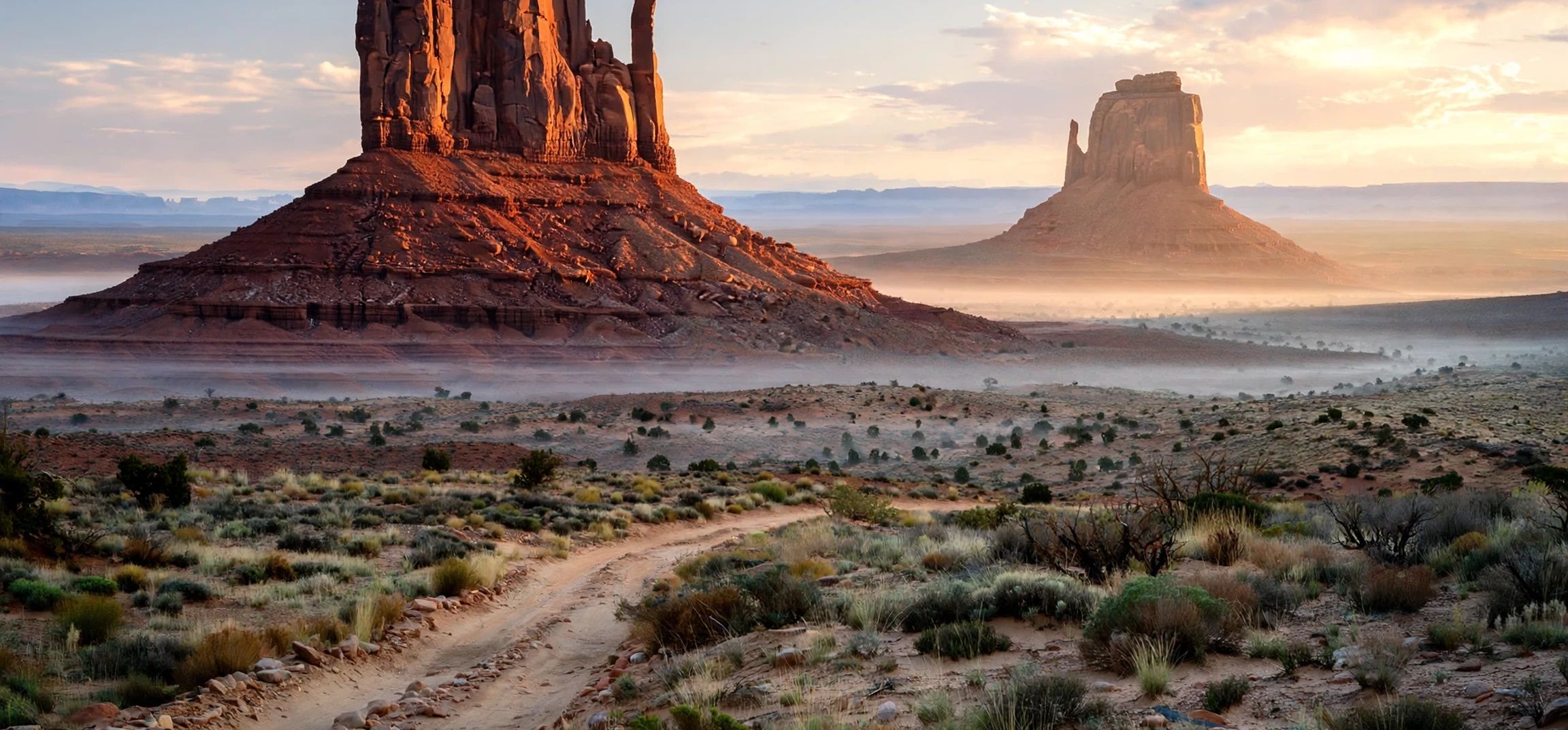
Exploring monument valley is one of those travel experiences that stays with you long after the road trip ends, because the landscape itself feels larger than life: towering red buttes rise from a wide desert floor, the light shifts from gold to deep red as the day passes, and the silence between viewpoints is part of the experience. This guide to exploring monument valley covers how to plan a visit, what to see, how guided tours work in this special place, and how to travel respectfully through land that is home to the Navajo Nation. There are no booking links here and no prices quoted as fact, because costs and tour availability change; instead, you will find the practical knowledge you need to plan well and check current details through official channels before you travel.
Monument Valley sits on the border of Arizona and Utah, within the Navajo Nation, and it is best known as Monument Valley Navajo Tribal Park. That tribal park status matters for visitors, because it means the valley is not a national park and its rules, access, and guided experiences are managed by the Navajo Nation. The famous scenic drive, the viewpoints along it, and the backcountry areas that require a Navajo guide all follow tribal park rules, and understanding that distinction before you arrive makes the visit smoother and more respectful.
Exploring Monument Valley: Planning Your Visit
Planning for exploring monument valley starts with timing and transport. The valley is remote, with long distances between services, so arrive with a full tank of fuel, drinking water, sun protection, and a clear idea of where you will stay that night. Spring and autumn generally bring the most comfortable temperatures for walking and photography, while summer days can be intensely hot and winter visits can bring cold mornings and occasional snow on the buttes. Each season changes the character of the light, so there is no single wrong time to visit, only different preparations to make. That preparation makes exploring monument valley far more enjoyable.
Most visitors reach the valley by car as part of a wider road trip through the American Southwest, and the drive itself is part of the reward. The approach along the highway offers the famous view of the road running straight toward the buttes, a scene that has appeared in countless films and photographs. Give yourself more time than the map suggests, because you will want to stop, and because desert driving rewards a relaxed pace. Check road and park conditions through official tribal park channels before setting out, especially after rain, since unpaved sections of the scenic drive can become difficult in wet weather.
What to bring for a desert day
A desert day in Monument Valley calls for practical packing. Bring more water than you think you need, a hat and sunscreen, sturdy shoes for uneven ground, and layers for temperature changes between morning and afternoon. A camera or phone with plenty of storage is essential, but also bring a way to keep devices charged, since services are limited once you leave the main visitor area. If you plan to walk any trails, a small day pack with snacks and a basic first-aid kit rounds out the essentials without weighing you down. This is part of what makes exploring monument valley so rewarding.
Photography deserves a note of its own. The buttes photograph best in the soft light of early morning and late afternoon, when long shadows define their shapes and the red rock glows. Midday light is harsher and flatter, which is a good time for the scenic drive itself or for a guided tour into areas where the landscape, rather than the light, is the main subject. Whatever your camera, take a moment at each viewpoint to simply look before you photograph, since the scale of the valley is easy to miss when you are focused on a screen.
Exploring Monument Valley Along the Scenic Drive
The scenic drive is the backbone of exploring monument valley for most visitors. This unpaved loop road winds past the valley most celebrated formations, with numbered viewpoints and pullouts where you can stop, walk a short distance, and take in the panorama. The drive is suitable for many ordinary vehicles in dry conditions when driven slowly and carefully, though high-clearance vehicles handle the rougher sections more comfortably. Drive slowly, watch for other visitors and for livestock, and pull fully off the road at viewpoints rather than stopping in the driving line. A slower pace suits exploring monument valley perfectly.
Each viewpoint offers a different angle on the same great landscape. From one stop, a pair of buttes may frame each other perfectly; from the next, the valley opens out into a vast plain with formations scattered to the horizon. The Mittens, Merrick Butte, and the other named formations reward slow looking, and the names themselves are part of the valley story, passed down through generations of Navajo guides and storytellers. Take the drive at a leisurely pace and allow at least a couple of hours, longer if you plan to walk or photograph extensively.
Walking and viewpoints
Short walks near the visitor centre and at viewpoints let you experience the valley on foot without committing to a long hike. Desert walking calls for care: stay on marked paths and roads, watch your footing on loose rock, and keep a sensible distance from cliff edges. The desert surface may look empty, but it supports fragile soil crusts and plant life that take years to recover from a single footstep off the path, so staying on established routes is both a safety choice and a mark of respect for the land. That mindset is ideal for exploring monument valley respectfully.
Sunrise and sunset are the valley most magical hours, and they are worth planning your day around. A sunrise viewpoint session means an early start and cool air, rewarded by the first light striking the buttes. A sunset session brings warmer colours and a slower, more reflective mood as the day ends. If you are staying nearby, consider both: the same formation can look like a different place entirely under morning and evening light, and comparing the two is one of the quiet pleasures of a Monument Valley visit.
Guided Tours in Monument Valley
Guided tours are central to exploring monument valley beyond the scenic drive, because large areas of the tribal park are accessible only with a Navajo guide. These backcountry areas include narrow canyons, arches, ancient dwellings, and viewpoints that self-driving visitors cannot reach on their own, and travelling with a guide is both a rule and a privilege: the guide shares stories, history, and cultural context that transform rock formations into a living landscape with deep meaning. Tour formats vary, from open-air vehicle tours to horseback experiences and longer cultural tours, and the right choice depends on your interests, mobility, and available time. This detail matters when exploring monument valley in desert conditions.
When choosing a guided experience, look for tours operated by Navajo guides and authorised through the tribal park system, and check current options, schedules, and conditions through official channels before your visit. Ask what the tour covers, how long it lasts, what terrain it involves, and whether it suits children or visitors with limited mobility, so there are no surprises on the day. A good guide will explain what you are seeing, why certain places are restricted, and how the Navajo people relate to this land, and listening to those explanations is as much a part of the tour as the scenery itself.
| Way to experience the valley | What it offers | Good to know |
|---|---|---|
| Scenic drive | Self-paced viewpoints along a loop road | Unpaved in places; drive slowly and check conditions |
| Guided vehicle tour | Access to restricted backcountry areas with a Navajo guide | Required for areas beyond the scenic drive |
| Guided cultural tour | Stories, history, and cultural context from local guides | Ask about duration and terrain before booking |
| Sunrise or sunset viewing | The valley most dramatic light | Plan an early start or a late finish |
Respectful Travel Through Navajo Land
Respectful travel is the most important part of exploring monument valley, because you are visiting a homeland, not just a scenic attraction. Stay on designated roads and trails, do not enter homes, hogans, or restricted areas, and do not photograph people without permission. If a guide or a sign indicates that an area is closed or that photography is not permitted, honour that guidance without argument: some places hold cultural or spiritual significance that is not obvious to an outsider, and respecting those boundaries is the foundation of a welcome visit. Good planning turns exploring monument valley into a lasting memory.
Supporting local livelihoods is another form of respect. Navajo artisans sell jewellery, crafts, and artwork in the valley, and buying directly from makers supports families and keeps traditional skills alive. Take time to look, ask questions politely, and appreciate the work, whether or not you buy anything. The same spirit applies to food and lodging: choosing locally operated options where available keeps more of your visit spending within the community that hosts you.
Leave no trace in the desert
Desert ecosystems are fragile and slow to heal. Carry out everything you bring in, including food wrappers and tissues, and dispose of waste properly at the visitor facilities. Avoid disturbing rock piles, plants, or archaeological features, and never remove stones, plants, or artefacts as souvenirs. The valley has been shaped over millions of years and inhabited for far longer than any visitor lifetime; leaving it exactly as you found it is the smallest courtesy you can offer, and the most important. That advice applies throughout exploring monument valley.
Weather and safety round out the responsible-travel picture. Desert storms can arrive quickly, bringing wind, lightning, and sudden rain, so check forecasts and be ready to change plans if conditions turn. Heat is a genuine risk in summer: drink water regularly even before you feel thirsty, rest in shade, and recognise the early signs of heat exhaustion in yourself and your companions. A cautious, well-prepared visitor enjoys the valley far more than one who pushes on regardless.
Exploring Monument Valley FAQ
Do I need a guide to visit Monument Valley?
You can enjoy the scenic drive and main viewpoints independently, but backcountry areas beyond the drive require a Navajo guide. A guided tour is also the best way to understand the cultural history of the valley, even for visitors who are comfortable driving themselves. This is the spirit of exploring monument valley at its best.
How much time should I allow?
Allow at least half a day for the scenic drive and viewpoints, and a full day if you plan a guided tour plus sunrise or sunset viewing. Many visitors combine Monument Valley with nearby destinations on a longer road trip, and you can find wider trip-planning ideas in a family travel guide and travel guides for planning routes. For general domestic trip preparation, see what domestic travel planning involves.
Can I visit year-round?
Yes, the valley is a year-round destination, but conditions vary greatly by season. Check official tribal park information before travelling, especially in winter or after rain, when road conditions and tour availability can change. With that approach, exploring monument valley stays enjoyable all day.
Is Monument Valley suitable for children?
Yes, children often love the vast landscapes and the sense of adventure, but desert conditions call for preparation: sun protection, water, snacks, and realistic expectations about walking distances and vehicle tours. Short viewpoints and a guided tour tailored to families usually work best for younger visitors.
Conclusion
Exploring monument valley rewards the traveller who slows down, plans carefully, and travels with respect. Drive the scenic loop at a leisurely pace, take a guided tour into the backcountry with a Navajo guide, watch the light change at sunrise and sunset, and leave the desert exactly as you found it. Check current conditions and tour details through official tribal park channels before you go, pack for desert weather, and give the valley the time it deserves. Done that way, a visit to Monument Valley is not just a stop on a road trip, but a memory that deepens every time you recall those red buttes rising out of the wide desert floor.