If you have searched for tan mean, you probably want a clear answer that covers more than one sense of the word. The phrase tan mean is used by people looking up a colour name, a verb for darkening skin in the sun, and a short form used in mathematics. In everyday English, tan most often describes a light brown colour, the colour skin takes after sun exposure, or the process of making leather. In mathematics, tan is the standard abbreviation for the tangent function. Because the same short word appears in colour guides, weather and holiday talk, fashion descriptions, and school maths, context is the key to understanding which meaning is intended in any sentence.
Learning the different senses of tan mean helps you read descriptions more accurately and use the word with confidence. A paint chart, a clothing label, a holiday post, and a maths worksheet can all use tan, but they are not talking about the same thing. This guide explains each common sense in plain language, shows how tan is used in real sentences, and compares it with nearby words such as beige, bronze, and brown. By the end, you will be able to tell at a glance whether tan refers to a colour, to sun exposure, to leather making, or to a maths function.
Tan Mean as a Colour Name
When people ask about tan mean in the context of colour, they usually mean a pale to medium brown shade with warm, yellowish undertones. Tan sits between beige and brown on many colour charts. It is lighter than chocolate brown and darker than cream, and it often reminds people of sand, khaki fabric, natural leather, and sunlit wood. Designers use tan for furniture, shoes, bags, and clothing because it feels natural, neutral, and easy to pair with white, black, navy, olive, and denim blue.
The exact shade called tan can vary from one brand or chart to another, which is why colour names alone are not always precise. One company may call a light sandy shade tan, while another uses tan for a deeper, richer brown. If exact matching matters, for example when buying paint or fabric, check a swatch or a colour code rather than relying on the name alone. In general writing, however, tan is understood as a warm light brown, and readers will picture something close to sand or natural leather even if the precise tone differs slightly.
How Tan Compares With Beige, Bronze, and Brown
Beige is usually paler and greyer than tan, while bronze has a metallic, golden shine that tan does not have. Brown is the broader family name, and tan is one lighter member of that family. A tan leather bag, for instance, looks warm and natural, whereas a bronze bag would look shiny and metallic, and a dark brown bag would look much deeper. Keeping these distinctions in mind helps when describing clothes, interiors, and products, and it also explains why the question tan mean comes up so often in shopping and design searches. For more word-meaning guides, see this guide to word meanings and this explainer on English definitions.
Tan Mean in Tanning and Sun Exposure
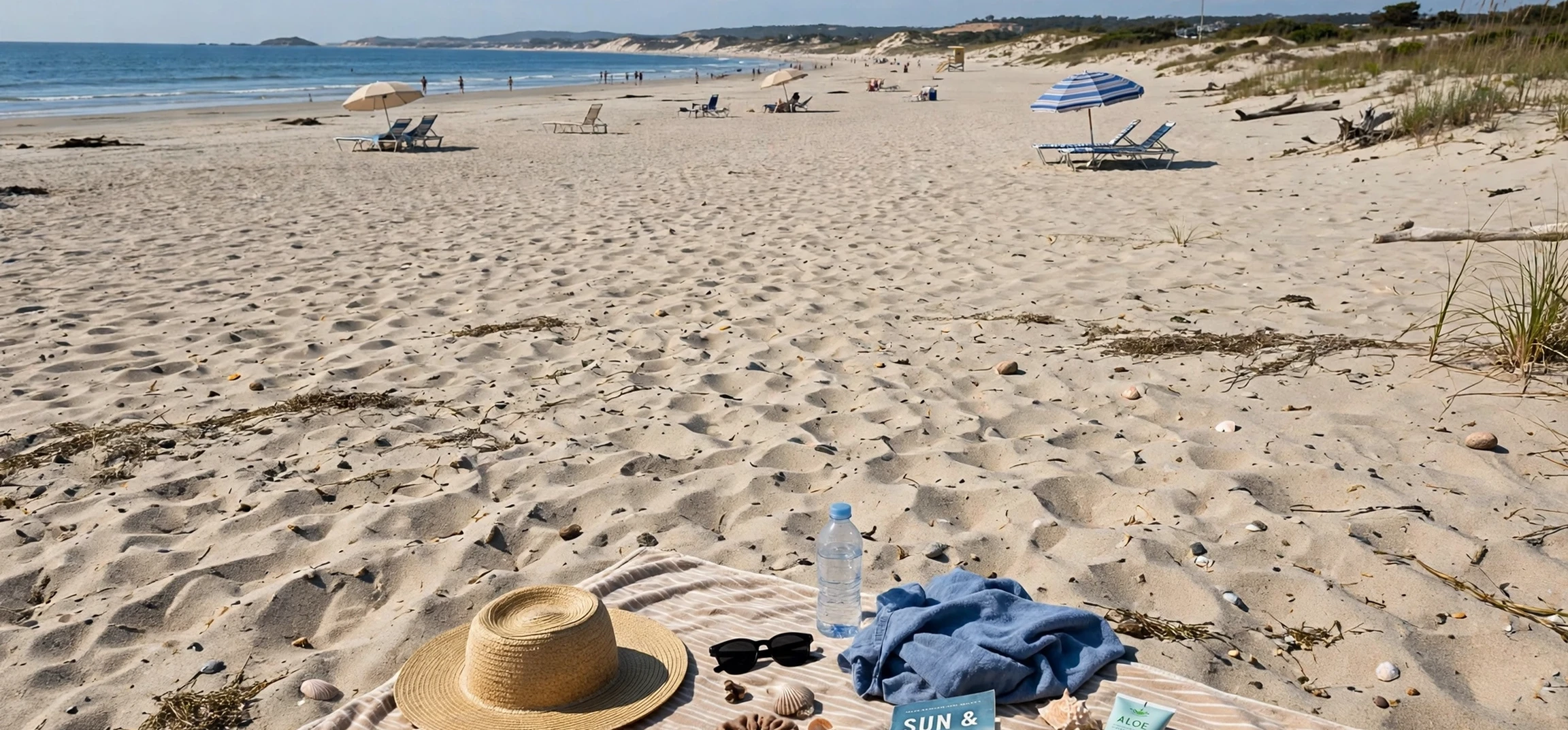
Another common sense behind tan mean relates to tanning, the darkening of skin after exposure to sunlight or ultraviolet light. When skin tans, it produces more melanin, the pigment that gives skin its colour, as a natural response to ultraviolet radiation. People often talk about getting a tan on holiday, keeping a tan through summer, or fading tan as the darker colour gradually returns to its usual tone. In this sense, tan can be a noun for the darker colour itself, as in a summer tan, or a verb for the process, as in to tan easily.
Safe sun habits matter whenever tanning is discussed, because ultraviolet exposure can damage skin even when no burning is visible. Shade, protective clothing, hats, sunglasses, and sunscreen are widely recommended for long periods outdoors, and fair skin generally needs extra care. A tan is not a reliable sign of protection, and repeated burning increases skin damage over time. This guide describes what the word means; it does not give medical advice, and anyone with concerns about skin changes should speak to a qualified health professional for personal guidance.
Tanning also appears in beauty and fashion language in phrases such as fake tan, spray tan, and tan lines. A fake tan is a product that colours the skin without sun exposure, while tan lines are paler marks left where clothing or a strap blocked the sun. These phrases show how flexible the word is: the same root covers natural sun colour, cosmetic colour, and the visible pattern left behind. When you meet tan mean in a beauty article, the writer is almost always talking about skin colour rather than the colour of paint or fabric.
Tan Mean in Leather Making
Historically, tan mean also connects to tanning leather, the process of treating animal hides so they become durable leather instead of decaying. Traditional tanning used tannins from tree bark, which gave the leather a warm brown colour and gave us the word tannery for the place where the work was done. Modern leather making uses several methods, but the old link between the process and the colour remains in everyday language. That is one reason tan feels like such a natural word for light brown leather goods such as belts, wallets, boots, and saddles.
You may still see phrases such as tanned leather and vegetable-tanned leather in product descriptions. Vegetable-tanned leather is made with plant-based tannins, while other methods use different chemicals to achieve a similar result. The word tan in these labels points to the treatment process, not only to the final colour, although the two are closely related. Knowing this history makes the range of meanings easier to remember, because colour, skin, and leather all share the same idea of a warm brown tone produced by a natural process.
Tan Mean in Mathematics as Tangent
In school and college mathematics, tan mean takes on a technical sense: tan is the abbreviation for tangent, one of the main trigonometric functions alongside sine and cosine. In a right-angled triangle, the tangent of an angle is the ratio of the length of the side opposite the angle to the length of the side adjacent to it. Students meet tan on calculators, where a tan button gives the tangent value, and in problems about angles, slopes, gradients, and heights. For example, surveyors and builders use tangent relationships to work out heights and angles that cannot be measured directly.
The maths sense is easy to recognise because it appears with numbers, angles, degrees, and triangle diagrams rather than with colours or skin. If a sentence says to find tan of forty-five degrees, it is clearly using the mathematical abbreviation, not describing a shade of brown. Likewise, phrases such as tan function, tan graph, and inverse tan belong to trigonometry. This is a good reminder that short words often carry a specialist meaning in one subject and an everyday meaning elsewhere, and the surrounding words usually make the intended sense obvious.
Tan Mean at a Glance
The table below summarises the main senses so you can match the meaning to the context quickly. Keep it in mind whenever you meet the word in reading, shopping, or study, and check the surrounding sentence if you are unsure which sense applies.
| Context | Meaning of tan | Example use |
|---|---|---|
| Colour and design | A warm light brown shade | She chose a tan coat for autumn. |
| Sun and skin | Darker skin colour after sun exposure | He returned from holiday with a tan. |
| Leather making | Treating hides to make leather | The workshop tans leather by hand. |
| Mathematics | Abbreviation for tangent | Find tan of the marked angle. |
| Everyday speech | Colour, skin tone, or process | The tan shade suits the room well. |
Notice how the same word changes role across the rows. In the colour row, tan is mainly an adjective or noun for a shade. In the skin row, it can be a noun for the colour or a verb for the process. In leather making, it is a verb for treatment. In mathematics, it is a fixed abbreviation. Grammar, subject, and nearby words together point to the right reading, which is why dictionaries list several entries for tan instead of a single definition. For a related colour reference, see this colour guide for how shades are described.
Tan Mean: Frequently Asked Questions
Is tan a shade of brown?
Yes, tan is generally described as a light to medium shade of brown with warm undertones. It is lighter than dark brown and often close to sand or khaki, although exact shades vary by brand and chart. If precise matching matters, compare swatches rather than names alone.
Can tan be used as a verb?
Yes. As a verb, tan means to darken skin in sunlight or to treat hides to make leather. The past forms are tanned and tanning, as in tanned skin and tanning leather. The verb sense is common in holiday writing, beauty writing, and craft descriptions.
What does tan mean in maths?
In maths, tan is short for tangent, a trigonometric function. In a right-angled triangle, it is the ratio of the opposite side to the adjacent side for a given angle. You will see it on calculators and in trigonometry lessons, usually with angles measured in degrees.
What is the difference between tan and beige?
Beige is usually paler, softer, and sometimes greyer than tan. Tan is warmer and a little deeper, closer to sand or light leather. The boundary is not strict, and different brands may use the two names for similar shades, so swatches help when accuracy matters.
Conclusion: What Tan Mean Really Covers
To sum up, tan mean covers a small family of related ideas rather than a single fixed definition. Most often it names a warm light brown colour, the darker skin tone gained in the sun, or the traditional process of making leather. In mathematics, it is the standard short form for tangent. The context around the word, whether a paint chart, a holiday story, a leather label, or a triangle problem, tells you which sense is intended. Once you know these four uses, the word becomes much easier to read, write, and explain, and you will rarely be caught out by its different meanings again.