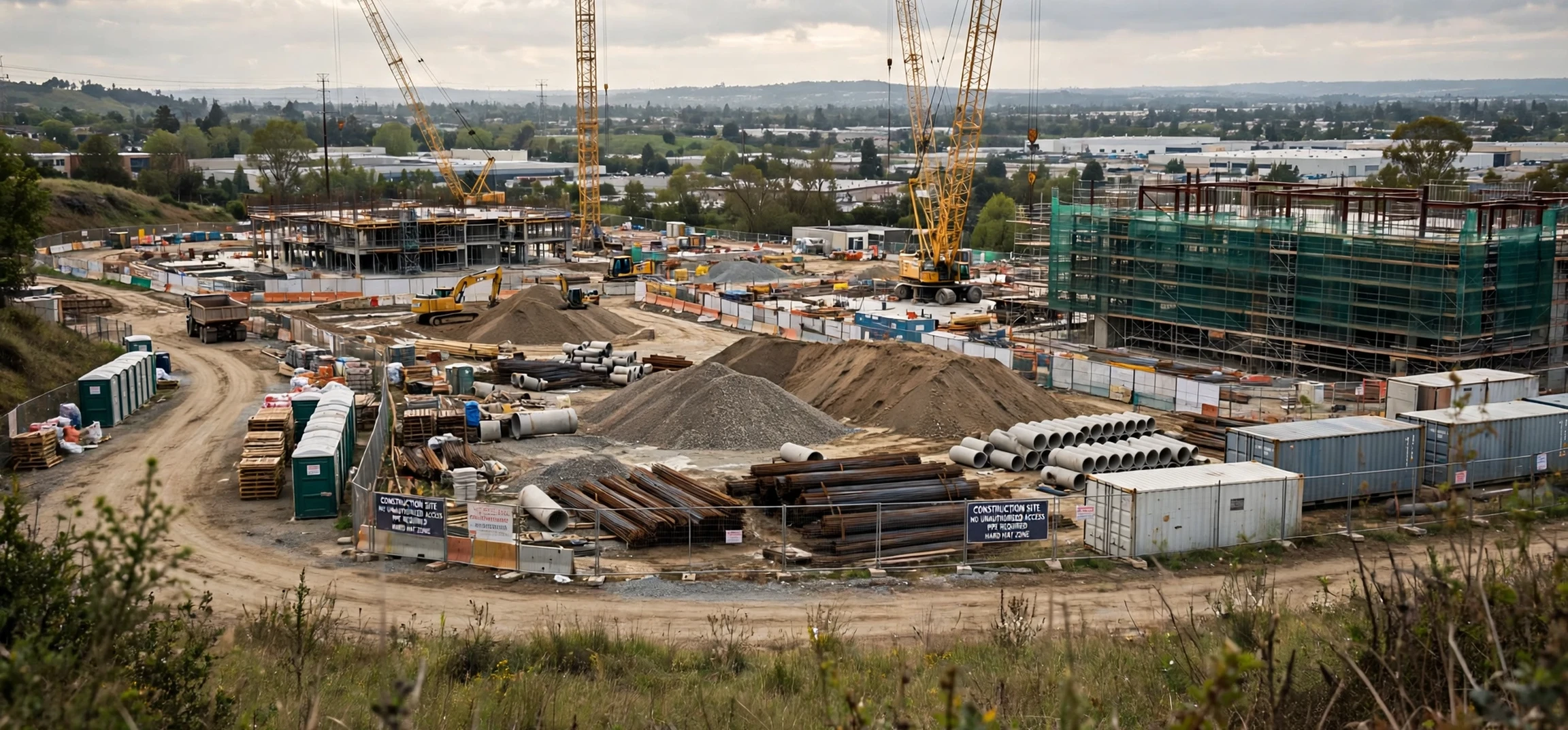
The search phrase definition of rfi leads most readers to construction, where RFI stands for Request for Information. In simple terms, the definition of rfi in construction is a formal written question sent by a contractor, subcontractor, or designer to clarify something in the project documents before work proceeds. A drawing may be unclear, two specifications may conflict, a detail may be missing, or site conditions may differ from what the drawings show. Instead of guessing, the team raises an RFI, the design team or owner representative answers in writing, and everyone works from the same clarified instruction. That written trail is what makes the RFI so important on a building site.
This guide explains the construction meaning of RFI honestly, as the phrase definition of rfi is used in search, while noting that the same letters can mean different things in other fields. In construction, however, the meaning is consistent and practical: an RFI is how a project asks, answers, and records a question that affects how work should be done. You will learn what an RFI contains, when to raise one, how the review process works, what a good answer looks like, and how RFIs connect to changes, costs, and schedules. Whether you are a student, a new site engineer, a contractor, or a client trying to understand project paperwork, this guide gives you a clear, jargon-light picture of the process.
Definition of RFI in Construction Explained
The definition of rfi in construction can be stated in one sentence: an RFI is a formal request for clarification about project documents, site conditions, or requirements, answered in writing by the party responsible for the design or the decision. The request itself is usually a short form or a digital record with a unique number, a title, a description of the issue, references to the relevant drawings or specifications, and a suggested solution where the requester has one. The answer is also written, dated, and filed with the project records, so it becomes part of the project history. That history matters, because months later someone may need to know why a detail was built a certain way, and the RFI record provides the answer.
An RFI is not a complaint, a claim, or a change order on its own. It is a question. The answer may confirm the original intent, clarify a detail, or reveal that a change is needed, but the RFI itself does not authorise extra work or extra payment. If the answer changes the scope, cost, or schedule, that change is handled through the project change process, which is separate from the RFI. Keeping that distinction clear prevents disputes: the RFI clarifies what should be done, and the change process deals with what the clarification costs or how it affects time. Teams that blur the two often end up arguing about money that was never properly agreed.
When to Raise an RFI
Raise an RFI whenever a reasonable, skilled worker could interpret the documents in more than one way, or whenever the documents do not give enough information to build the work correctly. Common triggers include missing dimensions, conflicting details between a drawing and a specification, a detail that cannot be built as drawn, a clash between services such as pipes and ducts, an unclear material requirement, or a site condition that differs from the survey. If you find yourself guessing, stopping work to ask is almost always cheaper than building the wrong thing and redoing it. A short delay for a written answer saves the far larger cost of demolition, rework, and delay later.
Not every question needs a formal RFI. Simple site questions can often be answered in a toolbox talk, a site meeting, or a quick conversation with the engineer, and then noted in the meeting minutes. The formal RFI route is for questions that affect the design, the quality, the safety, or the record of the project, or where a verbal answer would leave room for disagreement later. A good rule is to ask whether someone in six months would need to prove what was agreed. If the answer is yes, put it in an RFI. If the answer is no, a noted conversation may be enough, but when in doubt, the written route is the safer choice.
Definition of RFI: What a Good RFI Contains
A good RFI is short, specific, and easy to answer. It states the problem in plain language, points to the exact drawing number, specification section, or site location involved, and explains why clarification is needed. It often includes a photograph, a sketch, or a marked-up drawing, because a picture can show a clash or a missing detail far faster than words alone. It may also propose a solution, such as using a different fixing detail or adjusting a dimension, which helps the reviewer respond quickly. A vague RFI that says only that something is unclear, without saying where or why, will usually come back with more questions, and that round trip wastes time for everyone.
Numbering and tracking matter as much as content. Each RFI gets a unique number, a date, a status such as open, answered, or closed, and a named person responsible for the answer. Project teams track RFIs on a log or in project management software, review open items in progress meetings, and chase overdue answers before they block work. A well-kept log shows at a glance which questions are holding up which trades, and it helps managers sequence work around unanswered items. Without a log, RFIs disappear into inboxes, work stalls, and no one can say with confidence which questions are still open.
The RFI Review and Answer Process
The review process usually follows a clear path. The contractor or subcontractor submits the RFI to the project manager or engineer, who checks that it is complete and sends it to the right reviewer, often the architect or structural engineer, depending on the subject. The reviewer studies the documents, may visit the site or consult a specialist, and then writes an answer that clarifies the intent. That answer returns through the same chain, is recorded on the log, and is issued to the site team as an instruction to proceed. The whole cycle should be as fast as the project programme allows, because an unanswered RFI can stop a trade from starting or finishing a section of work.
Response times vary by contract and by project, but most teams agree a target turnaround in advance, such as a set number of working days, and they flag urgent RFIs that block critical work. An answer should be decisive: it should say what to build, which drawing or detail applies, and whether any further document will follow. An answer that merely repeats the question, or that tells the contractor to proceed as per the drawings when the drawings were the problem, does not help and usually generates a follow-up RFI. Good reviewers write as if the site team will build directly from their words, because in practice, that is exactly what happens.
How RFIs Connect to Cost and Schedule
An RFI answer can have three kinds of effect: no change, a clarification with no cost or time effect, or a change that affects cost, time, or both. In the first two cases, work proceeds as clarified and the project continues. In the third case, the team must handle the change properly. The contractor notifies the project manager that the answer changes the work, and the change is priced, agreed, and recorded through the contract change process before the extra work is treated as authorised. Skipping that step is a common source of disputes, because a contractor may build extra work in good faith, only to find later that the client does not accept the cost.
Schedule effects work in a similar way. An RFI that arrives late, or an answer that arrives late, can push a trade off its planned dates, and that push can ripple through following trades. Project managers therefore track RFIs against the programme, not just against a simple open list. They ask which RFIs block the critical path, which can wait until a later phase, and which need escalation to a senior reviewer. Early RFIs are cheaper than late ones, because a question raised before materials are ordered or work starts can be answered without rework. That is why experienced site teams review drawings in advance and raise RFIs during preparation, rather than waiting until the workface reaches the problem.
Best Practice for Writing and Managing RFIs
Best practice starts with preparation: review drawings and specifications before work starts, walk the site, and list questions early. When you write an RFI, write one question per RFI where possible, because a combined RFI with five unrelated questions often gets a partial answer and stays open longer. Use plain language, reference exact documents, attach a clear photograph or sketch, and suggest a solution if you have one. Keep the tone professional, even when the missing information is frustrating, because the RFI record may be read later in a dispute, and a calm, factual tone always reads better than blame.
For reviewers, best practice means answering promptly, decisively, and in writing, and issuing any revised drawing promptly where the answer changes a detail. For clients, best practice means understanding that RFIs are a normal, healthy part of construction, not a sign of failure. A project with no RFIs at all may simply mean questions are being answered informally and not recorded, which is riskier than a well-managed RFI log. The goal is not zero RFIs; the goal is clear questions, clear answers, and a complete record that lets the project be built, checked, and handed over with confidence.
| RFI stage | Who acts | What good looks like |
|---|---|---|
| Identify the issue | Contractor or site team | Specific problem, exact document reference, photo or sketch |
| Submit the RFI | Contractor | Unique number, one clear question, suggested solution where possible |
| Review | Engineer or architect | Right reviewer, site check if needed, prompt turnaround |
| Answer in writing | Reviewer | Decisive instruction, revised drawing if the detail changes |
| Record and close | Project team | Log updated, site team briefed, change process used if scope changes |
Definition of RFI Checklist for Site Teams
A useful definition of rfi checklist starts with the question itself: state the problem plainly, reference the exact drawing, and attach a photograph or sketch, because the definition of rfi in practice is a question that must be answerable in writing. Good definition of rfi practice also means one question per RFI, a unique number, a named reviewer, and a tracked status, so nothing disappears into an inbox. Teams that follow the definition of rfi discipline raise questions early, before materials are ordered or work reaches the problem.
Use the definition of rfi as a record habit, not just as a form: log the question, log the answer, brief the site team, and use the change process if the answer alters scope, cost, or time. Clear definition of rfi handling helps projects avoid rework, disputes, and programme drift, and it leaves a history that explains why work was built a certain way. If an answer is vague, ask a follow-up RFI rather than guessing, because guessing is what the RFI exists to prevent.
One last note on the definition of rfi: the best definition of rfi routine is ask early, answer decisively, and record everything, since the definition of rfi only protects a project when both sides use it properly.
Frequently Asked Questions
What is the definition of RFI in construction?
In construction, RFI stands for Request for Information: a formal written question asking for clarification about project documents, site conditions, or requirements, answered in writing and filed as part of the project record.
Does an RFI authorise extra work or payment?
No, an RFI on its own does not authorise extra work or payment. It clarifies what should be built. If the answer changes scope, cost, or time, that change must go through the project change process and be agreed separately.
How long should an RFI answer take?
Turnaround depends on the contract and the project, and teams usually agree a target in advance. Urgent RFIs that block critical work should be flagged as urgent, tracked against the programme, and escalated if the answer is overdue.
Can one RFI cover several questions?
It is better to write one question per RFI where possible. Combined RFIs often receive partial answers and stay open longer, while single-question RFIs are easier to review, answer, track, and close.
Key takeaway for the definition of rfi: treat the definition of rfi as a written-question discipline, because the definition of rfi only works when questions and answers are recorded, and the definition of rfi you follow early is the definition of rfi that prevents rework later.
Conclusion
The definition of rfi in construction is practical, not abstract: it is the written question that keeps a building project honest, clear, and buildable. Raise RFIs early, write them specifically, answer them decisively, and record both question and answer in a tracked log. Handle any resulting change through the proper change process, and treat a healthy RFI log as a sign of a well-managed project, not a failing one. For more meaning guides, see our look at all-encompassing meaning and our guide to 888 tattoo meaning. Clear questions lead to clear buildings, and the RFI is how construction teams ask them properly.



