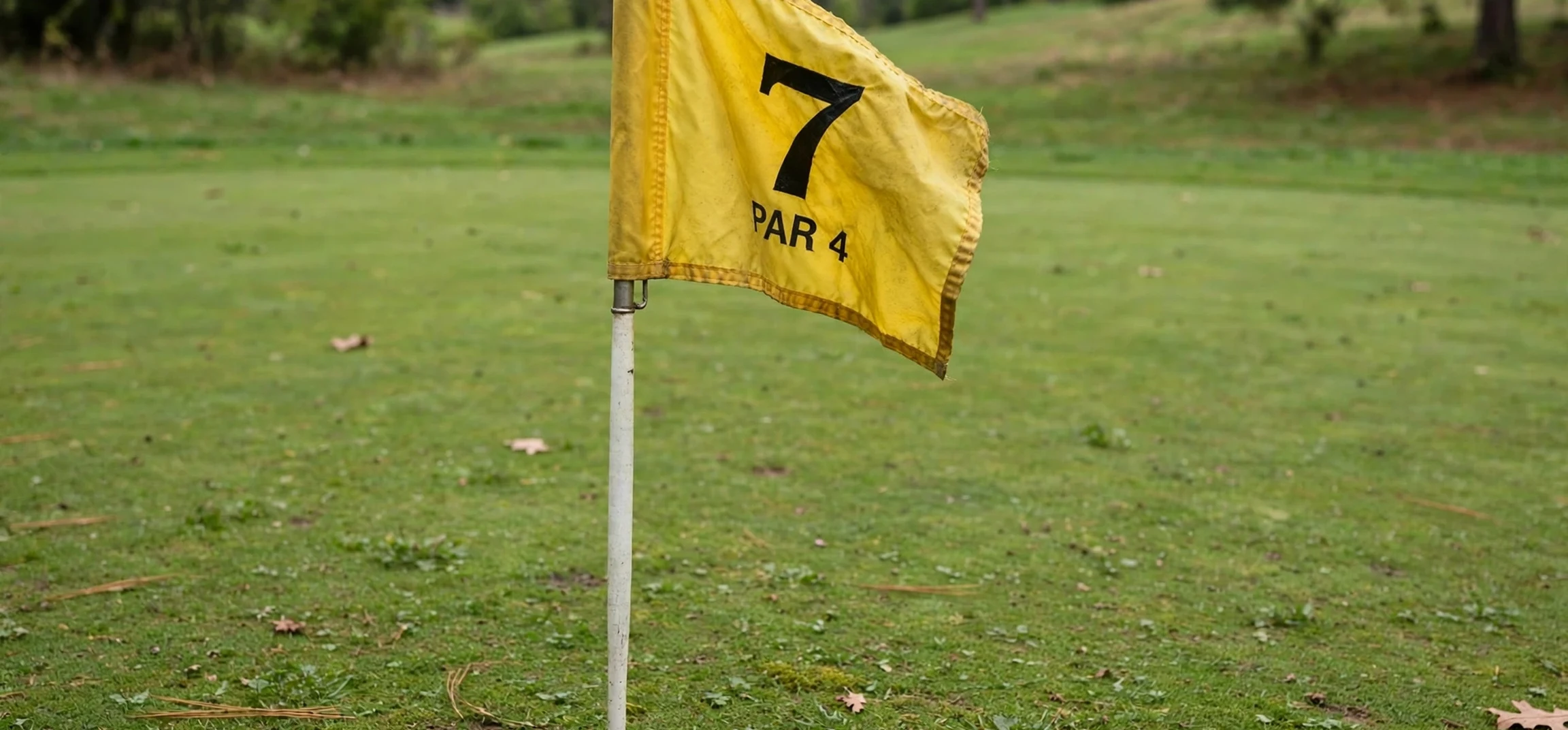
In golf, the phrase “pin high” describes a shot that finishes level with the flagstick in terms of distance, even if it is left or right of the target. If you are looking for a clear explanation, this guide covers the full pin high meaning, how golfers use the term on the course, why it is usually considered a good result, and how it differs from being short or long. A ball that is pin high has travelled the correct distance to the hole, judged from front to back, but it may still need a putt from the side of the green. That distinction is the heart of the term, and it explains why commentators, caddies, and playing partners use it so often. Distance control is one of the hardest skills in golf, so reaching pin high is a meaningful achievement even when the direction is slightly off.
Imagine standing on a par three with the flag near the middle of the green. You hit a clean shot that lands beside the hole, perhaps ten feet to the left, at exactly the same depth as the flag. That shot is pin high. Now imagine a second shot that lands ten feet short of the flag, directly in line with it. That shot is not pin high, because the distance is wrong, even though the direction is perfect. A third shot that flies ten feet beyond the flag is also not pin high. Golfers care about this difference because distance errors are often harder to recover from than direction errors, especially when bunkers, slopes, or thick grass guard the front or back of the green.
Pin High Meaning Explained in Simple Terms
The pin high meaning is simple once you picture the green as a map with two directions: distance from you to the hole, and sideways position left or right. Pin high concerns only the first direction. It means the ball stopped at the same distance as the pin, measured along the line of play. It does not mean the ball is close to the hole in every direction, and it does not guarantee an easy putt. A ball can be pin high and still be forty feet from the hole if it finished well to the side. Equally, a ball can be pin high and very close if it finished just beside the flag.
This is why golfers often pair the phrase with a sideways description. You might hear “pin high, just left” or “pin high, right side of the green.” Those extra words complete the picture. The first part tells you the distance was correct. The second part tells you where the ball sits across the green. Together, they describe a shot far more precisely than simply saying it was “near the green” or “on the green.”
Pin High Meaning With Everyday Examples
Consider a downhill approach shot to a flag tucked near the back of the green. A ball that lands beside the flag, level with it, is pin high, even if it is on the far left edge. A ball that lands short will face an uphill putt and may still be on the green, but the golfer will know the distance was under-hit. A ball that lands long may run into trouble behind the green, where recovery is often harder. In this example, the pin high shot is the safest of the three, because it avoids the front and back hazards while keeping the putt manageable.
Another example comes from a long iron shot into a large green. Large greens punish poor distance control, because a shot that is short or long can leave a very long putt or a difficult chip. A pin high shot on a large green may still leave a long putt, but at least the golfer is putting from level with the hole rather than fighting a steep slope from well short or well long. That is why professional commentators often praise a pin high approach even when the ball finishes some distance from the flag: the player has solved the hardest part, which is judging distance.
Pin High Compared With Short
Being short is usually less dangerous than being long, but it is still a distance error. A short shot may leave an uphill putt, which many golfers prefer, yet it can also fall into a front bunker or stop in a hollow. A pin high shot avoids that front trouble and keeps the golfer level with the target. For that reason, coaches often tell players that a well-struck shot that finishes pin high is a good outcome, even if the line was slightly off.
Pin High Compared With Long
Being long is often the most punishing error, because the area behind a green may slope away, contain bunkers, or lead to thick grass. A long shot can also leave a fast downhill putt or chip back toward the hole. Pin high avoids that risk entirely. It keeps the ball at the correct depth, which is why experienced golfers would usually rather be pin high and to the side than perfectly on line but well past the flag.
Why Golfers Value a Pin High Shot
Distance control depends on many variables: club selection, wind, elevation, temperature, lie, and the firmness of the ground. A golfer must combine all of those factors before swinging, and small mistakes multiply over a long shot. Reaching pin high shows that the golfer judged those variables well. Direction, by contrast, can sometimes be corrected more easily with a putt, because a sideways putt across a relatively flat green is often simpler than a long putt up or down a severe slope.
Pin high also matters for course management. When a flag is near a hazard, a golfer may deliberately aim to the safe side of the green while still trying to be pin high. That strategy accepts a longer putt in exchange for avoiding trouble. The result is still a good outcome, because the golfer remains in play, avoids a penalty or a difficult recovery, and gives themselves a chance to make par. In match play and stroke play alike, avoiding big mistakes is often more valuable than chasing a perfect shot.
How to Hit More Pin High Shots
Improving distance control starts with knowing how far you hit each club. Many amateur golfers overestimate their distances, especially with long irons and hybrids, and then wonder why shots finish short. A better approach is to record honest, typical distances rather than best-ever distances, and to choose the club that matches the yardage in normal conditions. Practising with a clear target and noting where shots finish, short, long, or pin high, builds a much more accurate picture than simply hitting balls without feedback.
Wind and elevation also deserve attention. A shot into the wind needs more club, while a downhill shot needs less. Uphill shots play longer than the measured yardage, and downhill shots play shorter. Temperature and altitude can affect distance too. Golfers who adjust for these factors, even roughly, will hit more pin high shots than golfers who always play the number on the scorecard without thinking about conditions.
Finally, tempo matters. A rushed swing often produces inconsistent contact, which leads to unpredictable distance. A smooth, balanced swing with clean contact gives the ball a consistent flight and makes distance easier to predict. Coaches often advise players to focus on the middle of the clubface and a steady rhythm rather than swinging harder for extra distance, because a well-struck shot at eighty percent effort is usually more reliable than a wild swing at full effort.
Pin High in Television Commentary and Caddie Talk
Television commentators use “pin high” because it communicates a lot in two words. When a commentator says a player is pin high, viewers immediately know the distance was correct, even if the camera angle makes the sideways position hard to judge. Caddies use the phrase in the same way, often as reassurance after a shot: the distance was right, so the player can focus on reading the putt rather than worrying about a poor strike.
The phrase also appears in post-round interviews. A player might say they were pin high all day but did not hole putts, which tells listeners that ball-striking was strong while putting was weak. Another player might say they struggled to get pin high, which suggests distance control was the problem. Learning this vocabulary helps casual viewers follow professional golf more easily, because it turns a vague impression of a “good shot” into a specific judgment about distance.
| Shot result | Distance to pin depth | What it means |
|---|---|---|
| Pin high | Level with the flag | Distance correct, direction may vary |
| Short | Before the flag | Under-hit, may face uphill putt |
| Long | Beyond the flag | Over-hit, may face downhill recovery |
| Pin high and close | Level with the flag, near it sideways | Excellent approach, short putt |
For readers who enjoy clear explanations of everyday terms, our guide to another common meaning follows the same plain-language approach, and our guide to a broad descriptive phrase shows how context changes a definition.
Frequently Asked Questions
Is pin high always a good shot?
Almost always, yes, in the sense that distance was correct. It can still leave a long or difficult putt if the ball finished far to the side, but it is generally much better than being well short or well long.
Can a shot be pin high but off the green?
Yes. If a ball finishes beside the green at the same depth as the flag, it is still pin high in distance terms, even though it is not on the putting surface. The phrase describes depth, not whether the ball is on the green.
Does pin high guarantee an easy putt?
No. The putt may still be long, across a slope, or over a ridge. Pin high tells you the depth was right; the putt itself still depends on sideways position and green contours.
Conclusion
The pin high meaning is one of the most useful phrases in golf because it separates distance from direction. A pin high shot has travelled the correct distance to the flag, even if it finished left or right, and that makes it a strong result in most situations. It avoids the front hazards that punish short shots and the back trouble that punishes long shots, and it gives the golfer a putt from level with the hole. Golfers improve their chances of finishing pin high by knowing their true club distances, adjusting for wind and elevation, and swinging with a smooth, repeatable tempo. Once you understand the term, you will hear it everywhere in commentary and caddie talk, and you will be able to judge approach shots with a much sharper eye. A shot does not need to be perfect to be good, and pin high is proof of that: correct distance, sensible position, and a real chance to score.