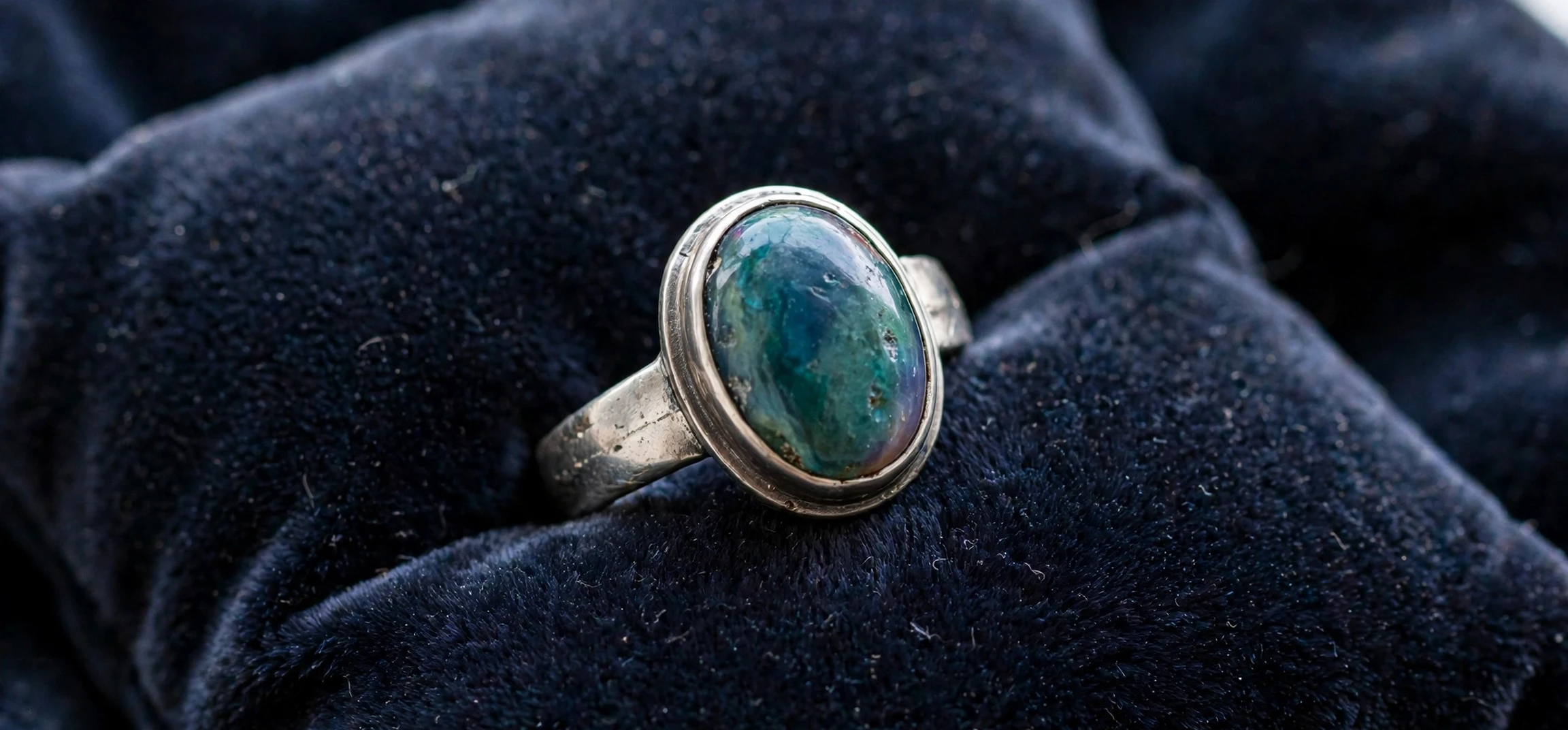
If you have ever slipped on a mood ring and watched it turn a clear, bright blue, you have probably asked yourself: what does the blue mean on a mood ring? According to the traditional colour charts that come with most mood rings, blue is one of the most welcome colours of all. It is usually linked with calm, relaxation and a peaceful state of mind. But what does the blue mean on a mood ring in practice, and how should you read that cheerful colour? This guide explains the traditional chart, what blue is said to represent, and how those meanings are best understood — as popular beliefs and folklore, not as scientific fact.
Before we go further, one important note: mood rings are novelty jewellery, and their colour meanings come from tradition and marketing rather than from medical or psychological science. The charts differ slightly from maker to maker, and the same ring can show different colours on different days, on different fingers, or in different weather. Keeping that in mind makes the whole topic more fun, because you can enjoy the symbolism without treating it as a diagnosis. So, what does the blue mean on a mood ring, and why do so many people hope to see it?
What Does the Blue Mean on a Mood Ring? The Traditional Chart
In most traditional mood ring charts, blue is associated with feeling calm, relaxed, happy and at ease. Some charts describe it as the colour of tranquillity, while others link it to feeling content, peaceful or even romantic. Dark blue is sometimes given a slightly different meaning from light blue: dark blue is often described as feeling passionate, joyful or deeply relaxed, while lighter blue is linked with feeling calm and carefree. The exact wording varies, but the general theme is consistent — blue is presented as a positive, settled state, a sign that the wearer is comfortable and untroubled.
This is why blue is often the colour people most want to see. On a traditional chart, the colours are arranged roughly like a scale, with darker, more stressed shades at one end and bright, relaxed shades at the other. Black and grey are usually linked with tension or nervousness, amber and green with mixed or unsettled feelings, and blue and violet with calm and happiness. Within that scale, blue sits near the happiest end. That is the core answer whenever someone asks what does the blue mean on a mood ring. If you are wondering what does the blue mean on a mood ring, the short traditional answer is: calm, content and relaxed.
Blue Versus the Other Colours
To understand blue properly, it helps to see it beside the other colours on the chart. Black is traditionally read as tense or stressed, grey as anxious or uncertain, and brown or amber as nervous or unsettled. Green is often linked with a normal, everyday mood or a slightly mixed state, while blue-green or teal is sometimes described as feeling relaxed but still alert. Violet or purple is usually read as passionate, excited or deeply content, and pink or red tones are linked with energy, excitement or strong feelings. Blue stands out in this company because it is consistently described in gentle, peaceful terms rather than in terms of excitement or tension.
What Does the Blue Mean on a Mood Ring in Different Shades?
Not all blues on a mood ring look the same, and traditional charts often split blue into two or three shades. A deep, rich blue is commonly described as feeling happy, passionate or blissfully relaxed. A bright sky blue is often described as feeling calm, peaceful and carefree. A blue-green shade, sometimes called teal or aqua, is often placed between green and blue on the chart and is described as feeling relaxed, calm and comfortable. These distinctions are part of the charm of mood rings, but they are also a reminder that the charts are folk guides rather than precise instruments: two makers can label the same shade differently. So if you ask what does the blue mean on a mood ring, the honest answer also depends on which maker’s chart you hold.
It is also worth remembering that what does the blue mean on a mood ring can depend on the chart that came with your particular ring. Some charts use only six colours, while others list ten or more, with extra shades such as lavender, turquoise and magenta. If your ring shows a colour that is not on your chart, the closest shade is usually the best guide. And if your ring shows blue on one finger and green on another, that is normal too — temperature can vary slightly across your hands, and the ring only responds to the temperature of the skin beneath it.
The Full Mood Ring Colour Meanings Chart
The table below brings together the most commonly published traditional meanings. Treat it as a folklore guide: these are the meanings people have attached to mood ring colours over the years, not measurements of emotion.
| Colour | Traditional meaning (belief only) |
|---|---|
| Black | Tense, stressed or overworked, according to tradition |
| Grey | Anxious, nervous or uncertain, according to tradition |
| Brown or amber | Unsettled, restless or nervous, according to tradition |
| Yellow | Thoughtful, daydreaming or slightly anxious, according to tradition |
| Green | Normal, calm or mixed feelings, according to tradition |
| Blue-green or teal | Relaxed, comfortable and at ease, according to tradition |
| Blue | Calm, happy, peaceful and relaxed, according to tradition |
| Dark blue | Very happy, passionate or deeply relaxed, according to tradition |
| Violet or purple | Passionate, excited or deeply content, according to tradition |
| Pink or red | Energetic, excited or strongly emotional, according to tradition |
Why Blue Is a Favourite Colour
Blue has long been associated with calm in colour symbolism well beyond mood rings. In art, design and everyday language, blue is linked with the sky and the sea, with peace and with trust. That wider symbolism probably helps explain why the mood ring tradition placed blue at the relaxed end of the chart. When people ask what does the blue mean on a mood ring, they are often really asking whether the ring is telling them something good — and in the traditional chart, blue is one of the best answers you can get.
There is also a simple visual reason: a bright blue ring looks attractive. Mood rings were a fashion craze when they first appeared in the 1970s, and a vivid blue stone suited almost any outfit. Jewellery makers knew this, and the cheerful meaning attached to blue made the rings even more appealing as gifts. A ring that turns blue, the tradition suggests, is a ring that says its wearer is doing well — a lovely message to give to a friend.
Beliefs, Not Facts: How to Read Mood Ring Meanings
It is important to be clear about what mood ring colours can and cannot tell you. A mood ring does not measure emotions, stress or happiness directly. Its stone contains materials that change colour with temperature, so the ring is really responding to how warm or cool your finger is at that moment. Warm hands tend to produce blue and violet shades, while cooler hands tend to produce darker or greener shades. That is why your ring may turn blue after a warm bath, on a sunny day, or when you have been indoors for a while — and why it may turn darker when you step out into cold air.
This does not make mood rings useless or uninteresting. They are enjoyable as jewellery, as conversation pieces and as a light-hearted way to think about how you feel. The traditional meanings work best as prompts for reflection: if your ring turns blue and the chart says you are calm, you might pause and notice that you do feel relaxed — or you might laugh and disagree. Either way, the ring has done its job as a novelty. What it cannot do is replace genuine self-awareness, and it should never be used to judge someone else’s feelings or to make health decisions.
Readers interested in colour symbolism may also enjoy our colour guide, our explanation of 888 tattoo meaning, and our guide to what brown colour means in a very different context. Colour meanings change a great deal depending on where they appear, which is part of what makes them so fascinating.
Frequently Asked Questions About Blue Mood Rings
Is blue a good colour on a mood ring?
According to the traditional chart, yes. Blue is generally read as calm, happy and relaxed, which makes it one of the most positive colours a mood ring can show. Remember, though, that this is a traditional belief rather than a scientific reading.
Why does my ring stay blue all the time?
If your ring almost always shows blue, it may simply mean your hands tend to run warm, or that the ring fits a finger that stays warm. Room temperature, activity and even the fit of the ring can all affect the colour. A ring that rarely changes colour is not broken; it is just responding to a fairly steady temperature. Even so, many owners still ask what does the blue mean on a mood ring each time they notice the colour.
Can two mood rings show different colours on the same person?
Yes, easily. Different rings use slightly different materials, and temperature varies across your fingers and hands. Two rings worn at the same time can show different shades, which is another reason to treat the chart as folklore rather than fact. The question of what does the blue mean on a mood ring therefore has a traditional answer, not a measured one.
Does blue on a mood ring mean love?
Some charts link dark blue with passion or romance, but most charts describe blue mainly as calm and happy. That is the usual reply when someone asks what does the blue mean on a mood ring and hopes it signals affection. If you want a traditional love colour, violet and pink are more often linked with passion and strong feelings. Again, these are beliefs attached to the charts, not proven meanings.
Conclusion
So, what does the blue mean on a mood ring? In the traditional chart, blue means calm, content, peaceful and relaxed — one of the happiest readings a mood ring can give. Dark blue is often described as even more joyful or passionate, while lighter blue is linked with a carefree, easy mood. Enjoy that meaning for what it is: a charming piece of 1970s jewellery folklore. The next time a friend asks what does the blue mean on a mood ring, you will have both the traditional answer and the healthy scepticism to go with it. that has delighted wearers for fifty years. Your ring cannot read your mind, but when it turns a beautiful blue, it is a pleasant reminder to pause, breathe and enjoy a calm moment — and that, in the end, is what does the blue mean on a mood ring for most of the people who wear one.