Many people searching for a picture of emmett till in his casket are not looking for a shocking image. They are usually students, teachers, researchers, or readers who have heard that a fourteen-year-old boy from Chicago became a central figure in American civil rights history, and they want to understand why his story still matters today. This article shows no funeral pictures and contains no graphic description of any kind. Instead, it offers a respectful historical overview of Emmett Till, his family, the events of 1955, and the long legacy that followed. If you came here hoping to see a picture of emmett till in his casket, this guide explains what that search phrase refers to, why the funeral became historically important, and where serious historical sources discuss the case with care and context.
Emmett Louis Till was born in Chicago in 1941 and grew up in a close, loving family. His mother, Mamie Till-Mobley, later became one of the most important voices in the civil rights movement. Family members and friends remembered Emmett as a lively, funny, and generous young person who enjoyed jokes, clothes, and spending time with his cousins. He was not a symbol when he was alive. He was a child, a son, a cousin, and a friend. Keeping that simple fact at the centre of the story matters, because history can too easily turn a young life into an abstract lesson. Emmett Till was a real boy whose life was cut short, and the people who loved him carried the loss for the rest of their lives.
In the summer of 1955, Emmett travelled from Chicago to Mississippi to visit relatives. The American South at that time was governed by segregation laws and customs that controlled where Black people could live, work, eat, travel, and gather. Those rules were enforced not only by law but also by intimidation and violence. A young Black visitor from the North could be in danger simply for not knowing, or not following, unwritten local rules. That dangerous setting is essential background for understanding what happened next, and why the case became a national turning point rather than a private family tragedy.
Who Was Emmett Till
Emmett Till was raised in Chicago by his mother after his parents separated, and he lived in a community shaped by the Great Migration, in which many Black families moved from the South to northern cities seeking work and greater safety. Chicago offered more freedom than Mississippi, but it was not free from racism. Still, Emmett grew up in a home where he was protected, encouraged, and loved. His mother later wrote and spoke at length about his personality, his sense of humour, and his dreams. Those accounts are valuable because they restore the human being behind the headlines.
Before his trip south, Mamie Till-Mobley warned her son to be careful in Mississippi and to follow the cautious behaviour that Black travellers were expected to show at the time. That warning itself tells a powerful story about America in 1955. A mother felt she had to prepare her child for a place where ordinary behaviour could be treated as a serious offence. The warning did not protect him, and that failure became one of the reasons his mother later spoke so publicly about the injustice of the system.
What Happened in Mississippi in 1955
In August 1955, while visiting family in Money, Mississippi, Emmett Till entered a local store and had a brief interaction that was later reported in conflicting ways. Within days, he was taken from his relatives’ home at night. His body was later found in a river, and the discovery confirmed the worst fears of his family. This article deliberately does not describe injuries, remains, or funeral imagery. The historical importance of the case does not depend on graphic detail, and respectful coverage should never require readers to encounter such detail in order to learn the facts.
Two men were charged with murder and were acquitted by an all-white jury after a short trial. The verdict shocked many people across the United States and around the world. Later, one of the men gave a magazine account claiming responsibility, a statement that historians have studied carefully and debated. No one was ever convicted in a criminal court for the killing. The lack of a conviction became part of the story, illustrating how the legal system in Mississippi at that time failed Black victims and their families.
Why a picture of emmett till in his casket Became Part of History
The reason a picture of emmett till in his casket is searched for today is tied to a decision made by his mother. Mamie Till-Mobley insisted on an open-casket funeral in Chicago so that the world could see what had happened to her son. She believed that hiding the truth would allow people to ignore it, while showing the reality of racial violence would force the nation to confront it. Thousands of people attended the funeral, and photographs from that event were later published in Black newspapers and magazines. Those publications reached readers who might otherwise never have learned the full story.
Historians often describe that decision as a turning point in media history and in the civil rights movement. It was an act of grief, but it was also an act of moral courage. A grieving mother chose to make a private loss public in the hope that it would prevent future violence. The funeral photographs therefore became historically significant not because of their visual content, but because of what they represented: a mother refusing to let her son be forgotten, and a community refusing to look away. Readers who search for a picture of emmett till in his casket today are often tracing that moment when private mourning became public witness.
Modern teachers and museums handle this material with great sensitivity. Many educational resources describe the funeral and its impact without reproducing the most distressing images, and some give students a clear warning before any image is shown. That approach respects both the historical record and the reader. This article follows the same approach: it explains the history fully while showing no funeral pictures at all. A reader can understand why the funeral mattered without viewing an image, and that understanding is often deeper because it rests on context rather than shock.
How a picture of emmett till in his casket Is Discussed Today
Today, discussion of a picture of emmett till in his casket usually appears in three settings: classrooms, museums, and journalism about civil rights history. Teachers may discuss the funeral decision as an example of how families and journalists can shape public understanding. Museum exhibitions may place the story within a wider display about segregation, protest, and legal change. Journalists may mention the funeral when explaining why the Till case is remembered while many other cases of violence were not widely reported at the time.
Ethical discussion has also changed over time. Earlier coverage sometimes treated the photographs as evidence to be displayed without reflection. More recent scholarship asks harder questions: who has the right to share images of a child, what does a viewer owe the family, and how can history be taught without exploiting grief? Those questions are worth taking seriously. They remind readers that historical images involve real people and real families, and that curiosity should be paired with respect. Searching for a picture of emmett till in his casket can be the start of serious learning, provided the search leads to context, care, and accurate history rather than to sensational material.
Parents and teachers who are asked about this topic by young people can begin with the human story, not with an image. They can explain who Emmett was, what segregation meant, why his mother spoke out, and how ordinary people later worked to change unjust laws. That framing gives children a foundation in empathy and citizenship. It also protects young readers from encountering distressing material before they are ready to understand it.
The Civil Rights Legacy of Emmett Till
The murder of Emmett Till is widely regarded as a catalyst for the modern civil rights movement. Rosa Parks later said that she thought of Emmett Till when she refused to give up her seat on a Montgomery bus in December 1955. Young activists who became leaders in the 1960s often cited the Till case as the moment they understood that segregation was enforced by violence and that silence was not neutral. The case helped connect local injustice in Mississippi to a national struggle for voting rights, equal education, and equal protection under the law.
Mamie Till-Mobley devoted the rest of her life to education and justice. She became a teacher, spoke to young people across the country, and worked to keep her son’s story alive as a lesson in courage and responsibility. Her memoir, published after her death, remains one of the most important first-hand accounts of the case. It shows a mother transforming grief into teaching, and it gives readers a voice that is dignified, clear, and deeply human. Her work is a major reason the case is still taught today.
In later decades, the federal government took further steps connected to the Till legacy. The Emmett Till Unsolved Civil Rights Crime Act, first passed in 2008 and reauthorised later, directed the Justice Department to investigate unsolved civil rights era killings. In 2022, the Emmett Till Antilynching Act made lynching a federal hate crime. These laws did not undo the past, and they could not bring back the boy who was lost. They did, however, recognise the case as a matter of national importance and affirm that racially motivated killing must be treated as a serious crime under federal law.
Key Dates in the Story
| Year | Milestone | Why It Matters |
|---|---|---|
| 1941 | Emmett Till is born in Chicago | His childhood and family life are the human centre of the story |
| 1955 | Visit to Mississippi and his killing | The case exposes segregation-era violence to a national audience |
| 1955 | Funeral in Chicago and trial in Mississippi | Public attention grows while the legal system delivers an acquittal |
| 1955 | Montgomery bus boycott begins | Activists cite the Till case as a motivating event |
| 2008 | Unsolved Civil Rights Crime Act | Federal review of cold cases from the civil rights era begins |
| 2022 | Emmett Till Antilynching Act | Lynching becomes a federal hate crime in his name |
Memorials, Museums, and Education
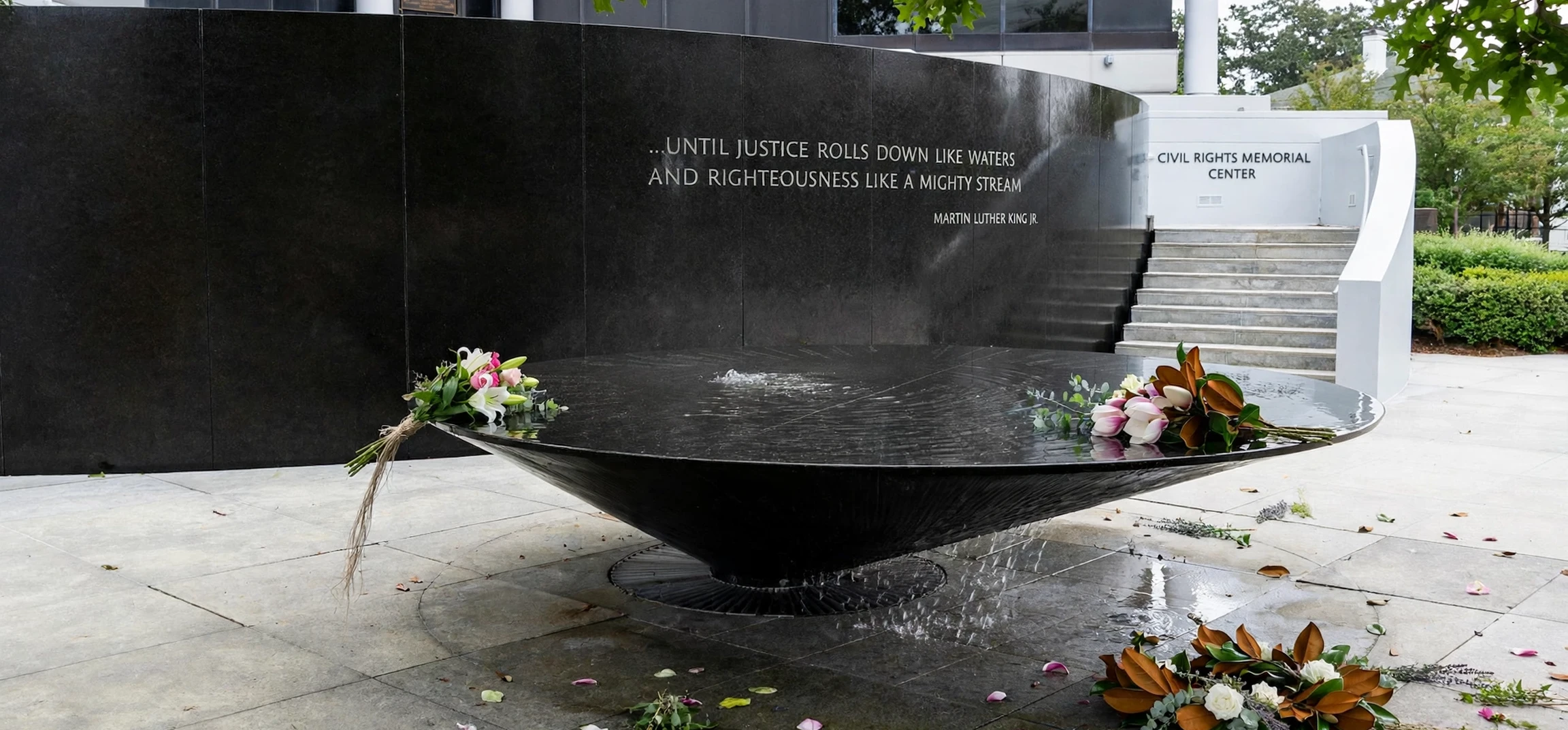
Several memorials and museums now honour Emmett Till and teach his story to new generations. A national monument, established in 2023, includes sites in Mississippi and Illinois connected to his life and to the case. The National Museum of African American History and Culture in Washington has addressed the case in its exhibitions, handling the material with the seriousness it deserves. In Mississippi, a memorial centre and historical markers help visitors understand the local geography of the story, including the store, the courthouse, and the river sites that are part of the public record.
These places matter because they turn memory into learning. A visitor who stands at a historical marker or walks through a museum gallery can grasp the scale of segregation and the courage of the people who opposed it. Memorials also create space for reflection. They invite visitors to ask what justice requires today, how communities remember difficult history, and what responsibility each generation carries. A respectful visit does not require viewing distressing images. It requires attention, honesty, and a willingness to learn.
Educators often pair the Till story with primary sources such as newspaper reports, trial coverage, and Mamie Till-Mobley’s own words. Those sources help students practise historical thinking: comparing accounts, checking evidence, and recognising bias. Students learn that history is not a single story told by one voice, but a set of sources that must be weighed carefully. That skill is useful far beyond this one case, and it is one reason the case remains a staple of American history teaching.
How to Research This History Respectfully
Readers who want to go further should start with reputable sources: university histories, museum websites, published memoirs, and established journalism. Those sources provide context, cite evidence, and treat the family with respect. Readers should be cautious about social media posts that share images without context, captions, or warnings. Such posts can spread misinformation, misidentify photographs, or present material in a sensational way that the family never intended.
When a source does include a historical photograph, a responsible reader can pause and ask three questions. First, does this source explain why the image is historically important? Second, does it give a warning and offer a text alternative? Third, does it centre the person and the family rather than the shock value? If the answer to those questions is no, the source is probably not the best place to learn. Better sources explain the funeral decision, the press coverage, and the legacy in words, and they leave the choice to view an image to the reader.
For further reading on American history and the meaning of key terms, see the history behind the Thirteenth Amendment and a look at Abraham Lincoln and his place in American history. Those guides give useful background on the long struggle against slavery and its aftermath, which forms the deeper context for the Till story. A reader who understands that longer history will understand the 1955 case more clearly.
Frequently Asked Questions
Why do people search for a picture of emmett till in his casket?
Most searchers have heard that his mother held an open-casket funeral and that photographs from it were published and widely discussed. They want to understand why that decision mattered and how it affected the civil rights movement. A picture of emmett till in his casket is therefore searched for as a historical reference, not simply as an image. This article answers that historical question in words, without showing any funeral picture.
Does this article show funeral pictures?
No. This article shows no funeral pictures and includes no graphic description. It explains the history, the funeral decision, and the legacy, so readers can learn fully without encountering distressing imagery. Anyone who wishes to consult archival material should do so through a museum or reputable historical source that provides context and warnings.
What was the legal outcome of the case?
The two men charged with murder were acquitted in 1955. Later federal investigations and new laws, including the Emmett Till Antilynching Act of 2022, recognised the national significance of the case, but no criminal conviction was ever secured for the killing. The legal history remains an important lesson about how justice systems can fail victims.
How should teachers discuss this topic with students?
Teachers can focus on Emmett Till as a person, on segregation and its enforcement, on his mother’s courage, and on the movement that followed. They can use memoirs, newspaper accounts, and museum resources, and they can give students a warning before any sensitive material is introduced. That approach teaches history with empathy and accuracy.
What Readers Searching for a picture of emmett till in his casket Want to Know
Readers who type a picture of emmett till in his casket into a search engine usually want context, not shock. They want to know who Emmett Till was, why his funeral became a public event, and how a picture of emmett till in his casket came to symbolise a mother determination to make injustice visible. A picture of emmett till in his casket is therefore best understood as a historical reference point, a reminder that private grief can become public testimony. This article answers that search by explaining the funeral decision, the press coverage, and the legacy, while showing no funeral pictures. Anyone searching for a picture of emmett till in his casket and finding this page will learn the full story in words, with respect for Emmett Till, for his mother, and for readers who deserve history without graphic detail.
For students revising this topic, the key point about a picture of emmett till in his casket is not the image itself but the decision behind it. A picture of emmett till in his casket became famous because a mother chose openness over silence, and because Black newspapers carried that witness to readers across the country. Remembering a picture of emmett till in his casket in that context keeps the focus on courage, justice, and the civil rights movement that followed.
Conclusion
Emmett Till was a fourteen-year-old boy who loved his family, enjoyed life in Chicago, and travelled to Mississippi in the summer of 1955 expecting to visit relatives and return home. The injustice that followed changed American history, because his mother refused to let the world look away and because ordinary people were moved to act. The search phrase a picture of emmett till in his casket points to that moment of public witness, but the real story is larger than any single image. It is a story about a child, a mother courage, a flawed legal system, and a movement that demanded equality under the law.
Remembering Emmett Till respectfully means remembering him as a person first, learning the history honestly, and carrying its lessons into the present. It means supporting accurate teaching, visiting memorials with care, and recognising that justice is not automatic but must be defended in every generation. This article has shown no funeral pictures, and it has described no graphic detail, because understanding does not require either. What it requires is attention to the truth, respect for the family, and a commitment to the equality that Emmett Till was denied.



