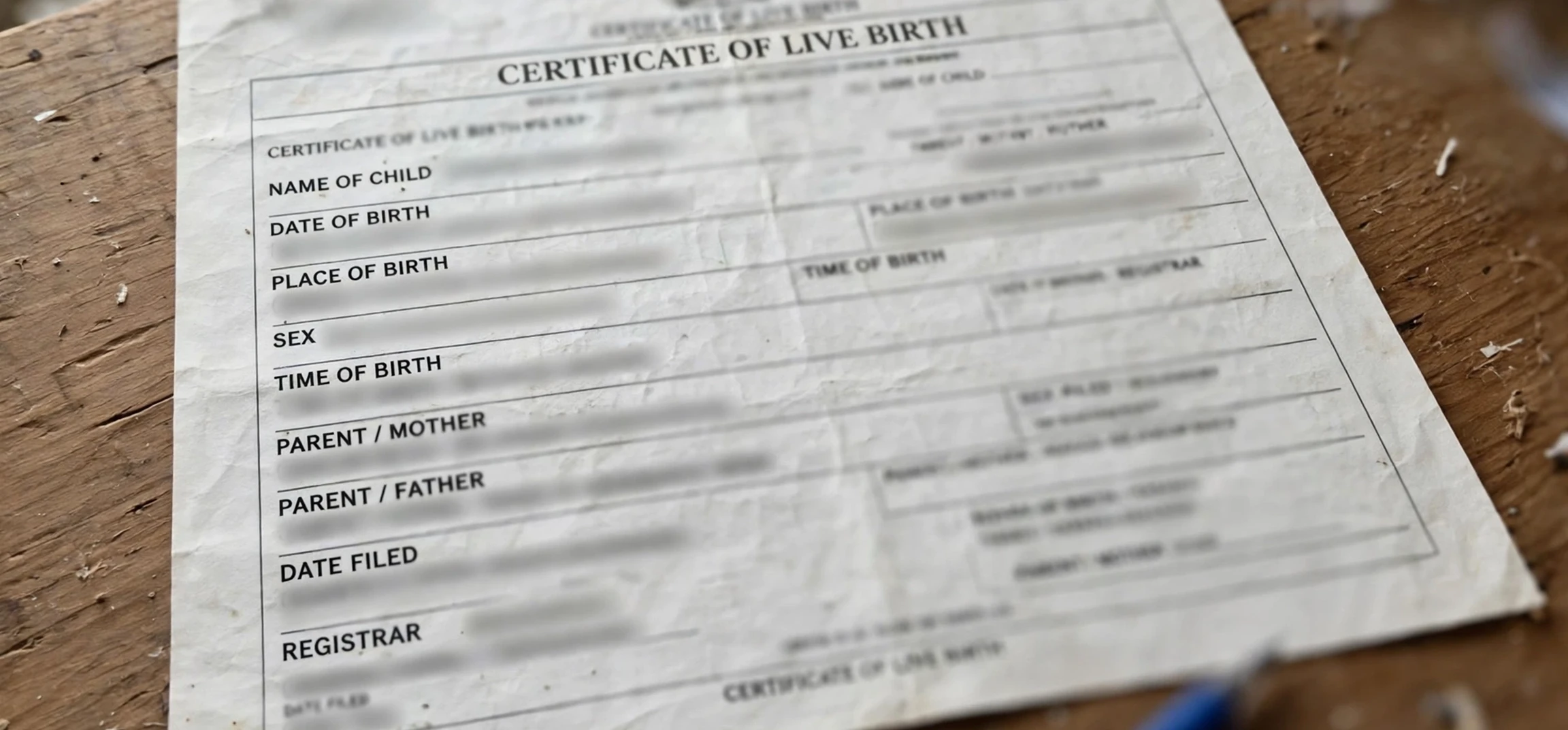
If you need to know how to change the last name on a birth certificate, the first thing to understand is that the process is handled through official government channels, and the exact steps depend on why the change is needed and where the birth was registered. A birth certificate is a vital record, which means it is an official document held by a government registry, and changes to it are not made informally. This guide explains how to change the last name on a birth certificate in general terms, outlines the two main routes, correction of an error and legal name change, and describes the kinds of documents and steps that official offices commonly ask for. It is general information only, not legal advice, and you should always confirm the current requirements with the vital records office that holds the record.
People seek this change for many different reasons. A surname may have been recorded incorrectly at birth, a parent may have married or divorced and changed their own name, a child may have been adopted, or an adult may have legally changed their name and now wants their birth record to reflect that change. Each situation is handled slightly differently, and that is why there is no single universal form or single office that covers every case. Knowing which category your request falls into is the most important first step, because it determines whether you apply for a correction, a court order, or an amended certificate, and which supporting documents you will need to provide.
How to Change the Last Name on a Birth Certificate: An Overview
At a high level, how to change the last name on a birth certificate usually involves three stages: identifying the correct office, submitting an application with supporting evidence, and waiting for the amended record to be issued. The correct office is normally the vital records office or civil registry in the state, province, or country where the birth was registered, not necessarily where you live now. If you were born in one place and now live in another, you will generally need to contact the office that holds the original record. Many vital records offices publish their forms and instructions online, and starting with their official website is the safest way to get current, accurate information.
The application itself typically asks for identifying details about the person named on the certificate, the current information as recorded, and the requested change, together with the reason for the change. You will usually need to prove your identity and, where relevant, your relationship to the person named on the certificate. Parents applying for a minor child, for example, are commonly asked to show that they are the child’s parent or legal guardian. Adults applying for their own record are commonly asked to show government-issued identification. Fees and processing times vary widely by jurisdiction, and some offices offer expedited handling for an additional fee, while others process requests in the order received.
Correction or Legal Name Change?
The distinction between a correction and a legal name change is central to this process. A correction is used when the record contains an error, such as a misspelled surname, a surname recorded under the wrong parent’s name, or a clerical mistake made at the time of registration. Corrections are generally handled administratively by the vital records office, provided you can supply evidence of the correct information, such as hospital records, parental identification, or other official documents from around the time of birth. A legal name change, by contrast, is used when a person has lawfully adopted a new surname for reasons such as marriage, divorce, adoption, or a court-approved name change, and now wants the birth record amended to match. That route often requires a court order or other legal document proving the name change.
How to Change the Last Name on a Birth Certificate for a Child
For a minor child, the process usually begins with the child’s parents or legal guardians. If both parents agree to the change, the application is generally more straightforward, although the office will still ask for proof of identity and parentage. If only one parent is applying, or if the parents disagree, the office or a court may require additional steps, such as consent from the other parent or a court order, depending on local law. This is an area where rules differ significantly, and it is important not to assume that one jurisdiction’s approach applies in another. Checking with the vital records office, and seeking legal advice if there is a disagreement, is the prudent course.
Adoption is a special case. When a child is adopted, a new birth certificate is often issued showing the adoptive parents and the child’s new surname, and the original record is sealed under court order. That process is handled through the adoption court and the vital records office together, and adoptive parents are usually guided through it by the court or by their adoption agency. It is different from a simple correction, because it involves a court judgment, and the new certificate replaces the original for most everyday purposes. Families going through adoption should follow the instructions given by their court rather than using a general correction form.
Documents Commonly Requested for a Child
Although requirements vary, offices commonly ask for the child’s current birth certificate, identification for the applying parent or guardian, proof of the reason for the change, and, where relevant, a court order or adoption decree. Proof of the reason might include a marriage certificate, a divorce decree showing a name restoration, or a court order granting a name change. Some offices also ask for a form signed by both parents, or for a sworn statement explaining the request. Gathering these documents before you apply can save time, because incomplete applications are a common cause of delays. Make copies for your own records, and send originals only when the office specifically asks for them.
How to Change the Last Name on a Birth Certificate as an Adult
Adults who want to change the surname on their own birth certificate usually need to show that they have legally changed their name, or that the original record contains an error. If you changed your name through marriage, for example, your marriage certificate is commonly accepted as evidence, although some offices will only amend a birth certificate on the basis of a court order, even after marriage. If you changed your name through a court petition, the court order itself is the key document, and you should keep a certified copy for use with the vital records office and with other agencies. If the surname was simply recorded incorrectly, you will need evidence of the correct surname from around the time of birth.
It is worth understanding that an amended birth certificate does not automatically update every other record in your name. After the birth record is amended, you may still need to update your identification, passport, tax records, bank accounts, and other official documents separately, following each agency’s own process. Some people find it helpful to make a list of every record that carries their old surname and work through it systematically, starting with the most important documents. The birth certificate is often the foundation document, because other agencies may ask for it as proof of identity, but it is not the only document that needs attention.
Court Orders and When They Are Needed
A court order is needed in many name-change cases, and the process for obtaining one varies by jurisdiction. In general, a person petitions a local court for a name change, provides identification and background information as required, and, in some places, publishes notice of the petition or attends a hearing. The court then issues an order granting the change, which can be presented to the vital records office and to other agencies. The details, including whether a hearing is required, whether publication is required, and what fees apply, are set by local law, and they can change over time. Court websites and legal aid services in your area are the best sources for current local procedure, and this guide does not replace that local information.
Steps to Follow Through Official Channels
A practical sequence for most requests looks like this. First, identify the vital records office that holds the original birth record, using the official government website for that jurisdiction. Second, determine whether your request is a correction or a legal name change, and download or request the correct form. Third, gather your identification and supporting documents, and check whether any of them need to be certified copies. Fourth, complete the form carefully, making sure the requested surname is spelled exactly as you want it to appear, and sign it as instructed. Fifth, submit the application by the method the office specifies, whether online, by mail, or in person, and pay any required fee. Finally, keep your receipt or tracking information, and follow up if the office’s stated processing time has passed.
Common mistakes to avoid include applying to the wrong office, using the correction form for a legal name change or vice versa, submitting uncertified copies when certified copies are required, and misspelling the new surname on the form itself. Each of those errors can cause a rejection or a delay, and in the worst case it can result in a second amended certificate being needed to fix a new error. Taking time to read the instructions, double-checking every spelling, and confirming requirements by phone or through the official website before submitting can prevent most of these problems. If you are unsure about any part of the form, contact the office for clarification rather than guessing.
Fees, Processing Times, and Follow-Up
Fees for amending a birth certificate vary by jurisdiction and by the type of amendment, and they are usually published on the vital records office website. Some offices charge a processing fee plus a fee for each certified copy of the amended certificate, so it is worth ordering any extra copies you are likely to need at the same time, rather than applying again later. Processing times also vary, from a few weeks to several months, depending on workload, the complexity of the request, and whether a court order is involved. If your request is urgent, ask the office whether expedited handling is available and what it costs, but be aware that not every office offers it.
| Situation | Usual route | Key document often needed |
|---|---|---|
| Surname misspelled at registration | Administrative correction | Evidence of the correct surname from around birth |
| Name changed after marriage | Amendment on legal name change | Marriage certificate or court order, as local rules require |
| Name changed after divorce | Amendment on legal name change | Divorce decree or court order restoring a former name |
| Child adopted | New certificate via adoption court | Adoption decree and court order |
| Adult court-approved name change | Amendment on court order | Certified court order granting the name change |
Frequently Asked Questions About Birth Certificate Name Changes
Can I change a surname on a birth certificate online?
Some vital records offices allow you to apply online, while others require a mailed or in-person application. It depends on the jurisdiction that holds the record. Start with that office’s official website to see which submission methods it offers for your type of request.
How long does it take?
Processing times vary widely, from a few weeks to several months, depending on the office, the type of amendment, and whether a court order is involved. The office holding the record can give you its current estimate, and you should allow extra time if you need the amended certificate for a specific deadline.
Can I learn how to change the last name on a birth certificate without a court order?
Sometimes, yes, if the request is a straightforward correction of an error and you can provide strong evidence of the correct information. For a legal name change, however, many jurisdictions require a court order. The vital records office that holds the record can confirm which route applies to your situation.
Planning How to Change the Last Name on a Birth Certificate
Good planning makes the process of learning how to change the last name on a birth certificate much smoother. Before you submit anything, write down the exact spelling of the surname you want, check it against your other identification, and make sure every document you submit uses that same spelling. When you research how to change the last name on a birth certificate, you will notice that offices stress accuracy, because a single misspelled letter on the new certificate can create a fresh problem. Taking a few minutes to verify the spelling at the start is one of the simplest ways to avoid delays, and it is worth doing even if you are confident about the name.
It also helps to plan around timing. If you need the amended certificate for a passport application, a school enrolment, or another deadline, start the process early, because processing times for how to change the last name on a birth certificate vary and can stretch to several months. Keep copies of everything you send, note the date you submitted the application, and keep the office’s contact details where you can find them. If the office asks for an additional document, responding promptly will keep your application moving, while a slow reply can push it to the back of the queue. Those practical habits matter as much as the form itself.
Finally, remember that advice about how to change the last name on a birth certificate is general, and local rules always take precedence. A friend’s experience in one jurisdiction may not match your experience in another, even if the situations look similar. When you read general guides about how to change the last name on a birth certificate, use them to understand the overall shape of the process, and then confirm the details with the office that holds your record. That combination, a general understanding plus local confirmation, is the most reliable way to approach any vital records request, and it applies whether your case is a simple correction or a court-ordered change.
What checklist helps when you research how to change the last name on a birth certificate?
A useful checklist is to confirm the holding office, confirm whether your case is a correction or a legal name change, gather certified supporting documents, verify the exact new spelling, and keep copies of the submitted application. Following that checklist, and confirming each step with the office, covers the main points that guides on how to change the last name on a birth certificate emphasise, and it reduces the chance of a rejected or delayed application.
Key Takeaways
- First, confirm whether you need a correction or a legal change, since how to change the last name on a birth certificate depends on that distinction.
- Apply to the office holding the original record when learning how to change the last name on a birth certificate.
- Gather certified supporting documents before you apply, as guides on how to change the last name on a birth certificate advise.
- Verify the exact new spelling, because accuracy matters for how to change the last name on a birth certificate.
- Allow weeks to months for processing, and follow up after the stated time for how to change the last name on a birth certificate.
- For disputes or complex cases, seek local legal advice alongside general guidance on how to change the last name on a birth certificate.
- After amendment, update other records separately, a step often missed when studying how to change the last name on a birth certificate.
- Always confirm current requirements through official channels before applying, the safest rule for how to change the last name on a birth certificate.
- This guide is general information only, not legal advice, about how to change the last name on a birth certificate.
Conclusion
Changing a surname on a birth certificate is a formal process, but it is a well-established one, and vital records offices handle such requests every day. The keys to a smooth application are identifying the correct office, understanding whether you need a correction or a legal name change amendment, gathering the right supporting documents, and following the office’s instructions exactly. Because rules differ by jurisdiction and can change over time, always confirm current requirements through official channels before you apply, and seek legal advice if your situation involves a dispute, an adoption, or any other complexity. With careful preparation, the process is manageable, and the result is an official record that accurately reflects your name. For related official-record guides, see how to change your name on a Social Security card, change of name on a driving licence, and change of address with the postal service.