If you share your home with a schnauzer, you already know that the breed’s famous beard, brows, and wiry coat do not maintain themselves. Learning the basics of grooming a schnauzer is one of the most useful skills a schnauzer owner can develop, because regular grooming keeps the coat healthy, reduces matting, and gives you a chance to notice skin, ear, or nail issues early. This guide covers grooming a schnauzer from start to finish: the tools you need, the classic cut, bathing and brushing routines, and when to ask a professional groomer or a veterinarian for help.
Schnauzers come in three sizes, miniature, standard, and giant, but their coats share the same general character: a wiry outer coat with a softer undercoat, plus the distinctive furnishings on the face and legs that give the breed its look. That double texture is why grooming a schnauzer differs from grooming a smooth-coated breed. The wiry topcoat needs regular attention to stay tidy, while the softer furnishings tangle more easily and need gentler handling. A consistent routine, rather than an occasional marathon session, is the secret to a happy dog and a good-looking coat. That principle sits at the heart of grooming a schnauzer well.
Tools you need for grooming a schnauzer
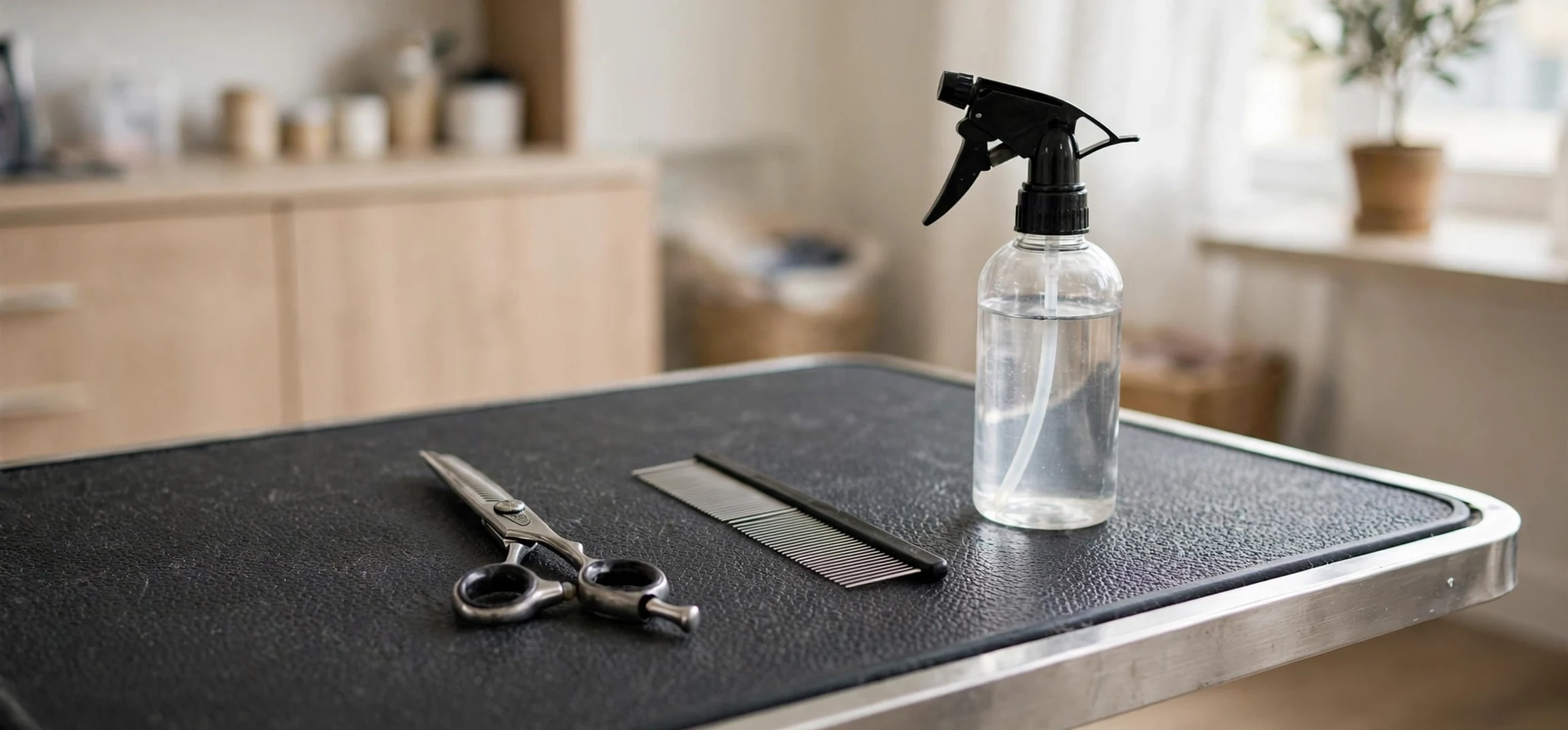
Good tools make grooming a schnauzer far easier and more comfortable for the dog. A slicker brush handles everyday brushing and light tangles, while a metal comb with both fine and coarse teeth is essential for checking your work, since a comb glides through a tangle-free coat but catches on hidden mats. Blunt-tipped scissors are useful for tidying the face, ears, and paws, and a pair of thinning shears helps blend the coat so the cut looks natural rather than harsh. Nail clippers or a nail grinder, dog shampoo, ear cleaner recommended by your veterinarian, and plenty of treats complete the basic kit.
Clippers deserve a special mention, because the classic schnauzer cut relies on them for the body coat. A sturdy clipper with a detachable blade is the usual choice, and beginners should practise on a low-pressure area before attempting the full body. Keep blades clean, oiled, and cool during use, and stop immediately if the blade feels hot against your hand, since a hot blade can irritate the skin. If clippers feel intimidating, there is no shame in leaving the clipping to a professional groomer while you handle brushing, bathing, and tidying at home. Splitting the work this way is a perfectly valid approach to grooming a schnauzer.
Setting up a calm grooming session
Choose a non-slip surface at a comfortable height, gather everything before you start, and keep sessions short and positive, especially with puppies or nervous dogs. Talk calmly, offer treats, and take breaks if the dog becomes restless. Grooming should never become a battle: a dog that learns grooming means praise and rewards will cooperate far more willingly next time. If your schnauzer shows signs of pain, fear, or distress during any step, pause and consider whether professional help or veterinary advice is needed. Patience matters more than speed when you are grooming a schnauzer.
The regular routine for grooming a schnauzer
A sensible routine for grooming a schnauzer combines brushing several times a week with bathing every few weeks and a full cut every six to eight weeks, although individual needs vary with coat type, lifestyle, and the time of year. Brush the furnishings on the legs and beard most often, since these areas mat fastest, particularly after walks in wet weather or muddy parks. Work through tangles gently with your fingers or a comb before using a brush, and never pull hard on a mat, because that hurts and teaches the dog to dread grooming. Gentle detangling is one of the most important skills in grooming a schnauzer.
Bathing starts with a thorough brush-out, so you are not washing tangles into tighter knots. Use lukewarm water and a shampoo made for dogs, lather gently, and rinse completely, since leftover shampoo can irritate the skin. Dry the coat with towels and, if your dog tolerates it, a low-heat dryer held at a distance, brushing as you dry to keep the furnishings fluffy. Clean the ears only as far as you can easily reach with a product your veterinarian approves, and never insert anything deep into the ear canal. Ear care is a small but regular part of grooming a schnauzer. Trim nails little and often, taking care to avoid the quick, the sensitive inner part of the nail.
Caring for the beard and brows
The beard and eyebrows are the schnauzer’s signature, and they need regular attention. Wipe the beard after meals and drinking, since food and water collect there and can cause staining or odour if left. Comb the beard and brows gently every few days, trimming stray hairs with blunt-tipped scissors to keep the classic rectangular shape. Around the eyes, be especially careful and work slowly, keeping scissors pointed away from the eye. If the skin under the beard looks red or sore, or if there is an unusual smell, ask a veterinarian rather than trying to treat it at home. Spotting problems early is one of the hidden benefits of grooming a schnauzer regularly.
Dog lovers planning names or reading about other breeds may enjoy the guide to dog names in Spanish for females and the list of names for tan coloured dogs, while the cartoon dogs characters collection is a fun read for anyone who loves dogs on screen as much as at home.
The classic schnauzer cut step by step
The classic schnauzer cut is what most people picture: a short, neat body coat, longer furnishings on the legs, and the distinctive beard and brows. The body is usually clipped short over the back and sides, blending into the longer leg hair, while the head is shaped to emphasise the rectangular muzzle and the bold eyebrows. The belly and the inner legs are kept tidy, and the tail area is clipped neatly. Achieving a smooth blend between the short body and the longer legs is the hardest part for beginners, and thinning shears are your best friend here, since they soften harsh lines without removing too much coat at once.
Work in this general order: brush out the whole coat, clip the body, tidy the neck and head shape, shape the brows and beard, blend the legs, and finish with the paws and sanitary area. Check your work from several angles and in natural light, since indoor lighting can hide uneven patches. Remember that the first few home cuts rarely look perfect, and that is completely normal. Confidence in grooming a schnauzer grows with every session. Dogs do not judge haircuts, and each session builds your skill. If a show-standard cut matters to you, a professional groomer is the right choice, and watching them work once can teach you more than any guide.
What about hand-stripping?
Hand-stripping is a traditional technique for wiry coats in which dead outer hairs are plucked by hand or with a stripping tool, preserving the harsh texture and rich colour of the coat. It is mainly used for show dogs, it takes skill and patience, and it is not necessary for a pet schnauzer, whose coat can be clipped happily. If you are curious about hand-stripping, ask an experienced groomer to demonstrate it and to judge whether your dog’s coat is suitable. Never attempt it on a dog with irritated skin or without guidance, since poor technique can be uncomfortable. For most pet owners, clipping remains the simpler path in grooming a schnauzer.
Grooming schedule at a glance
| Task | How often | Notes |
|---|---|---|
| Brushing furnishings | Several times a week | Focus on beard, legs, and belly |
| Full brush and comb check | Weekly | Comb should glide through without catching |
| Bathing | Every few weeks | Brush first, rinse shampoo fully |
| Full cut or clip | Every 6 to 8 weeks | Professional groomer or confident home groomer |
| Nail trimming | Every 3 to 4 weeks | Little and often, avoid the quick |
| Ear check | Weekly | Clean only outer ear with approved product |
| Teeth brushing | Several times a week | Use toothpaste made for dogs |
Puppies, seniors, and special cases
Puppy schnauzers benefit from gentle introductions to grooming from an early age: short brushing sessions, handling of paws and ears, and the sound of clippers, all paired with treats. The goal at this stage is confidence, not a perfect cut, and a puppy that enjoys grooming grows into an adult that cooperates. Early positive experiences shape a lifetime of grooming a schnauzer happily. Senior schnauzers, meanwhile, may need shorter sessions, a softer brush, and extra care around stiff joints, and any lumps, skin changes, or sore spots noticed during grooming should be mentioned to a veterinarian at the next visit.
Dogs with skin conditions, allergies, or anxiety about grooming need an adjusted approach. A veterinarian can advise on suitable shampoos and on whether clipping or certain products should be avoided, while a groomer experienced with nervous dogs can work at a slower pace. If grooming at home consistently causes distress for you or the dog, that is not a failure; it is useful information that professional help will make life easier for everyone. Knowing your limits is part of grooming a schnauzer responsibly.
When to ask a vet or groomer
Ask a professional groomer for help with full clips, matted coats, or breed-standard styling, and ask a veterinarian about red, itchy, or flaky skin, ear odour or discharge, nails that bleed, lumps found during brushing, or any sign of pain during grooming. Mats that are tight against the skin should never be cut out at home with scissors, since it is easy to nick the skin hidden underneath a mat; a groomer can remove them safely. When in doubt, a quick professional opinion is always better than guessing.
Frequently asked questions
How often should I groom my schnauzer?
Brush furnishings several times a week, bathe every few weeks, and arrange a full cut every six to eight weeks. Adjust this schedule for your dog’s coat, activity level, and the season.
Do schnauzers shed a lot?
Schnauzers are generally considered low-shedding, which is one reason regular grooming matters: loose hairs that would otherwise fall out stay in the wiry coat and need brushing out to prevent matting.
Can I groom my schnauzer at home?
Yes, many owners handle brushing, bathing, and tidying at home and use a professional groomer for full clips. Start with the easy tasks, build confidence gradually, and ask a groomer for guidance on clipping. Most owners find that grooming a schnauzer becomes easier and quicker within a few months.
How do I stop the beard from staining?
Wipe the beard after meals and drinking, keep it combed and trimmed, and check the skin beneath regularly. Persistent staining or odour is worth raising with a veterinarian.
Conclusion
Grooming a schnauzer is a routine, not a rare event, and that is good news: short, regular sessions keep the wiry coat healthy, the beard and brows looking their best, and small problems visible before they grow. Start with good tools and a calm setup, brush the furnishings often, bathe with dog shampoo and a full rinse, and approach the classic cut patiently, blending as you go. Use a professional groomer for full clips or tricky coats, and a veterinarian for any skin, ear, nail, or health concern you notice along the way. Done this way, grooming becomes quality time with your schnauzer, and the famous beard, brows, and neat silhouette take care of themselves.