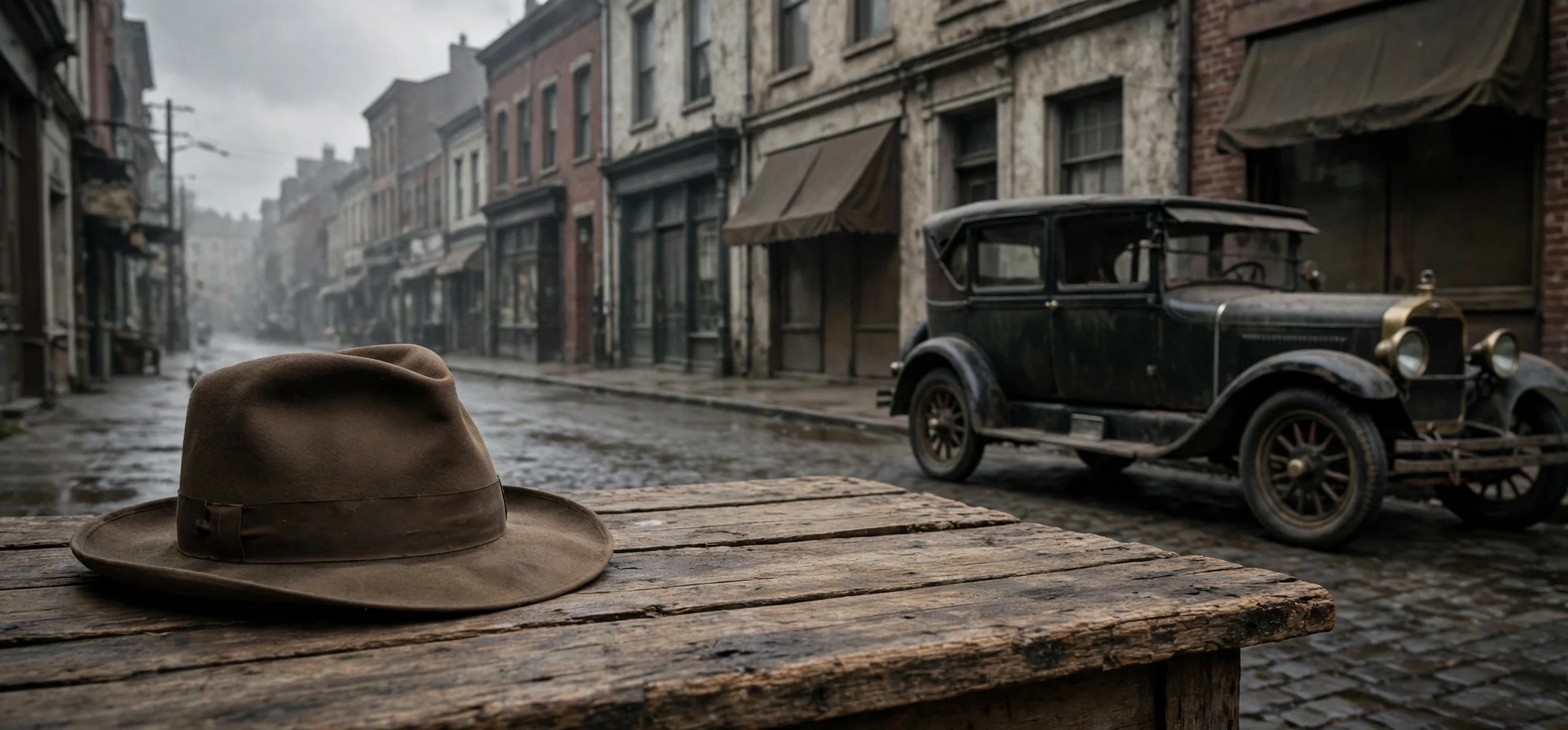
When writers, game masters, and costume-party planners search for gangster last names, they are usually looking for something very specific: a surname that sounds tough, old-fashioned, and instantly at home in a 1920s speakeasy, a 1950s crime film, or a modern retro-styled novel. The best gangster last names do not need a long explanation. They land with a single beat, suggest a family history, and help a reader picture a character before a single line of dialogue is spoken. That is why this style has stayed popular for decades, long after the eras that inspired it have passed.
This guide explains gangster last names as a fictional and cultural naming tradition, not as a guide to any real person or real organisation. It looks at why certain surnames feel retro and classic, which sounds and origins recur most often, how to pick a name that fits a character rather than overpowering them, and how to use these names responsibly in stories, games, and themed events. If you are building a fictional cast, the goal is atmosphere and believability, and the surname is one of the fastest tools a writer has for creating both.
Retro classic surnames work because they carry associations built up by a century of films, novels, radio dramas, and television. Names ending in vowels, names with strong consonant clusters, and names tied to old trades, places, or family lines all feel rooted in an earlier time. A writer searching for gangster last names does not need to copy a famous character to borrow that feeling. Instead, understanding the patterns behind gangster last names makes it possible to invent an original surname that sounds like it belongs in the same world, without borrowing anyone else’s identity.
What Gangster Last Names Mean in Fiction
In fiction, gangster last names are shorthand for loyalty, family, territory, and reputation. A character introduced only by a surname is often understood to be part of a larger group, even if that group is never shown on the page. That is a powerful storytelling device, but it also means the name carries more weight than an ordinary surname. Writers choosing gangster last names should choose deliberately, because readers will fill in the gaps with everything they have seen before in similar stories.
One useful way to think about these names is to separate sound from story. Sound is the rhythm of the name: how many syllables it has, where the stress falls, and whether it is easy to say aloud. Story is what the name suggests about background, such as an Italian, Irish, Jewish, or Eastern European heritage in classic American crime fiction, or a trade, a town, or a nickname that became a family name over time. The most convincing gangster last names balance both sound and story. They sound natural when spoken, and they suggest a history without spelling that history out in the first chapter.
It is also worth remembering that gangster last names in fiction are almost always exaggerated. Real family names are ordinary, varied, and often unremarkable, while fictional crime stories favour names that are memorable and dramatic. That gap is part of the appeal of gangster last names. A reader expects a fictional underworld figure to have a name with presence, just as they expect a detective to have a sharp first name or a hero to have a name that is easy to cheer. The surname is doing character work before the character acts.
Retro Classic Style in Gangster Last Names
Retro classic style is the heart of this topic. The phrase points to two qualities at once. Retro, in gangster last names, means the name feels drawn from an earlier period, usually the Prohibition era, the post-war years, or the golden age of Hollywood crime films. Classic means it has staying power: it does not depend on a passing trend, a slang word, or a joke that will date quickly. Together, those qualities produce surnames that can appear in a period story, a modern homage, or a stylised game without feeling out of place.
Several sound patterns recur in retro classic gangster last names gangster last names. Short, punchy names with one or two syllables feel blunt and confident. Longer names with three or four syllables can feel more formal, old-world, and dynastic, as though the family has been established for generations. Names ending in a vowel often feel warm and melodic, while names ending in a hard consonant feel clipped and authoritative. Neither is better in itself. The right choice depends on whether the character is meant to feel charming, menacing, weary, or refined.
Spelling matters too for gangster last names. A retro classic surname usually looks simple on the page, even if its origin is complex. Writers often simplify spellings for readability, keeping the pronunciation obvious so a reader never stumbles. If a name requires a pronunciation guide, it may be working against the story. The best fictional surnames can be read once and remembered, which is exactly what a writer wants when a character returns many chapters later.
Origins and Patterns Behind the Names
Many fictional gangster last names gangster last names draw on the immigration history of American cities, because classic crime stories are so often set in New York, Chicago, Boston, or other port and industrial cities. Italian surnames are the most familiar pattern, thanks to the long influence of Italian-American characters in film and literature. Irish surnames form a second familiar group, often associated in fiction with political machines, neighbourhood loyalty, and old-city rivalries. Jewish, Polish, Russian, and other European surnames also appear, reflecting the genuinely mixed populations of those cities.
Another pattern is the occupational or descriptive surname. In older naming traditions, a family might be known by a trade, a place, or a distinguishing feature, and fiction borrows that logic freely. A name suggesting stone, iron, wine, bread, or a river town can feel grounded even when it is invented. Place-based names work the same way: a surname that sounds like a village, a street, or a region gives a character an implied origin without a paragraph of backstory.
Nickname surnames are a third pattern, and they need careful handling. In fiction, a character may be known by a descriptive nickname that later hardens into a family label, such as a name referring to a scar, a habit, or a reputation. Used sparingly, this can be vivid. Used heavily, it can turn a character into a caricature. The strongest approach is to give the character a plausible surname first, and let any nickname emerge from behaviour in the story, rather than building the whole identity around a single joke or threat.
For readers interested in how ordinary surnames developed, guides to common English last names show how many familiar family names began as trades, places, or personal descriptions. That history helps explain why invented crime-fiction names feel convincing when they follow the same logic, and unconvincing when they sound like random syllables stuck together.
Choosing a Fictional Surname for a Character
Choosing well starts with the character, not the name list. Ask what the character wants, what they fear, and how other characters speak to them. A boss who is feared may carry a short, hard surname that people say quietly. A fixer who charms people may carry a smoother, longer surname that sounds respectable in a boardroom. A young newcomer may carry a name that sounds slightly out of place, signalling that they have not yet earned their standing. When the name matches the role, the story feels coherent.
Next, test the name aloud and in full. Say the first name and surname together, then the surname alone, then the surname in a sentence of dialogue. If any version sounds comic when it should sound serious, or clumsy when it should sound smooth, try a different rhythm. Also check the name against the rest of the cast. If two major characters share a similar sound, a similar ending, or a similar length, readers may confuse them, especially in a large ensemble. Distinct surnames are a simple way to keep a cast readable.
Originality is another practical concern. Before settling on a name, search your memory and, where possible, a quick reference check for famous fictional characters with the same surname. Sharing a surname with a famous character is not forbidden, but it will invite comparison, and it may distract readers who expect that other character to walk into the scene. An original name, or a familiar pattern with an unfamiliar combination, usually serves a new story better than a direct echo of a classic.
Historical flavour can also help. Names that were common in the 1800s often feel naturally retro, because they predate modern naming fashions. A look at popular last names from the 1800s can inspire period-appropriate choices and show which sounds have remained stable over time. The aim is not to copy a historical list, but to absorb its rhythm so an invented name feels like it could have existed then.
Retro Classic Name Styles at a Glance
The table below summarises the main styles writers use when inventing retro classic surnames. Each style suits a different kind of character, and mixing styles across a cast can make a fictional world feel larger and more believable.
| Style | Typical sound | Best suited to | Watch out for |
|---|---|---|---|
| Short and blunt | One or two syllables, hard ending | Enforcers, street-level figures, terse dialogue | Can feel flat if every character uses it |
| Long and dynastic | Three or four syllables, flowing rhythm | Family heads, old-money figures, formal scenes | Can slow dialogue if overused |
| Melodic and vowel-led | Ends in a vowel, smooth stress | Charming operators, social scenes, period romance | Can feel soft for a menacing role |
| Place-based | Sounds like a town, region, or landmark | Characters with a strong origin story | May imply a real place unintentionally |
| Trade-based | Suggests a craft, food, or material | Working-class roots, grounded casts | Can become a joke if too literal |
Notice how the table separates feeling from function. A name is not good or bad in isolation. It is good when it helps the scene, and weak when it fights the scene. Writers who test gangster last names against scenes, rather than against lists alone, tend to end up with casts that feel intentional instead of assembled from a random generator.
Using These Names Responsibly
Fictional crime names carry a responsibility that lighter naming topics do not. A surname tied to a real ethnic community can, if handled carelessly, reinforce stereotypes that link that community with crime. The safest approach is to treat heritage as background, not as destiny. Give characters individual motives, jobs, humour, and flaws, and avoid implying that every member of a fictional family, neighbourhood, or community behaves the same way. A diverse cast, where surnames of many origins appear in many roles, helps prevent a single pattern from becoming a stereotype.
It is also important to keep fiction clearly separate from real life. Do not use the surname of a real person to imply that person is involved in crime, and do not present invented histories as facts about real families. If a story is inspired by a historical period, a short note that the characters are fictional protects both the writer and the reader. This is especially important for costume events, online role-play, and social media, where a fictional name can travel far beyond its original context.
For party and game use, the same principles apply in miniature. A themed evening works best when gangster last names are playful, obviously fictional, and chosen with consent. Avoid assigning a menacing surname to someone who has not agreed to play that role, and avoid names that mock a real community or a real person. The fun of a retro theme comes from hats, music, slang, and set dressing, not from making anyone uncomfortable.
Character-name inspiration can come from many genres, not only crime fiction. For example, lists of Ghostbusters character names show how surnames can carry humour, science-fiction flavour, and team identity at the same time. Borrowing that lesson, rather than any specific name, helps a writer build surnames that serve comedy, drama, or adventure just as well as they serve a retro crime story.
For a final check, read a shortlist of gangster last names aloud in dialogue, test gangster last names against the rest of the cast for confusion, and ask whether the gangster last names you have chosen still feel retro and classic after a second reading. That simple test catches names that looked good in a list but sound wrong in a scene.
Frequently Asked Questions
What makes a last name sound like a gangster last name?
Sound, rhythm, and association all play a part. Short, confident syllables, old-world spellings, and echoes of classic crime films make a surname feel like it belongs in that genre. Context matters just as much: the same surname can sound ordinary in a family drama and dramatic in a crime story, depending on how the character is introduced.
Are retro classic surnames only Italian or Irish?
No. Those traditions are prominent in classic American crime fiction, but retro crime stories also use English, Jewish, Polish, Russian, German, and many other naming traditions. A believable fictional city contains many backgrounds, and a cast that reflects that range usually feels more realistic than a cast drawn from a single pattern.
Can I invent a gangster last name for my novel?
Yes, provided the name is original and is used for a fictional character. Test it aloud, check it against famous characters, and make sure it fits the character’s role and era. An invented name that follows real naming logic, such as a place or trade pattern, will usually feel more convincing than a random string of dramatic syllables.
Should a surname reveal a character’s whole backstory?
It should suggest, not explain. A surname can hint at origin, class, or family standing, but the story itself should reveal character through choices and dialogue. When a name tries to do all the work, the character can feel like a label rather than a person.
Conclusion
The enduring appeal of gangster last names lies in their economy. A single surname can set a period, suggest a family, and shape how a reader hears a character’s voice, all before the plot begins. Retro classic names work best when they are chosen for sound, story fit, and originality, rather than copied from famous examples. Writers who understand the patterns behind these names, who test them in dialogue, and who use them with care for the communities they echo, can build fictional worlds that feel rich without relying on stereotypes.
Whether the name is destined for a novel, a tabletop game, a screenplay, or a themed party, the same test applies: say it aloud, place it in a scene, and ask whether it helps the character come alive. If it does, it has earned its place. If it distracts, dates the scene, or leans on a cliché, a small change in rhythm or origin can often fix it. In the end, the best gangster last names are the ones readers remember for the character, not merely for the name itself.