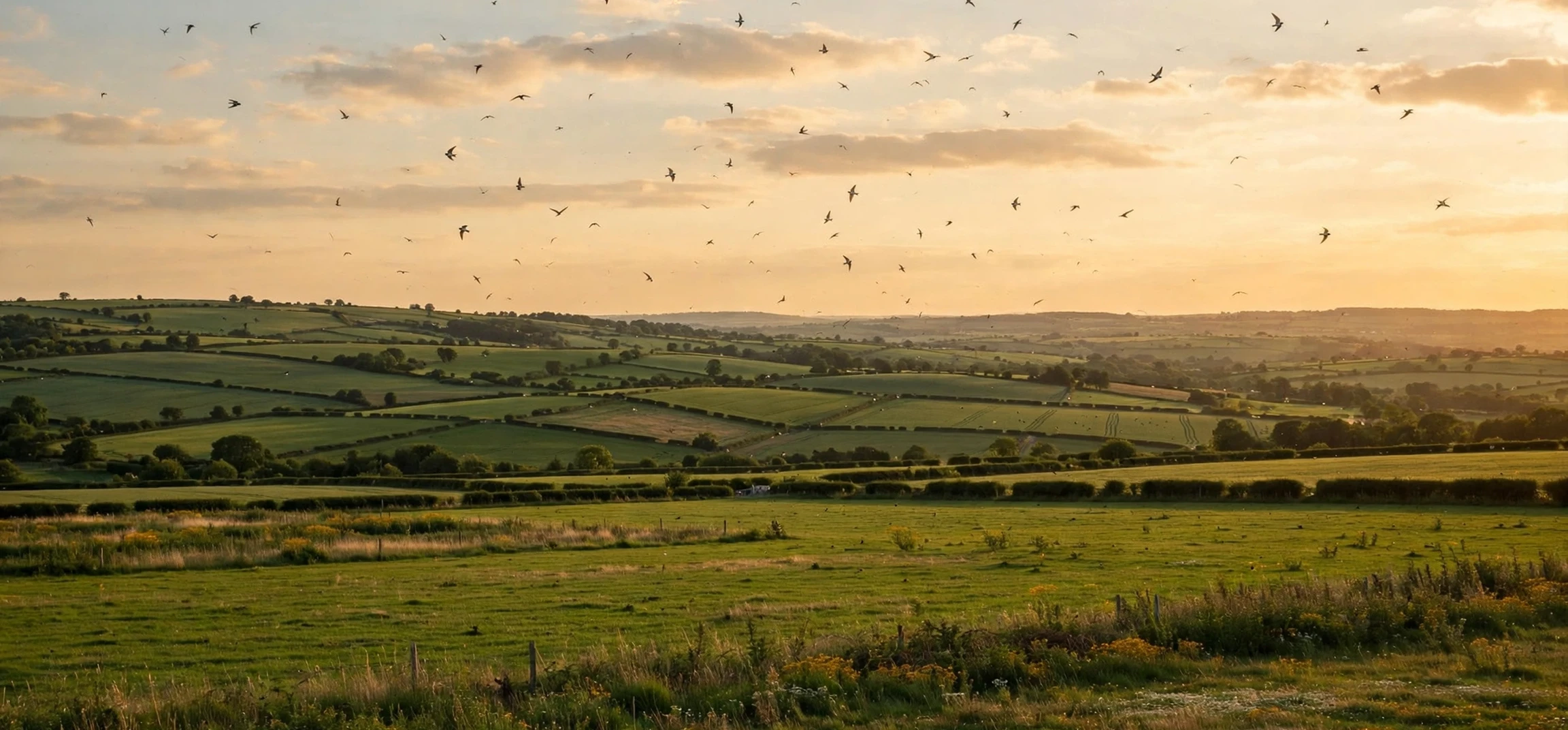
When people search for swallows meaning bird, they are usually asking a gentle but fascinating question: why has this small, swift bird carried so much symbolism across cultures and centuries? This guide to swallows meaning bird explores the beliefs, stories, and associations that people have attached to swallows, from home and hope to travel, loyalty, and the return of spring. Throughout, beliefs are presented as beliefs: what people have thought, said, and celebrated, rather than proven facts about the birds themselves.
The swallows meaning bird tradition begins with observation. Swallows return to familiar places, build nests near human homes, fly with remarkable agility, and travel long distances. People noticed those habits and turned them into stories. A bird that comes back each year easily becomes a sign of return. A bird that nests beside a house easily becomes a sign of home. A bird that crosses seas easily becomes a sign of journey and freedom. Understanding those links helps explain why the same bird can mean slightly different things in different places.
Swallows Meaning Bird in Spring and Home
One of the oldest associations in the swallows meaning bird tradition is spring. In many temperate regions, the sight of swallows is believed to signal warmer days, new growth, and the end of winter hardship. Folk sayings in several cultures link the first swallow with good news, and some people have traditionally treated the return of swallows as a hopeful moment after a long, quiet season. The belief is poetic rather than scientific: swallows follow food and weather, but humans have long read their return as a promise.
Home is the second great theme. Swallows often nest on buildings, barns, porches, and cliffs near people, and they may return to the same nesting area year after year. Because of that habit, many cultures have regarded a swallow nesting at a home as a good omen, a sign of blessing, protection, or good fortune for the household. Some traditions even held that harming a swallow or its nest would bring bad luck, a belief that encouraged people to leave the birds in peace. That protective attitude, whatever its origin, has helped swallows live close to humans for generations.
Why returning birds feel meaningful
Return is powerful in human storytelling. A creature that leaves and comes back suggests loyalty, memory, and endurance. Swallows, which migrate and yet return to familiar nesting sites, fit that story perfectly. People have used them as symbols for loved ones coming home, for seasons turning, and for hope after absence.
Swallows Meaning Bird and Travel
Travel is another central strand of swallows meaning bird symbolism. Sailors, in particular, developed a rich set of swallow beliefs. In maritime tradition, a swallow tattoo or image was believed by some sailors to mark experience at sea, safe return, or remembrance of a journey completed. The bird that could cross great distances and find its way home became a natural emblem for people whose work took them far from land.
Beyond the sea, swallows have symbolised freedom and movement in art and literature. Their flight looks effortless: quick turns, long glides, and sudden dives. Writers and artists have used that flight to suggest liberation, lightness, and the joy of open skies. In this symbolic sense, a swallow does not just travel from one place to another; it represents the feeling of being unbound, of moving by choice rather than by constraint.
It is worth separating the symbol from the biology. Real swallows migrate because of food, breeding, and climate, not because they carry messages about human fate. The symbolism is a human layer added on top of that natural behaviour, and recognising that distinction makes the traditions more interesting, not less. We can admire the birds for what they do while also appreciating what people have imagined about them.
Love, Loyalty, and Family Beliefs
In many folk traditions, swallows are also linked with love, loyalty, and family life. Swallows often pair and raise young together, and their return to a shared nesting place has been read as a sign of faithfulness. Some wedding and love symbolism has therefore included swallows as emblems of devotion, partnership, and a happy home. Poets have used the pair of swallows, building and returning together, as an image of a relationship that endures distance and season.
Family beliefs extend to protection. The idea that swallows bring good luck to a house is tied to the idea that a home with swallows is a home that is watched over. In some stories, swallows are portrayed as messengers or guardians, carrying news between worlds or warning of change. Those stories vary widely, and no single version is universal, but the recurring pattern is clear: people have tended to trust swallows, welcome them, and treat their presence as reassuring.
| Theme | Common belief or association | What inspired it |
|---|---|---|
| Spring | Return signals new beginnings and hope | Seasonal return after winter |
| Home | Nesting at a house brings good fortune | Nests built near human dwellings |
| Travel | Safe journeys and return from afar | Long migration and homing behaviour |
| Freedom | Lightness, movement, and open skies | Agile, graceful flight |
| Loyalty | Faithfulness and lasting partnership | Pairing and returning to a nest site |
Swallows in art, tattoos, and literature
Swallows appear in paintings, poems, songs, and tattoos far more often than their small size might suggest. Artists love their forked tails and sweeping flight lines, which lend themselves to elegant, simple designs. In tattoo tradition, swallows have been linked by wearers with travel, homecoming, and remembrance, with meanings that are personal as well as traditional. A person who chooses a swallow design today may be honouring a family tradition, marking a journey, or simply celebrating a bird they love.
Different Cultures, Different Meanings
Although the broad themes overlap, swallows meaning bird symbolism is not identical everywhere. In some European folk traditions, swallows are associated with spring festivals and household luck. In some East Asian traditions, swallows have been linked with seasonal change, family happiness, and the beauty of a well-kept home. In maritime communities around the world, the emphasis falls more on travel and safe return. In modern popular culture, swallows often appear as symbols of hope and renewal, especially in stories about starting again after difficulty.
Those differences are a reminder to treat symbolism as local and historical, not fixed. A meaning that feels obvious in one place may be unknown in another, and a symbol can gain new layers over time. When you encounter a swallow in a poem, a painting, or a piece of jewellery, the most accurate question is not only what swallows mean in general, but what they meant to the person who used the image.
Related explorations on this site include an explainer on a bird proverb, a guide to number symbolism in tattoos, and a guide to a phrase about completeness. Each looks at how a familiar image or phrase gathers meaning through use.
Swallows in Everyday Life and Nature
If you want to enjoy swallows without the symbolism, simply watching them is rewarding. Swallows feed on flying insects, swoop low over fields and water, and gather on wires before migration. Their calls are cheerful, their flight is a pleasure to follow, and their nests, made of mud pellets, are small feats of construction. Many nature lovers value swallows for these real qualities alone, and conservation groups encourage people to protect nesting sites and insect-rich habitats.
For those who enjoy the symbolic layer as well, swallows offer a gentle way to mark the seasons. Noticing the first swallow of spring, watching a pair repair a nest, or seeing young birds take their first flights can become small personal rituals. You do not need to believe in a particular omen to find meaning in that attention; the act of noticing, season after season, is itself a form of connection with the natural world.
Frequently Asked Questions
What is the most common symbolic meaning of swallows?
Across many traditions, the most common beliefs link swallows with spring, home, safe return, and hope, all inspired by their seasonal return and nesting habits.
Are swallows considered good luck?
In many folk beliefs, yes. People have traditionally regarded swallows nesting at a home as a good omen, although this is a cultural belief rather than a scientific claim.
What do swallow tattoos traditionally symbolise?
Wearers have associated swallow tattoos with travel, homecoming, experience, and remembrance, especially in maritime tradition, though personal meanings vary widely today.
Do swallows really bring spring?
Swallows do not cause spring, but their return often coincides with warmer weather and abundant insects, which is why people have long treated their arrival as a sign of the season changing.
Why People Search for swallows meaning bird
People search for swallows meaning bird for many personal reasons. Some have seen a swallow near their home and want to know what others have believed about that visit. Some are choosing a tattoo, a piece of jewellery, or a gift, and want a symbol that carries a hopeful meaning. Others have read a poem or seen a painting and want to understand the image. A search for swallows meaning bird is therefore often a search for connection: between a small bird, a human story, and a feeling that is hard to put into words.
That variety is also why swallows meaning bird results can differ. One source may stress spring, another may stress travel, and another may stress loyalty, and all three can be correct within their own tradition. When you read about swallows meaning bird symbolism, it helps to ask which tradition the writer is describing, and whether that tradition matches the meaning you want to honour. A swallows meaning bird guide is most useful when it presents beliefs as beliefs, shows where they came from, and leaves room for your own interpretation.
Conclusion
The swallows meaning bird tradition shows how a small bird can carry large ideas: home, hope, travel, loyalty, and renewal. Those meanings grew from real behaviour, seasonal return, nesting near people, and graceful long-distance flight, and they were shaped by sailors, poets, artists, and households over many centuries. Whether you meet a swallow in nature, in art, or in a story, its richest meaning may be the simplest one: something that leaves can return, and that return is worth noticing and celebrating.