The viticulture meaning is simple at first glance and rich in detail once you look closer: viticulture is the science, study, and practice of growing grapevines, especially for wine production, but also for table grapes, raisins, and juice. If you have ever wondered what the viticulture meaning covers, this guide explains the definition in plain language, how viticulture differs from related terms such as viniculture and oenology, the history of grape growing, the main factors that shape a vineyard, and the seasonal work that keeps vines healthy year after year. No prior knowledge of farming or wine is needed to follow it.
The word itself gives a useful clue. Viticulture comes from Latin roots connected to the vine, combined with culture in the sense of cultivation. In other words, viticulture is vine cultivation as a discipline. It includes choosing where to plant, which grape varieties to grow, how to train and prune vines, how to manage soil, water, pests, and disease, and when to harvest. It stops, in a strict sense, at the harvest: turning grapes into wine belongs to winemaking, which is a related but separate craft.
viticulture meaning: Definition in Plain Language
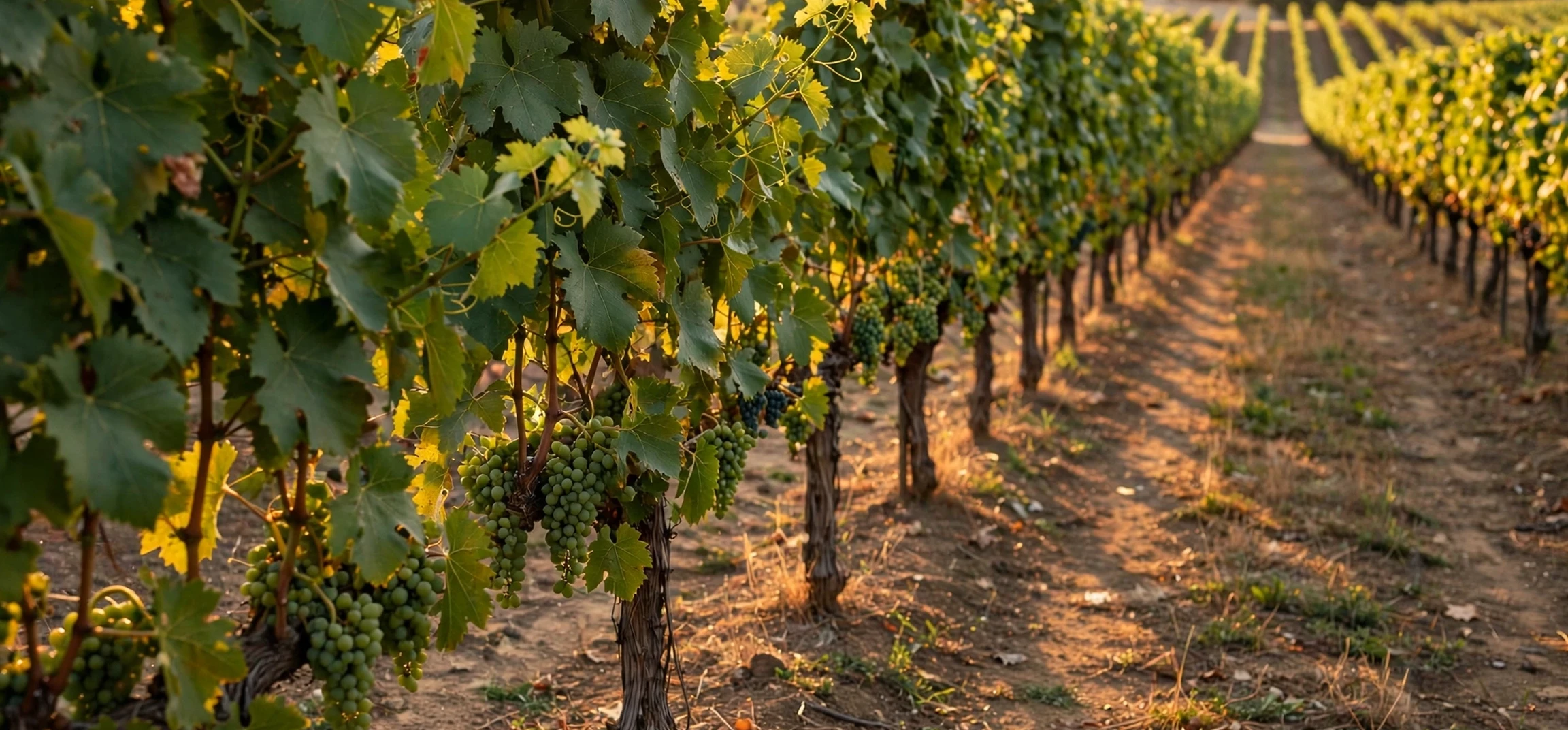
In plain language, the viticulture meaning can be stated in one sentence: viticulture is everything involved in growing grapes well, from the vineyard site to the moment the fruit is picked. A viticulturist is a person who studies or practises that work. A vineyard is the place where grapevines are grown commercially, although the term is also used more loosely for any planted area of vines. A grape variety, often called a cultivar, is a specific type of grape, such as a variety bred for a cool climate, a variety known for thick skins, or a variety prized for aromatic juice.
Viticulture is both a science and a craft. The science includes plant biology, soil science, climate study, and pest management. The craft includes judgement built over seasons: knowing when a vine needs water, when a canopy needs thinning, or when fruit is ripe enough to pick. Good viticulture balances those two sides. Scientific measurements help, but they do not replace walking the vineyard rows, tasting grapes, and observing how vines respond to weather.
It is also important to note that viticulture is not only about wine. Table grapes grown for eating fresh, grapes dried for raisins, and grapes pressed for juice all depend on viticulture. The goals differ: table grapes are often bred for large berries, crisp texture, and seedlessness, while wine grapes are often smaller, with more concentrated flavour and a balance of sugar and acidity that suits fermentation. The growing principles overlap, but variety choice and harvest timing change with the intended use.
Viticulture, Viniculture, and Oenology: What Is the Difference
Three similar terms cause frequent confusion, so it helps to separate them clearly. Viticulture is grape growing. Viniculture is sometimes used more broadly for wine production as a whole, including both growing and winemaking, although usage varies and some writers use viniculture and viticulture interchangeably. Oenology, also spelled enology, is the science and study of wine itself, including fermentation, ageing, tasting, and wine chemistry. A simple way to remember the split is: viticulture grows the grape, oenology studies the wine, and winemaking turns one into the other.
In practice, the boundaries blur, because a good winemaker needs to understand the vineyard, and a good viticulturist needs to understand what the winery wants from the fruit. Many wine producers employ both viticulturists and winemakers, and in smaller operations one person may do both jobs. Still, keeping the terms distinct helps when reading wine labels, course descriptions, or job titles, because a course in viticulture will focus on the vineyard, while a course in oenology will focus on the cellar and the glass.
Another related term is terroir, a French word used in wine writing to describe the combined influence of soil, climate, topography, and local tradition on a wine. Terroir is not a synonym for viticulture. Viticulture is the human practice of growing grapes within a terroir. Terroir describes the place, while viticulture describes the work done in that place.
viticulture meaning Through History
Grape growing is one of the oldest forms of agriculture. Archaeological evidence places early grape cultivation in regions around the Caucasus, the Near East, and the Mediterranean thousands of years ago. From there, grape growing spread with trade, migration, and empires, reaching Greece, Rome, and later much of Europe. Roman writers recorded detailed advice on vine planting, pruning, and site selection, and many of those principles, such as planting on slopes for drainage and sunlight, remain recognisable in modern vineyards.
The spread of viticulture was not a smooth story. Climate shifts, wars, trade disruption, and plant diseases all shaped where grapes could grow. In the nineteenth century, the phylloxera insect devastated many European vineyards, and recovery depended on grafting European grape varieties onto resistant rootstocks, a practice that remains standard in many regions today. That episode is a reminder that viticulture is not only about sunshine and harvest festivals. It is also about plant health, resilience, and long-term planning.
In the modern era, viticulture has expanded well beyond its traditional Mediterranean heartland. Vineyards now thrive in cooler regions, in high-altitude sites, and in New World wine countries, thanks to better variety selection, improved understanding of climate, and advances in canopy management and irrigation. At the same time, traditional regions continue to refine old practices, balancing heritage with new knowledge about soil health and sustainability.
The Main Factors That Shape a Vineyard
Climate is the first factor every viticulturist considers. Grapevines need enough warmth and sunlight to ripen fruit, but too much heat can produce grapes that are high in sugar and low in acidity, while too little heat can leave fruit underripe. Rainfall timing matters as much as total rainfall: rain during flowering or harvest can cause problems, while dry periods during ripening often help concentration. Frost, hail, wind, and humidity also affect site choice, variety choice, and management.
Soil is the second major factor. Grapevines generally prefer well-drained soils, because waterlogged roots suffer and disease pressure rises. Soil texture, depth, and mineral content affect vigour, which is the vine’s growth strength, and vigour in turn affects fruit quality. A very fertile, water-rich soil may produce vigorous leaf growth at the expense of fruit concentration, while a poorer, stony soil may restrain growth and encourage smaller, more concentrated berries. Soil management therefore aims for balance, not maximum fertility.
Topography, meaning slope, aspect, and elevation, is the third factor. Slopes improve drainage and air movement, which can reduce frost and disease risk. Aspect, the direction a slope faces, affects sunlight exposure: in the northern hemisphere, south-facing slopes generally receive more sun, while in the southern hemisphere, north-facing slopes do. Elevation affects temperature, with higher sites often cooler, which can help preserve acidity in warm regions or delay ripening in cool ones.
Variety choice ties these factors together. A variety suited to a cool climate may struggle in a hot region, and vice versa. Viticulturists match variety, rootstock, and training system to site, asking questions such as: How long is the growing season? How much frost risk exists? How much water is available? What style of grape is wanted? Getting that match right is one of the highest-value decisions in viticulture, because a vineyard is a long-term investment that may produce for decades.
| Factor | What it affects | Viticulturist’s response |
|---|---|---|
| Climate | Ripening, sugar, acidity, disease pressure | Match variety to season length and heat |
| Soil | Drainage, vigour, fruit concentration | Manage fertility, cover crops, and drainage |
| Slope and aspect | Sunlight, frost, air movement | Choose row orientation and site carefully |
| Water | Growth, berry size, stress | Irrigate or dry-farm according to region |
| Canopy | Light, airflow, ripening | Prune, thin, and train shoots through the season |
| Pests and disease | Yield and fruit health | Monitor, use resistant stock, apply controls as needed |
The Vineyard Year, Season by Season
Viticulture follows an annual cycle, and each season has distinct work. In winter dormancy, vines lose their leaves and rest. This is the main pruning season in many regions: workers cut back last year’s growth to set the number of buds for the coming season, which controls crop size and vine shape. Pruning is skilled work, because a wrong cut can affect yield and vine health for years.
In spring, buds burst, shoots grow, and flowers appear. Frost protection may be needed on cold nights, and canopy work begins as shoots lengthen. Flowering is a sensitive stage: poor weather can reduce fruit set, meaning fewer berries form. Growers monitor shoots, manage weeds, and begin disease monitoring as leaves expand.
In summer, the canopy fills, fruit sets, and berries grow. A key stage called veraison marks the start of ripening, when berries change colour and soften. After veraison, sugar rises and acidity falls, and growers thin fruit or leaves where needed to improve light and airflow. Water management becomes critical in dry regions, with the aim of mild stress that concentrates flavour without harming the vine.
In autumn, harvest arrives. Timing is decided by tasting grapes, measuring sugar and acidity, and watching weather forecasts. Picking too early can produce thin, acidic wine or unripe table grapes. Picking too late can produce overripe fruit, loss of freshness, or damage from rain. After harvest, vines store reserves for winter, leaves fall, and the cycle begins again. Good viticulture therefore requires attention in every season, not only at harvest.
Sustainable Viticulture Today
Modern viticulture increasingly emphasises sustainability. Cover crops between rows protect soil, support beneficial insects, and reduce erosion. Careful water use, composting, and reduced chemical inputs aim to protect soil life and nearby ecosystems. Some vineyards pursue organic or biodynamic certification, which involves stricter rules about inputs and practices, while others adopt integrated pest management, which combines monitoring, cultural controls, biological controls, and targeted treatments only when needed.
Climate change adds urgency to these choices. Rising temperatures, shifting rainfall, and more frequent extreme weather push growers to trial new varieties, adjust harvest dates, change canopy practices, and reconsider site selection. Viticulture is therefore a living discipline: its core definition stays stable, but its methods evolve with each generation of growers, scientists, and winemakers.
Frequently Asked Questions
What is the viticulture meaning in one sentence?
The viticulture meaning in one sentence is: viticulture is the science and practice of growing grapevines, chiefly for wine, but also for table grapes, raisins, and juice.
Is viticulture the same as winemaking?
No. Viticulture covers growing grapes up to harvest. Winemaking covers fermenting grape juice into wine and ageing it. The two crafts work closely together, but they are distinct disciplines.
What does a viticulturist do?
A viticulturist plans vineyard sites, selects varieties and rootstocks, manages pruning, canopy, soil, water, pests, and disease, and decides harvest timing, all to produce healthy grapes suited to their intended use.
Where is viticulture practised?
Viticulture is practised in traditional Mediterranean regions and in many New World regions, as well as in cooler and higher-altitude sites where suitable varieties and careful management allow grapes to ripen.
Remembering the viticulture meaning
A simple memory aid helps keep the viticulture meaning clear long after you finish this guide. Think of viticulture as vine work, viniculture as wine work in a broad sense, and oenology as wine science. If you can place each term on that spectrum, from vineyard to cellar to glass, the viticulture meaning will stay distinct, even when writers use the terms loosely. That distinction is useful when you read course descriptions, wine articles, or vineyard job listings, because it tells you immediately whether the focus is growing, making, or studying wine.
You can test your understanding by describing a vineyard visit in viticulture terms. Mention the site, the variety, the pruning, the canopy, and the harvest decision, and notice how naturally the viticulture meaning covers all of that work. Then describe the cellar work separately, and notice where viticulture ends and winemaking begins. That short exercise turns the viticulture meaning from a dictionary definition into a working vocabulary, and it makes future reading about grapes, vineyards, and wine far easier to follow.
Key Points to Remember
First, the viticulture meaning is the science and practice of growing grapevines. Second, the viticulture meaning covers site choice, variety choice, pruning, soil, water, pests, and harvest timing. Third, the viticulture meaning is not limited to wine, because table grapes, raisins, and juice also depend on it. Fourth, the viticulture meaning differs from oenology, which studies wine itself rather than growing grapes. Fifth, the viticulture meaning includes both science, such as soil and climate study, and craft, such as seasonal judgement. Sixth, climate, soil, slope, and variety together shape the viticulture meaning in any vineyard. Seventh, the viticulture meaning follows a yearly cycle from winter pruning to autumn harvest. Eighth, sustainable practice is now a central part of the viticulture meaning, through soil care and careful water use. Ninth, remembering the viticulture meaning as vine work, from site to harvest, keeps the term clear in any context.
Conclusion
The viticulture meaning is best understood as a complete discipline, not a single fact. It is the science and craft of growing grapevines, shaped by climate, soil, slope, variety, and seasonal care, and distinct from winemaking and from the study of wine itself. From ancient vineyards to modern sustainable practices, viticulture has always balanced knowledge with observation: measure the soil, watch the weather, walk the rows, taste the fruit, and decide. If you remember that vineyard work ends at harvest and winemaking begins there, you have grasped the core distinction, and the rest of the vocabulary, from terroir to veraison, will fall into place around it.
For related plant and meaning guides on this site, see planting guides by climate zone and plain-language meaning guides.