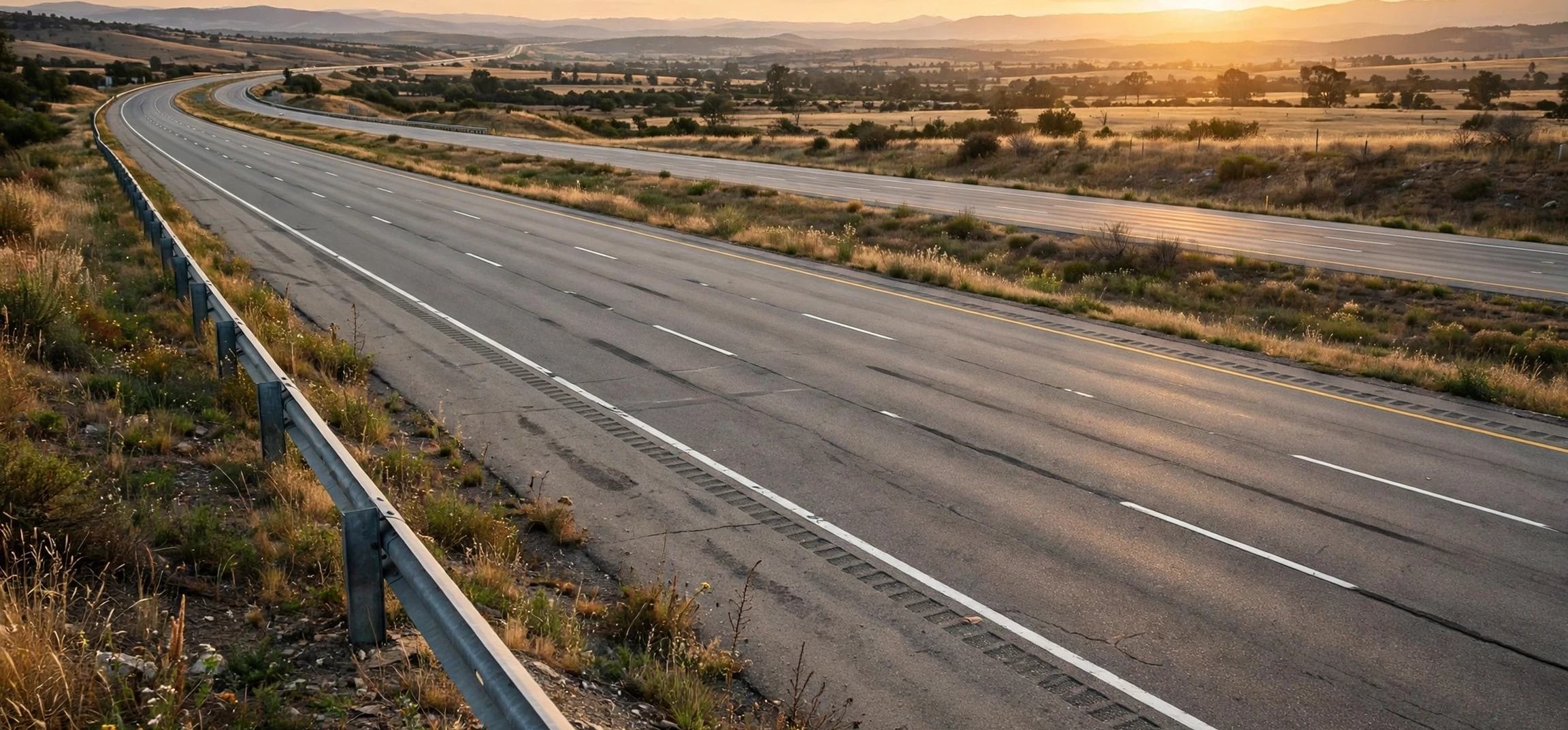
The phrase the expressway is defined as a high-speed, limited-access road designed for fast, uninterrupted travel, usually with multiple lanes in each direction, a central divider, and entry and exit only at interchanges. If you have ever wondered what separates an expressway from an ordinary road or a motorway, that definition is the starting point: it is not simply a wide road, but a road engineered so that traffic can flow without the stops, turns, and crossings that slow down ordinary streets. This guide explains the definition in full, compares expressways with similar road types, and looks at how the term is used in different countries. That starting point is why the expressway is defined as is a useful search for students, drivers, and map readers alike.
Road terminology causes confusion because the same kind of road can carry different names in different places, and because everyday speech often uses expressway, highway, freeway, and motorway as if they were interchangeable. They are related, but they are not identical, and the differences matter for drivers, for map readers, and for anyone studying transport or geography. Understanding the expressway is defined as a specific category, rather than as a vague synonym for a big road, clears up most of that confusion at once.
The Expressway Is Defined As a Limited-Access Road
At its core, the expressway is defined as a road built for high-speed traffic with limited access, which means vehicles join and leave only at designated interchanges, rather than turning in from side streets, driveways, or farm tracks. There are no traffic lights on a true expressway, no pedestrian crossings, and no direct access from adjoining properties. Instead, on-ramps and off-ramps, often with acceleration and deceleration lanes, manage the flow of vehicles joining and leaving, so that through traffic never has to stop for a joining vehicle.
Most expressways also have several lanes in each direction, a median or central barrier separating opposing traffic, and a higher speed limit than ordinary roads, reflecting the fact that the design removes the hazards that force lower speeds elsewhere. Shoulders, or hard shoulders, give broken-down vehicles a safe place to stop clear of moving traffic, and grade separation, meaning bridges and underpasses instead of level junctions, keeps traffic streams apart. Taken together, these features produce a road where long-distance travel is faster, smoother, and generally safer per journey than the same trip on ordinary roads. That design logic is the reason the expressway is defined as a high-speed road, rather than simply a wide one.
Key Features of an Expressway
The defining features can be summarised as limited access, grade-separated junctions, multiple lanes, a central divider, and no stopping for cross traffic. If a road lacks several of these features, it may still be an important road, but it is probably not an expressway in the strict sense. A dual carriageway with frequent roundabouts, for example, shares the multiple-lane feature but fails the limited-access test, because traffic must slow or stop at each junction. The expressway label is earned by the whole package of design choices, not by width alone. The whole-package test is the practical way to apply the expressway is defined as to a real road you are looking at.
The Expressway Is Defined As Distinct From Highways and Motorways
Comparing road types is the fastest way to fix the definition, because the contrasts make each category clear. The table below sets out the main distinctions in general terms; exact rules, speed limits, and toll arrangements vary by country and by the authority that manages the road, so treat the table as a guide to the concepts rather than as a legal summary for any one jurisdiction.
| Road type | Access | Junctions | Typical use |
|---|---|---|---|
| Expressway | Limited, at interchanges only | Grade-separated | Fast regional and intercity travel |
| Motorway or freeway | Fully controlled, highest standard | Grade-separated, no stopping | Long-distance, high-volume travel |
| Highway | Varies widely by country | May include level junctions | General term for a major road |
| Ordinary arterial road | Open, with side turnings | Traffic lights and roundabouts | Local and through traffic combined |
| Residential street | Fully open | Uncontrolled or lightly controlled | Local access to properties |
The closest relatives of the expressway are the motorway in British usage and the freeway in American usage, and in some countries the terms overlap so closely that they are used interchangeably in everyday speech. In strict technical usage, a motorway or freeway represents the highest standard of limited-access road, while expressway can cover a slightly broader range, including roads that meet most but not every motorway criterion, such as a road with a lower design speed or with some at-grade elements in older sections. The practical lesson is to check the local meaning: in the United States, expressway often means a high-speed divided road that may still have some traffic signals in older urban stretches, while in other countries it is closer to a full motorway standard. That overlap is why the expressway is defined as in one country can sound slightly different from the same phrase in another.
Expressways Around the World
Expressways exist under many names, and recognising the local term helps when reading maps or driving abroad. In China, the national expressway network is one of the largest in the world, linking provinces with high-speed, tolled, limited-access roads that have transformed long-distance travel. In India, expressways are a growing category of high-speed corridor, often built to motorway-like standards with controlled access and higher speed limits than older national highways. In Japan, expressways form the tolled intercity network that connects the main islands, while in parts of Europe, similar roads may be signed as motorways or as high-standard dual carriageways depending on the country.
What unites these networks is the design philosophy rather than the name on the sign. Wherever you find a road that keeps through traffic moving by removing junctions, separating opposing flows, and controlling entry and exit, you are looking at an expressway in function, even if the local term is different. That functional definition is more useful for travellers than memorising every national label, because it tells you what to expect: higher speeds, fewer stops, tolls on some networks, and the need to plan your exit in advance, since you cannot simply turn off wherever you like. For other word and meaning guides, see our pages on all-encompassing meaning and animosity meaning. Knowing what to expect is the traveller’s benefit of understanding the expressway is defined as before a journey.
Driving on an Expressway
Driving on an expressway follows the same basic rules as other roads, with a few habits that matter more at higher speeds. Joining traffic should use the acceleration lane to match the speed of the flow before merging, rather than stopping at the end of the ramp or forcing into a gap. Lane discipline matters: the leftmost or rightmost lane, depending on the country, is for normal driving, while other lanes are for overtaking, and staying in an overtaking lane when not passing slows everyone and creates risk. Exits should be planned early, with mirror checks and signals well before the off-ramp, because a missed exit on a limited-access road means continuing to the next interchange rather than turning around.
Fatigue and following distance also deserve attention on long expressway journeys. High speeds shorten reaction time, and the monotony of a straight, smooth road can dull alertness, so regular breaks are important on trips of more than a couple of hours. Keeping a generous gap to the vehicle ahead gives room to react to sudden braking, which is the most common cause of multi-vehicle incidents on fast roads. None of this requires special skill beyond careful, attentive driving, but it does require respecting the fact that an expressway forgives inattention less quickly than a slow street. That fatigue point matters precisely because the expressway is defined as a road designed for sustained high-speed travel.
History and Purpose of Expressways
Expressways grew out of the twentieth-century growth in car ownership and intercity travel, when ordinary roads could no longer carry the volume of traffic between growing cities. Early examples were built to link industrial centres and ports, to bypass congested towns, and to give long-distance traffic a route that did not have to thread through every settlement along the way. The economic logic was straightforward: faster, more reliable journeys lower transport costs, widen labour markets, and let businesses serve larger areas, and the safety logic pointed the same way, because separating traffic streams and removing junctions reduces the most dangerous kinds of collision.
Modern expressway planning balances those benefits against costs that early builders paid less attention to, including land use, noise, air quality, and the effect on communities that a new road bypasses or divides. Tolling, environmental assessment, and public consultation are now standard parts of major expressway projects in many countries, and some networks are being upgraded with better noise barriers, wildlife crossings, and rest facilities. The definition has stayed constant through all of this, but the way expressways are planned and built reflects a broader understanding of what a major road owes to the places it passes through. That broader view has not changed the expressway is defined as a limited-access road, but it has changed how such roads are planned.
Frequently Asked Questions
What is the difference between an expressway and a highway?
Highway is a broad term for a major public road, and it can include roads with level junctions, traffic lights, and direct property access. An expressway is a narrower category: a high-speed road with limited access at interchanges only. Every expressway is a major road, but not every highway is an expressway.
Are all expressways tolled?
No. Some expressway networks are tolled, particularly where a private operator or a dedicated authority built and maintains the road, while others are funded from general taxation and free at the point of use. Tolling depends on the country and the specific road, so check before travelling.
Can pedestrians or cyclists use an expressway?
Generally no. Expressways are designed for motor traffic only, and pedestrians, cyclists, and slow vehicles are normally prohibited, both for their own safety and because slow-moving traffic would disrupt high-speed flow. Separate paths or parallel local roads serve non-motorised travel.
Why are expressway speed limits higher?
Speed limits are higher because the design removes the hazards that force lower limits elsewhere: there are no crossroads, no turning traffic, no pedestrians, and opposing flows are separated. The limit still varies by country and by section, and it can be lowered for weather, roadworks, or congestion.
The Expressway Is Defined As: Recap
To recap, the expressway is defined as a high-speed, limited-access road with multiple lanes, a central divider, and entry and exit only at interchanges. If you remember nothing else from this guide, remember that sentence, because the expressway is defined as in that form gives you a test you can apply anywhere: check the access, check the junctions, and check whether through traffic can flow without stopping. A road that passes all three checks fits the expressway is defined as; a road that fails one of them belongs in a different category, however wide or busy it may be.
Conclusion
To sum up, the expressway is defined as a high-speed, limited-access road with multiple lanes, a central divider, and entry and exit only at interchanges, built so that traffic can travel long distances without the interruptions of ordinary roads. It sits above the ordinary highway in design standard and alongside the motorway and freeway as one of the highest categories of road, with the exact local name varying by country. Whether you are reading a map, planning a journey, or simply settling a terminology question, that definition gives you the test to apply: limited access, grade-separated junctions, and uninterrupted flow are what make an expressway an expressway.