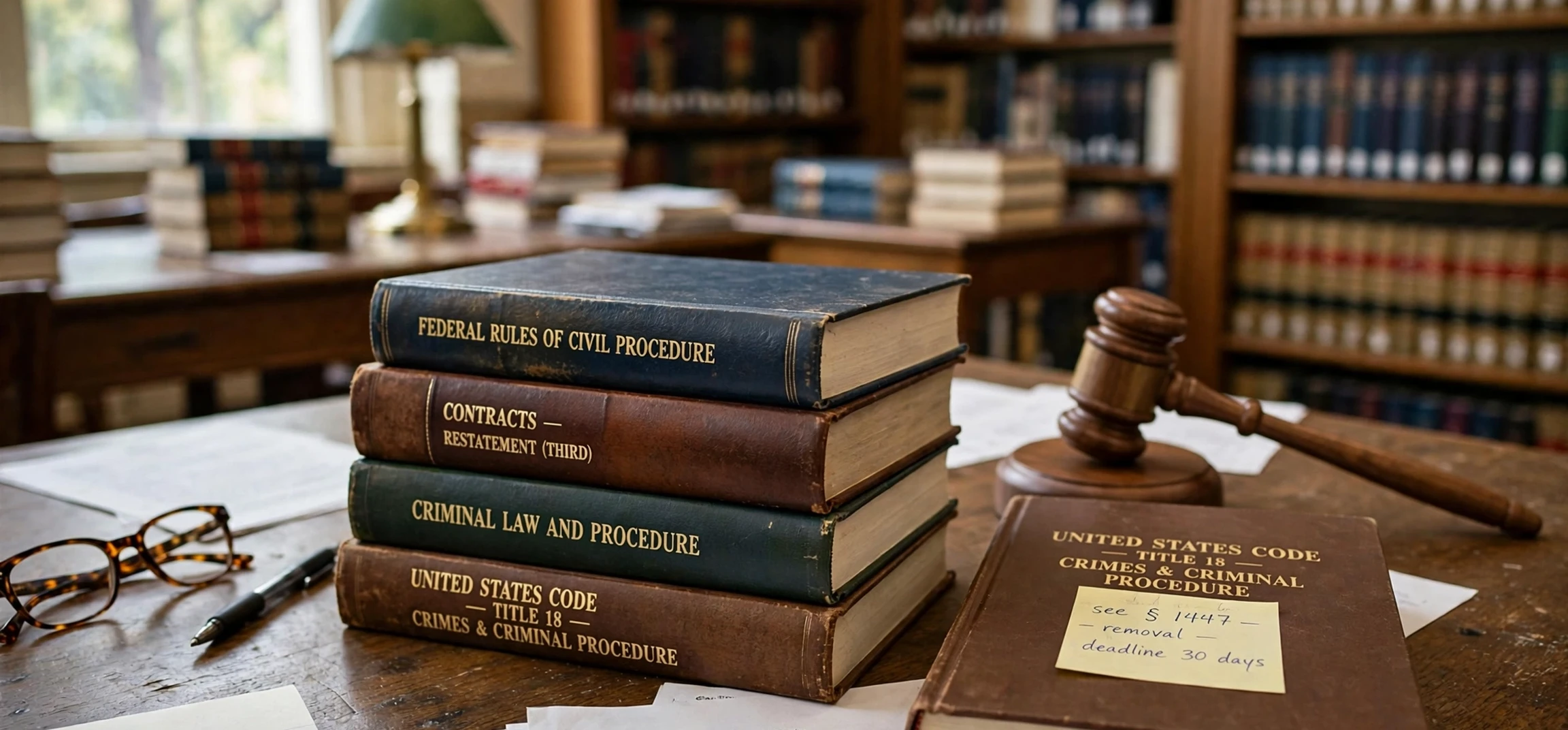
The definition precedent law question comes up often for students, readers of legal news, and anyone trying to understand why courts cite earlier cases. In simple terms, a precedent in law is an earlier court decision that guides how later courts decide similar cases. The definition precedent law gives us is therefore not just a dictionary meaning: it is a working principle that helps keep the law consistent, predictable, and fair, while still allowing it to develop over time.
This guide explains the definition precedent law in plain English. It covers what a precedent is, how binding and persuasive precedents differ, why courts follow earlier decisions, when they can depart from them, and how precedent works in everyday legal reporting. It is a general educational guide, not legal advice for a specific case.
Definition Precedent Law: The Core Meaning
The definition precedent law uses is straightforward: a precedent is a previous judicial decision that serves as an example or authority for deciding a later case with similar facts or a similar legal question. When a court decides a case, the reasoning it gives can become a reference point. Later courts, lawyers, and legal writers look back to that reasoning when they argue or decide new cases.
Two Latin phrases are often used alongside this idea. Stare decisis means “to stand by things decided.” It is the principle that courts should generally follow their own earlier decisions and the decisions of higher courts. Ratio decidendi means the reason for the decision: the legal principle that was necessary to reach the outcome. It is the ratio, rather than every remark in a judgement, that normally forms the binding part of a precedent.
Other remarks in a judgement, known as obiter dicta or things said by the way, may be interesting and influential, but they are not usually binding in the same way. Distinguishing the ratio from obiter is one of the key skills in legal study, because it determines which part of an earlier case actually controls a later one.
Why Precedent Matters in Law
Precedent matters because it gives the law stability. If similar cases were decided in completely different ways depending on which judge heard them, people would find it hard to know where they stand. Businesses could not plan, individuals could not predict the consequences of their actions, and trust in the courts would suffer. By following precedent, courts treat like cases alike, which is a basic idea of fairness.
Precedent also makes the law more efficient. Lawyers do not have to argue every point from scratch, and judges do not have to reinvent the reasoning for every familiar question. They can build on what has already been decided, focus on what is genuinely new or different about the current case, and explain clearly when a departure is justified.
At the same time, precedent allows the law to grow. New technologies, new social conditions, and new kinds of disputes create questions that older cases did not address. Courts can extend an existing principle to a new situation, refine it, or, in limited circumstances, overrule it. The definition precedent law therefore describes a living system, not a frozen set of rules.
Binding and Persuasive Precedent
Not all precedents carry the same weight. The most important distinction is between binding precedent and persuasive precedent. A binding precedent must be followed by a court, because it comes from a higher court in the same hierarchy, or, in some systems, from the same court following its own earlier decisions. A persuasive precedent may be considered and respected, but the court is not obliged to follow it.
For example, a decision of a supreme court or court of appeal will normally bind lower courts in the same jurisdiction. A decision from another jurisdiction, from a lower court, or from a court in a different legal system may be persuasive if its reasoning is strong, but it does not compel the later court. Academic writing, dissenting judgements, and decisions from respected foreign courts can also be persuasive, even though they are not binding.
Hierarchy is therefore central to the definition precedent law. The higher the court, the greater the authority of its decisions within its jurisdiction. Lower courts follow higher courts, and courts generally follow their own previous decisions unless there is a strong reason to depart from them.
| Type of precedent | Must the later court follow it? | Typical source |
|---|---|---|
| Binding precedent | Yes, unless it can be distinguished or overruled by a higher court | A higher court in the same hierarchy |
| Persuasive precedent | No, but the reasoning may be adopted | Another jurisdiction, a lower court, or a respected dissent |
| Original precedent | It creates a new principle for later cases | A court deciding a point for the first time |
| Declaratory precedent | It states a principle already thought to exist | A court clarifying an existing rule |
How Courts Use Precedent in Practice
In practice, lawyers research earlier cases that are factually and legally similar to the case before the court. They argue that a favourable precedent should be followed, or that an unfavourable precedent should be distinguished because its facts or legal question were different. Judges then examine the earlier reasoning, decide whether it applies, and explain their conclusion in the judgement.
Distinguishing a precedent does not mean ignoring it. It means showing, with reasons, that the earlier case is materially different, so its principle does not control the new case. This is a normal and respected part of legal argument. It allows courts to respect earlier decisions while recognising that no two cases are identical.
Overruling is stronger. When a higher court overrules an earlier decision, it declares that the earlier principle is no longer good law. Overruling is used sparingly, because it disrupts the stability that precedent is meant to provide. Courts usually overrule only when the earlier decision is clearly wrong, unworkable, or out of step with later developments.
Precedent and Statute Law
Precedent works alongside statute law, which is law made by a legislature. Where a statute applies, courts must apply it, and earlier case law is used to interpret what the statute means. Where no statute covers a point, case law itself may provide the rule, as in many areas of the common law tradition. In both situations, precedent helps courts interpret and apply the law consistently.
If a legislature disagrees with a judicial precedent, it can often change the law by passing new legislation. This is an important check: precedent is powerful, but it is not the final word when the elected legislature chooses to act. The balance between courts and legislatures is part of what keeps a legal system both stable and democratic.
Definition Precedent Law in Different Systems
The definition precedent law carries slightly different weight in different legal traditions. In common law systems, such as those in England and Wales, the United States, and many Commonwealth countries, precedent is a formal source of law. Courts are expected to follow binding precedent, and case law is studied as law itself.
In civil law systems, such as those in much of continental Europe, the main source of law is codified statutes, and earlier decisions are generally less formally binding. Judges in those systems may still look to earlier decisions for guidance and consistency, but the authority structure is different. A reader following international legal news should therefore check which system is involved before assuming that a precedent will control a later case.
Even within a single country, different courts and different levels of court can have different rules about precedent. A supreme court may be freer to depart from its own earlier decisions than a lower court is to depart from a higher court’s ruling. The specific hierarchy, and any constitutional rules, matter.
Precedent in Legal News and Everyday Reading
When news reports say that a case “sets a precedent,” they usually mean that the decision will influence later cases, not that it automatically decides them. A first decision on a new technology, a new workplace practice, or a new interpretation of a statute can be described as precedent-setting because later lawyers and judges will cite it. Whether it becomes binding depends on the court that decided it and the jurisdiction involved.
Readers should also be careful with headlines that say a court “overturned precedent.” That may mean a higher court overruled an earlier decision, or it may mean a lower court distinguished an earlier case on its facts. The details in the judgement matter more than the headline. For a broader look at how televised legal proceedings are presented, see our guide to court television coverage, which explains how courtroom reporting differs from the judgement itself.
For students, the best way to understand precedent is to read a short judgement and practise identifying the facts, the legal question, the ratio, and any obiter remarks. That exercise makes the abstract definition concrete, and it shows why two lawyers can read the same case and argue for different outcomes.
Advantages and Disadvantages of Precedent
The advantages of precedent are consistency, predictability, fairness, and efficiency. People can plan their affairs with reasonable confidence, lawyers can advise clients based on earlier outcomes, and courts can focus on genuinely new issues. The system also builds up a body of reasoned decisions that can be studied, criticised, and improved over time.
The disadvantages are rigidity and complexity. A precedent that made sense in an earlier era may fit poorly with modern conditions, yet lower courts must still follow it until a higher court or legislature changes it. The body of case law can also become very large and difficult to navigate, with many overlapping decisions that need careful comparison. These are real costs, and they are why systems allow distinguishing and, rarely, overruling.
Some critics also argue that precedent can entrench past mistakes, especially where an earlier decision reflected outdated social attitudes. Supporters reply that the ability to distinguish, to overrule in higher courts, and to legislate provides safety valves. The debate itself shows that precedent is not a mechanical rule: it requires judgement at every stage.
How to Read a Precedent
To read a precedent usefully, start with the facts and the legal question. Ask what the court was actually asked to decide, and what facts were essential to the answer. Then find the reasoning that led to the outcome, and separate it from background discussion. Then check the court, the date, and the jurisdiction, because those details determine whether the decision is binding or merely persuasive for your purpose.
Next, check whether the case has been followed, distinguished, or overruled in later decisions. A precedent that was once influential may have been narrowed or reversed, and relying on it without that check can be misleading. Legal databases and textbooks usually note the later history of a case, which is why lawyers rarely cite a case without checking its current status.
For readers exploring other defined terms, our guides to word meanings and general knowledge follow a similar plain-English approach. You can compare this legal definition with a literary term explained in plain English or with a common word whose meaning changes with context. The method is the same: start with the core meaning, then look at how context changes its force.
Frequently Asked Questions About Precedent
What is the definition precedent law in simple words?
In simple words, the definition precedent law is that an earlier court decision guides later courts in similar cases. Higher courts bind lower courts, and courts generally follow their own earlier decisions.
Is every earlier case a binding precedent?
No. Only decisions from a higher court in the same hierarchy, or a court following its own binding decisions, are binding. Other decisions may be persuasive only.
Can a precedent be overruled?
Yes, but normally only by a higher court, or by new legislation. Lower courts cannot simply ignore a binding precedent because they disagree with it; they must distinguish it on its facts or follow it.
Does precedent apply in all countries?
The idea of looking to earlier decisions is widespread, but its formal force varies. It is strongest in common law systems and less formally binding in many civil law systems, where codes and statutes dominate.
Definition Precedent Law: A Quick Recap
To recap, the definition precedent law gives is that earlier decisions guide later cases, with binding force when they come from a higher court in the same system. The definition precedent law also leaves room for distinguishing cases on their facts and, rarely, for overruling a principle that no longer works.
For students and general readers, the most useful habit is to identify the facts, the legal question, and the reasoning that was essential to the outcome. That habit makes the definition precedent law concrete, rather than abstract, and helps you read legal news with a critical eye.
Students often ask whether the definition precedent law is simply about following old cases. It is not. The definition precedent law is about following reasoned principles, testing them against new facts, and changing them through higher courts or legislation when they no longer serve justice. That balance is what keeps precedent both stable and adaptable.
Conclusion: Definition Precedent Law
The definition precedent law is best remembered as a principle of consistency with room for growth. A precedent is an earlier decision that guides later cases, binding when it comes from a higher court in the same system, persuasive when it comes from elsewhere. By following precedent, courts treat like cases alike and give people a predictable legal framework. By distinguishing and occasionally overruling precedent, they keep the law responsive to new facts and new values. Understanding that balance is the key to reading legal news, studying law, and appreciating why earlier cases matter so much to what happens in court today.



