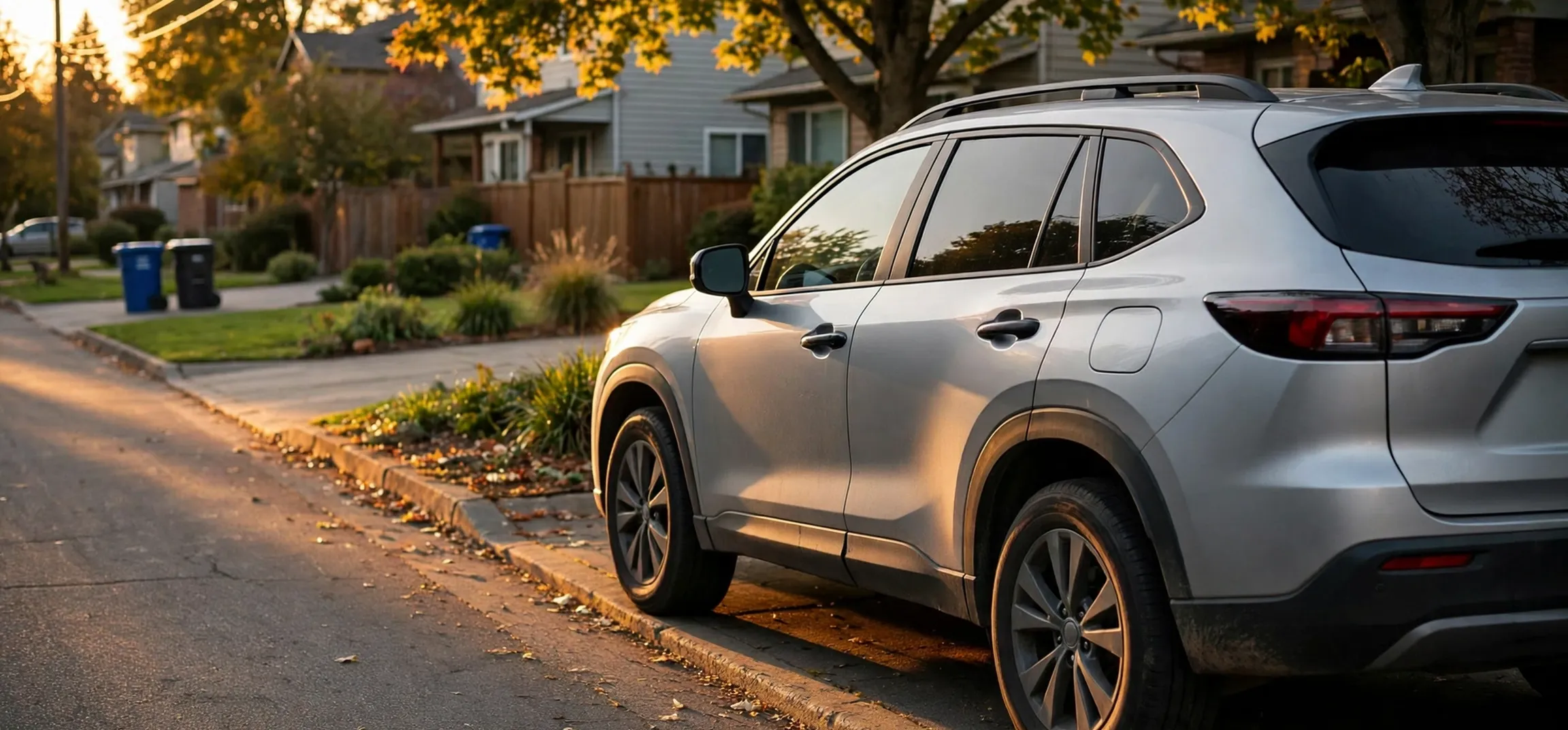
Car badges are full of letters that look like they must mean something, and few generate as many confident but conflicting answers as the badge on Acura’s compact luxury SUV. The question what does rdx stand for in acura appears in search results alongside several different expansions, each presented as though it were official, and that is exactly why it deserves a careful answer. The honest position, stated up front, is that Acura does not publish a single authoritative word-by-word expansion of RDX in the way that some model names are officially expanded, and the expansions circulating online are best treated as popular interpretations rather than confirmed factory definitions. That does not leave the question unanswered. It reframes it: what the badge actually denotes, how it fits Acura’s naming system, what the vehicle itself is, and which claimed expansions should be treated with caution.
Acura is the luxury and performance division of Honda, launched in North America in the mid-1980s as the first Japanese luxury automotive brand in that market. Its model names have followed an alphanumeric pattern for most of its history: a combination of letters followed by an X for many models, with the letters suggesting the model’s place in the range and the X marking the line. Within that system, RDX denotes a specific model, a compact luxury crossover SUV positioned below the larger three-row MDX and, in recent line-ups, alongside other Acura crossovers. Understanding that position in the range is more useful, and more reliable, than memorising an unofficial expansion.
This guide therefore does three things. It explains Acura’s naming pattern and where RDX sits inside it. It describes the RDX itself across its generations, including its size, character, and place in the market. And it examines the expansions you are likely to meet online, separating what is documented from what is merely repeated. No private individual is discussed, no personal information appears, and every claim about official naming is framed by what Acura itself publishes.
What Does RDX Stand for in Acura? The Naming Pattern
To answer that question, start with the system rather than the single badge. Acura’s modern line-up has used names such as ILX and TLX for sedans and RDX, MDX, and ZDX for crossovers and SUVs, with the final X common across the range. Earlier Acura models used names such as Legend, Integra, and Vigor, before the brand moved to the alphanumeric system that now dominates luxury car naming. In that system, the letters are a model code first and a phrase second: they identify the vehicle in ordering, servicing, and marketing, and they signal its size and role relative to its siblings.
The MDX offers the clearest parallel. It is Acura’s larger, three-row crossover, and its name is widely associated with the idea of a multi-dimensional crossover, though even there, enthusiasts debate how official any particular expansion is. The RDX sits one step below it: a two-row, compact luxury crossover, smaller and more manoeuvrable than the MDX, aimed at buyers who want a premium SUV without the size and price of a three-row vehicle. The R in RDX therefore functions, in practice, as the distinguishing initial for this model, in the same way that the M distinguishes the MDX and the T distinguished the TLX sedan. That is a description of how the naming system works, not a claim that Acura has published a dictionary definition for each letter.
Why do so many websites offer a confident expansion then? The reason is that search demand rewards a single tidy answer, and a plausible phrase is easy to repeat. Once one site publishes an expansion, others copy it, and repetition begins to look like confirmation. That cycle affects many model names across the industry, not only Acura’s. The safeguard is simple: prefer the manufacturer’s own materials. If an expansion does not appear in Acura’s official model pages, press materials, or owner’s documentation, treat it as unofficial, however often it is repeated elsewhere. For a broader look at how car naming works across brands, the guide to car emblems and names explains how badges combine heritage, marketing, and model hierarchy.
What Does RDX Stand for in Acura? Popular Expansions Examined
Among the expansions offered online for RDX, a few recur. One common suggestion links the letters to ideas of refinement and dynamism, presenting RDX as a refined dynamic crossover. Another links them to rapid or responsive driving character. Others expand the letters differently again, sometimes by analogy with the MDX. None of these should be quoted as Acura’s official definition without a primary source, because none is consistently supported by Acura’s own published materials in the way that, for example, a model name with a documented heritage story would be.
That caution is not a criticism of the people who repeat these expansions. Many are enthusiasts trying to be helpful, and some expansions may have originated in dealer training, marketing shorthand, or journalistic paraphrase rather than in a formal naming announcement. The problem is only that a chain of repetition is not evidence. When a claim has passed through many secondary sources without ever being traced to Acura, the responsible description is that the expansion is widely repeated but unofficial, not that it is the answer. Readers who need an authoritative statement for publication or research should contact Acura’s official channels or consult the manufacturer’s documentation for the model year in question, rather than relying on a search snippet.
There is a useful comparison here with other Acura names. The ZDX, a later crossover, and the CDX, a model sold in some markets, follow the same pattern: a distinguishing letter plus DX or X, marking the vehicle as part of the crossover family. The pattern is the point. Luxury brands choose alphanumeric names partly because they travel well across languages, partly because they suggest engineering precision, and partly because they allow a clear hierarchy: a shopper can learn that a larger letter or a larger number, depending on the brand, means a larger vehicle. The letters are a code, and codes are useful even when they are not sentences.
The Acura RDX Itself: Generations and Character
Whatever the letters originally signified, the vehicle they denote has a clear identity. The RDX was introduced in the mid-2000s as Acura’s entry into the growing compact luxury crossover segment, offering a raised driving position, flexible cargo space, and a more engaging driving character than many rivals. Early models were noted for a turbocharged engine, unusual in the segment at the time, and for a sporty, driver-focused feel that reflected Acura’s performance aspirations. Later generations grew slightly, refined the interior, and broadened the technology on offer, while keeping the compact footprint that distinguishes the model from the MDX.
The current generation of RDX, in broad terms, is a five-seat crossover with a turbocharged four-cylinder engine, available with front-wheel drive or Acura’s Super Handling All-Wheel Drive system, depending on market and specification. Its cabin emphasises comfort, quietness, and technology, with driver assistance systems that have become standard expectations in the luxury segment. Its rivals are the compact luxury crossovers from German, Japanese, and American premium brands, and its appeal rests on a combination of value, reliability heritage from its Honda parentage, and a driving feel that is more engaging than the segment average. Specifications vary by model year and market, so buyers should always check the official specification for the exact year and trim they are considering, rather than assuming that one year’s equipment carries over unchanged.
Colours, trims, and packages also vary by year and market, which is worth noting because some searches for the RDX combine the model name with colour or appearance terms. A buyer researching a particular colour should check the official configurator or the model-year brochure for that market, since paint names and availability change regularly, and a colour offered in one year may be renamed or withdrawn in the next. The same caution applies to wheels, interior materials, and option packages. The model name stays constant; the details around it move.
How to Research a Model Name Reliably
Researching a model name reliably follows the same pattern as researching any widely repeated claim. Start with the manufacturer’s official site and press materials for the model year. Check the owner’s manual and official brochures, which sometimes explain naming or heritage where the manufacturer wishes it to be known. Then consult reputable automotive reference works and encyclopaedias, noting whether they cite a primary source for an expansion or simply repeat a popular one. Finally, treat forums, video titles, and search snippets as leads, not as verdicts, however confidently they are phrased.
That method also helps with the wider vocabulary of car buying. Terms such as trim, drivetrain, and financing each have precise meanings that vary by market, and a guide to what refinancing a car means shows how a single term can hide several different arrangements. Model names are similar: a short code can hide a history of marketing decisions, and the only way to separate history from guesswork is to ask for the source.
| Claim about RDX | Status | How to treat it |
|---|---|---|
| RDX is Acura’s compact luxury crossover SUV | Documented model positioning | Safe to use as the core description |
| RDX sits below the larger MDX in the range | Documented range hierarchy | Safe to use when comparing models |
| A specific word-by-word expansion of RDX | Widely repeated, not confirmed as official | Describe as popular or unofficial, not as Acura’s definition |
| Paint, trim, and equipment for a given year | Varies by model year and market | Check the official specification for that year |
The table captures the article’s central advice. Use the documented facts freely, and label the rest honestly. That approach may feel less satisfying than a single punchy expansion, but it is more accurate, and accuracy is what makes a guide useful when a reader repeats its answer elsewhere.
Frequently Asked Questions
What is the official meaning of the RDX badge?
Acura does not publish a single official word-by-word expansion of RDX. The badge is the model designation for Acura’s compact luxury crossover SUV, positioned below the larger MDX. Expansions found online are popular interpretations and should be described as unofficial unless a primary Acura source is cited.
Is the RDX a large SUV?
No. The RDX is a compact, two-row crossover, smaller than Acura’s three-row MDX. It seats five and suits buyers who want a premium SUV with a more manoeuvrable footprint.
What is the difference between the RDX and the MDX?
Size and seating are the main differences. The MDX is larger and offers three rows of seating, while the RDX is a smaller two-row model. Both share Acura’s luxury positioning and crossover character, but they serve different household needs.
Where can I confirm the specification for a particular RDX?
Check Acura’s official pages, the model-year brochure, and the owner’s documentation for the exact year and market. Specifications, colours, and equipment vary, so a general guide should not be treated as a substitute for the official specification.
Conclusion
So, what does the RDX badge actually mean in practice? In practical terms, it stands for a model: Acura’s compact luxury crossover SUV, the two-row counterpart to the larger MDX, identified by a badge that follows the brand’s alphanumeric naming system. The word-by-word expansions that circulate online are best understood as popular guesses that have been repeated into apparent authority, not as definitions Acura itself has published. Holding that distinction, and checking official specifications for the model year that matters to you, gives a more honest and more useful answer than any single invented phrase. The badge may not spell out a sentence, but the vehicle behind it, and its place in Acura’s range, is clear enough without one.