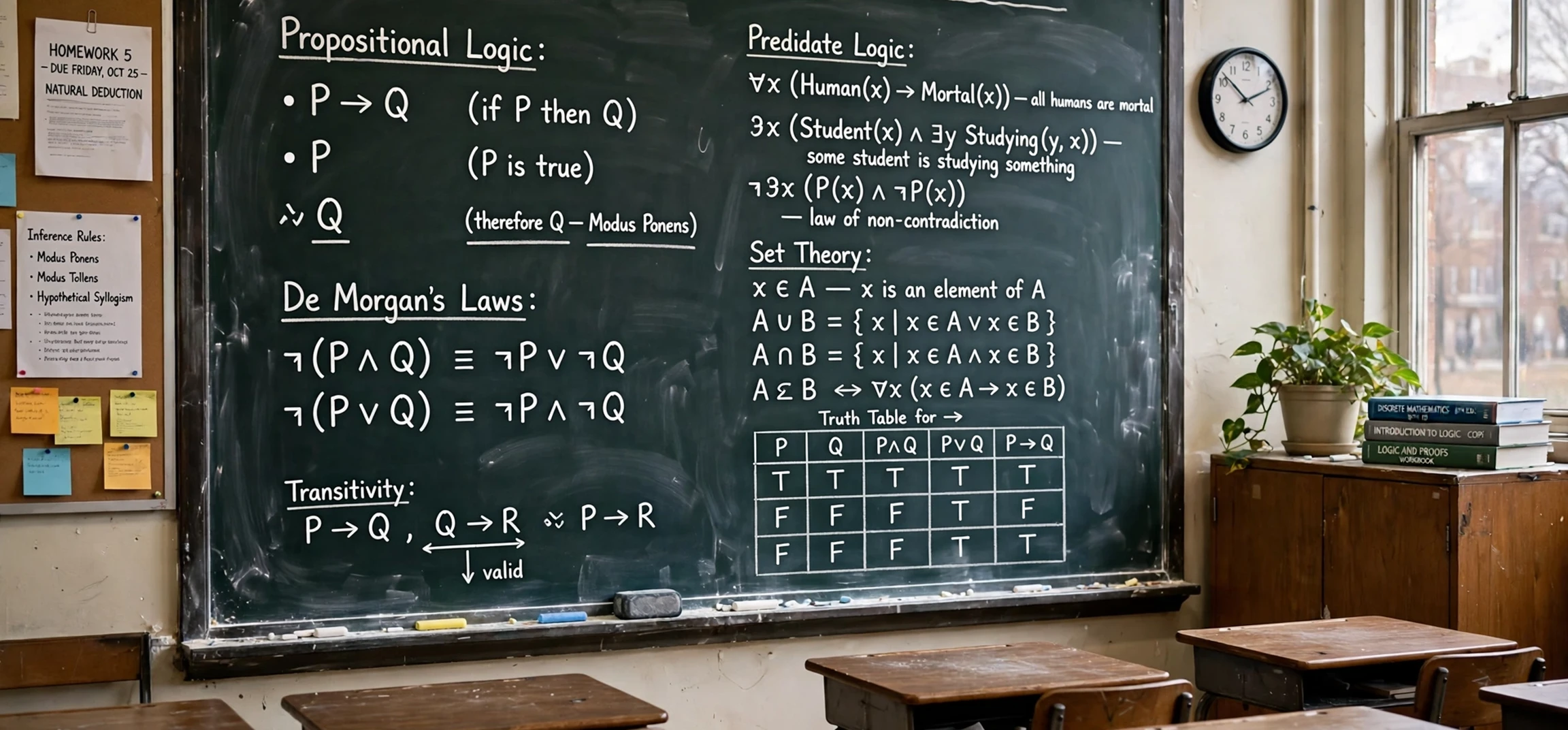
The converse definition in mathematics is one of those ideas that sounds simple but trips up many learners, because it involves swapping the two halves of a statement. If you start with a conditional statement of the form “if P, then Q”, its converse is “if Q, then P”. The converse definition therefore describes a new statement formed by reversing the hypothesis and the conclusion. This guide explains the converse definition carefully, with examples, truth tables in words, common mistakes, and the difference between a converse, an inverse, and a contrapositive.
Understanding the converse definition matters because a statement and its converse are not automatically equivalent. A true statement can have a false converse, and a false statement can have a true converse. That single fact explains many errors in mathematical reasoning, in everyday arguments, and in test questions that deliberately probe whether you have swapped the parts correctly. Learning to form and test a converse is a basic reasoning skill that appears in geometry, logic, algebra, and computer science.
Converse Definition: The Basic Idea
Formally, the converse definition starts from a conditional statement, also called an implication. Write the original as “if P, then Q”, where P is the hypothesis and Q is the conclusion. The converse is “if Q, then P”. Nothing else changes: you do not negate either part, and you do not add new information. You simply reverse their order. For example, the statement “if a shape is a square, then it has four sides” has the converse “if a shape has four sides, then it is a square”. The original is true, but the converse is false, because a rectangle or a rhombus can have four sides without being a square.
That example captures the heart of the converse definition. Reversing a statement changes what is being claimed, and the new claim must be judged on its own merits. Learners often assume that if the original is true, the reverse must be true too, but logic does not work that way. The converse is a different statement with a different truth value, and it must be proved or disproved separately. Keeping that separation clear is the first step to using converses correctly.
Converse Definition in Symbolic Form
In symbols, the original conditional is written P implies Q, and the converse definition gives Q implies P. Some textbooks write the converse as the reverse implication, and they stress that implication is not symmetric. Symmetry would mean that P implies Q always gives Q implies P, which is false in general. A truth table makes the point concrete: when P is true and Q is false, the original is false, but the converse, which asks whether Q implies P, is true in that row. Working through such rows slowly is an excellent way to internalise why the two statements differ.
Converse Definition With Worked Examples
Consider the statement “if a number is even, then it is divisible by two”. Its converse, by the converse definition, is “if a number is divisible by two, then it is even”. In this case both statements are true, because the two descriptions pick out the same numbers. This is an example of a biconditional relationship, where each statement implies the other, and mathematicians often express it with the phrase “if and only if”. But this happy case is the exception, not the rule, and it should not be assumed without proof.
Contrast that with geometry. The statement “if two lines are parallel, then they never meet” has a converse that, in ordinary Euclidean geometry, is also true in a suitable formulation, but many geometric converses fail. “If a triangle is isosceles, then it has two equal angles” has the converse “if a triangle has two equal angles, then it is isosceles”, which happens to be true, while “if a quadrilateral is a square, then it is a rectangle” has the converse “if a quadrilateral is a rectangle, then it is a square”, which is false. Each pair must be checked separately, and the converse definition tells you how to form the pair, not whether both halves hold.
Converse Definition Compared With Inverse and Contrapositive
Confusion often arises because three related statements are taught together. Starting from “if P, then Q”, the converse definition gives “if Q, then P”. The inverse negates both parts without swapping: “if not P, then not Q”. The contrapositive both negates and swaps: “if not Q, then not P”. Of these, only the contrapositive is always equivalent to the original: whenever the original is true, the contrapositive is true, and vice versa. The converse and the inverse are equivalent to each other, but neither is equivalent to the original in general.
A simple table helps keep them straight. Keep the original in the first row, then form each variant mechanically: swap for the converse, negate for the inverse, and do both for the contrapositive. Practising this mechanical step before thinking about truth values prevents the most common error, which is accidentally negating when you meant to swap, or swapping when you meant to negate. Once the four statements are written correctly, judging each one becomes a separate, manageable task.
Converse Definition in Everyday Reasoning
The converse definition also explains everyday reasoning errors. From “if it rains, the grass gets wet”, people sometimes infer “if the grass is wet, it rained”, forgetting that a sprinkler could also wet the grass. From “if a student studies hard, they pass”, people sometimes infer “if a student passes, they studied hard”, forgetting other routes to passing. Spotting these converse errors in ordinary arguments is good practice, and it shows why the concept matters beyond examinations: reversing a claim without evidence is a frequent source of mistaken conclusions.
Converse: Mistakes to Avoid in Proofs
In proofs, the most serious converse error is assuming what you need to prove. A proof that a shape is a square cannot begin by assuming it has the properties of a square; that is circular. Similarly, proving a statement by proving its converse is invalid unless you have also shown the two are equivalent. Examiners look for this error deliberately, and it appears in geometry, number theory, and logic questions. When you write a proof, label which direction you are proving, and check that each step follows from what is given, not from the conclusion you hope to reach.
Another common mistake is misidentifying P and Q in a statement written in words rather than in “if, then” form. Statements such as “a number is prime only if it has exactly two divisors” or “all squares are rectangles” hide their conditional structure. Rewriting them explicitly as “if, then” statements before applying the converse avoids errors. Take time to identify the hypothesis and the conclusion first, write the converse second, and only then ask whether the converse is true. That order, identify, reverse, evaluate, is the reliable habit.
| Statement | How it is formed | Equivalent to the original? |
|---|---|---|
| Original: if P, then Q | Given | Yes, by definition |
| Converse: if Q, then P | Swap P and Q | No, not in general |
| Inverse: if not P, then not Q | Negate both parts | No, not in general |
| Contrapositive: if not Q, then not P | Swap and negate both parts | Yes, always |
Related mathematics guides include our article on the definition of mean in mathematics, our guide to define mean in math, and our explainer on what multimodal text means.
Frequently Asked Questions About the Converse
If a statement is true, is its converse true?
Not necessarily. The converse produces a different statement, and its truth must be checked separately. Some converses are true, some are false, and assuming truth without proof is a common reasoning error.
How is the converse different from the contrapositive?
The converse swaps the hypothesis and conclusion without negating them, giving “if Q, then P”. The contrapositive swaps and negates both, giving “if not Q, then not P”, and it is always equivalent to the original, unlike the converse.
When do a statement and its converse both hold?
When each implies the other, the relationship is biconditional, often written “if and only if”. This must be proved in both directions; showing one direction alone does not establish the other.
How do I find the converse of a worded statement?
First rewrite the statement explicitly as “if P, then Q”, identifying the hypothesis and conclusion. Then apply the converse by swapping them to get “if Q, then P”. Rewriting first prevents errors with statements that hide their conditional form.
Conclusion: Converse Made Clear
In summary, the converse is simple to state and important to respect: from “if P, then Q”, form “if Q, then P” by swapping the two parts, and then judge the new statement on its own. Do not assume it shares the original’s truth value, do not confuse it with the inverse or contrapositive, and always rewrite worded statements into explicit conditional form first. With that discipline, converses become a useful tool for testing claims, spotting everyday reasoning errors, and writing proofs that actually prove what they claim, in both directions where both directions are needed.