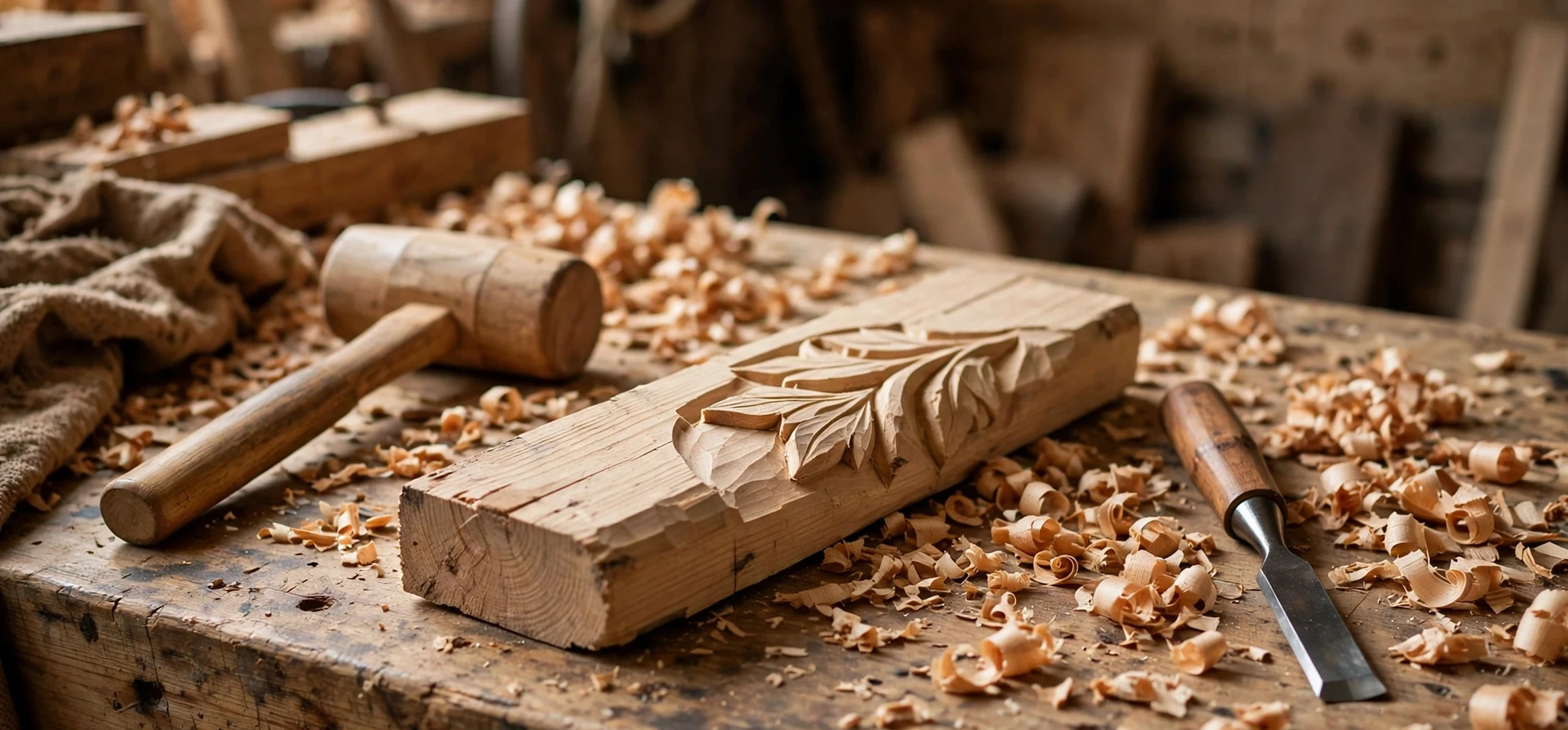
Chiselling is a word that most people meet first in craft, sculpture and building, where it describes shaping a hard material by cutting away small pieces with a chisel. This guide explains chiselling in full: its literal meaning, how chiselling is used in wood, stone and metal work, how the word is spelled in British and American English, and how it is also used figuratively to describe shaping skills, ideas, careers and creative work over time. In both its literal and figurative senses, the word is about patient, controlled removal and refinement, rather than sudden or forceful change. Understanding that core idea makes every other use of the term easier to recognise.
At its simplest, chiselling means working with a chisel, a hand tool with a sharp cutting edge and a handle, struck with a mallet or hammer, or pushed by hand, to cut, carve or shape a material. A sculptor may use this method to reveal a form inside a block of stone. A woodworker may use it to cut a joint, to clean up a surface, or to carve decoration. A stonemason may use it to dress stone, to cut lettering, or to shape a building element. In each case, the work is not random chipping: it is guided by a plan, by knowledge of the material, and by control of angle, force and direction. A single careless blow can spoil a surface, while a series of careful cuts can produce a smooth curve, a crisp edge or a detailed pattern.
Chiselling in Craft and Making
Work with a chisel in craft begins with choosing the right tool for the job. Wood chisels are typically used for paring, chopping and carving wood, and they come in different widths and edge shapes for different tasks. Stone chisels are heavier and are designed to work with harder, more brittle materials, often with a mallet rather than a hammer. Metal chisels, sometimes called cold chisels, are used for cutting and shaping metal when it is not heated. In every case, a sharp edge matters more than brute force. A sharp tool cuts cleanly, follows the intended line, and gives the maker control. A dull tool needs more force, is more likely to slip, and can tear or crush the material instead of cutting it.
Technique is equally important in chiselling. The maker usually works with the grain in wood, or with the natural structure in stone, rather than against it, because working against the structure can cause splitting or unwanted breakage. Cuts are often made in stages: rough shaping first, to remove bulk material, then finer work to refine the form, then finishing cuts to smooth and define detail. The hands play different roles: one hand guides the tool and controls the angle, while the other applies force through a mallet or through steady pressure. Safety is part of technique, too. Keeping hands behind the cutting edge, working on a stable surface, wearing eye protection when chips may fly, and keeping tools sharp and in good condition are standard practices, and they protect both the maker and the work.
Chiselling also appears in restoration and conservation. When an old building, carving or piece of furniture is repaired, a craftsperson may use a chisel to remove damaged material carefully, to match an existing profile, or to recreate a missing detail. That kind of repair requires restraint: the goal is to preserve as much original material as possible, and to make a repair that respects the original design. In archaeology and related fields, careful hand tools may be used to expose features in stone or earth, again with an emphasis on control and documentation rather than speed. Across all these settings, the craft is slow, and its quality is judged by precision, patience and respect for the material.
Working Wood, Stone and Metal
Working wood with a chisel is often the first kind of chiselling people learn, because wood is forgiving, widely available and useful for joints, carving and decoration. Common wood tasks include cutting mortises for joints, paring a surface flat, carving a pattern, or cleaning up after sawing. Working stone is heavier, often used for sculpture, architectural detail, letter cutting and memorial work, where the maker must understand how different stones behave. Working metal is a more specialised task, used for cutting, shaping and marking metal, and it requires tools suited to the hardness of the metal. Although the materials differ, the shared principle remains the same: remove a little at a time, check the result often, and let the tool do the work.
Sculpture and Direct Carving
In sculpture, chiselling is often associated with direct carving, where the sculptor works straight into stone or wood without first making a full model in another material. Direct carving demands confidence, because each cut is final, and the sculptor must imagine the finished form inside the block. Many sculptors combine the chisel with other methods, such as modelling, sawing, rasping and polishing, but it remains central to the early and middle stages, when the broad form is established and the main planes are defined. The sound, rhythm and physical effort of the work are part of why sculpture is often described as a dialogue between maker and material: the material resists, guides and sometimes surprises the maker, and the finished work records that process.
Chiselling Meaning in Language and Figurative Use
Beyond the workshop, chiselling is widely used figuratively to mean shaping something gradually through steady effort. People speak of working away at a problem, shaping a skill into form, or building out a career over many years. In each case, the metaphor borrows the craft image: a large, rough starting point is refined by repeated, careful action until a clearer form emerges. Figurative use suggests discipline rather than luck, and process rather than a single breakthrough. A writer may refine a draft through revision, an athlete may build fitness through training, and a student may build understanding through practice. The word therefore carries a positive, workmanlike tone in most figurative uses.
The term is also used to describe physical shaping in fitness and body language, usually in the phrase chiselled features or a chiselled physique. Here the metaphor is visual: just as a sculptor reveals sharp, defined planes in stone, training and diet are said to reveal defined muscles or facial structure. This use is descriptive and metaphorical, not literal, and it should be read as praise for definition and discipline rather than as a technical claim. Like other body metaphors, it is best used carefully and without implying that one body type is the only admirable one. The core image, however, remains the same: definition created by gradual removal and refinement.
Spelling is a small but useful point about chiselling. In British English, it is commonly spelled with a double L, following the pattern for verbs ending in L when a suffix is added. In American English, the common spelling uses a single L. Both spellings are understood, and the choice usually follows the spelling convention of the publication or region. The same pattern applies to related forms, such as the past form in British and American English. When searching online, trying both spellings can help, because older books, craft guides and regional sources may use either form.
| Context | What the word means there | Key idea |
|---|---|---|
| Woodwork | Cutting joints, carving and paring wood with a chisel | Control, grain and sharp tools |
| Stonework | Shaping, dressing and carving stone | Patience, structure and staged cuts |
| Metalwork | Cutting and shaping metal with a cold chisel | Right tool for hardness |
| Sculpture | Revealing form by direct carving | Vision inside the block |
| Figurative use | Shaping a skill, idea or career gradually | Steady refinement over time |
| Fitness language | Describing defined muscles or features | Visual metaphor for definition |
For other word-meaning guides on this site, see the 888 tattoo meaning guide, the ADES meaning guide, and the acceded meaning guide. Those guides follow the same dictionary-style approach: a clear definition first, then examples, then the contexts where the word is most often used.
The Word in Everyday Life and Learning
Chiselling offers a useful model for learning and creative work, because it reframes progress as removal and refinement rather than only addition. A first draft, a first design or a first attempt is often rough and oversized, and improvement comes from cutting what is unnecessary, sharpening what matters, and checking the result at each stage. Teachers and coaches sometimes use this image to encourage persistence: progress may be slow, the work may feel repetitive, and the final form may not be visible at the start, but steady, careful effort can reveal it. That model is encouraging because it does not demand perfection in a single attempt, only attention and willingness to revise.
Chiselling also appears in phrases about time and habit. Someone may talk about working away at a large project over weeks, carving time out of a busy schedule, or cutting down a long list to its essentials. In each case, the verb suggests deliberate, bounded action: a little is removed, the remainder becomes clearer, and the work moves forward. This is different from rushing, forcing or breaking through. The craft image implies that the maker respects the material, whether that material is stone, wood, a text, a plan or a routine, and works with its nature rather than against it.
For beginners interested in literal chiselling as a hobby, the sensible starting point is basic safety and basic tools, learned through a class, a workshop or a reputable guide, rather than through improvisation with unsuitable tools. Start with soft wood, a sharp, well-maintained chisel, a stable bench and eye protection, and practise simple cuts before attempting detailed carving. Learn to sharpen, to hold the tool safely, and to work with the grain. As with any craft, progress comes from practice, from studying finished work, and from learning how different materials respond. The figurative lesson and the literal craft reinforce each other: both reward patience, observation and steady hands.
Common Phrases Using the Word
Common phrases include working away at a task, building out a niche or a career, shaping a design into form, and describing features as chiselled. In each phrase, the chisel image adds a sense of craft and intention. The phrase does not suggest easy or instant success; it suggests work that has been shaped over time. Recognising that shared sense helps readers understand new uses of the word, even when the context is unfamiliar, because the underlying metaphor stays stable across craft, fitness, writing, business and personal development.
Versus Carving and Cutting
Chiselling, carving and cutting overlap, but they are not identical. Cutting is the broadest term, covering any separation of material. Carving is broader than the chisel technique and can include work with knives, gouges and other tools, often for decorative or sculptural purposes. Chiselling specifically implies the use of a chisel, often struck or pushed, to remove material in controlled amounts. A maker may carve a figure using chisels among other tools, and may cut a board with a saw before shaping a joint. Keeping those distinctions in mind helps when reading craft instructions, because the tool named usually tells you the technique expected.
Frequently Asked Questions About Chiselling
What Does Chiselling Mean?
The word means shaping a material, usually wood, stone or metal, by cutting away small pieces with a chisel. Figuratively, it means shaping something gradually through steady, careful effort, such as refining a skill, a draft or a plan over time.
Is It Chiselling or Chiseling?
Both are correct in different spelling conventions. The double-L form is the common British spelling, while the single-L form is the common American spelling. Choose the form that matches your publication or region, and use it consistently.
What Is the Technique Used For?
It is used for cutting joints in wood, carving decoration, shaping stone for sculpture and building, cutting lettering, cleaning up surfaces, and refining forms in craft and restoration. It is valued for control and precision in hard materials.
Is It Hard to Learn?
Basic work with a chisel can be learned with instruction, practice and attention to safety, starting with simple cuts in soft wood. Skilled work, especially in stone sculpture and fine carving, takes much longer to master, because it combines tool control, material knowledge and design judgement.
Conclusion
Chiselling is, at heart, a word about making form by patient removal. Literally, it describes the craft of shaping wood, stone and metal with a chisel, guided by sharp tools, knowledge of material and controlled technique. Figuratively, it describes the equally patient work of shaping skills, ideas and careers through steady revision and effort. Whether you meet chiselling in a workshop, in a sculpture gallery, in a fitness description or in a sentence about learning, the image is the same: a rough starting point, a careful hand, and a clearer form emerging little by little. That is why the term remains such a durable metaphor, and why understanding its literal meaning unlocks every other use.



