The meaning of vale in English depends entirely on which vale you mean, because this small word lives two quite different lives. In Spanish, vale is one of the most useful everyday words you will hear, used to say OK, agreed, or that something is fine. In English, vale is a much rarer and more poetic word meaning a valley. The two uses look identical on the page, but they come from different languages, belong to different registers, and behave differently in sentences. This guide keeps them clearly separated, explains each one with examples, and helps you avoid the most common mix-ups.
The confusion is understandable. Learners of Spanish meet vale constantly in conversation, in films, and in song lyrics, and they naturally wonder whether the same word carries the same meaning when they meet it in an English poem or novel. It does not. The Spanish vale and the English vale are what linguists call false friends in appearance only: they share spelling, but not meaning, origin, or everyday use. Once you learn to ask which language you are reading, the word becomes much easier to handle.
Vale in Spanish: OK, Agreed, and Fine
In Spanish, the meaning of vale in English is most often OK, agreed, all right, or fine. It is the word a Spanish speaker uses to accept a plan, confirm an arrangement, or show that something is acceptable. If someone suggests meeting at a certain time and the other person replies Vale, they are saying, in effect, OK, that works for me. If someone asks whether a proposal is acceptable and hears Vale, vale, the repetition adds emphasis, like saying OK, OK, or absolutely fine. It is informal, friendly, and extremely common, especially in Spain, where it functions almost like a conversational punctuation mark.
Vale in Spanish comes from the verb valer, meaning to be worth or to be valid. That origin still shines through in the meaning: when you say vale, you are saying that something is worth accepting, that it counts, or that it is good enough. The word can also appear in other forms of the same verb, such as vale la pena, meaning it is worth it, and no vale, meaning it is not fair or it does not count. Recognising the verb behind vale helps you see why it feels so natural as a word of agreement: it is not just a sound of approval, it is a judgement that something is valid and acceptable.
Spanish Vale and the Meaning of Vale in English in Everyday Conversation
Spanish vale appears in many everyday situations. A friend might say, in Spanish, that they will meet you later, and you reply Vale to confirm. A shop assistant might explain a return rule, and you reply Vale to show you understand and accept it. A teacher might ask whether the instructions are clear, and a student replies Vale to mean yes, understood. In each case, vale does the work that OK, sure, got it, or fine would do in English. It is not formal, but it is not rude either; it sits in the comfortable middle ground of polite everyday speech, and it is appropriate with friends, colleagues, and strangers in casual settings.
It is also worth knowing that Spanish vale has a second, noun sense: a voucher or ticket. In Spain, a vale can be a voucher for a meal, a discount, or a service, a piece of paper or a code that entitles you to something. This sense is less frequent in conversation than the OK sense, but it appears on signs, menus, and promotions. If you see vale on a coupon or a notice, think voucher rather than agreement. Context, as always, is the guide: a spoken Vale after a question means OK, while a printed vale with a value attached means a voucher.
Examples of Spanish vale
Here are simple examples showing how Spanish vale works in context, with an English equivalent for each. Notice how the English translation changes slightly with the situation, even though the Spanish word stays the same.
- Spanish: Vale, nos vemos luego. English equivalent: OK, see you later.
- Spanish: ¿Quedamos mañana? Vale. English equivalent: Shall we meet tomorrow? Agreed.
- Spanish: Vale, entiendo lo que quieres decir. English equivalent: All right, I understand what you mean.
- Spanish: Vale, vale, no te preocupes. English equivalent: OK, OK, do not worry.
- Spanish: Tengo un vale para el desayuno. English equivalent: I have a voucher for breakfast.
Vale in English: A Valley
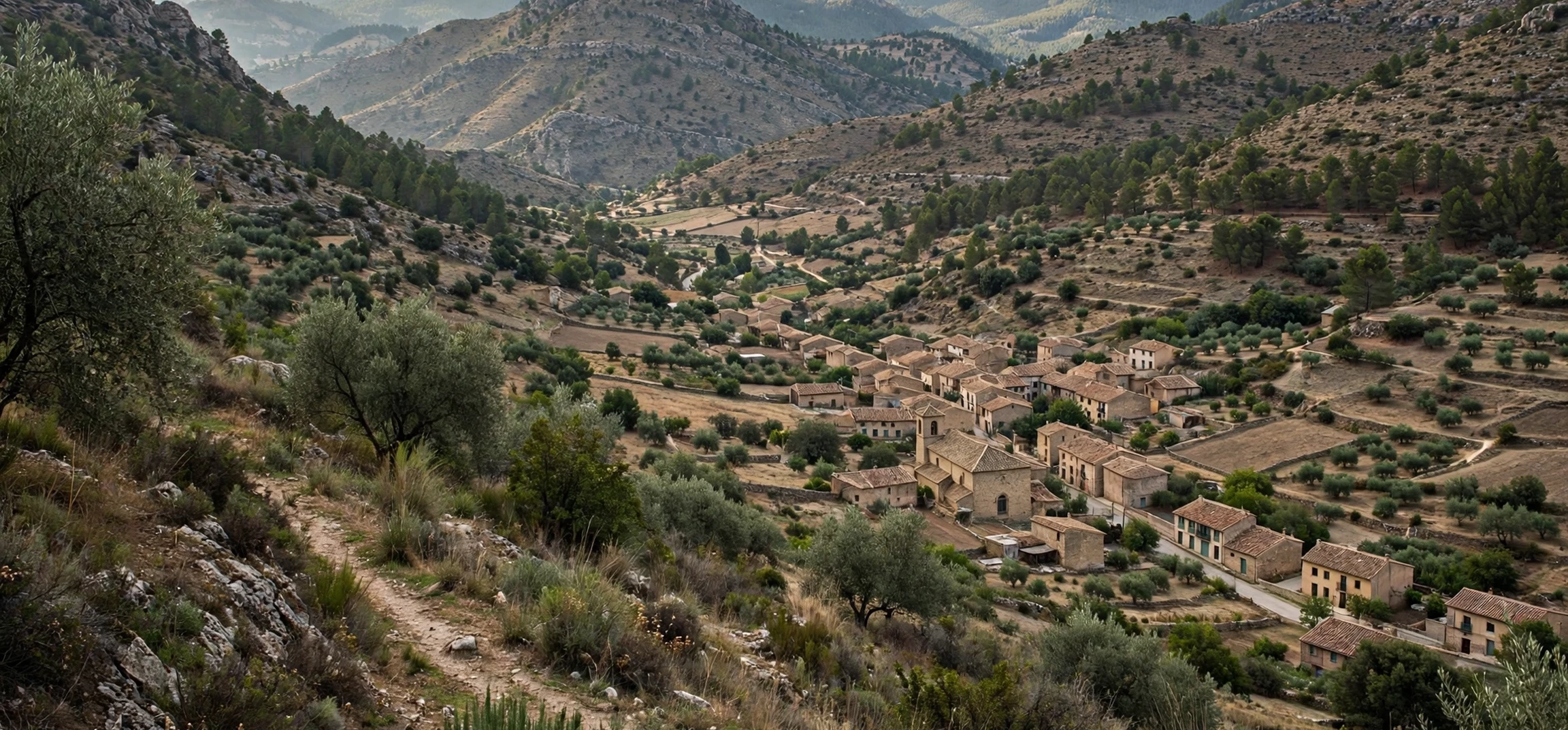
Now we turn to the completely separate English word. In English, the meaning of vale in English is a valley, especially a broad, gentle valley between hills. It is a poetic and literary word rather than an everyday one: most English speakers today say valley in ordinary conversation, and reserve vale for poetry, place names, song lyrics, and deliberately old-fashioned writing. If you meet vale in an English novel, a hymn, or a poem, it almost certainly means a valley, not OK.
English vale comes from Latin vallis, meaning valley, through Old French, and it has been part of English for centuries. That Latin root is also behind the word valley itself, so vale and valley are close relatives with different levels of formality. Vale sounds more elevated and more musical, which is why poets have favoured it. A phrase such as a green vale conjures a peaceful, sheltered landscape in a way that a green valley, while perfectly correct, does slightly less vividly. The choice between vale and valley is therefore a stylistic choice, not a difference in basic meaning.
English Vale, the Meaning of Vale in English, in Idioms and Place Names
The best-known English idiom using vale is vale of tears, a traditional phrase for the world as a place of sorrow and hardship, often used in religious or literary writing. The image is of life as a valley through which people journey, with tears as part of the landscape. You may also meet vale in place names, where it marks a valley settlement or region, and in the Latin farewell vale, pronounced VAH-lay, meaning farewell, which appears in formal or classical contexts. That farewell sense comes from the Latin verb valere, to be well, and is a third, separate use that belongs to Latin rather than to everyday English or Spanish.
Because English vale is literary, learners should not use it in everyday English conversation when they mean valley, unless they are aiming for a poetic effect. Saying that you walked through a vale will be understood, but it will sound deliberately old-fashioned, like quoting a poem. In normal speech and writing, valley is the natural choice. Vale is best kept for reading poetry, understanding place names, and appreciating older English, where it appears often and beautifully.
Examples of English vale
Here are simple examples showing how English vale works in context. Notice how different these sentences feel from the Spanish examples above, even though the spelling is the same.
- The path led down into a quiet, green vale between two wooded hills.
- She described her childhood home as lying in a broad vale, sheltered from the wind.
- The poet wrote of a vale of tears, using the valley as an image of life’s sorrows.
- The village took its name from the vale in which it stood.
- In the old farewell, the writer closed with the Latin word vale, meaning farewell.
Vale at a Glance: Spanish and English Compared
The table below sets the two main uses side by side, so you can check quickly which vale you are dealing with.
| Feature | Spanish vale | English vale |
|---|---|---|
| Core meaning | OK, agreed, fine | A valley |
| Register | Everyday, informal conversation | Poetic, literary, old-fashioned |
| Origin | Spanish verb valer, to be worth or valid | Latin vallis, valley, through Old French |
| Typical context | Replying to a plan or question | Poems, novels, hymns, place names |
| Extra sense | A voucher or ticket | Vale of tears idiom; Latin farewell vale |
| Everyday equivalent | OK, sure, got it | Valley |
| What not to do | Do not use it formally in writing as a substitute for a full agreement | Do not use it in casual speech when valley sounds natural |
Common Mistakes With Vale
The most common mistake is carrying the Spanish meaning into English. A learner who has heard vale a hundred times in Spanish conversation may read an English poem, see vale, and translate it as OK, which makes the poem nonsensical. The reverse mistake is rarer but also happens: a reader of English poetry may meet vale in a Spanish film subtitle and wonder why a valley is being mentioned in a conversation about meeting for coffee. In both cases, the fix is the same: pause and ask which language you are in. Language, not spelling, decides the meaning.
Another mistake is overusing Spanish vale in formal writing. Vale is perfect in conversation, but in a formal letter, contract, or academic essay in Spanish, a fuller form of agreement is usually more appropriate, such as de acuerdo, meaning agreed, or está bien, meaning that is fine. Similarly, overusing English vale in ordinary writing can make a text sound artificially poetic. Good style in both languages means matching the word to the situation, and vale, in either language, is a word whose situation matters more than most.
Finally, learners sometimes confuse vale with similar words. In Spanish, vale is not the same as vela, meaning candle or sail, or valla, meaning fence, even though the spellings look close. In English, vale is not the same as veil, meaning a covering, or vail, an older variant spelling. Sounding the word out carefully, and checking the context, will usually resolve these lookalikes quickly. For other word-meaning guides, see what subito means in music, the meaning of goad, and what simultaneously means.
Meaning of Vale in English: A Quick Decision Guide
If you are still unsure which vale you have met, ask yourself two questions. First, what language is the text in? If it is Spanish conversation, the meaning of vale in English is almost certainly OK or agreed. Second, what kind of text is it? If it is an English poem, hymn, or older novel, the meaning of vale in English is a valley. Those two questions resolve most cases at once, and they are much more reliable than guessing from the spelling alone, because the spelling is identical in both languages.
It also helps to listen for the tone around the word. In Spanish, the meaning of vale in English is carried by a short, confident reply, often on its own: Vale. In English poetry, the meaning of vale in English is carried by landscape language around it, such as green, quiet, wooded, or sheltered. A single word on its own after a question points to Spanish agreement, while a valley full of trees, hills, and paths points to English landscape. Tone and neighbours, in other words, are your best clues.
Meaning of Vale in English: Frequently Asked Questions
What is the meaning of vale in English when it comes from Spanish?
When vale comes from Spanish, its English equivalent is OK, agreed, all right, or fine. It is used to accept a plan or confirm understanding, and that is the everyday meaning of vale in English for Spanish learners.
What does vale mean in English itself?
In English, vale means a valley, especially in poetry, literature, and place names. In everyday English, valley is the normal word, and that valley sense is the literary meaning of vale in English.
Is Spanish vale formal?
No, Spanish vale is informal everyday speech. It is polite in casual settings, but formal writing usually prefers a fuller expression such as de acuerdo, even though the conversational meaning of vale in English remains simply OK.
What does vale of tears mean?
Vale of tears is a traditional literary phrase for the world as a place of sorrow, using the valley as an image of life’s journey through hardship, a good example of the poetic meaning of vale in English.
Can vale also mean a voucher?
Yes, in Spanish a vale can also be a voucher or ticket entitling the holder to something, such as a meal or a discount. Context shows whether the voucher sense or the OK sense is intended.
Conclusion
The meaning of vale in English is a tale of two words sharing one spelling. In Spanish, vale is a warm, everyday OK, a word of agreement rooted in the idea that something is worth accepting, with a secondary life as a voucher. In English, vale is a valley, a poetic word rooted in Latin, kept alive by poems, place names, and the phrase vale of tears. Keeping those two lives separate, and letting language and context decide which one you are reading, is the whole trick. Once you do, vale stops being a confusing lookalike and becomes a small, satisfying example of how languages borrow, adapt, and occasionally collide on the page.



