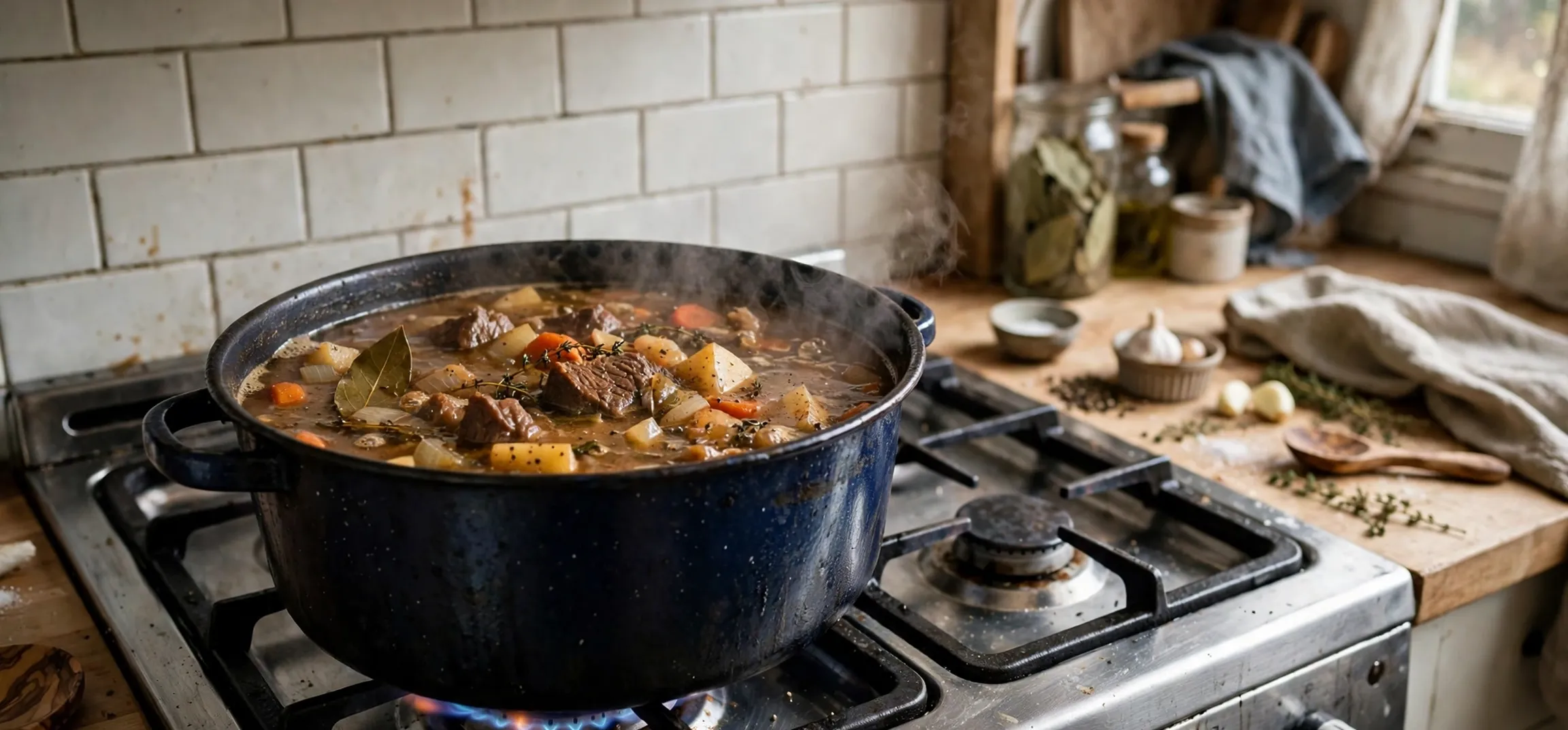
If you have ever wondered what makes a slow-cooked stew so tender and rich, the answer is usually braising. To understand what does braised mean in cooking, picture this: food, usually meat, is first browned at high heat, then cooked slowly in a small amount of liquid, in a covered pot, until it becomes meltingly tender. Braising is one of the oldest and most forgiving cooking methods, and it transforms tough, inexpensive cuts into dishes of remarkable depth and flavour.
In this guide, we explain what braised means in cooking, how braising differs from similar methods, which foods suit it best, and how to braise successfully at home, with practical tips for every stage.
What Does Braised Mean in Cooking?
What does braised mean in cooking? In short, braising is a combination cooking method that uses both dry and moist heat. The food is first seared or browned, which is dry heat, and then cooked gently in liquid, which is moist heat, with the pot covered so that steam circulates. The liquid usually comes partway up the food rather than covering it completely, which distinguishes braising from boiling or stewing.
The word “braise” comes from the French braiser, referring to cooking over braise, or hot coals. The method predates modern ovens by centuries, and it developed as a way to make the most of tough cuts of meat, which are rich in connective tissue. Slow, moist cooking converts that connective tissue, mainly collagen, into gelatine, which gives braised dishes their silky texture and body. Without this slow transformation, the same cuts would be chewy and dry.
Braising is a slow method. Times of two to four hours are common for large cuts, though smaller items may take less. The low temperature, usually around 140 to 160 degrees Celsius in an oven, is essential: high heat would toughen the meat and evaporate the liquid too quickly. Patience is the main ingredient, and it is rewarded with flavour that fast cooking cannot achieve.
Braising vs Stewing, Roasting, and Pot-Roasting
Braising is often confused with neighbouring methods, and the distinctions are worth knowing:
| Method | How it works | Key difference from braising |
|---|---|---|
| Braising | Large pieces browned, then cooked slowly in partial liquid, covered | — |
| Stewing | Small pieces fully submerged in liquid, simmered | Food is cut small and fully covered |
| Roasting | Dry heat in an oven, uncovered | No liquid, no cover |
| Pot-roasting | Similar to braising, often with larger joints | Essentially a form of braising; terms overlap |
Pot-roasting is so close to braising that many cooks use the terms interchangeably, and the distinction, where it exists, is mainly about the size of the joint and the amount of liquid. Stewing differs more clearly: the food is cut into small pieces before cooking and is fully immersed. Braising keeps pieces large, which gives the finished dish a different texture and presentation, with slices or whole portions rather than chunks.
Understanding these distinctions helps when following recipes. If a recipe says “braise”, it expects large pieces, partial liquid, and a covered pot. Substituting a stewing approach, with small pieces fully submerged, will produce a different, though still tasty, result.
Best Foods for Braising
Braising suits foods that benefit from long, slow cooking, particularly:
- Tough cuts of meat. Beef chuck, lamb shoulder, pork shoulder, oxtail, and shin are classic braising cuts. Their connective tissue becomes gelatine, enriching the sauce.
- Poultry legs. Chicken and duck legs, which are tougher than breasts, become tender and flavourful when braised.
- Root vegetables. Carrots, parsnips, turnips, and celeriac hold their shape while absorbing flavour from the braising liquid.
- Leafy greens. Cabbage, kale, and similar greens can be braised with aromatics for a soft, savoury side dish.
- Alliums. Whole onions, shallots, and leeks become sweet and melting when braised slowly.
Tender cuts, such as fillet steak or chicken breast, are poor candidates for braising, since they have little connective tissue to convert and will dry out over long cooking. Matching the method to the ingredient is the first rule of braising, and it is why the method is associated with economical, flavourful cooking rather than luxury cuts.
How to Braise: Step by Step
While recipes vary, most braises follow the same sequence:
- Prepare the food. Pat meat dry, season it, and cut vegetables into large pieces. Dry surfaces brown better, which matters for flavour.
- Sear. Brown the meat on all sides in a hot, heavy pot with a little fat. This step builds flavour through the Maillard reaction, the browning process that creates savoury compounds. Do not crowd the pot, or the meat will steam rather than brown.
- Soften aromatics. Remove the meat and cook onions, carrots, celery, garlic, and herbs in the same pot, scraping up the browned bits from the base, which are full of flavour.
- Add liquid. Pour in stock, wine, beer, or a combination, enough to come partway up the food, usually about halfway. The liquid will form the basis of the sauce.
- Cover and cook slowly. Return the meat, cover the pot tightly, and cook in a low oven or on a low hob until the food is tender when pierced. Check occasionally, topping up liquid if needed.
- Finish the sauce. Remove the meat, strain the liquid if desired, and reduce it to a sauce consistency. Adjust seasoning, and serve the meat with the sauce spooned over.
Two tips make a real difference. First, do not rush the searing step; deep, even browning is where much of the flavour comes from. Second, resist the urge to lift the lid constantly. Each lift releases heat and steam, extending the cooking time. Trust the low temperature and check only occasionally.
For a related cooking technique explained in plain terms, see our guide to what CTE means, which, like braising, is a term whose precise meaning is often misunderstood.
Choosing Braising Liquids and Flavours
The braising liquid is not just a cooking medium; it becomes the sauce, so its flavour matters. Stock is the most common base, providing body and savouriness. Wine adds acidity and depth, and is often used alongside stock rather than alone. Beer suits hearty, malty braises, while tomato-based liquids suit Mediterranean styles. Water alone is a last resort, since it adds no flavour of its own.
Aromatics build the flavour profile. The classic combination of onion, carrot, and celery, known as mirepoix, is a reliable starting point. Garlic, herbs such as thyme, bay, and rosemary, and spices such as peppercorns and juniper, can be added to suit the dish. Acidic ingredients, such as vinegar or tomato, help balance richness, and a touch of sweetness, from caramelised onions or a spoonful of honey, can round out the sauce.
Regional braising traditions show how flexible the method is. French braises favour wine and herbs, Italian braises favour tomato and olive oil, Asian braises favour soy, ginger, and star anise, and North African braises favour dried fruit and warm spices. The method is the same; the flavourings change the character entirely.
What Does Braised Mean in Cooking: Common Mistakes
- Cooking too hot. High heat toughens meat and evaporates liquid. Low and slow is the rule.
- Too much liquid. Fully submerging the food turns a braise into a stew and dilutes flavour. Aim for halfway up the food.
- Skipping the sear. Unbrowned meat produces a paler, less flavourful dish. Browning is worth the extra time.
- Using the wrong cut. Tender cuts dry out; tough, collagen-rich cuts are the point of braising.
- Under-seasoning the sauce. The braising liquid needs seasoning at the end, after reduction, since flavours concentrate as liquid evaporates.
Frequently Asked Questions
What does braised mean in cooking?
Braised means cooked by first browning food at high heat, then cooking it slowly in a small amount of liquid in a covered pot, until tender. It is a combination of dry and moist heat.
Is braising the same as stewing?
No, though they are related. Braising uses large pieces cooked in partial liquid, while stewing uses small pieces fully submerged in liquid. The results differ in texture and presentation.
How long does braising take?
It depends on the food, but two to four hours is common for large meat cuts. Smaller items and vegetables take less time. The food is done when it is tender when pierced, not at a fixed time.
Can you braise vegetables?
Yes. Root vegetables, leafy greens, and alliums all braise well, becoming tender and flavourful while absorbing the braising liquid. Vegetable braises are excellent in their own right, not merely as accompaniments.
For related reading, see our guide to healthy recipe guides.
Conclusion
To answer what does braised mean in cooking in full: it means transforming tough ingredients into tender, deeply flavoured dishes through a patient combination of browning and slow, covered, moist cooking. It is a method that rewards inexpensive cuts, forgives small errors, and produces sauces of remarkable richness from simple ingredients. Whether you are braising beef for a Sunday dinner, lamb for a celebration, or vegetables for a weeknight supper, the principles are the same: brown well, add flavourful liquid partway up, cover, cook low and slow, and finish the sauce with care. Master those steps, and braising becomes one of the most reliable techniques in your kitchen.



