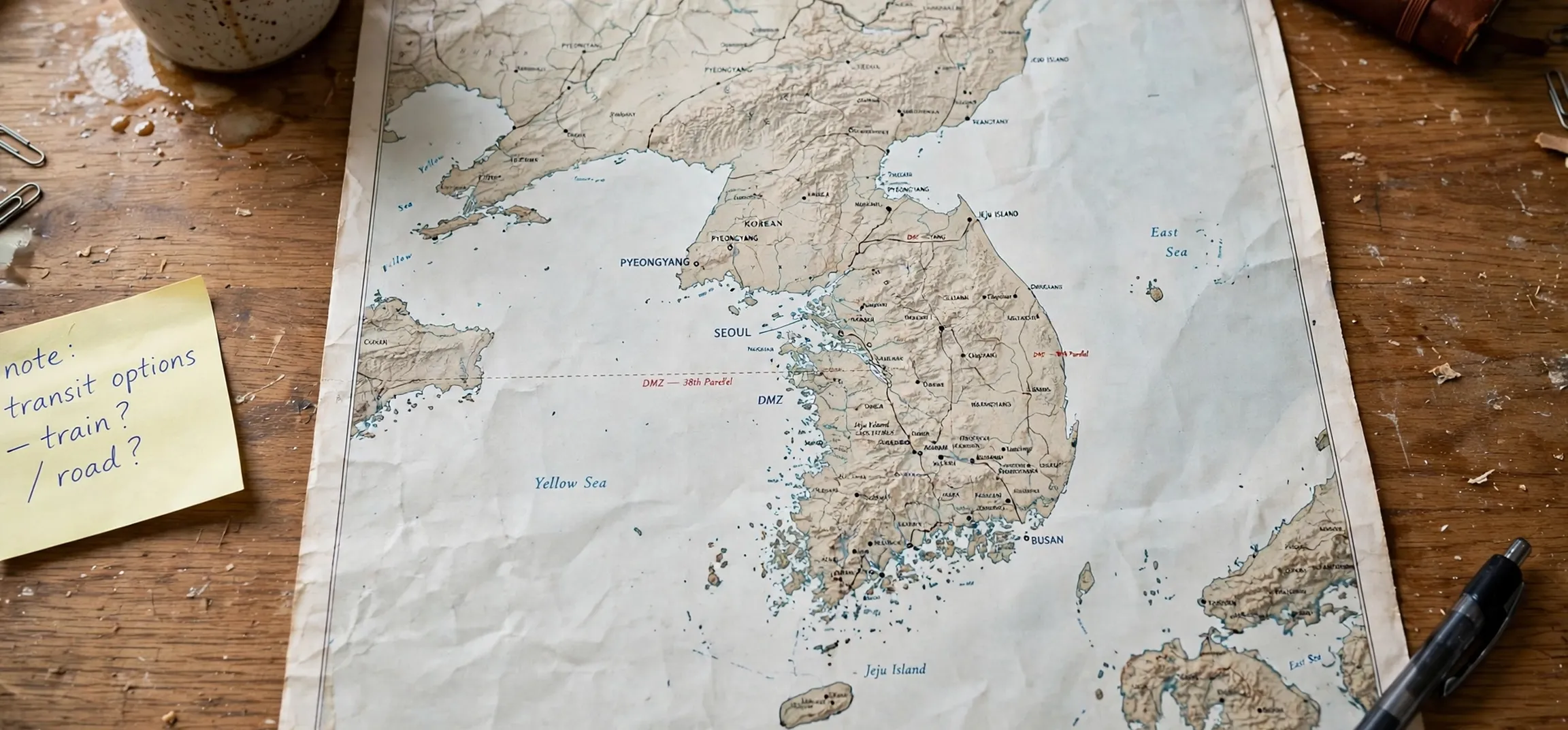
The government of North Korea is one of the most distinctive and least understood systems of rule in the modern world. North Korea, officially the Democratic People’s Republic of Korea (DPRK), is a one-party state governed by the Workers’ Party of Korea under the leadership of the Kim family, now in its third generation. Its system combines a highly centralised party-state, a powerful military, and an official ideology that emphasises self-reliance, loyalty and national unity. This guide explains the structure of that government in general terms, as it is commonly described by scholars, journalists and international organisations.
Understanding North Korea’s government matters because the country plays an outsized role in regional security, nuclear diplomacy and humanitarian debate, despite its small economy and limited contact with the outside world. Its decisions affect its neighbours, its own population, and the wider international system. A clear picture of how it is governed helps readers make sense of news from the Korean peninsula without falling for either caricature or propaganda.
Government of North Korea: Official Structure
On paper, North Korea has the institutions of a republic: a constitution, a legislature called the Supreme People’s Assembly, a cabinet, courts, and local people’s assemblies. The Supreme People’s Assembly is described as the highest organ of state power, and it formally elects the leadership, approves budgets and passes laws. In practice, scholars describe these bodies as largely ceremonial, since real decisions are made within the Workers’ Party and its leadership organs.
The most important state body in practice is the State Affairs Commission, which the constitution describes as the supreme policy-oriented leadership body. It is chaired by the country’s supreme leader and oversees defence, foreign policy and major state decisions. Below it sit the Cabinet, which manages day-to-day administration, and the military and security organs, which hold extensive power. The formal structure and the real distribution of power are therefore quite different, and both must be understood to make sense of how the country is run.
The Workers’ Party and the Kim Family
The Workers’ Party of Korea is the only legal political party of consequence, and it dominates every level of government. Party membership is a mark of status and a route to advancement, and party organisations exist in workplaces, schools and neighbourhoods across the country. The party’s Central Committee and its Politburo are the forums where major policy is debated and decided, though the supreme leader’s authority over them is generally regarded as decisive.
Leadership has passed through three generations of the Kim family: Kim Il Sung, who founded the state in 1948 and ruled until 1994; Kim Jong Il, who ruled from 1994 to 2011; and Kim Jong Un, who has ruled since 2011. The family is surrounded by an elaborate personality cult, with monuments, portraits and an official history that presents the leaders as uniquely wise and devoted to the people. This cult is a central instrument of rule, reinforcing loyalty and discouraging dissent.
Official Ideology: Juche and Songun
North Korea’s official ideology is Juche, usually translated as self-reliance. Juche holds that people are the masters of their own destiny, that a nation should rely on its own strength, and that loyalty to the leader and the collective is the highest virtue. In practice, Juche has justified economic independence, political isolation and the rejection of outside influence, though the country does trade with a small number of partners, above all China.
Alongside Juche stands Songun, or “military-first” politics, which was emphasised under Kim Jong Il. Songun gives the armed forces priority in resources and status, reflecting the leadership’s view that military strength is the foundation of national survival. Under Kim Jong Un, the emphasis has shifted somewhat towards parallel development of the military and the economy, but the armed forces remain central to the state’s identity and power.
| Institution | Formal role | Role in practice |
|---|---|---|
| Supreme People’s Assembly | Highest organ of state power, legislature | Largely ceremonial, rubber-stamps decisions |
| State Affairs Commission | Supreme policy leadership body | Key decision-making forum under the leader |
| Workers’ Party of Korea | Ruling party | Dominates government at every level |
| Cabinet | Day-to-day administration | Manages ministries and the economy |
| Military and security organs | Defence and internal security | Extensive power and resources |
The Economy and Everyday Administration
North Korea’s economy is centrally planned in principle, with the state setting production targets and allocating resources. In practice, informal markets have grown considerably, and many citizens supplement state rations and wages through market trading, small-scale farming and private enterprise tolerated by local officials. This dual economy — official plan alongside unofficial markets — is one of the most important developments in recent North Korean history, and it has changed daily life even as the formal system remains intact.
Local administration runs through people’s committees at provincial, city and county levels, which manage services, housing and distribution. Workplaces are organised into units that provide not only employment but also housing, food and social services, making the workplace a central institution of daily life. This structure gives the state extensive reach into citizens’ lives, while also creating the networks through which market activity spreads.
North Korea and the Outside World
North Korea’s foreign policy centres on security, recognition and survival. Its nuclear weapons programme, developed over decades, is presented by the leadership as a deterrent against external threats, and it is the main subject of international negotiations involving the country. The programme has brought extensive international sanctions, which restrict trade and finance and contribute to the country’s economic isolation.
Relations with South Korea, with which North Korea technically remains at war — the Korean War ended in an armistice, not a peace treaty — swing between confrontation and cautious engagement. Relations with China, its main trading partner and historical ally, are the country’s most important external relationship. Relations with the United States, Russia and Japan are shaped by the nuclear issue, regional security and historical grievances. Understanding the government means understanding these external pressures, which the leadership uses to justify internal control.
Human Rights and International Assessment
International organisations, including the United Nations, have documented extensive human rights concerns in North Korea, including restrictions on freedom of speech, movement and association, political prison camps, and severe limits on access to information. A landmark UN commission of inquiry in 2014 described systematic violations and recommended referral to the International Criminal Court. The North Korean government rejects these findings, describing them as politically motivated.
Humanitarian conditions are also a concern. Food insecurity affects a significant part of the population, and access for international aid agencies is limited. The government prioritises military and elite spending, while ordinary citizens face shortages of food, medicine and consumer goods. These conditions are the human backdrop to any discussion of North Korea’s government, and they explain why the country’s internal politics matter far beyond its borders.
Government of North Korea and Daily Life
The government of North Korea reaches into daily life through institutions that organise work, housing, food and education. Most citizens belong to a workplace unit that provides not only a job but also rations, housing and social services, and neighbourhood units organise local activities and mutual surveillance. Schools teach the official history and ideology from an early age, and state media — television, radio and newspapers — present the leadership’s view of domestic and world events without competing perspectives.
Despite this control, daily life has changed significantly with the growth of informal markets. Citizens buy and sell food, clothing and consumer goods in markets that operate with varying degrees of official tolerance, and mobile phones, though restricted to a domestic network, have spread widely. These changes do not amount to political liberalisation, but they have given ordinary people more economic autonomy and more access to information than the formal system alone would suggest. Understanding North Korea today means holding both facts together: a tightly controlled state, and a society finding room to adapt within it.
Frequently Asked Questions
What is the official name of North Korea?
North Korea’s official name is the Democratic People’s Republic of Korea (DPRK).
Who governs North Korea?
North Korea is governed by the Workers’ Party of Korea under the leadership of Kim Jong Un, with the State Affairs Commission as the key state decision-making body.
What is Juche?
Juche is North Korea’s official ideology, usually translated as self-reliance, emphasising national independence, loyalty and collective effort.
Is North Korea still technically at war with South Korea?
Yes. The Korean War ended in 1953 with an armistice, not a peace treaty, so the two Koreas remain technically at war.
Conclusion
The government of North Korea is a centralised party-state led by the Kim family, structured around the Workers’ Party, the State Affairs Commission and a powerful military, and justified by the ideologies of Juche and Songun. Its formal institutions present a republic; its real power flows through party and leadership organs. Understanding both layers — the official structure and the practical reality — is essential to understanding the country, its people, and its place in the world.
For more country and government guides, see what simultaneously means, the meaning of Bildungsroman, and the meaning of Angelica.



