When people search for bombaclat slang meaning alongside clips and compilations, they are usually asking a different question from the dictionary question. They have seen the word attached to a short video, a reaction montage, or a music track, and they want to understand why it appears there, what cultural world it comes from, and when it is inappropriate to repeat it. This article answers that cultural question. It looks at Jamaican music and media, at how short-form video spreads slang, and at the boundaries that help listeners enjoy culture respectfully without imitating strong language they do not fully own. All language here is kept clean, and the discussion stays educational.
Short video has changed how slang travels. A single clip can carry a word across continents in a day, stripped of the conversation, the accent, and the social setting that gave it meaning. Viewers then copy the word because it sounds energetic, funny, or dramatic, often without knowing its strength. Understanding the bombaclat slang meaning in cultural context means restoring some of that missing background: the music, the humour, the community, and the etiquette that surround the term.
Bombaclat Slang Meaning in Jamaican Culture
Jamaican culture is known worldwide for music, humour, storytelling, and expressive everyday speech. Jamaican Patois is central to that expressiveness. It is not broken English, and it is not merely slang; it is a creole language with its own structure, rhythm, and wit. Within that language, strong exclamations play a role similar to strong language in any language: they mark surprise, anger, solidarity, and comic timing. The bombaclat slang meaning must be understood inside that system, not as an isolated internet joke.
In Jamaican speech, tone and relationship do a great deal of work. A strong word between close friends in a lively story may signal humour and closeness. The same word in a formal speech, a church service, or a conversation with an elder would be jarring. Jamaican speakers, like speakers everywhere, adjust their language to audience and occasion. Outsiders who hear only the informal, playful uses online may miss that code-switching entirely, and may assume the word is always light-hearted. It is not.
Humour is another key context. Jamaican comedy, storytelling, and everyday banter often use exaggeration, timing, and vivid language to make a point. A strong exclamation can be the punchline of a story, the reaction to an absurd situation, or a way of showing that the speaker is genuinely taken aback. That humour works because the audience shares the language and understands the register. When the same clip is shared globally without that shared understanding, the humour can be misread as mere rudeness, or the rudeness can be misread as mere humour.
Bombaclat Slang Meaning in Music
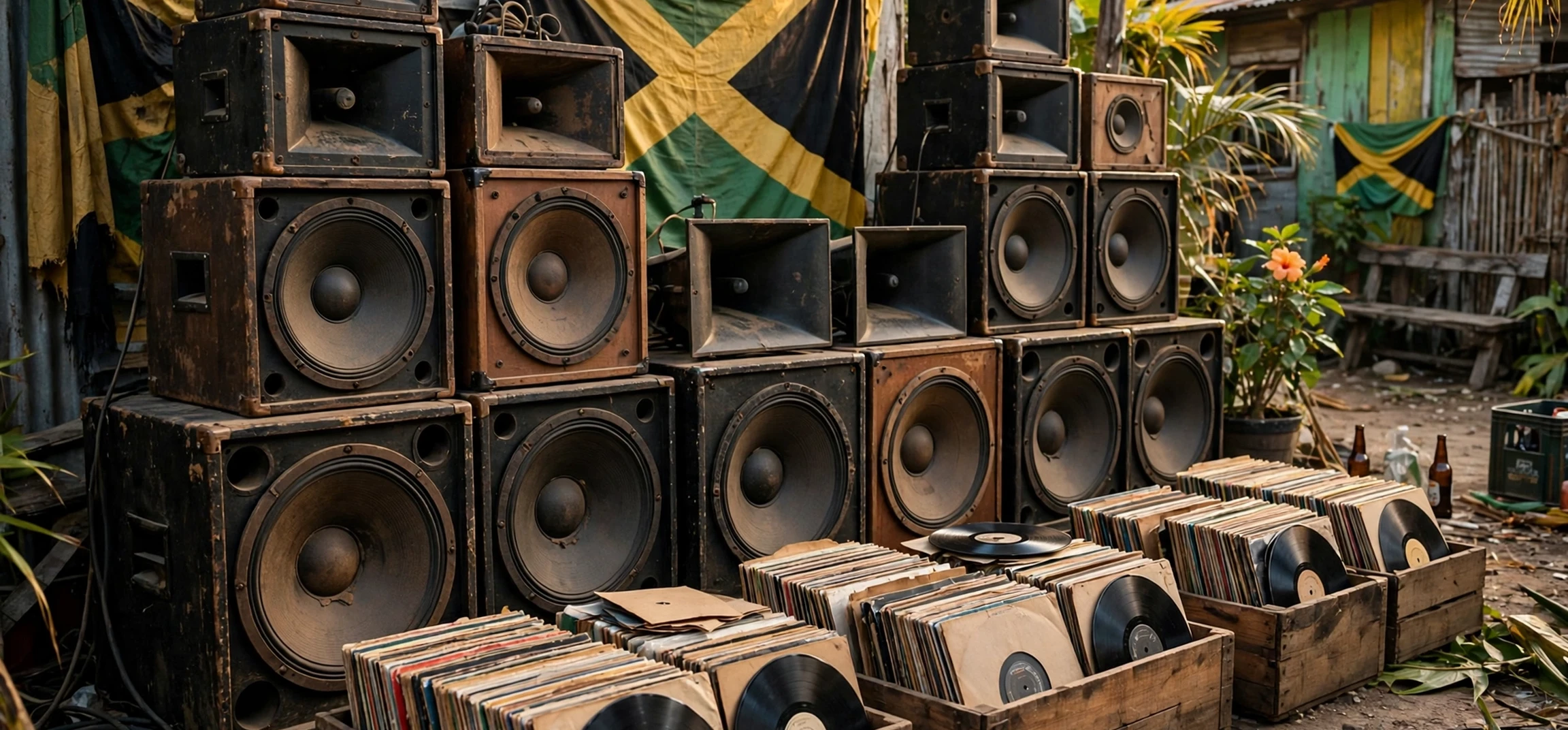
Music is the main route by which many listeners first meet Jamaican Patois. Dancehall, reggae, and their global offshoots have carried Patois vocabulary, rhythms, and vocal styles to audiences far beyond Jamaica. Artists use language creatively: for rhythm, for rhyme, for character, and for emotional force. A strong exclamation in a lyric may serve as a percussive sound, a mark of authenticity, or a dramatic peak in a verse. Listeners often learn the sound of a word long before they learn its precise social weight.
Dancehall in particular is known for direct, energetic language and for competitive wordplay. Performers build reputations on delivery, inventiveness, and crowd response. Strong language in that performance context is understood by the audience as part of the genre’s energy and bravado. That does not mean the same language transfers neatly to everyday conversation, to a classroom, or to a comment thread. Performance language and conversational language follow different rules in every musical tradition, from rock to hip-hop to dancehall.
Reggae offers a useful contrast. While reggae also uses Patois expressively, its best-known themes often emphasise social commentary, spirituality, and unity. The presence of strong language varies by artist, era, and message. Comparing genres helps listeners avoid a single stereotype: Jamaican music is not one sound or one register, and Patois is not reducible to its strongest words. The bombaclat slang meaning is one small part of a rich linguistic and musical tradition, not its definition.
Global pop and hip-hop have further spread Patois-influenced vocabulary. Artists outside Jamaica sometimes borrow Patois words, rhythms, or vocal inflections as a tribute, a stylistic choice, or a commercial hook. Borrowing can be respectful when it acknowledges its source and understands the bombaclat slang meaning. It can feel exploitative when it treats a community’s language as a costume or a punchline. Listeners can develop a better ear for that difference by learning the background, as this article aims to do, rather than by repeating every borrowed word uncritically.
Bombaclat Slang Meaning in Clips and Compilations
Clip compilations work by repetition and reaction. An editor gathers short moments — a surprising goal, a failed stunt, a dramatic argument, a funny animal — and adds a bold caption or a reaction sound. A strong exclamation fits that format perfectly: it is short, it signals surprise, and it tells the viewer how to feel. That is why bombaclat slang meaning searches so often sit next to compilation videos, and why the bombaclat slang meaning is so often learned from a caption rather than a conversation. The word functions as a label for the feeling the clip is meant to provoke.
There are, however, costs to that format. A compilation removes the original speaker’s context, flattens different situations into one reaction, and rewards the strongest possible response. A mild surprise and a genuine shock receive the same caption. Over time, viewers may start to associate the word only with humour, forgetting that in its original language it can express real anger or offence. The clip format also encourages imitation: viewers copy the caption onto their own videos, spreading the word further from its source with each reuse.
Another feature of compilations is decontextualised authorship. The person who made the original clip may be Jamaican, may be quoting Jamaican speech, or may simply be using a word they heard online. The viewer usually cannot tell. That uncertainty is itself a reason for caution. Repeating a strong term from a compilation without knowing who first used it, or in what setting, risks repeating language in a way its originators would not endorse.
None of this means compilations are harmful in themselves. Short video is a legitimate form of entertainment, and reaction culture is a normal part of online life. The point is narrower: when a compilation’s humour depends on a strong word from another language community, the viewer should pause before adopting that word. Enjoying a clip and adopting its vocabulary are different actions, and only the second carries social consequences.
Bombaclat Slang Meaning in Media and Memes
Memes follow a similar logic to compilations. A meme template pairs an image with a short text, and the text must do a lot of work in very few words. A strong exclamation provides instant emphasis, which is why meme creators reach for it. The meme may be shared thousands of times, each share further detaching the word from its origin. Eventually, many sharers know the meme but not the language, and the word becomes a generic internet reaction.
Media coverage and language explainers, including this article, play a corrective role. By explaining the bombaclat slang meaning in cultural context, they slow down that detachment and remind readers that internet slang has a home. Good explainers do not scold readers for curiosity; they give readers enough background to make informed choices. Curiosity about language is healthy. What matters is what the reader does next: whether they treat the word as a toy, or as a real term belonging to a real community.
Social media platforms also shape usage through filters and trends. A word may be altered in spelling to avoid moderation, turned into a sound, or used as a trending audio clip. Each transformation makes the word feel more like platform content and less like human speech. That feeling is misleading. Behind every trending sound is a speaker, a language, and a set of social norms. Keeping that human background in mind is the simplest form of respect a global audience can practise.
When Not to Use Bombaclat Slang Meaning
The clearest guidance for learners is to avoid using the bombaclat slang meaning in formal, professional, educational, and unfamiliar settings. Do not use it at work, in a job application, in a classroom, in a presentation, or in correspondence with someone you do not know well. Do not use it in front of children as a joke, and do not use it to address a stranger, a customer, or a person in authority. In all of those settings, the bombaclat slang meaning is likely to be heard as rude, aggressive, or unprofessional, regardless of the speaker’s intention.
Also avoid using it as an imitation of Jamaican speech. Performing another community’s strong language for laughs, for social media content, or to sound fashionable is likely to be read as mockery, even if the performer admires Jamaican culture. Admiration is better expressed by listening to the music, learning about the history, supporting Jamaican artists, and learning Patois respectfully through proper resources, rather than by adopting its strongest exclamation as a catchphrase.
Avoid using it in anger towards another person, even online. Strong language directed at someone is experienced as an insult, not as a meme. A disagreement conducted in clean language is clearer, more persuasive, and less likely to escalate. If a conversation is becoming heated, stepping away is better than reaching for a stronger word.
Finally, avoid using it when you are unsure of the audience. If you do not know whether the listeners speak Patois, understand the bombaclat slang meaning, or will find it offensive, the safe choice is not to use it. Uncertainty is not a reason to test a strong word; it is a reason to choose a milder expression. Ordinary language offers plenty of ways to show surprise, frustration, or enthusiasm without borrowing a term whose force you cannot fully judge.
Enjoying the Culture Without Copying Strong Language
Enjoying Jamaican culture does not require using its strongest language. Listeners can appreciate dancehall rhythms, reggae messages, Patois wordplay, Jamaican cuisine, literature, and humour without adopting a single expletive. In fact, deeper appreciation often comes from learning the milder, everyday vocabulary, the proverbs, the storytelling styles, and the musical history that give the culture its depth. A listener who knows a few polite greetings and understands a song’s theme has learned more than a listener who knows only one strong reaction word.
For creators, the same principle applies. A video, a meme, or a piece of writing can be energetic and funny without relying on borrowed strong language. Original humour, clear storytelling, and genuine reaction are more durable than a copied caption. Creators who credit their influences, avoid caricature, and keep their language clean reach a wider audience and avoid alienating the very community they admire.
For educators and parents, the guidance is to answer curiosity honestly and calmly. If a young person asks about the bombaclat slang meaning after seeing a clip, explain that it is a strong Jamaican Patois exclamation, that it can be offensive, and that it is not a word to use casually. That honest answer satisfies curiosity without encouraging imitation, and it models how to treat language from other communities with respect.
Cultural Context: Summary Table
| Context | How the bombaclat slang meaning functions | What to remember |
|---|---|---|
| Jamaican everyday speech | Strong exclamation, shaped by relationship and setting | Speakers adjust to audience; formal settings call for milder language |
| Music performance | Rhythmic, dramatic, genre-specific emphasis | Performance language does not transfer directly to conversation |
| Clips and compilations | Short reaction label for surprise or drama | Repetition flattens context; imitation spreads the word without its background |
| Memes and social media | Instant emphasis in a tiny text or sound | Popularity does not make a strong term neutral |
| Formal or unfamiliar settings | Read as rude or aggressive | Do not use it; choose clean, clear language instead |
Frequently Asked Questions
Does bombaclat slang meaning change in music?
The core bombaclat slang meaning stays strong, but music gives it a performance function: rhythm, emphasis, and genre energy. A lyric is not the same as a conversational remark, so listeners should not copy performance language into everyday speech uncritically.
Why does the word appear in so many clip compilations?
Compilations need short, emphatic reactions, and this term supplies strong emphasis in one word. Its usefulness as a caption explains its popularity, but it does not change its strength in its language of origin.
Is it disrespectful to watch clips that use the word?
Watching a clip is not the same as adopting its language. Enjoying music, humour, or video from another culture is normal. The respectful boundary is imitation: do not adopt strong language from another community as your own catchphrase.
When is it definitely not appropriate to use the term?
It is not appropriate at work, in education, in formal writing, in front of children, towards strangers, or in anger towards another person. In any unfamiliar setting, choose a milder expression.
How can I appreciate Jamaican culture respectfully?
Listen widely, learn the history and the everyday language, support Jamaican artists, and avoid caricature. Respectful appreciation is about learning and listening, not about copying the strongest word you heard in a clip.
Conclusion
The cultural story behind bombaclat slang meaning is larger than any single clip. It begins in Jamaican Patois, travels through music and media, and arrives on global screens as a short, punchy reaction word. That journey explains both its popularity and its risk: the more a word travels, the easier it is to forget its force. Listeners who understand the cultural context can enjoy the music, the humour, and the creativity without making that mistake. They can recognise the term, respect its speakers, and choose clean language for their own speech. In the end, cultural appreciation is not measured by how many borrowed words you use, but by how carefully you listen — and the bombaclat slang meaning, understood in full, is a good reminder of why that care matters.
For related cultural explainers, see Jason David Frank movies and television shows and where to watch the Marie Antoinette television series.