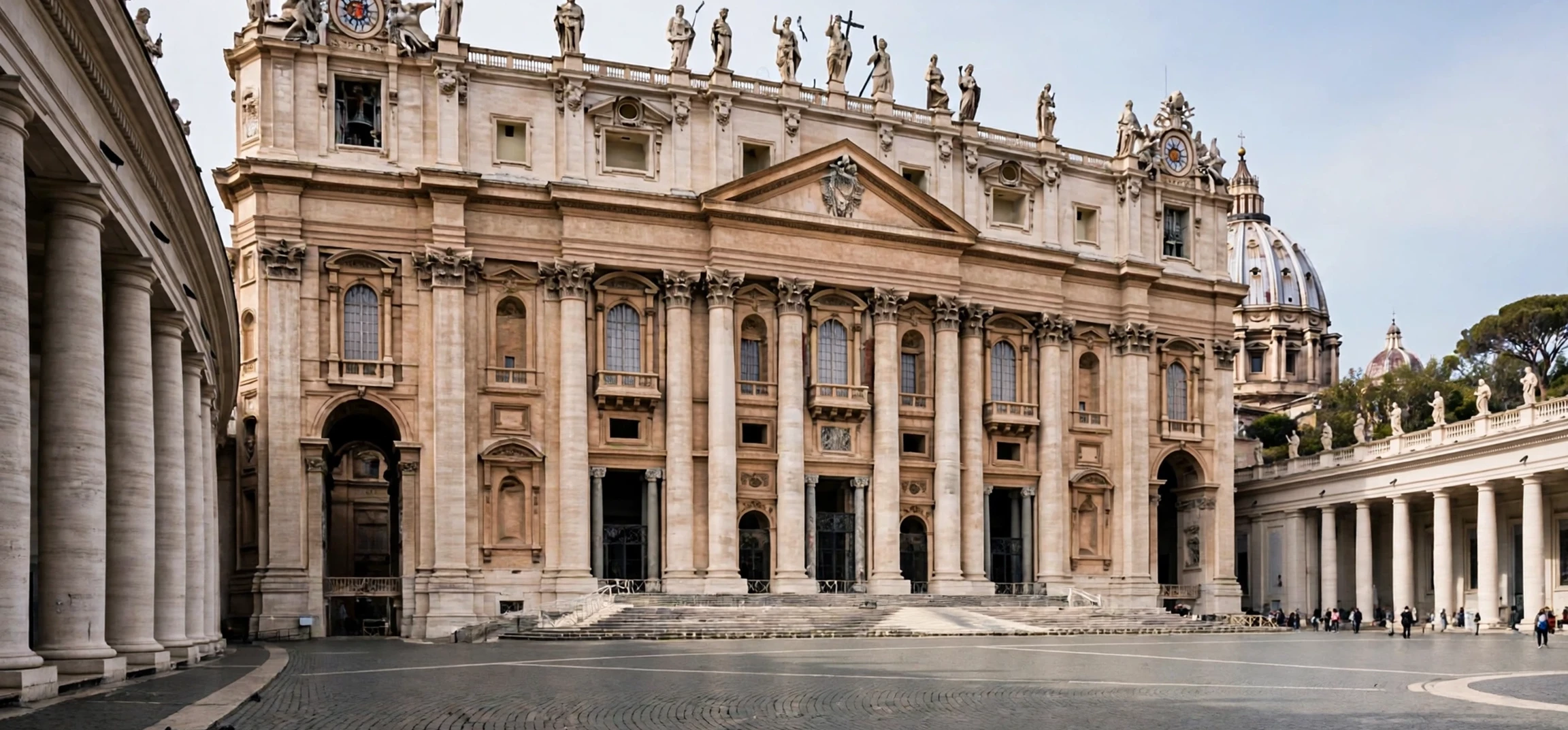
A listing of all popes is one of the most searched reference topics in church history, because it promises a single, orderly line from the first century to the present day. The reality is more interesting, and more complicated, than a simple numbered list suggests. This guide explains the history of the papacy, how the official list is counted, why numbering is disputed, and which popes are most confidently known from historical records. It does not fabricate a complete list of names and dates, and it directs readers to official sources for the full, authoritative listing. That caution is not a gap in the guide; it is the honest way to treat a list that scholars and the Church itself have debated for centuries.
The papacy is the office of the Bishop of Rome, who is also the leader of the worldwide Catholic Church. The holder is called the pope, a title derived from a word for father. Over nearly two thousand years, the office has changed enormously, from a local bishop in a persecuted minority community to a global spiritual leader with a sovereign state, the Vatican City. A listing of all popes therefore spans different eras, different political systems, and very different kinds of historical evidence.
Listing of All Popes: Why the Count Is Complicated
The figure most often quoted for a listing of all popes is 266, counting up to the present pontificate, but even that figure needs explanation. Counting popes is not like counting monarchs in a single, unbroken, well-documented dynasty. Early records are fragmentary, some reigns are disputed, some figures were later judged not to be legitimate popes, and numbering systems were applied retrospectively, long after the people in question had lived. Different reference works therefore give slightly different totals, depending on how they treat antipopes, short reigns, and gaps in the record.
An antipope is a person who claimed the papacy, or was elected by a rival faction, but who is not recognised in the official list as a legitimate pope. Antipopes arose most often during periods of political conflict, schism, or disputed elections. They are historically important, and they appear in many histories, but they are not counted in the official succession. A reader who adds antipopes to a listing of all popes will therefore get a higher total, and a reader who removes disputed early figures will get a lower one. Neither total is simply wrong; they reflect different counting rules.
Numbering adds a second layer of confusion. Popes who choose the same regnal name are numbered in order, such as John XXIII or Benedict XVI, but those numbers were not always assigned consistently. In some cases, a numbering error made centuries ago was never fully corrected, because changing it would create even greater confusion. In other cases, a figure once counted as a pope was later removed from the list, leaving a gap in the numbering. That is why a listing of all popes can contain a jump — for example, from one number to a later number without an intervening holder — and why readers should not assume that every number in a sequence was once held.
Listing of All Popes in the Early Centuries
The early centuries of a listing of all popes are the hardest to reconstruct with certainty. For the first two or three centuries, sources are sparse, dates are approximate, and the role of the Bishop of Rome was still developing. Catholic tradition traces the office to Saint Peter, regarded as the first pope, followed by figures such as Linus, Anacletus, and Clement. Those names are traditional and widely repeated, but the exact order, dates, and lengths of reign for the earliest bishops are not established with the same precision as later pontificates. Responsible histories say so plainly, rather than presenting approximate dates as exact facts.
As the Church grew, the Bishop of Rome’s authority and administrative role also grew. By the fourth century, after Christianity gained legal status in the Roman Empire, the papacy became more visible in imperial politics and in doctrinal disputes. Councils, letters, and imperial records provide firmer evidence from this period onwards, though gaps and disputes remain. A listing of all popes becomes progressively more reliable as the centuries pass, because record-keeping improved and because multiple independent sources survive.
Readers should therefore treat early lists as traditions supported by varying degrees of evidence, not as a modern-style civil register. That does not diminish their historical interest. The early papacy is fascinating precisely because it shows how a local leadership role grew, through persecution, debate, and empire, into a central institution. The uncertainty is part of the story, not a flaw to be hidden by inventing precise dates.
Listing of All Popes Through the Middle Ages
The Middle Ages brought both greater documentation and greater political complexity to a listing of all popes. Popes crowned emperors, negotiated with kings, founded universities, and at times acted as territorial rulers in central Italy. The Papal States gave the pope temporal power as well as spiritual authority, which made papal elections matters of international politics. Rival families, emperors, and city factions all sought influence over who would be chosen, and disputed elections became more common.
One of the most complex episodes was the Western Schism in the late fourteenth and early fifteenth centuries, when rival claimants to the papacy were supported by different European powers. The eventual resolution, through councils and resignations, restored a single recognised line, but the episode left a legacy of rival claimants who must be carefully distinguished from legitimate popes in any listing of all popes. Historians still discuss the details, and popular lists that ignore the schism risk misleading readers.
The medieval papacy also saw reform movements, crusades, the growth of religious orders, and major doctrinal and administrative developments. Popes such as Gregory I, known as Gregory the Great, are remembered for pastoral writing and for organising missions, while later medieval popes are remembered for legal, political, and institutional reforms. These are broad, well-established historical judgements, and they can be discussed confidently without needing to reproduce a disputed full list.
Listing of All Popes in the Modern Era
From the early modern period onwards, a listing of all popes rests on much firmer ground. The Reformation, the Council of Trent, and the growth of Vatican archives all improved record-keeping. Papal elections, reigns, and major acts are documented in detail, and modern reference works agree far more closely on this period than on the early centuries. Readers can therefore be confident about the broad sequence of recent popes, even if they should still check official sources for exact dates.
The nineteenth and twentieth centuries transformed the papacy again. The loss of the Papal States, the definition of papal infallibility at the First Vatican Council, the Lateran Treaty that created Vatican City, and the Second Vatican Council all reshaped the office. Popes of this era are among the best-known in history, partly because photography, broadcasting, and global travel made them visible worldwide. Their travels, writings, and public statements are extensively documented, which makes modern papal history accessible to general readers in a way early history is not.
The present era continues that visibility. A modern pope’s election is broadcast live, his first words are reported globally within minutes, and his daily schedule is published through official channels. For a listing of all popes, the modern end of the list is therefore the easiest part to verify. The difficulty lies at the beginning, not the end, and that contrast is itself instructive about how historical evidence works.
How the Official List Is Counted
The official list, as maintained through Vatican reference works and the Annuario Pontificio, the annual Vatican yearbook, counts legitimate popes in succession from Saint Peter onwards, excluding antipopes. When a pope resigns, as Benedict XVI did, his successor is counted as the next pope in the normal way; resignation does not create a second simultaneous line. When a reign is very short, it still counts, provided the election is recognised as valid. When an election is disputed and later judged invalid, the claimant is treated as an antipope and excluded.
Regnal names are chosen by the new pope, often to honour a predecessor, a saint, or a particular programme. Numbering follows the chosen name, not the person’s birth name. A pope who chooses a name never used before takes no number. A pope who chooses a name used before takes the next number in that sequence, subject to the historical quirks described above. This system explains why the same birth names can produce different regnal names, and why regnal numbers sometimes skip.
Readers who want the complete, authoritative listing should consult official Vatican sources and reputable reference works, rather than copying a list from a blog or a social media post. Official sources are updated when scholarship or Church judgement changes a detail, and they distinguish clearly between legitimate popes and antipopes. A general guide like this one can explain the system and highlight well-known figures, but it should not pretend to replace that official record.
Well-Known Popes: A Confident Selection
The table below includes only popes whose place in history is widely agreed and whose general significance can be stated confidently. It is a selection, not a complete listing of all popes, and it deliberately avoids precise reign dates where a general guide might mislead. Readers who need exact dates should check the official list.
| Pope | Era in broad terms | Why widely remembered |
|---|---|---|
| Saint Peter | First century | Regarded in Catholic tradition as the first pope and a leading apostle |
| Gregory I, Gregory the Great | Late sixth and early seventh centuries | Pastoral leadership, writings, and organisation of missions |
| Leo I, Leo the Great | Fifth century | Doctrinal leadership and defence of Rome in a turbulent era |
| Urban II | Late eleventh century | Associated with the calling of the First Crusade |
| Innocent III | Late twelfth and early thirteenth centuries | A powerful medieval pope who shaped Church law and politics |
| Pius IX | Nineteenth century | Long reign spanning Italian unification and the First Vatican Council |
| Leo XIII | Late nineteenth century | Known for social teaching and engagement with modern thought |
| Pius XII | Mid-twentieth century | Led the Church through the Second World War and its aftermath |
| John XXIII | Mid-twentieth century | Called the Second Vatican Council |
| Paul VI | Mid to late twentieth century | Guided the Second Vatican Council to completion and travelled widely |
| John Paul II | Late twentieth and early twenty-first centuries | Long, highly visible global pontificate |
| Benedict XVI | Early twenty-first century | Noted theologian who resigned from the papacy |
| Francis | Twenty-first century | First pope from the Americas; emphasised mercy, care for the poor, and care for creation |
This selection is intentionally short. A longer table that claimed completeness would risk exactly the errors this guide warns against: invented dates, misordered early figures, and confusion between popes and antipopes. A short, confident selection is more useful than a long, unreliable one.
Common Mistakes in a Listing of All Popes
The most common mistake is copying a list without checking its counting rules. A list that includes antipopes, a list that excludes disputed early figures, and the official list will all differ, and none of those differences means the copier made an arithmetic error. The error lies in presenting one version as the only version without explaining the rules. A careful reader should always ask: does this list count antipopes, and how does it treat the earliest centuries?
A second mistake is treating approximate early dates as exact. Early papal dates are often given as ranges or as traditional dates, and different sources give different years. Presenting a single year without qualification overstates the evidence. A third mistake is assuming that regnal numbers are continuous. As explained above, numbering gaps and retrospective corrections mean that a missing number does not always indicate a missing pope.
A fourth mistake is relying on images alone. Many searches for a listing of all popes also seek portraits, and image collections online often mislabel, duplicate, or invent portraits, especially for early popes for whom no contemporary portrait exists. Portraits of early popes are usually later artistic imaginings, not photographs or contemporary likenesses. Readers should treat such images as illustrations, not as historical evidence.
Frequently Asked Questions
How many popes have there been in a listing of all popes?
The commonly quoted total is 266, counting legitimate popes up to the present pontificate under official counting rules. The total varies in other works depending on how antipopes and disputed early figures are treated, so readers should check the counting rules behind any figure they quote.
Who was the first pope?
In Catholic tradition, Saint Peter is regarded as the first pope. Early succession after Peter is traditional rather than precisely documented, and exact order and dates for the first successors are not established with modern precision.
What is an antipope?
An antipope is a rival claimant to the papacy who is not recognised in the official succession. Antipopes are historically important, but they are excluded from the official count in a listing of all popes.
Why do some pope numbers skip?
Numbering was applied retrospectively and inconsistently, and some figures once counted were later removed. A skipped number therefore does not necessarily mean a pope is missing from the list.
Where can I find the complete official list?
Consult official Vatican reference sources, including the Annuario Pontificio, and reputable scholarly reference works. Those sources distinguish legitimate popes from antipopes and are updated as scholarship develops.
Conclusion
A listing of all popes is best understood as a long, evolving story rather than a simple spreadsheet. The papacy began as a local bishopric, grew into a medieval power, survived schism and reform, and became a global spiritual office documented in extraordinary detail in the modern era. Counting that story produces a famous total, but the total only makes sense when the counting rules are understood: legitimate popes counted, antipopes excluded, early uncertainty acknowledged, and numbering quirks explained. For well-known figures, history is confident and rich. For a complete, authoritative list, the wise step is to turn to official sources. That approach respects both the history and the reader, and it avoids the false precision that so many online lists unfortunately offer. A listing of all popes, handled honestly, teaches as much about how history is written as it does about the popes themselves.
For related reading on the site, see fan-made streaming collections and Cartoon Network games and Ben 10 gameplay.



