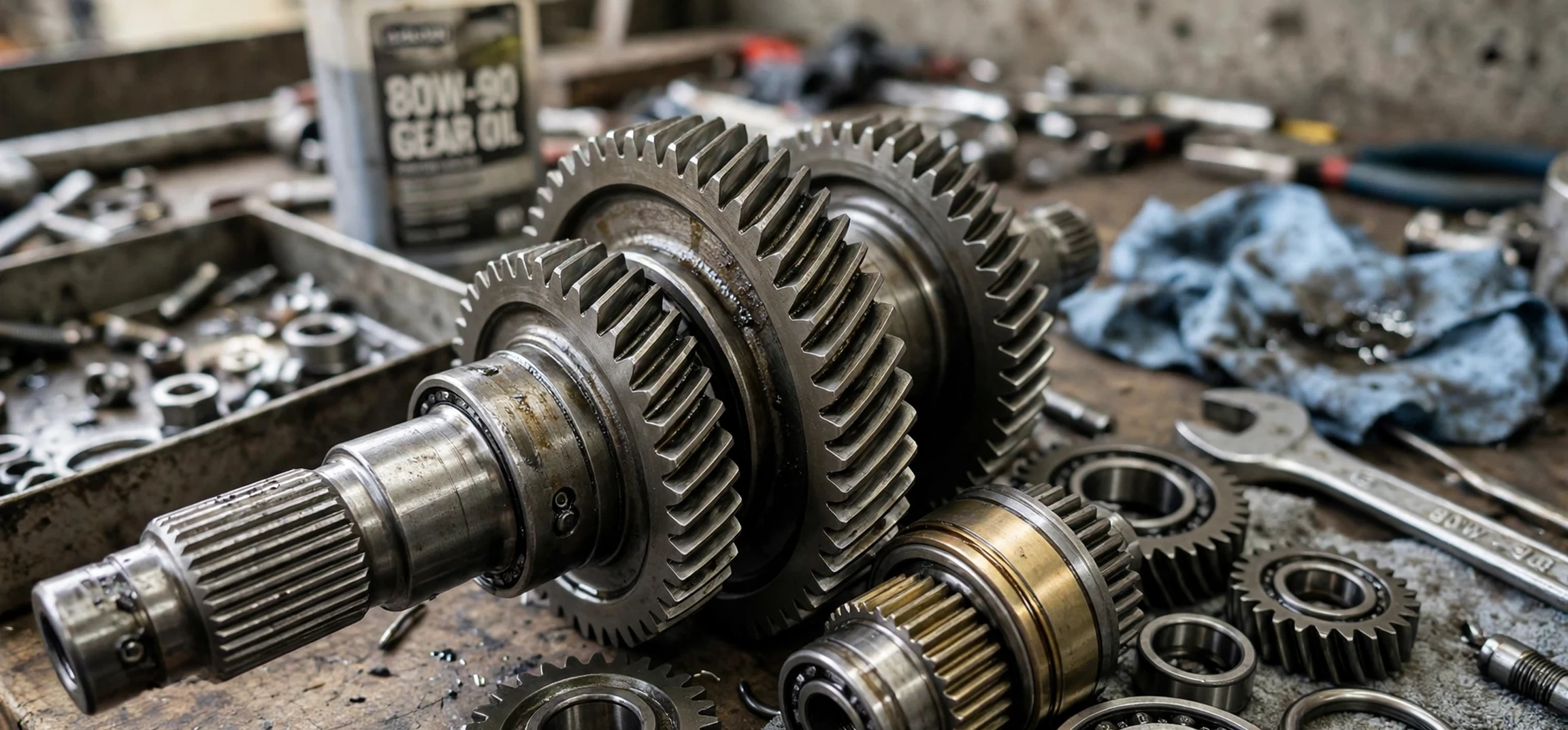
The meaning of continuously variable transmission is simpler than the long name suggests. A continuously variable transmission, usually shortened to CVT, is a type of automatic gearbox that does not use a fixed set of gears. Instead, it can change its gear ratio smoothly and continuously across a range, so the engine can stay at an efficient speed while the car speeds up or slows down. If you have ever wondered why some modern cars accelerate without the familiar stepped changes of a conventional automatic, the meaning of continuously variable transmission is the answer: the gearbox is adjusting constantly, rather than stepping from one gear to the next.
This guide explains the meaning of continuously variable transmission in plain language. It describes how a CVT works, how it differs from manual and conventional automatic gearboxes, what its advantages and disadvantages are, which kinds of vehicles use it, and what drivers should know about living with one. No engineering degree is needed to grasp the meaning of continuously variable transmission. By the end, you should be able to explain a CVT to another driver, recognise its distinctive driving feel, and understand why manufacturers choose it for many small and mid-sized cars.
Meaning of Continuously Variable Transmission: The Basic Idea
To understand the meaning of continuously variable transmission, start with what a gearbox does. An engine produces power most efficiently within a certain range of speeds, measured in revolutions per minute. The wheels, however, need to turn at very different speeds depending on whether the car is pulling away from a junction, cruising on a motorway or climbing a hill. A gearbox bridges that gap. It changes the ratio between engine speed and wheel speed, so the engine can work efficiently while the car moves at the right speed for the road.
In explaining the meaning of continuously variable transmission, it helps to contrast it with a manual gearbox, which does this with a fixed set of gears, typically five or six, and the driver selects them with a lever and clutch. A conventional automatic also uses fixed gears, but it selects them for the driver. A CVT takes a different approach. Instead of fixed gears, it provides an effectively infinite number of ratios within its operating range. As the car accelerates, the ratio changes gradually, keeping the engine near its most efficient speed. That is the “continuously variable” part of the name: the ratio varies continuously, rather than jumping between set points.
The most common CVT design uses two pulleys connected by a belt or chain. Each pulley can change its effective diameter. When one pulley gets wider and the other gets narrower, the ratio changes. Imagine two cones facing each other with a belt running between them: moving the belt along the cones changes the gearing smoothly. Modern CVTs use sophisticated hydraulics and electronics to control those pulleys precisely, responding in fractions of a second to the driver’s throttle input, the road gradient and the vehicle’s speed. The result is seamless ratio change with no gear-shift jolt.
Meaning of Continuously Variable Transmission Compared with Other Gearboxes
Comparing a CVT with other gearboxes helps clarify the meaning of continuously variable transmission, and the meaning of continuously variable transmission becomes clearer still when you drive one. A manual gearbox gives the driver full control and a direct mechanical connection, which many enthusiasts enjoy, but it requires skill and attention, especially in traffic. A conventional automatic removes the clutch pedal and gear lever work, but it still steps through fixed gears, and drivers can usually feel each change, however smooth it has become in modern cars. A CVT removes those steps entirely, which creates a different driving sensation.
That sensation is often described as smooth but unfamiliar. In a conventional car, acceleration is accompanied by rising engine noise, a gear change, a brief fall in engine speed, and then rising noise again. In a CVT car, the engine may rise to a steady speed and stay there while the car gathers speed, because the gearbox is adjusting the ratio rather than the engine speed. Some drivers find this calm and refined. Others, used to stepped gears, initially find it odd, as if the car is not changing gear at all. Manufacturers have responded by programming many modern CVTs to simulate stepped changes under hard acceleration, giving a more familiar feel while retaining the efficiency benefit.
Fuel efficiency is one of the main reasons CVTs are used, and it is central to the meaning of continuously variable transmission in everyday motoring. Because the gearbox can keep the engine at an efficient speed more of the time, it can reduce fuel consumption compared with an older automatic, particularly in town driving and steady cruising. That advantage matters more as fuel economy and emissions standards become stricter. It is also why CVTs are common in hybrid vehicles, where the gearbox must work smoothly alongside an electric motor and a petrol engine. In a hybrid, seamless ratio change helps the system switch between power sources without jerks or hesitation.
| Gearbox type | How ratios change | Driving feel |
|---|---|---|
| Manual | Driver selects fixed gears | Direct, engaging, requires clutch work |
| Conventional automatic | System selects fixed gears | Smooth steps, familiar gear changes |
| Continuously variable (CVT) | Ratio varies continuously | Seamless, steady engine speed |
Advantages and Disadvantages of a Continuously Variable Transmission
The advantages of a CVT begin with smoothness, which follows directly from the meaning of continuously variable transmission. Without stepped gear changes, acceleration feels linear and refined, and there is no shift shock in traffic. Fuel efficiency is another benefit, as described above, because the engine can stay near its ideal speed. CVTs are also mechanically simpler in one sense: they have fewer gear sets than a conventional automatic, which can reduce weight and manufacturing complexity. For small cars, where weight and cost matter greatly, that simplicity is attractive to manufacturers.
There are disadvantages to consider as well. Some drivers dislike the steady engine note under acceleration, describing it as a droning sound, although modern programming has reduced this effect considerably. Towing capacity can be lower in some CVT models than in equivalent conventional automatics, because the belt-and-pulley system has limits on the torque it can handle comfortably. Repair costs can also be higher if a CVT fails outside warranty, because specialist knowledge and parts are required, and some units are replaced rather than repaired. Those points do not make a CVT a poor choice, but they are worth weighing when comparing models.
Maintenance is another practical topic. Most manufacturers recommend periodic transmission fluid changes for CVTs, and using the correct fluid type is essential. CVT fluid is not interchangeable with conventional automatic transmission fluid in most cases, and using the wrong fluid can cause damage. Drivers should follow the service schedule in the vehicle handbook, avoid aggressive launch-style starts, and have any unusual noises, slipping sensations or warning lights checked promptly. With proper maintenance, a modern CVT can provide many years of reliable service, and many manufacturers now offer long warranties on the transmission.
Which Vehicles Use a Continuously Variable Transmission?
CVTs are most common in small hatchbacks, and that pattern reflects the meaning of continuously variable transmission as an efficiency-first design., compact saloons, small SUVs and hybrid cars, where efficiency and smoothness are priorities. Several Japanese manufacturers have used CVTs extensively, and the technology has spread to other brands as well. It is less common in large, heavy vehicles designed for towing, and in high-performance sports cars, where drivers often prefer the feel of fixed gears or a dual-clutch gearbox. That pattern reflects a simple engineering trade-off: a CVT excels at efficiency and refinement in everyday driving, while other gearboxes may suit heavy loads or track-focused performance better.
Electric vehicles, by contrast, generally do not need a CVT at all, because an electric motor produces strong torque across a wide speed range and can often work with a single fixed reduction gear. Hybrids sit in between: they combine a petrol engine, which benefits from a CVT, with an electric motor, which provides instant torque at low speed. That combination explains why so many hybrid models use a CVT or a closely related electronically controlled system. When test-driving a hybrid, the smooth, stepless feel you notice is very likely the CVT at work.
For car buyers, the practical advice is to test-drive rather than judge a CVT from description alone, because the meaning of continuously variable transmission is best understood behind the wheel. Spend time in town traffic, on a dual carriageway and on a hill, and notice how the car responds when you press the accelerator gently and firmly. Some drivers adapt within minutes and never think about the gearbox again. Others prefer the stepped feel of a conventional automatic and should choose accordingly. Neither preference is wrong; it is a matter of driving style and expectation, and a test drive is the quickest way to discover your own.
Owning a car involves more than the gearbox, of course. Running costs, insurance and finance all affect the total picture, and readers comparing models often find it helpful to read related guides, such as what a deductible means in car insurance and what refinancing a car means. For a broader look at car-related costs, name-your-price car rental explains a different way of thinking about vehicle pricing.
Frequently Asked Questions
What is the meaning of continuously variable transmission?
It is a type of automatic gearbox that changes its gear ratio smoothly and continuously, rather than stepping through fixed gears, so the engine can stay at an efficient speed.
Is a CVT an automatic gearbox?
Yes. A CVT is a form of automatic transmission, because the driver does not operate a clutch or select gears manually. It simply works differently from a conventional automatic.
Why does a CVT car sound different when accelerating?
Because the gearbox changes ratio while the engine stays at a steady speed, the engine note may remain constant during acceleration, unlike the rising and falling note of a stepped gearbox.
Do CVTs need special maintenance?
They need the correct CVT fluid and servicing at the manufacturer’s recommended intervals. Using the wrong fluid or skipping services can shorten the transmission’s life.
Conclusion
The meaning of continuously variable transmission comes down to one idea, and the meaning of continuously variable transmission is worth remembering when you compare gearboxes.: a gearbox that varies its ratio continuously instead of stepping through fixed gears. That design brings smoothness and efficiency, especially in small cars and hybrids, at the cost of a driving feel that some drivers need time to appreciate. Whether a CVT suits you depends on your priorities, but understanding how it works makes the choice much easier. On your next test drive, listen for that steady engine note and seamless acceleration — you will now know exactly what is happening beneath the bonnet.