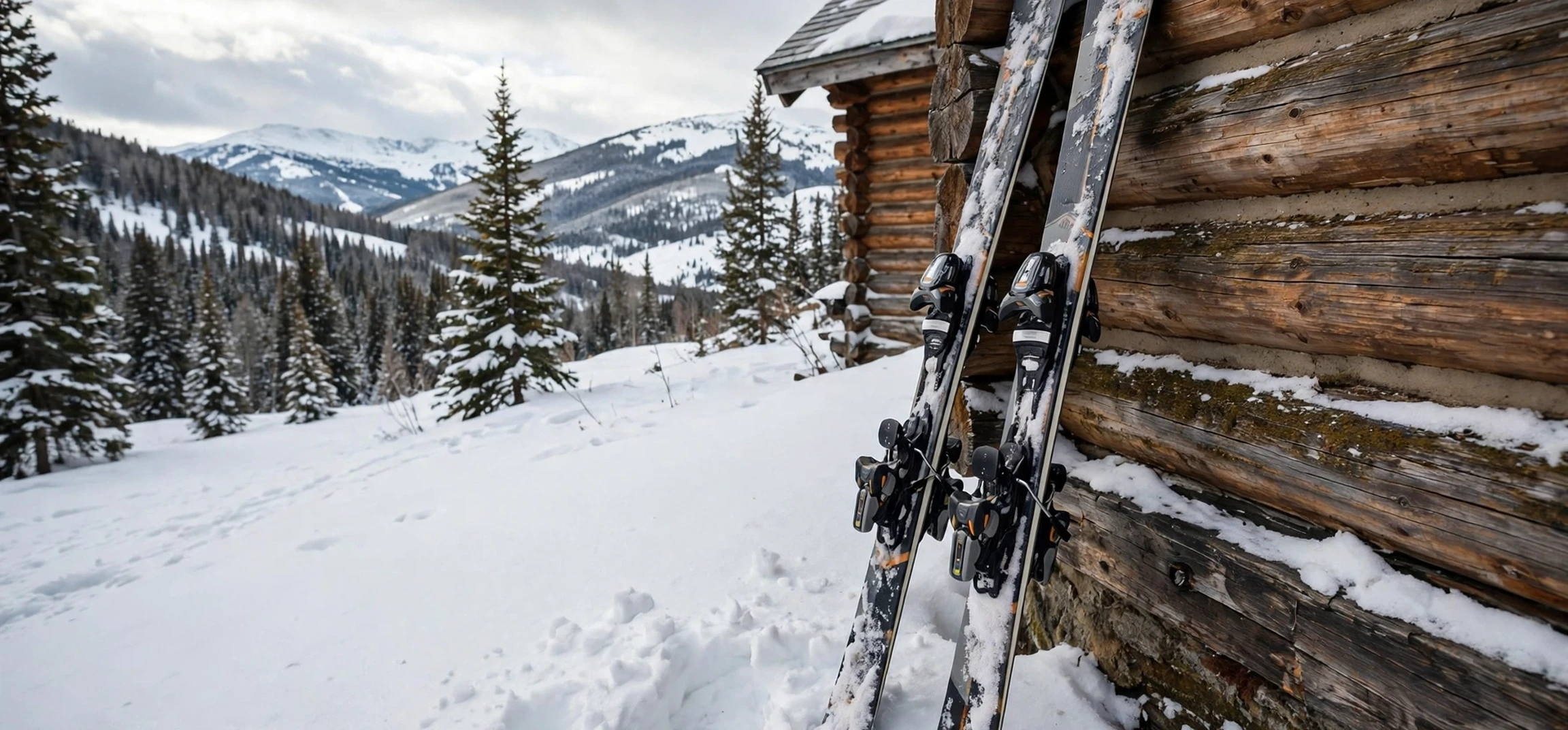
If you are 5 feet 5 inches tall and shopping for downhill skis, you have probably searched for 5 5 ski size — shorthand for the right ski length for a skier of your height. This guide explains what a 5 5 ski size generally means, what length range most guides suggest as a starting point for someone of this height, and how ability, terrain, and ski type shift that starting point. It offers general sizing guidance only: ski sizing involves personal factors that a chart cannot fully capture, so before you buy, confirm your choice with a qualified fitter at a reputable ski shop. Nothing here is a safety guarantee, and the right length for you may differ from the ranges below.
Why does height matter when you research a 5 5 ski size? A ski’s length affects how it turns, how stable it feels at speed, and how much effort it takes to control. Longer skis generally offer more stability and float in soft snow, while shorter skis generally turn more easily and feel more manoeuvrable. Height is a useful starting point because it correlates roughly with leg length and leverage, but it is not the whole story. Weight, ability, preferred terrain, and the type of ski all influence the final choice, which is why two skiers of the same height can sensibly choose different lengths.
5 5 Ski Size: A Sensible Starting Point
As a general starting point, a 5 5 ski size for an adult recreational skier often falls in the region of the mid-150s to the low-160s in centimetres, with many general charts placing a skier of this height somewhere around chin to nose height when the ski is stood upright beside them. That chin-to-nose rule is a traditional, easy way to visualise length in a shop, but it is only a rough guide. A beginner may be more comfortable towards the shorter end of the range, where turning feels easier, while a confident, athletic skier who likes speed and open pistes may prefer the longer end.
It is important to understand what these numbers are for a 5 5 ski size: starting points for discussion with a fitter, not prescriptions. Your weight matters because a heavier skier can flex a longer, stiffer ski more effectively, while a lighter skier may find the same ski hard to control. Your ability matters because technique changes how much ski you can handle. And your ambitions matter because a skier who spends most days on groomed pistes has different needs from one who seeks out powder, moguls, or park features. A 5 5 ski size is therefore best treated as the centre of a conversation, not as a final answer.
Children and teenagers searching for a 5 5 ski size are a separate case. Young skiers grow quickly, and sizing for them balances current height against expected growth, ability, and how often they ski. If you are buying for a young skier who is currently 5 feet 5 inches, ask a fitter about growth room versus control: a ski that is slightly long may last an extra season, but one that is too long can hinder learning and confidence. For adults, whose height is stable, the choice is simpler — focus on ability and terrain rather than growth.
5 5 Ski Size by Ability Level
Ability is the single biggest adjustment to any height-based chart. A beginner who is still learning to link turns and control speed will usually benefit from a shorter ski within the general range, because shorter skis are typically easier to turn and less demanding when technique is still developing. Confidence grows faster when the equipment feels manageable, and that confidence is what allows a beginner to progress to longer skis later. There is no prize for starting on the longest ski you can stand beside; there is a real cost in frustration if the ski constantly feels like it is running away from you.
An intermediate skier looking at a 5 5 ski size — someone who skis confidently on groomed runs, links turns comfortably, and is starting to explore varied terrain and higher speeds — will often sit in the middle of the range for a 5 5 ski size. At this stage, a ski that offers a blend of easy turning and reasonable stability is usually the most enjoyable choice. Many intermediates find that a versatile, all-mountain ski in the middle of their height range serves them well across a whole holiday, rather than a specialised ski that excels in only one condition.
An advanced or expert skier considering a 5 5 ski size may choose towards the longer end of the range, or beyond it, depending on discipline and preference. Advanced skiers generate more force through their turns and can control longer skis at speed, and they may want the extra stability for steep, fast, or off-piste skiing. Even so, the choice remains personal: some experts prefer shorter, livelier skis for moguls or tight trees, where quick turning matters more than straight-line stability. Ability opens up options; it does not dictate a single length.
How Terrain and Ski Type Change the Choice
Ski type matters as much as length when settling a 5 5 ski size. All-mountain skis are designed as a compromise across groomed pistes, mixed snow, and occasional off-piste, and their sizing generally follows the height-based range described above. Piste or carving skis, designed mainly for groomed runs and precise turns, are often chosen slightly shorter, because their shape and construction already provide grip and responsiveness. Powder skis, designed for deep, soft snow, are often chosen longer, because extra length and width help the ski float rather than sink.
Freestyle and park skis are another exception. Park skiers often choose shorter skis for manoeuvrability in tricks and tight features, while freeride skis for big-mountain terrain may run longer for stability in variable snow. Mogul skis tend to be shorter and more flexible for quick, rhythmic turns. The lesson is simple: do not apply a single 5 5 ski size number across every category. Decide what kind of skiing you will do most, then discuss length within that category with a fitter who can match the ski’s shape and flex to your weight and ability.
Width also deserves a mention in any 5 5 ski size discussion, although it is not part of the length question. The waist width of a ski — the narrowest point under the binding — affects how it behaves in different snow. Narrower waists generally suit firm, groomed snow, while wider waists suit softer snow. A fitter will consider length and width together, along with the ski’s flex and rocker profile, to recommend a complete package rather than a length in isolation. That holistic view is another reason a shop fitting is worth more than a chart alone.
General Length Ranges by Height: A Reference Table
| Skier height | Beginner starting range (general guidance) | Intermediate starting range (general guidance) | Advanced starting range (general guidance) |
|---|---|---|---|
| 5 feet 2 inches | Low to mid-140s cm | Mid-140s to mid-150s cm | Mid-150s to low-160s cm |
| 5 feet 5 inches | Mid-150s cm | High-150s to low-160s cm | Low to high-160s cm |
| 5 feet 8 inches | High-150s to low-160s cm | Mid-160s to low-170s cm | High-160s to high-170s cm |
| 5 feet 11 inches | Low to mid-160s cm | High-160s to mid-170s cm | Mid-170s to mid-180s cm |
These ranges are general guidance drawn from commonly published charts, not a guarantee that any particular length will suit you. Weight, strength, boot fit, ski model, and personal preference can all move the right choice outside these ranges. Use the table to arrive at a shop with a sensible question — “I am 5 feet 5 inches and an intermediate skier; is a ski in the high-150s to low-160s a good place to start?” — rather than as a substitute for advice. A qualified fitter can watch you stand in your boots, check your weight and ability, and recommend a specific model and length.
For readers who enjoy gear and fitting topics more broadly, the same principle — a chart as a starting point, a fitting as the decision — applies elsewhere too. For example, our guide to fitting guides for outdoor equipment makes a similar point about matching gear to the individual, and a general family travelling guide can help with the practical side of planning a trip once your equipment is sorted.
Renting First: The Smartest Way to Test a 5 5 Ski Size
If you are unsure about your 5 5 ski size, renting before buying is the most practical test available. Rental shops stock a range of lengths and can swap skis during your trip if the first pair feels too long, too short, or simply wrong for the conditions. A day on a rental pair teaches you more about your preferences than a week of reading charts, because you feel the difference between lengths on real snow. Note what length you rented, what you liked and disliked, and what the shop staff suggested — that record is gold when you later buy.
Renting also makes sense for a 5 5 ski size decision if you ski only once or twice a season, if you are still progressing rapidly, or if you want to try different ski types before committing. Buying makes more sense when you ski regularly, when your ability has stabilised, and when you have a clear sense of the length and type you prefer. Either way, boots deserve at least as much attention as skis: a well-fitted boot improves control and comfort more than a small change in ski length, and an uncomfortable boot can ruin a day regardless of how well the skis are sized.
What to Tell a Fitter
When you visit a shop about your 5 5 ski size, bring useful information: your height and weight, your ability level described honestly, where and how often you ski, what terrain you enjoy, and what you liked or disliked about skis you have used before. Mention any previous lengths you have tried and how they felt. A good fitter will ask follow-up questions, may check your boots, and will explain why they recommend a particular length and model. If a shop simply hands you the longest ski in stock without asking about ability or terrain, consider seeking a second opinion.
Frequently Asked Questions About Ski Sizing at 5 Feet 5 Inches
What is the 5 5 ski size in centimetres?
There is no single official number. General charts place an adult of this height in the mid-150s to low-160s centimetres as a starting range, with beginners towards the shorter end and advanced skiers towards the longer end. Confirm your choice with a qualified fitter.
Should I choose a shorter or longer ski as a beginner?
Beginners generally benefit from the shorter end of their height range, because shorter skis are typically easier to turn and control while technique is developing. Progress to longer skis as confidence and ability grow.
Does weight matter as much as height?
Yes. Weight affects how a ski flexes and how much force you apply in a turn. Two skiers of the same height but very different weights may sensibly choose different lengths, which is why fitters ask for weight as well as height.
Can I use the same length for powder and piste skis?
Not necessarily. Powder skis are often chosen longer for float, while piste and carving skis are often chosen slightly shorter for precise turning. Discuss length within each ski category rather than applying one number everywhere.
Is a sizing chart enough to buy skis online?
A chart is a useful starting point, but it cannot replace a fitting. If you buy online, check the retailer’s exchange policy, and consider getting fitted in a shop first so you know your preferred length and model.
Conclusion
A 5 5 ski size is best understood as a starting range — generally the mid-150s to low-160s centimetres for an adult recreational skier of this height — adjusted for ability, weight, terrain, and ski type. Beginners should lean shorter for easier turning, intermediates will usually sit in the middle of the range, and advanced skiers may go longer depending on discipline and preference. Renting first is an excellent way to test a length on real snow, and a well-fitted boot matters at least as much as the ski itself. Above all, treat any chart, including this one, as general guidance only: confirm your final choice with a qualified fitter, and do not treat any sizing suggestion as a safety guarantee. With the right length and a proper fitting, your days on the mountain will be more comfortable, more controlled, and a great deal more enjoyable.