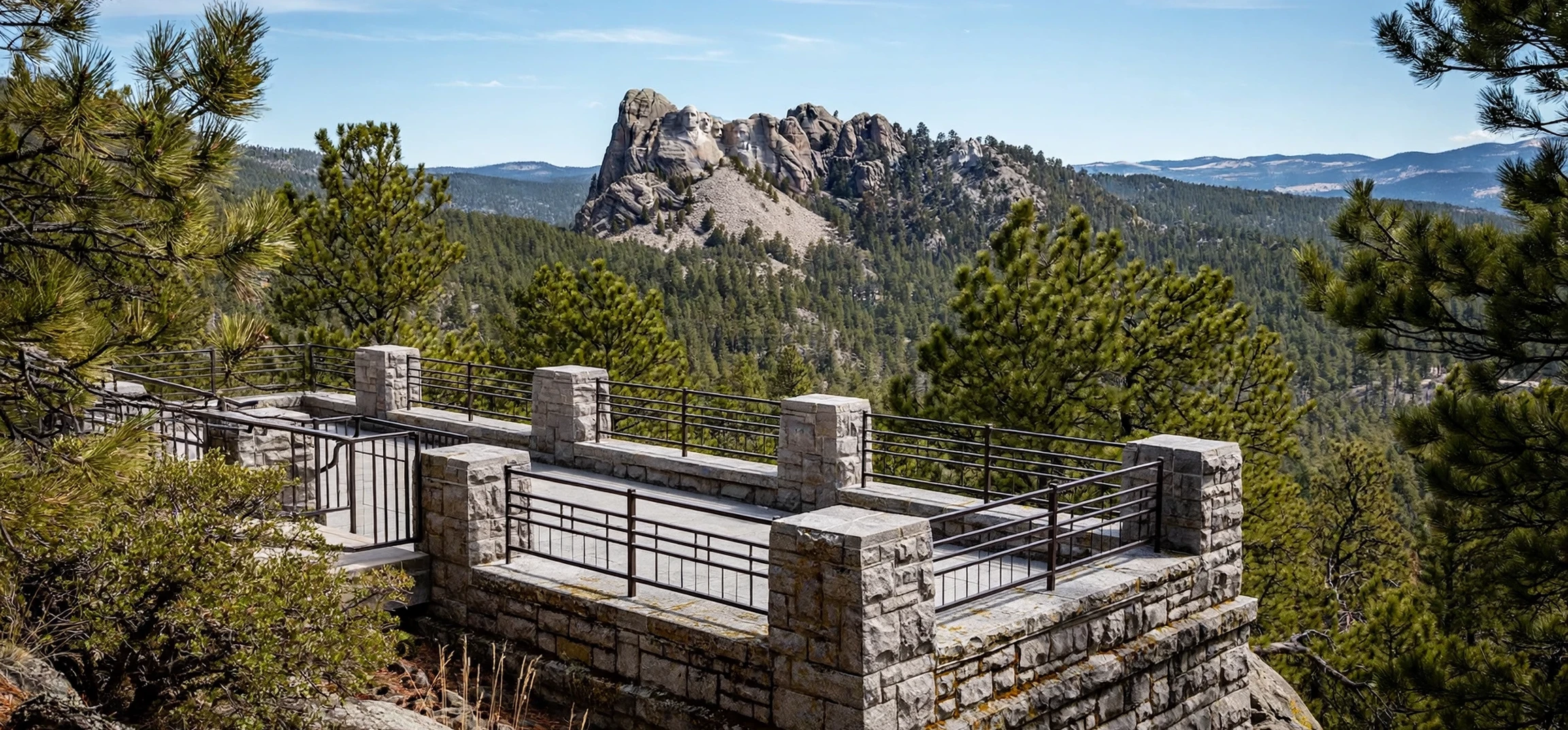
If you have ever stared at a photograph of the famous South Dakota mountainside and wondered about the mt rushmore faces names, you are not alone. The four enormous faces carved into granite look similar at first glance, especially in a small picture, yet each one belongs to a different president, chosen for a distinct reason. This guide gives you the mt rushmore faces names in the correct left-to-right order, explains how to recognise each face, and sets out the history behind the choices. By the end, you should be able to name every figure without hesitation and understand why these four men, rather than any others, were selected for such an extraordinary honour.
The short answer is simple. From left to right, as you face the memorial, the mt rushmore faces names are George Washington, Thomas Jefferson, Theodore Roosevelt and Abraham Lincoln. Washington stands on the far left, Jefferson is next to him, Roosevelt is third, and Lincoln closes the sequence on the far right. That order matters, because many quizzes, school worksheets and travel guides ask specifically for the left-to-right sequence, and swapping Jefferson and Roosevelt is the most common mistake. Keep the order Washington, Jefferson, Roosevelt, Lincoln fixed in your mind, and the rest of this guide will help you attach a face, a story and a set of clues to each name.
Mt Rushmore Faces Names From Left to Right
When people search for mt rushmore faces names, they usually want one clear list rather than a long history lesson. Here it is, in the order you see the faces when you stand in front of the memorial. George Washington, the first president, is on the left. Thomas Jefferson, the third president and principal author of the Declaration of Independence, comes next. Theodore Roosevelt, the twenty-sixth president, follows him. Abraham Lincoln, the sixteenth president, is on the right. The faces are each about eighteen metres tall, so their features are deliberately bold and simplified, which is one reason they can be hard to tell apart in photographs taken from a distance.
| Position from the left | President | Presidency | Best visual clue |
|---|---|---|---|
| First | George Washington | 1789–1797 | Calm, stern expression and powdered-hair style |
| Second | Thomas Jefferson | 1801–1809 | Longer face, high forehead and thoughtful gaze |
| Third | Theodore Roosevelt | 1901–1909 | Moustache and strong, energetic features |
| Fourth | Abraham Lincoln | 1861–1865 | Beard and deeply lined, solemn face |
That table is worth memorising if you are preparing for a test. It pairs each of the mt rushmore faces names with a single visual clue, which is often enough to identify a face even in a cropped or partly shaded photograph. Washington looks the most formal and restrained. Jefferson looks intellectual and slightly turned. Roosevelt looks vigorous, with his famous moustache giving him away at once. Lincoln, with his beard, is the easiest of all to recognise, because none of the other three wears a full beard in the sculpture.
George Washington: The First of the Mt Rushmore Faces Names
George Washington occupies the first position among the mt rushmore faces names, and his place there is symbolic as well as visual. As commander of the Continental Army during the American Revolutionary War and then as the first president, Washington helped to create the republic itself. The sculptor, Gutzon Borglum, intended Washington to represent the birth of the nation. That is why he stands at the start of the sequence: the story of the United States, as told by the memorial, begins with its founding.
To recognise Washington, look for a composed, almost severe expression and hair drawn back in the style of the late eighteenth century. His face is broad, his jaw is firm, and there is no beard or moustache. In many photographs, Washington also appears slightly more weathered than the others because his face was the first to be completed and has been exposed the longest, although regular preservation work keeps all four faces in good condition. If the face in front of you looks like the figure on the one-dollar bill, only far larger and carved from rock, you are looking at Washington.
Thomas Jefferson: The Second of the Mt Rushmore Faces Names
Thomas Jefferson is the second of the mt rushmore faces names, and he represents the growth of the nation. Jefferson wrote the Declaration of Independence and, as president, completed the Louisiana Purchase, which roughly doubled the size of the United States. Borglum therefore linked Jefferson with expansion: the country did not merely come into being under Washington, it grew under Jefferson. That pairing of birth and growth gives the first half of the memorial a clear narrative shape.
Visually, Jefferson is the figure most often confused with Roosevelt, so take a moment to learn his features. His face is longer and narrower than Washington’s, his forehead is high, and his gaze seems directed slightly upward and outward. He has no beard and no moustache, which separates him from both Roosevelt and Lincoln. His hair is shown in a natural, slightly wavy style rather than the formal powdered look associated with Washington. When you compare the second and third faces side by side, Jefferson looks more contemplative, while Roosevelt looks more forceful, and that contrast is a reliable way to tell them apart.
Theodore Roosevelt: The Third of the Mt Rushmore Faces Names
Theodore Roosevelt is the third of the mt rushmore faces names, and his inclusion sometimes surprises visitors who expect only eighteenth- and nineteenth-century figures. Roosevelt, president from 1901 to 1909, was chosen to represent the development of the nation, particularly its growing role in the wider world and its early conservation movement. He established national parks, forests and monuments on a large scale, and he pursued an energetic foreign policy. Borglum, who knew Roosevelt personally, admired that vigour and wanted it represented in stone.
Roosevelt is the easiest of the middle two faces to identify, thanks to his moustache. No other president on the memorial wears one, and Roosevelt’s moustache is prominent even in distant photographs. His features are also broader and more rugged than Jefferson’s, and his expression carries a sense of determination. He also wears spectacles in life, although the sculpture does not emphasise them in the same way a portrait might. If you see a moustache, you have found Roosevelt, and you are two-thirds of the way through the left-to-right sequence.
Abraham Lincoln: The Fourth of the Mt Rushmore Faces Names
Abraham Lincoln completes the mt rushmore faces names on the far right, and he represents the preservation of the nation. Lincoln led the United States through the Civil War, issued the Emancipation Proclamation, and worked to hold the Union together at a moment when it might have broken apart permanently. Borglum therefore placed Lincoln last in the sequence, not because he was the least important, but because preservation follows birth, growth and development in the story the memorial tells. Without Lincoln’s leadership, the nation Washington founded and Jefferson expanded might not have survived intact.
Lincoln is the most distinctive face on the mountain. His beard is unmistakable, his face is deeply lined, and his expression is solemn and thoughtful. Those lines were deliberate: Borglum wanted Lincoln to look like a man who had carried an enormous burden. In photographs, Lincoln’s face often appears the most shadowed, because of the way his features are carved and the angle of the light, but his beard remains the giveaway in almost any image. If you can only remember one clue from this whole guide, remember that the bearded president is Lincoln, on the right.
Why Were These Four Presidents Chosen?
Understanding why these four men were chosen makes the mt rushmore faces names much easier to remember, because the list stops being random and starts to form a story. Borglum’s original idea was broader: he first considered carving famous figures from the history of the American West. The project then changed direction, and the final design settled on four presidents who, in Borglum’s view, represented four great phases of American history. Washington represented the birth of the country, Jefferson represented its growth, Roosevelt represented its development, and Lincoln represented its preservation. That four-part theme is still used in the memorial’s own interpretation today.
It is worth noting what the memorial does not claim. It does not claim that these were the four greatest presidents by any objective measure, and historians continue to debate rankings. Other presidents, such as Franklin D. Roosevelt or Dwight D. Eisenhower, are often mentioned by visitors who wonder why they were left out. The answer is partly timing: the sculpture was designed in the 1920s and carved between 1927 and 1941, so later presidents could not have been considered in the original plan. The answer is also thematic: Borglum wanted a compact story in four chapters, and adding more faces would have changed the design completely.
The choice also reflects the sculptor’s personal admiration. Borglum knew Theodore Roosevelt and regarded him highly, which helps to explain Roosevelt’s inclusion ahead of other plausible candidates. He also admired Lincoln deeply. Recognising that personal element does not diminish the memorial; it simply reminds us that monuments are made by people with views and preferences, not by neutral committees. For a fuller sense of how public figures are remembered, readers may enjoy our guide to Abraham Lincoln’s middle name and the way small biographical details shape popular memory.
How to Remember the Mt Rushmore Faces Names
A simple memory trick helps many learners. Think of the initials W, J, R and L, and link each one to a vivid image: Washington with a wig, Jefferson with a journal, Roosevelt with a rough rider’s moustache, and Lincoln with a long beard. Say the sequence aloud a few times — Washington, Jefferson, Roosevelt, Lincoln — and then test yourself with a photograph, covering the labels if there are any. After two or three attempts, most people can name all four without checking.
Another useful trick is to work backwards from the two easiest faces. Find Lincoln first by his beard, on the right, and find Roosevelt next by his moustache, second from the right. That leaves only Washington and Jefferson on the left. Washington is the more formal, stern face on the far left, and Jefferson is the longer, more thoughtful face beside him. Working from the easiest clues inward reduces the chance of swapping the two middle figures, which is the error that catches out most people when they are asked for the mt rushmore faces names under time pressure.
Teachers and parents often use the memorial as a starting point for wider history lessons. Each president opens a different chapter: Washington leads to the Revolution and the early republic, Jefferson leads to the Declaration of Independence and westward expansion, Roosevelt leads to conservation and the early twentieth century, and Lincoln leads to the Civil War and emancipation. If you are studying any of those topics, the memorial gives you a visual anchor for the whole period. Our explainer on what monarchy means can also help younger readers understand why the American republic, founded in opposition to monarchy, chose presidents rather than kings as its symbols.
Common Mistakes When Naming the Faces
The most frequent mistake is placing Jefferson and Roosevelt in the wrong order, with Roosevelt second and Jefferson third. This happens because Roosevelt is the more famous face in popular culture, thanks to his moustache and adventurous reputation, so people assume he must come earlier. Remember that the memorial is not arranged by fame or by chronology alone: Jefferson, president from 1801, naturally comes before Roosevelt, president from 1901, if you think in date order, and that chronological logic is a good safety check. Washington (1789), Jefferson (1801), Lincoln (1861) and Roosevelt (1901) would be pure chronology, but the memorial swaps the last two for thematic reasons, placing Roosevelt before Lincoln so that the story ends with preservation.
Another mistake is assuming that the faces are in the order of the presidents’ numbers: first, third, sixteenth and twenty-sixth would give Washington, Jefferson, Lincoln and Roosevelt. That is a tempting pattern, but it is wrong, because the memorial’s order is Washington, Jefferson, Roosevelt, Lincoln. A third mistake is confusing the memorial with other carvings or monuments, including the nearby Crazy Horse Memorial, which is a separate and unfinished sculpture. Keeping the four names and their left-to-right positions distinct from other South Dakota landmarks will save confusion on quizzes and on visits alike.
Frequently Asked Questions About Mt Rushmore Faces Names
What are the mt rushmore faces names in order?
From left to right, the mt rushmore faces names are George Washington, Thomas Jefferson, Theodore Roosevelt and Abraham Lincoln. That order is fixed and is the answer expected in most quizzes and guides.
Which president is on the far left of Mount Rushmore?
George Washington is on the far left. He was the first president and represents the birth of the United States in the memorial’s design.
Which president has a beard on Mount Rushmore?
Abraham Lincoln, on the far right, is the bearded figure. His beard is the simplest visual clue for identifying any face on the memorial.
Why is Theodore Roosevelt on Mount Rushmore?
Roosevelt was chosen to represent the development of the nation, including conservation and America’s growing international role in the early twentieth century. The sculptor also admired him personally.
How big are the faces on Mount Rushmore?
Each face is about eighteen metres tall, which is why the features are carved so boldly. The scale is part of the reason the sculpture is visible from a considerable distance.
Conclusion
The mt rushmore faces names, from left to right, are George Washington, Thomas Jefferson, Theodore Roosevelt and Abraham Lincoln. Washington stands for birth, Jefferson for growth, Roosevelt for development, and Lincoln for preservation, and together they tell a compact story of the United States in four chapters. Use the beard to find Lincoln, the moustache to find Roosevelt, and the formal sternness of the far-left face to find Washington, and Jefferson will fall neatly into place between Washington and Roosevelt. With those clues, you will never need to guess again, and you will be able to explain not only who each face is, but why each man earned his place on the mountain.



