A clean, well-shaped beard starts with one detail most men get wrong: the line across the cheek. This beard cheek line guide walks you through finding your natural cheek line, shaping it with a trimmer, and keeping it sharp between cuts, so your beard looks intentional rather than overgrown. Whether you wear a short boxed beard or a fuller style, the cheek line frames your face and sets the tone for everything below it.
The cheek line is the upper boundary of your beard, running from near the ear toward the corner of the mouth. Get it right and your beard looks tidy and balanced. Set it too low and you lose fullness; set it too high and the beard looks thin and patchy. The good news is that your face already gives you a natural line to follow, and this beard cheek line guide shows you exactly how to find it.
What Is the Beard Cheek Line?
The beard cheek line is the top edge of your beard on each cheek. It usually runs in a gentle curve or a straight diagonal from the sideburn area down toward the corner of your lips. Unlike the neckline, which sits under the jaw, the cheek line is visible from the front, so it has an outsized effect on how neat your beard appears.
There are two main approaches to the cheek line. The natural approach follows the line where your beard hair naturally stops growing thickly on the cheek. The defined approach carves a crisp, deliberate line slightly below that natural boundary. Most barbers recommend starting natural and only defining the line once you are confident, because a carved line that is too high is hard to undo until the hair grows back.
Your cheek line also interacts with your face shape. On a round face, a slightly higher, more angular cheek line can add structure. On a longer face, keeping the cheek line a little lower preserves width and balance. The goal is never a one-size-fits-all line; it is a line that suits your growth pattern and your features.
How to Find Your Natural Cheek Line
Before you pick up a trimmer, let your beard grow for at least a week so you can see its real growth pattern. Wash and dry your beard, then stand in front of a mirror in good light and look at where the dense growth on your jaw transitions into the sparser, finer hairs on your cheek.
That transition zone is your natural cheek line. On most men it forms a soft curve that starts near the bottom of the sideburn, dips slightly, and rises gently toward the mouth. Mark it mentally, or use a white eyeliner pencil or a dab of beard balm to trace it if you want a visible guide for your first attempt.
A useful rule of thumb is the finger test. Place one finger horizontally just below your cheekbone and see where the bulk of your beard sits relative to it. If most of your dense growth falls below that finger, your natural line is lower, and you should respect it rather than carving far above it. For a broader look at how face shape affects grooming choices, see our face shape guide.
Cheek Line Styles Compared
| Style | How It Looks | Best For |
|---|---|---|
| Natural | Follows your own growth edge, lightly tidied | Fuller beards, first-time shaping |
| Defined straight | A crisp diagonal from ear to mouth corner | Short boxed beards, sharp professional looks |
| Defined curved | A gentle curve that follows the cheekbone | Most face shapes, softer finish |
| High and sharp | A bold line carved well above natural growth | Experienced groomers, dramatic styles |
Tools You Need for a Clean Cheek Line
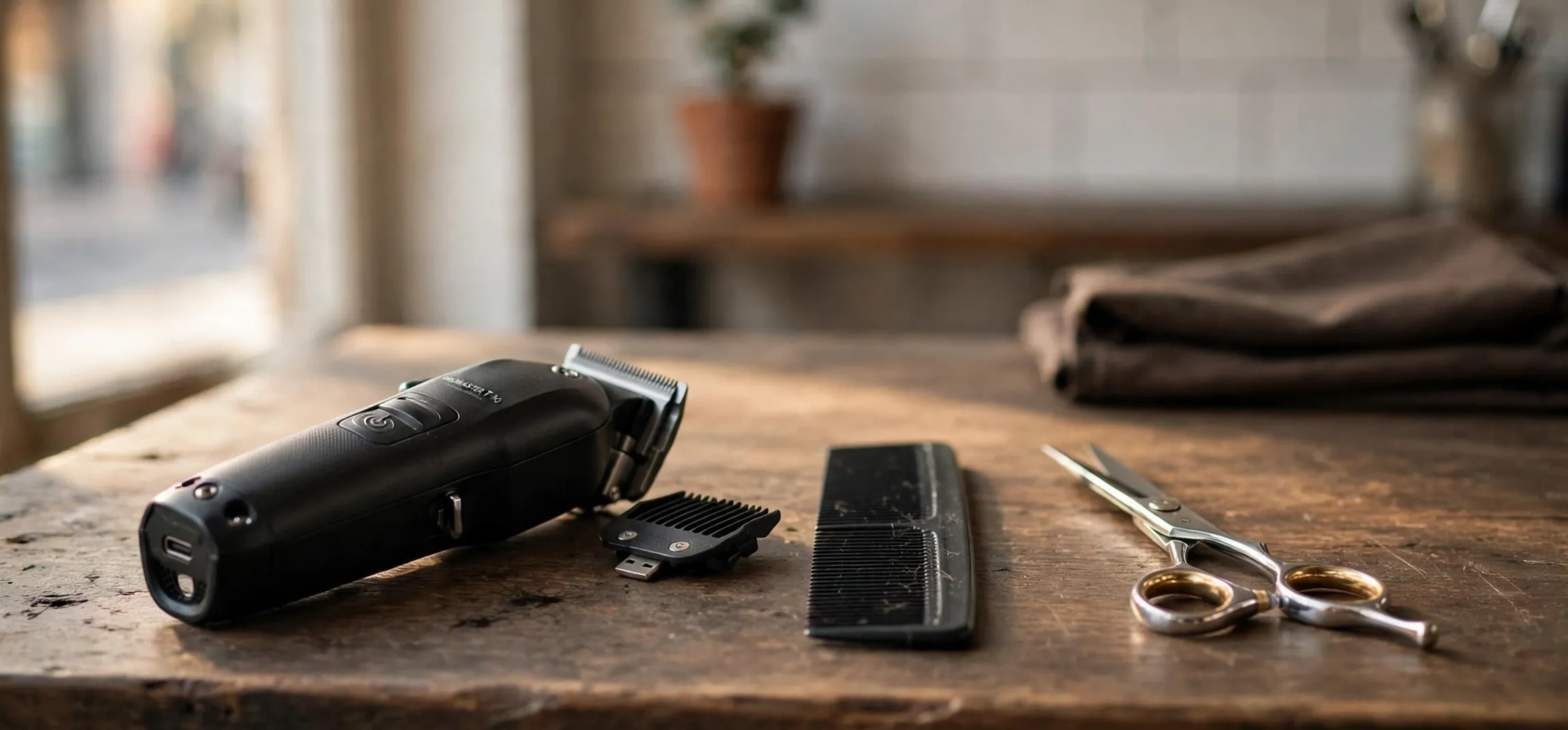
You do not need a professional kit, but the right tools make the job far easier and more forgiving. A quality trimmer with an adjustable guard is the core tool, and a detail trimmer or a single-blade razor helps with the final crisp edge. A fine-tooth comb, a small pair of grooming scissors, beard oil, and a hand mirror for checking the sides complete the setup.
Always work with a clean, dry beard. Wet hair hangs longer and clumps together, which makes it easy to cut more than you intended. Dry hair shows the true line, and a drop of beard oil beforehand helps the trimmer glide without dragging. If you are new to shaping, use a guard one setting longer than you think you need; you can always take more off, but you cannot put hair back.
Keep your tools clean and oiled. A dull or clogged trimmer pulls hairs instead of cutting them, which causes irritation and an uneven line. A quick brush-out after each use and a drop of clipper oil keeps the blades cutting cleanly.
Beard Cheek Line Guide: Step-by-Step Shaping
Work in good light, take your time, and shape one side fully before moving to the other so you can match them. This beard cheek line guide breaks the process into five manageable steps.
Step 1: Wash, Dry, and Comb
Wash your beard with a gentle beard wash or shampoo, pat it dry, and comb it downward and outward. This reveals the natural growth pattern and removes any stray hairs that might mislead you about where the line sits.
Step 2: Mark Your Line
Decide whether you are keeping the line natural or defining it. For a defined line, imagine a line from the bottom of your sideburn to a point just above the corner of your mouth. You can trace it lightly with a white pencil on your first few attempts. Step back and check that the line looks balanced on both sides before you cut anything.
Step 3: Trim Everything Above the Line
Using a trimmer without a guard, or with the shortest guard, carefully remove the stray hairs above your marked line. Work in short, light strokes from the line upward, away from the beard, so a slip moves into the area you are clearing rather than into the beard itself. Check your progress in the mirror every few strokes.
Step 4: Define the Edge
Once the area above the line is clear, use a detail trimmer or a razor to sharpen the edge itself. Hold the skin taut with your free hand and make slow, short passes along the line. Rushing this step is how most cheek lines end up uneven, so patience pays off here.
Step 5: Check Both Sides
Stand back and compare both cheeks. Use a hand mirror to check the sideburn transition on each side. Small differences are normal, but if one side sits noticeably higher, lower the higher side to match rather than raising the lower one, since raising a line removes beard you may want to keep.
Cheek Line vs Neckline: Do Not Confuse Them
The neckline is the lower boundary of the beard, sitting roughly two fingers above the Adam’s apple, following the curve of the jaw. The cheek line is the upper boundary on the face. Beginners often over-trim one while ignoring the other, which leaves the beard looking unbalanced.
As a rule, define the cheek line first, then tidy the neckline. The cheek line is more visible and harder to fix, so it deserves your fresh attention. Once both edges are set, the beard between them should need only light bulk trimming to look deliberate and groomed.
Common Cheek Line Mistakes to Avoid
The most common mistake is carving the cheek line too high. A high line thins the beard, exposes patchy areas, and can take weeks to grow back. Start low and raise the line gradually over several grooming sessions if you want a sharper look.
The second mistake is asymmetry. Because most people favour one hand, one side often ends up higher than the other. Always finish one side, then consciously mirror it, and check from a distance rather than centimetres from the mirror.
The third mistake is shaping a wet beard or shaping in poor light. Both lead to over-cutting. Dry hair, daylight or bright bathroom lighting, and a second mirror for the sides will prevent most accidents.
The fourth mistake is chasing a perfectly straight line on a face that grows in a curve. If your natural growth curves, a gently curved defined line will look far better than a forced straight edge that cuts across patches and creates steps.
Beard Cheek Line Guide: Maintenance Between Cuts
A good cheek line needs only a few minutes of upkeep every two or three days. Run a detail trimmer along the edge to catch stray hairs, and use a razor for the final crispness if you prefer a sharp finish. Daily beard oil keeps the hair soft and lying in the right direction, which makes the line look cleaner even between trims.
Resist the urge to redefine the line every day. Daily re-carving tends to creep the line higher over time. Instead, maintain the edge you have, and only reshape it during a proper grooming session once a week or so. For more step-by-step grooming routines, browse our other step-by-step guides on the site.
If you grow your beard out for winter or a new style, let the cheek line go natural for a few weeks. You can always redefine it later, and the extra growth gives you more to work with when you do.
Frequently Asked Questions
How high should my beard cheek line be?
As high as your natural growth allows without exposing patchy skin. For most men, that means following the natural transition from dense to sparse hair, or carving just slightly below it. If you can see bare skin through the beard above your line, the line is too high.
Should I use a trimmer or a razor for the cheek line?
Use both. A trimmer clears the bulk above the line quickly and safely, and a razor or detail trimmer finishes the edge crisply. Beginners should lean on the trimmer and only add the razor once they are confident with the line.
How often should I tidy my cheek line?
Every two to three days for stray hairs, with a full reshape once a week. Daily re-carving risks creeping the line higher, so light maintenance between sessions is the better habit.
What if my cheeks are patchy?
Keep the line natural and lower, which lets denser jaw growth do the visual work. A defined high line on patchy cheeks draws attention to the gaps, while a softer natural edge hides them. Beard oil and a few weeks of growth also improve coverage.
Conclusion
A great beard is less about length and more about edges, and the cheek line is the edge people notice first. Find your natural line, shape it slowly with the right tools, check both sides for symmetry, and maintain it lightly between sessions. Follow this beard cheek line guide for a few grooming cycles and the process becomes quick, repeatable, and hard to get wrong. The result is a beard that looks deliberate, balanced, and sharp, without the weeks of regret that come from one rushed trim.



