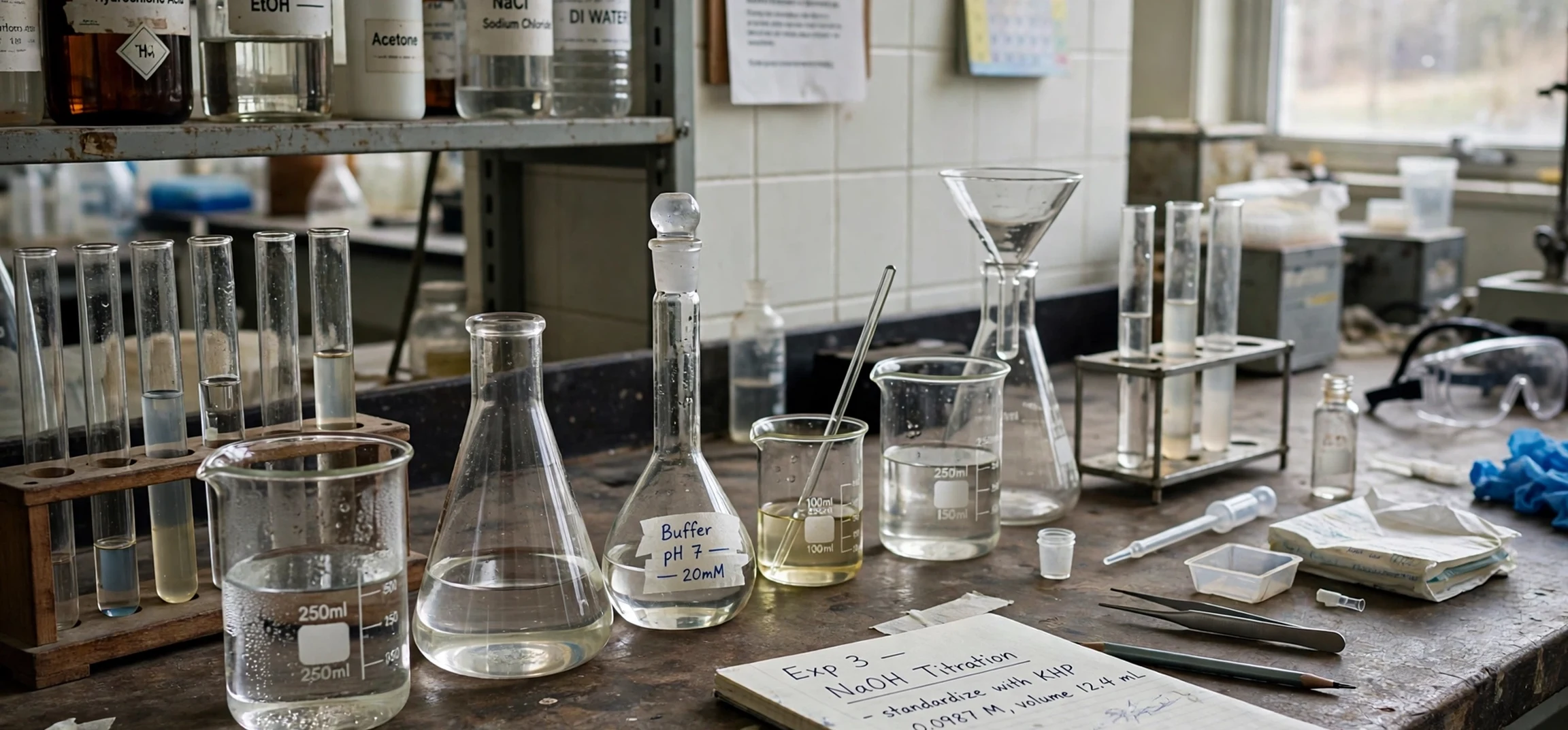
So, what does an inhibitor do? In general, an inhibitor is something that slows down, blocks or prevents a process, a reaction or an activity. The exact effect depends on the field: in chemistry, an inhibitor slows a chemical reaction; in biology, it reduces the activity of an enzyme or a cellular process; in engineering, it protects a material from corrosion; and in everyday language, it can mean anything that holds something back. This guide answers what does an inhibitor do across those contexts, explains the main types, and shows why inhibitors are useful tools rather than simply obstacles.
This article is general educational information only. It does not give medical, engineering or safety advice for any specific situation. Some inhibitors are used in medicines, industrial processes and laboratory work, and those uses involve professional judgement, regulation and safety controls that are outside the scope of a general guide.
What Does an Inhibitor Do in General?
At its simplest, what does an inhibitor do can be answered in one sentence: it makes a process happen more slowly, less completely, or not at all. That sounds negative, but slowing a process is often exactly what is wanted. A reaction that runs too fast may be dangerous, wasteful or hard to control. A biological process that runs unchecked may damage cells. A metal surface that corrodes freely may fail. In each case, an inhibitor gives control: it allows a process to be tuned, delayed or stopped when that is safer or more useful.
Inhibitors are different from catalysts, which speed reactions up, although the two ideas are related. A catalyst lowers the energy barrier for a reaction, while an inhibitor raises it, blocks a key step, or competes for a site where a reaction would otherwise happen. Some substances can act as an inhibitor in one context and not in another, because their effect depends on concentration, temperature, the other substances present and the system involved. That context-dependence is why scientists describe inhibitors carefully, naming what is being inhibited, under what conditions, and by how much.
It also helps to distinguish inhibition from destruction. An inhibitor does not necessarily destroy the thing it acts on. A corrosion inhibitor, for example, often forms a thin protective layer on a metal surface rather than changing the metal itself. An enzyme inhibitor may bind temporarily to an enzyme and then release it, allowing activity to resume. In other cases, inhibition is effectively permanent, because the inhibitor binds so strongly that the target cannot recover. The difference between temporary and permanent inhibition matters a great deal in both laboratory work and practical applications.
What Does an Inhibitor Do in Chemistry?
In chemistry, the question what does an inhibitor do usually refers to a reaction inhibitor: a substance that slows a chemical reaction or prevents an unwanted side reaction. Reaction inhibitors are used to stabilise substances that might otherwise polymerise, decompose or react during storage. For example, a stabiliser added to a monomer can prevent it from turning into a polymer before it is wanted, and an antioxidant can slow oxidation that would otherwise degrade a product. Without such inhibitors, many everyday materials would have much shorter shelf lives.
Chemical inhibitors work in several ways. Some react with the reactive species that drive a chain reaction, such as free radicals, and so break the chain. Others bind to a catalyst and reduce its activity. Others form a protective film or change the conditions at a surface so that a reaction is less likely. The common thread is that the inhibitor intervenes at a critical step. Understanding that step is often the key to choosing the right inhibitor, because an inhibitor that works well for one reaction may have no effect on another, even if the two reactions look similar.
Concentration is also important. A small amount of inhibitor may be enough to slow a reaction usefully, while too much may stop a wanted reaction altogether or introduce new problems. Chemists therefore test inhibitors at different concentrations and under different conditions, and they record not only whether inhibition occurred but how strong it was and how long it lasted. That careful, quantitative approach is what turns a general idea — “this slows the reaction” — into a practical tool. For background on the substances involved, see the meaning of a molecule in chemistry and the meaning of malleable in chemistry, which explain how structure affects behaviour.
Corrosion inhibitors
Corrosion inhibitors are a familiar, practical example. They are added to water systems, fuels, coatings or closed environments to slow the rusting and corrosion of metals. Some work by forming a thin, protective layer on the metal surface that blocks oxygen and water. Others work by changing the chemistry of the surrounding fluid so that corrosion is less likely. They are used in pipelines, boilers, cooling systems and vehicles, where corrosion can cause leaks, inefficiency or failure.
Choosing a corrosion inhibitor is not a matter of picking the strongest available product. The inhibitor must be compatible with the metal, the fluid, the temperature and any other chemicals in the system, and it must be safe for the people and the environment involved. Using the wrong inhibitor can be worse than using none, because it may hide corrosion, react unexpectedly or damage seals and coatings. That is why industrial use is governed by specifications, testing and professional advice, even though the basic principle — slow the corrosion — is easy to state.
Students sometimes ask what does an inhibitor do when they first meet the term in a textbook, and the clearest answer is that what does an inhibitor do depends on its target: it slows, blocks or prevents a specific process rather than stopping everything at once.
What Does an Inhibitor Do in Biology?
In biology, what does an inhibitor do most often means: it reduces the activity of an enzyme, a receptor or another biological molecule. Enzymes are proteins that speed up chemical reactions in living things, and enzyme inhibitors bind to an enzyme in a way that makes it work more slowly or not at all. That binding may be competitive, meaning the inhibitor competes with the enzyme’s normal substrate for the same active site, or non-competitive, meaning it binds elsewhere and changes the enzyme’s shape or behaviour. The distinction matters because competitive and non-competitive inhibitors respond differently to changes in substrate concentration.
Enzyme inhibition is a normal part of biology, not only a laboratory trick. Cells use feedback inhibition to regulate their own metabolism: when enough of a product has been made, that product inhibits an earlier step in the pathway, preventing wasteful overproduction. This kind of self-regulation keeps systems in balance. Scientists also use inhibitors as research tools, to switch off a particular enzyme temporarily and see what changes, which helps reveal what that enzyme normally does. For general background on enzymes in a health context, see the science meaning of matter, which sets out how physical and chemical ideas underpin biological processes.
It is important to keep this general explanation separate from medical use. Some medicines work as enzyme inhibitors, but whether a particular inhibitor is suitable for a person depends on diagnosis, other conditions, other medicines and professional assessment. A general guide can explain the mechanism in principle, but it cannot say whether an inhibitor is appropriate, safe or effective for an individual. Readers should not use general information about inhibitors to start, stop or change any treatment, and should speak to a qualified health professional about any health question.
Reversible and irreversible inhibition
Reversible inhibition means the inhibitor can bind and then release, so enzyme activity can recover when the inhibitor is removed or its concentration falls. This is useful in research and in many practical applications, because the effect can be controlled and reversed. Irreversible inhibition means the inhibitor forms a very strong bond, often a covalent bond, that permanently inactivates the enzyme. In that case, activity returns only when new enzyme is made. Both types are studied in biochemistry, and the difference is a key part of understanding how long an effect will last.
Students often confuse inhibition with denaturation, but they are different. Denaturation changes a protein’s shape through heat, acidity or other harsh conditions, often irreversibly and non-specifically. Inhibition, by contrast, is usually specific: a particular inhibitor acts on a particular enzyme or process, often at a particular site. That specificity is what makes inhibitors useful as tools, because they can target one step in a complex system without disrupting everything else.
That specificity is the point worth remembering. Whether you ask what does an inhibitor do in a laboratory, a factory or a living cell, the answer involves a particular target, a particular mechanism and a measurable effect, and what does an inhibitor do in each setting can be tested and described.
What Does an Inhibitor Do in Everyday Language?
Outside science, “inhibitor” is used more loosely to mean anything that restrains or holds back. In psychology, inhibition can refer to the ability to suppress an impulse or a response, which is an important part of self-control and attention. In social contexts, people talk about inhibitions as the internal restraints that stop them saying or doing something, and about losing inhibitions when those restraints weaken. In technology, an inhibitor might be a setting, a lock or a safety interlock that prevents an action until a condition is met.
These everyday uses share the core idea — slowing, blocking or preventing — but they should not be confused with the technical meanings. A psychological inhibitor is not a chemical, and a safety interlock is not an enzyme inhibitor, even though the word is the same. When you encounter the word in reading, the surrounding field is the best clue: chemistry, biology, engineering and psychology each use “inhibitor” in a related but distinct way, and the precise meaning comes from that context.
| Field | What is inhibited | Typical example of the effect |
|---|---|---|
| Chemistry | A chemical reaction or side reaction | Stabilising a substance during storage |
| Biology | An enzyme or cellular process | Slowing a metabolic pathway |
| Engineering | Corrosion of a metal surface | Protecting pipelines and boilers |
| Medicine (general principle) | A biological target, in a regulated context | Changing a pathway under professional supervision |
| Psychology | An impulse or response | Self-control and focused attention |
| Everyday language | An action or behaviour | A restraint that holds something back |
For revision, it helps to phrase the definition in a full sentence. Asking what does an inhibitor do and answering that it slows, blocks or prevents a specific process is a good starting point, and asking what does an inhibitor do in different fields then shows how that one idea is applied in practice.
Frequently Asked Questions
What does an inhibitor do?
An inhibitor slows down, blocks or prevents a process, reaction or activity. What does an inhibitor do in a particular case depends on the field, but the core idea is always control through slowing or blocking.
Is an inhibitor the opposite of a catalyst?
Loosely, yes. A catalyst speeds a reaction up, while an inhibitor slows it down or prevents it. The mechanisms differ, however, and a substance’s role depends on the reaction and conditions involved.
Can inhibition be reversed?
Sometimes. Reversible inhibitors bind temporarily and allow activity to recover, while irreversible inhibitors bind so strongly that activity returns only when new target molecules are made. The type depends on the inhibitor and the system.
Why are inhibitors useful if they slow things down?
Slowing a process is useful when speed causes danger, waste, damage or loss of control. Inhibitors let scientists, engineers and other professionals tune a process to a safe, stable and useful rate.
So, when someone next asks what does an inhibitor do, you can answer with confidence, and explaining what does an inhibitor do in terms of target, mechanism and reversibility will give a much fuller picture than simply saying that it slows things down.
Conclusion
What does an inhibitor do? It gives control by slowing, blocking or preventing a process that would otherwise run too fast, too far or at the wrong time. In chemistry, it stabilises reactions and materials; in biology, it regulates enzymes and pathways; in engineering, it protects metals from corrosion; and in everyday language, it describes any restraint that holds an action back. The word is simple, but its meaning is always tied to context: what is being inhibited, how strongly, for how long, and under what conditions. Understood that way, an inhibitor is not merely an obstacle. It is a tool for balance, safety and precision, and a reminder that in science and in life, slowing down is sometimes the most useful thing of all.



