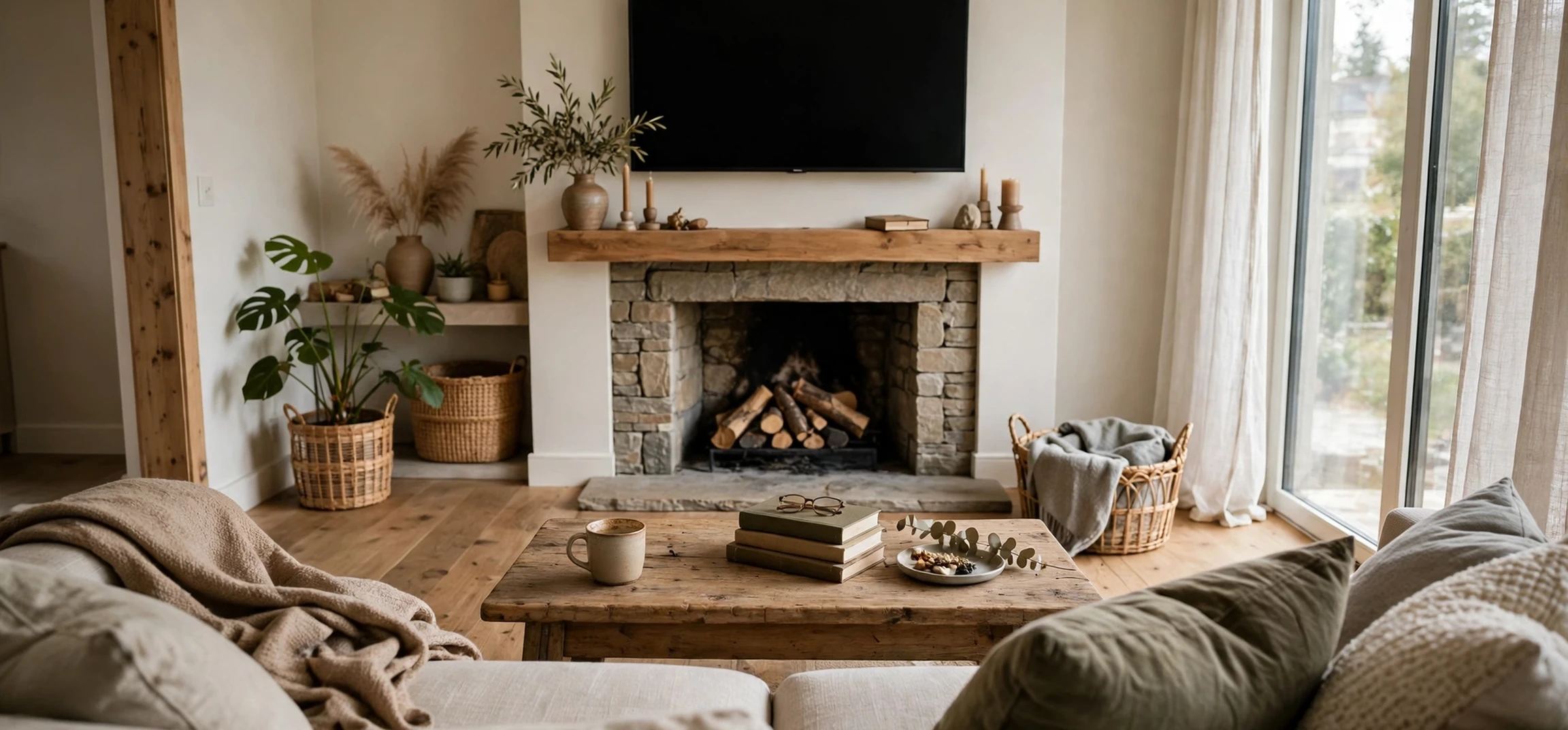
Learning how to mount a tv on fireplace walls is one of the most popular home projects, and also one of the easiest to get wrong. A television mounted above a fireplace looks clean and saves floor space, but it also sits above a heat source, often higher than ideal viewing height, and usually on a wall made of brick, stone, or tile rather than plain plasterboard. This guide walks through how to mount a tv on fireplace surfaces safely, step by step, including the checks to make before you drill, the tools and fixings to use, and the warning signs that mean you should stop and call a professional. If any step feels beyond your skills, hiring a qualified installer is the right call — a falling television is dangerous and expensive.
Before you begin, it is worth asking whether above the fireplace is really the best spot. The ideal television height puts the centre of the screen roughly at eye level from your usual seat. Above a fireplace, the screen often ends up higher than that, which can cause neck strain during long viewing sessions. Many people accept the compromise because the fireplace wall is the natural focal point of the room, and a tilting mount can angle the screen down to reduce the strain. But if your mantel is very high, or your seating is very close, consider a different wall or a floor stand first. A mount you regret is harder to undo once you have drilled into masonry.
How to Mount a TV on Fireplace Walls: Planning First
The first stage of how to mount a tv on fireplace projects is planning, not drilling. Measure the television’s size and weight, and check the mount manufacturer’s weight rating — the mount must be rated for at least your television’s weight, with margin to spare. Check the television’s VESA mounting pattern, which is the arrangement of screw holes on the back of the set, and make sure the mount you buy matches it. Note the width of your mantel and the height of the fireplace opening, and sit in your usual seat to judge the viewing angle. A simple cardboard template cut to the television’s size, taped to the wall, is the cheapest way to test the position before you commit.
Next, work out what your wall is made of. A timber-framed wall with plasterboard needs fixings that grip the studs, not just the board. A brick or stone fireplace needs masonry anchors and a hammer drill. A tiled surround needs a diamond or carbide bit and a gentle touch to avoid cracking tiles. If you are unsure what lies behind the surface, drill a small test hole in an inconspicuous spot, or use a stud finder and a careful tap test. Never guess: the fixing that holds in plasterboard will pull straight out of soft brick, and the fixing that holds in brick can split a tile if driven carelessly.
One planning habit separates a smooth project from a frustrating one: write down every measurement and fixing type before you shop. A complete plan for how to mount a tv on fireplace walls lists the television weight, the VESA pattern, the wall material, the mount rating, and the cable route, so you buy the right parts in one trip. Revisiting how to mount a tv on fireplace guidance while you are already holding a drill is how wrong anchors get used.
How to Mount a TV on Fireplace Walls: Heat Is the Deciding Factor
Heat is the single most important safety question when you learn how to mount a tv on fireplace openings. Televisions are electronics, and sustained heat shortens their life and can damage the screen. Gas, wood, and electric fires all behave differently: a wood-burning fire with an open flue can throw significant heat up the wall, while a modern electric fire may produce little wall heat at all. The mantel matters too — a deep mantel deflects rising heat away from the wall above it, while a shallow or absent mantel lets heat rise directly onto the screen.
Test before you mount. Light the fire as you normally would, let it run for an hour, and hold your hand — or better, a simple thermometer — at the exact spot where the television will sit. If the wall feels hot to the touch, or the temperature exceeds the television manufacturer’s recommended operating range (check the manual), do not mount there. You can also tape a thermometer to the wall at screen height for a more honest reading than a quick hand test. If heat is a problem, options include a deeper mantel shelf to deflect heat, a heat shield, or choosing a different wall. Never mount a television where the wall gets hot enough to be uncomfortable to touch for more than a few seconds.
Heat and Fire Safety Warnings
Never block ventilation slots on the television, and never mount the set so close to the mantel that air cannot circulate behind it. Keep cables away from hot surfaces, and never run a power cable through the fireplace opening or chimney. If you have a wood-burning fire, check that sparks and soot cannot reach the television, and clean the screen and vents regularly — soot build-up is both a cosmetic and a ventilation problem. If you smell burning plastic or the television shuts itself down from overheating, switch it off, let it cool, and reassess the position before using it again.
How to Mount a TV on Fireplace Walls: Step by Step
Once planning and heat checks are done, the practical work of how to mount a tv on fireplace walls follows a clear sequence. Gather your tools first: a stud finder, a spirit level, a pencil, a drill with the right bits for your wall type, the fixings supplied with the mount (or masonry anchors rated for your wall), a socket set or spanners, and a second person to help lift. Television mounting is a two-person job: one person holds and levels, the other marks and checks. Trying to hold a large screen with one hand while drilling with the other is how screens get dropped and walls get damaged.
Mark the mount position using the cardboard template and the spirit level, and double-check the height from your seat before drilling. Drill pilot holes at the marked points, taking care with tile: use a slow speed, light pressure, and masking tape over the drilling point to reduce the risk of the bit wandering or the tile cracking. Fix the wall plate with the correct anchors, tightening firmly but not so hard that you crack the surface or crush plasterboard. Attach the mounting arms to the back of the television on a soft, flat surface, then lift the set onto the wall plate with your helper and secure the locking screws. Check the level once more, test the tilt and swivel if your mount has them, and only then connect cables.
Cable management is the finishing touch that makes the installation look professional. Options include a paintable cable channel down the wall, routing cables behind the mantel, or an in-wall cable kit where the wall construction allows it. Do not notch structural timber or chase channels into a chimney breast without advice, and never run mains power cables inside a wall cavity unless the kit is designed and rated for that use. If in doubt, a surface-mounted channel is safe, tidy, and easy to change later.
| Wall type | Fixing approach | Key caution |
|---|---|---|
| Plasterboard on studs | Lag bolts into studs, verified with a stud finder | Never rely on plasterboard alone for a heavy set |
| Brick or stone | Masonry anchors with a hammer drill | Check for soft or crumbling mortar first |
| Tile over masonry | Carbide or diamond bit, slow speed, tape over the spot | Tiles can crack; drill a test hole if possible |
| Unknown construction | Stop and investigate before drilling | Call a professional if you cannot identify the wall |
Before moving to mistakes, it is worth restating the core sequence for how to mount a tv on fireplace work: plan, test the heat, mark, drill, fix, lift with a helper, level, and only then connect cables. Skipping any step in that sequence for how to mount a tv on fireplace projects is what turns a straightforward job into a repair bill, so treat the order itself as a safety rule.
Common Mistakes When You Mount a TV on a Fireplace
The most common mistake in any how to mount a tv on fireplace project is mounting too high and ignoring the neck-strain problem until it is too late. A tilting mount helps, but it does not fully fix a screen that sits far above eye level. The second mistake is using the wrong fixings — plasterboard plugs for a masonry wall, or short screws that bite only into the surface layer. The third is skipping the heat test, which can leave a television baking above a fire for months before the damage shows. The fourth is cable chaos: cables draped across the mantel not only look bad, they can be pulled by children or pets, dragging the set with them.
Electrical safety deserves its own warning. If you need a new socket behind the television, that is electrician’s work in most jurisdictions, not a DIY extension lead hidden behind the set. Overloaded multi-way adapters tucked behind a hot fireplace wall are a fire risk. Similarly, if your fireplace is gas, do not drill into the chimney breast without knowing where the flue and any gas pipework run. A professional installer or a gas engineer can confirm safe drilling zones quickly, and that small cost is worth it against the risk of striking a pipe.
Most questions about how to mount a tv on fireplace walls come back to the same three worries: heat, fixings, and height. Answer those three honestly and the rest of the project is straightforward. The final questions people ask about how to mount a tv on fireplace setups usually concern cables and viewing angle, both of which are easier to fix than a wrongly drilled wall.
How to Mount a TV on Fireplace Walls FAQ
Will heat from the fireplace damage my TV?
It can, if the wall above the fire gets hot. Test the wall temperature at screen height with the fire running normally for an hour. If it is hot to the touch or above the manufacturer’s recommended range, do not mount there, or add a deeper mantel or heat shield first.
What is the best mount for above a fireplace?
A tilting mount is usually the best choice, because it angles the screen down towards viewers and reduces neck strain. A full-motion mount adds flexibility but needs a very solid fixing, so confirm the wall and the mount rating before choosing it.
Can I mount a TV on a brick fireplace?
Yes, with masonry anchors and a hammer drill, provided the brick and mortar are sound. Crumbling mortar, loose bricks, or a decorative stone veneer that is not bonded to the structure are reasons to stop and get professional advice.
How high should a TV be above a fireplace?
As low as the mantel and heat allow, with the centre of the screen as close to seated eye level as possible. Use a cardboard template and sit in your usual seat to judge before drilling.
Reading a full guide to how to mount a tv on fireplace walls before you start is the cheapest insurance the project has. It costs nothing, it surfaces the heat and fixing questions early, and it helps you decide whether this is a DIY job or a professional one.
Conclusion
Knowing how to mount a tv on fireplace walls comes down to three disciplines: plan the position and the fixings for your exact wall, test the heat honestly before you drill, and never work alone on the lift. Get those right, manage the cables tidily, and respect the limits of your skills by calling a professional when the wall, the wiring, or the gas flue is uncertain. Done well, a fireplace-mounted television looks superb and lasts for years; done hastily, it is a hazard. For more home and TV guides, see our TV package guide, the Bend TV guide, and our home cleaning guide for keeping the room around your new setup looking its best.



