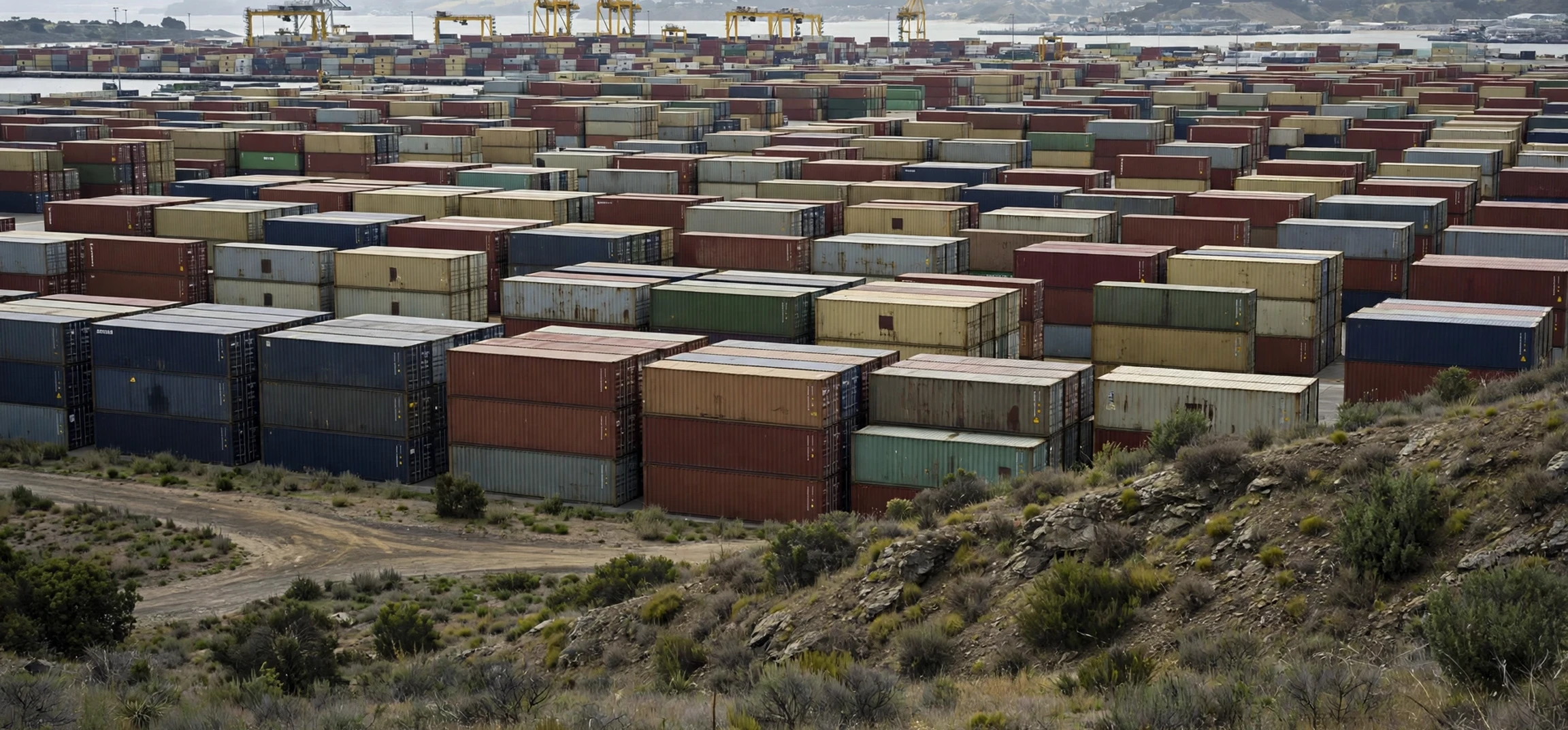
If you buy, sell, or ship goods across borders, you will eventually meet the three letters FOB, and understanding the fob shipping definition can save you real money and prevent costly disputes. FOB stands for Free On Board, and it is one of the internationally recognised trade terms published by the International Chamber of Commerce as Incoterms. In short, the fob shipping definition describes who pays for what, who arranges transport and insurance, and — most importantly — the exact point at which the risk of loss or damage passes from the seller to the buyer. This guide explains the fob shipping definition in plain language, how FOB differs from similar terms, and what to check before you agree to it in a contract.
The core idea behind FOB is a handover point. Under FOB, the seller is responsible for the goods up to the point where they are loaded on board the vessel nominated by the buyer at the named port of shipment. The seller clears the goods for export and bears the costs and risks up to that loading point. Once the goods are on board, risk passes to the buyer, who then pays the main carriage, the freight, and the insurance, and handles import clearance at the destination. That single sentence is the whole fob shipping definition in miniature, but the practical consequences — who pays the port charges, who books the ship, and who bears the loss if a container is damaged in a storm — all flow from where that line is drawn, so it is worth understanding in detail.
The FOB Shipping Definition Explained Step by Step
Consider a typical FOB shipment: a buyer in one country orders machinery from a seller in another, on FOB terms at the seller’s nearest seaport. The seller manufactures or sources the machinery, packages it for sea transport, delivers it to the port, completes export customs formalities, and loads it onto the buyer’s nominated vessel. Up to the moment of loading, the seller carries the risk: if the goods are damaged in the seller’s warehouse or on the way to the port, that is the seller’s problem. The moment the goods are safely on board, risk transfers. From then on, the buyer pays the ocean freight, arranges marine insurance if they choose to, and is responsible for unloading, import duties, and onward delivery. The fob shipping definition therefore splits a single journey into two halves, with the ship’s rail — in modern practice, the act of loading on board — as the dividing line.
Two details in that account deserve emphasis. First, FOB is designed for sea and inland waterway transport. It is not the right term for air freight, road haulage, or container shipments that travel by multiple modes, even though it is frequently misused that way in practice. Second, the named port matters enormously. “FOB Shanghai” and “FOB Rotterdam” are different contracts with different cost allocations, because the seller’s obligations end at different places. A contract that says only “FOB” without naming a port is incomplete, and a careful buyer or seller will always insist on the full form: FOB followed by the named port of shipment. That precision is part of what makes the fob shipping definition useful — it removes ambiguity about where one party’s responsibility ends and the other’s begins.
Who Pays What Under the FOB Shipping Definition
Under the fob shipping definition, the seller pays for the goods themselves, their export packaging, transport to the port of shipment, export clearance, and the cost of loading the goods on board the vessel. The buyer pays the ocean freight, marine insurance, unloading at the destination port, import customs duties and taxes, and delivery to the final destination. Terminal handling charges can be a grey area: under the current Incoterms rules, the seller bears the costs of loading, while charges levied at the destination terminal generally fall to the buyer, but port practices vary, so contracts should state who pays terminal handling charges explicitly rather than leaving them to assumption.
Insurance deserves a separate note. Under FOB, the seller has no obligation to insure the goods for the main carriage — that is the buyer’s responsibility, from the point of loading onward. A buyer who forgets to arrange cover, or who assumes the seller’s insurance extends to the sea voyage, is exposed for the entire ocean leg. Conversely, a seller who wants to protect goods before loading should hold their own cover for the pre-shipment leg. The prudent approach for both sides is to confirm insurance in writing: who insures which leg, for what value, and against which risks. A short email confirming this can prevent a dispute worth many times the premium.
A Worked Example of FOB Costs
Imagine goods worth 50,000 in currency units, with inland transport to the port costing 800, export clearance 200, ocean freight 3,000, insurance 400, and import duties 5,000. Under FOB, the seller’s invoice would typically cover the goods plus the 800 and 200, while the buyer separately pays the 3,000 freight, 400 insurance, and 5,000 duties. The buyer’s total landed cost is therefore 59,400, not 50,000, and any buyer comparing supplier quotes must compare landed costs on the same terms — a cheaper FOB price from a distant port can easily be more expensive overall than a slightly higher price from a nearer port. This landed-cost discipline is one of the most practical benefits of understanding the fob shipping definition properly.
FOB Shipping Definition Compared With Other Incoterms
FOB is often confused with neighbouring terms, and the differences are worth learning. Under CIF (Cost, Insurance and Freight), the seller pays freight and insurance to the destination port, though risk still passes on loading — the seller pays more, but the risk point is the same as FOB. Under CFR (Cost and Freight), the seller pays freight but not insurance, with the same risk point. Under EXW (Ex Works), the buyer collects the goods at the seller’s premises and bears almost everything from there. Under DDP (Delivered Duty Paid), the seller bears almost everything to the buyer’s door, including import duties. And under FCA (Free Carrier), the modern all-modes alternative to FOB, risk passes when goods are handed to the buyer’s carrier, which may be at a container terminal rather than on board a ship — a crucial difference for containerised cargo.
| Term | Seller pays freight? | Risk passes when | Best for |
|---|---|---|---|
| FOB | No | Goods loaded on board vessel | Sea / inland waterway, bulk cargo |
| CIF | Yes, plus insurance | Goods loaded on board vessel | Sea freight where buyer wants seller-arranged cover |
| CFR | Yes | Goods loaded on board vessel | Sea freight without seller insurance |
| FCA | No | Goods handed to buyer’s carrier | Containers and multimodal transport |
| EXW | No | Goods made available at seller’s premises | Buyers with their own logistics |
| DDP | Yes, plus duties | Goods delivered at destination, duty paid | Buyers wanting a single all-in price |
The table shows why FOB remains popular for traditional sea shipments — bulk commodities, machinery, and goods genuinely loaded onto a vessel — while FCA is usually the better choice for containerised freight, where goods are handed over at a terminal days before loading. Using FOB for a container shipment creates a gap: the seller’s risk may technically continue until loading, but the seller has no control over the goods once they are in the terminal. Trade bodies have warned about this mismatch for years, yet FOB is still written into container contracts out of habit. If your goods travel in a container, ask whether FCA would describe the real handover more accurately.
Common Mistakes in Using the FOB Shipping Definition
The most common mistake is treating FOB as a pricing term rather than a risk and responsibility term. Two suppliers quoting “FOB” prices from different ports are not quoting like for like, and a buyer who picks the lower number without checking the port may pay more in freight than they saved on price. The second mistake is omitting the named port or the Incoterms year: the rules were revised in 2020, and a contract should say “FOB [named port] Incoterms 2020” to remove doubt about which version applies. The third mistake is using FOB for air or road freight, where there is no vessel and therefore no meaningful “on board” point, leaving the risk transfer ambiguous. The fourth is forgetting insurance for the buyer’s leg, as discussed above.
A fifth mistake is more subtle: assuming FOB determines ownership. It does not, or at least not by itself. Incoterms allocate costs and risks; title, or ownership, is governed by the sales contract and applicable law, and may pass at a different point — on payment, on delivery of documents, or on arrival. A buyer who has borne the risk of goods lost at sea may still not own them, or a seller who has passed risk may still hold title until paid. Contracts should therefore state the title-transfer point separately. For a broader view of how business responsibilities are divided in a transaction, see our guide to business functions, and for the language of commercial roles, our explainer on business titles is a useful companion. If you are starting a small trading venture, the guide to sole proprietorship basics explains the simplest business structure many new importers use.
Frequently Asked Questions About the FOB Shipping Definition
What does FOB stand for in shipping?
FOB stands for Free On Board. It means the seller delivers the goods on board the vessel nominated by the buyer at the named port of shipment, and risk passes to the buyer at that point.
Under FOB, does the buyer pay for shipping?
Yes. The buyer pays the main carriage (ocean freight) and usually the insurance for the sea voyage, plus unloading, import duties, and onward delivery. The seller pays costs up to loading on board.
What is the difference between FOB and CIF?
Under both, risk passes when goods are loaded on board. The difference is cost: under CIF the seller also pays freight and insurance to the destination port, while under FOB the buyer pays those.
Can FOB be used for container shipments?
It is frequently used, but FCA is generally recommended for containers, because FOB’s risk point (loading on board) does not match the real handover at a container terminal. Using FOB for containers can leave a gap in responsibility.
Why must a FOB contract name a port?
Because the named port fixes where the seller’s obligations end. Without it, the parties may disagree about which port, which costs, and which leg of the journey each side is responsible for.
Conclusion
The fob shipping definition is, at heart, a line drawn on a ship’s deck: before loading, the seller carries the cost and the risk; after loading, the buyer does. Everything else — the freight bill, the insurance, the duties, the choice between FOB, CIF, and FCA — follows from that line. Get the named port right, state the Incoterms year, arrange insurance for your own leg, and compare landed costs rather than headline prices, and FOB will serve you well for genuine sea shipments. For containerised or multimodal cargo, consider FCA instead, and always remember that FOB allocates risk and cost, not ownership — that point belongs in your sales contract, stated separately and in plain words.