If you searched for the “meaning of word sage”, you have landed on a word with three distinct lives: a fragrant kitchen herb, a person famed for wisdom, and a given name used for both girls and boys. All three are connected by a long history, but they are not interchangeable, and confusing them can lead to odd sentences. This guide explains each meaning factually, traces the well-established links between them without inventing colourful etymology, and shows how the word is used in everyday English today. Whether you met the word in a recipe, a novel, a baby-name list or a historical text, you should finish this article able to tell which sage is meant.
English is full of words that carry several meanings, and sage is a good example of how that happens. Sometimes one word develops several senses over centuries, as people extend it metaphorically from one idea to another. Sometimes two different words that sound alike merge in spelling. With sage, the herb and the wise person have related but distinct histories, and the personal name draws on both associations, wisdom and the herb’s long cultural presence. Untangling those threads makes the word more interesting, and it also helps writers and readers use it precisely.
Meaning of Word Sage: The Herb in the Kitchen and Garden
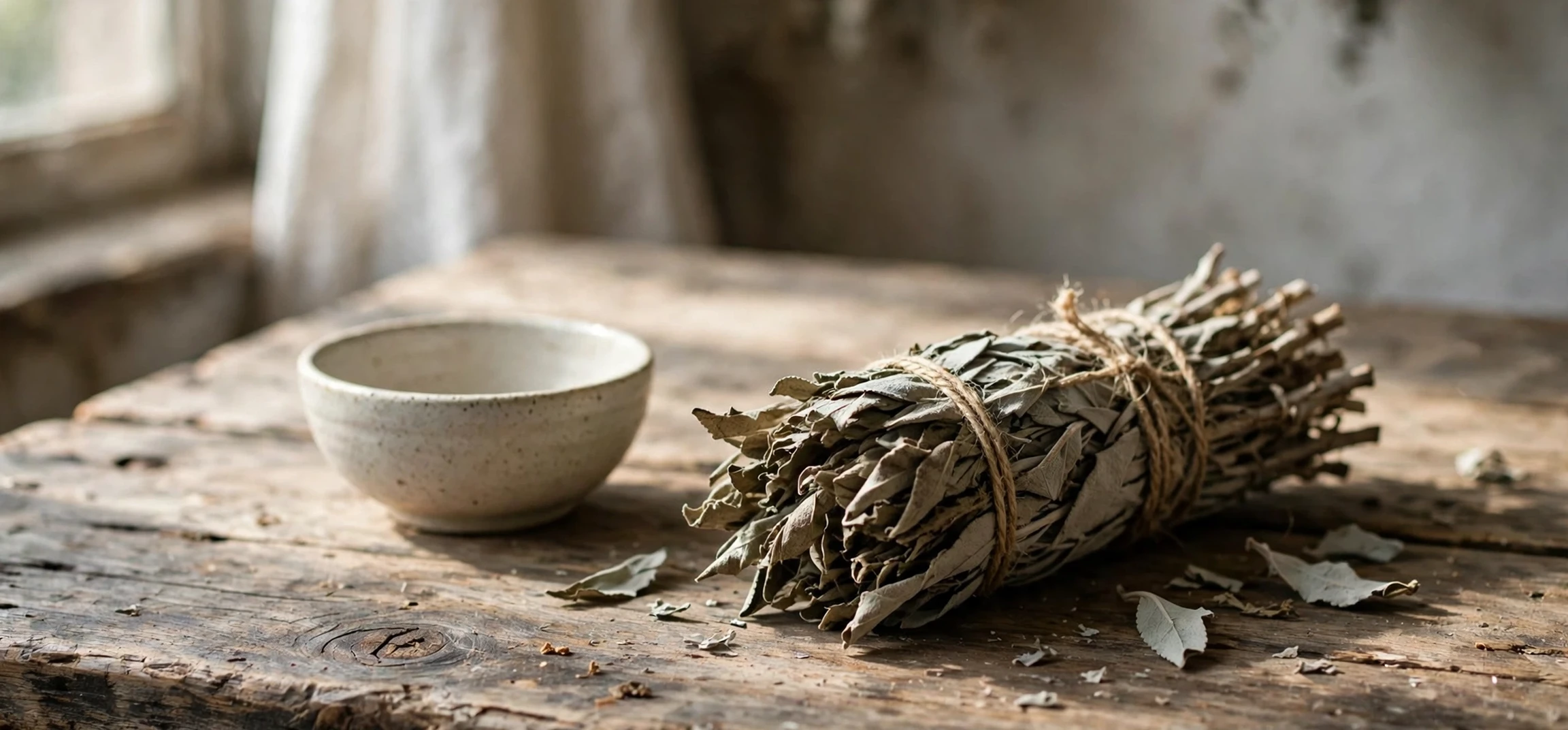
The most everyday meaning of sage is the herb. Culinary sage, botanically known as Salvia officinalis, is a perennial plant in the mint family, with soft, grey-green leaves and a warm, earthy, slightly peppery flavour. It is native to the Mediterranean region and has been grown in gardens across Europe for centuries. In cooking, sage is a classic partner for pork, poultry, stuffing, butter sauces and bean dishes, and it is famously used in traditional sage and onion stuffing. Fresh leaves can be fried briefly in butter until crisp, while dried sage, whether rubbed or ground, is a convenient store-cupboard staple.
In the garden, sage is valued as an attractive, drought-tolerant perennial that suits sunny, well-drained positions. It produces spikes of purple, pink or white flowers in summer, which bees and other pollinators visit, and its aromatic foliage makes it a popular choice for herb gardens and borders. Several ornamental varieties exist, with purple, golden or variegated leaves, and these are grown mainly for appearance, although many are also edible. Gardeners usually replace culinary sage plants every few years, because older plants can become woody and less productive, even though they may live longer.
Traditionally, sage has also been associated with cleansing and ceremonial uses in various cultures, most famously the burning of dried sage bundles, often called smudging, in some North American Indigenous traditions. That practice belongs to specific cultural contexts and should be described respectfully, not treated as a generic wellness trend. This article makes no medical claims for the herb. Beyond its well-established culinary use and its general traditional presence in gardens and kitchens, anyone interested in herbal remedies should consult reliable, qualified sources rather than relying on a general word guide.
Meaning of Word Sage: A Wise Person
The second major meaning of sage is a person who is regarded as profoundly wise, especially through age, experience and reflection. In this sense, sage is a noun, as in “the village sage” or “a sage of ancient philosophy”, and it can also be used as an adjective meaning wise, as in “sage advice” or “a sage observation”. The adjective is common in modern English: to describe advice as sage is to praise it as thoughtful, prudent and worth heeding. The noun is more literary and less common in everyday speech, but it appears frequently in history, philosophy, literature and fantasy writing.
The wise-person sense comes from a Latin root relating to wisdom and good judgement. Ancient philosophers, religious teachers and respected elders are often described as sages, and the word carries a tone of respect that simpler words such as “clever” or “smart” do not. A clever person solves problems quickly; a sage is understood to see the deeper pattern, to weigh consequences, and to speak sparingly but well. That distinction is why the word survives in phrases such as “sage counsel”, where the emphasis is on judgement built over time rather than on quick intelligence.
In literature and popular culture, the sage is a recognisable figure: the mentor who guides a younger hero, the hermit on the mountain, the elder whose advice proves decisive. Writers use the figure because readers instantly understand the role. At the same time, real life offers many quieter examples, from a grandparent whose advice steadies a family decision to a teacher or community elder whose experience helps others avoid mistakes. In all these cases, the word honours judgement rather than mere knowledge, and that is the heart of its wise-person meaning.
Sage, Wise and Clever: A Useful Distinction
English has several words for mental ability, and they are not synonyms. Clever suggests quick thinking and ingenuity. Intelligent suggests a strong capacity to learn and reason. Knowledgeable suggests a large store of facts. Wise, and by extension sage, suggests something broader: the ability to apply knowledge and experience with good judgement, to see long-term consequences, and to act with perspective and restraint. A person can be clever without being wise, and a wise person may not be the quickest thinker in the room. Keeping that distinction in mind helps writers choose the right word and helps readers catch the intended praise when they see “sage” in a text.
Meaning of Word Sage: Sage as a Name
As a given name, Sage is used for both girls and boys, and its appeal draws on both of the word’s main meanings. Parents who choose it may be attracted by the herb’s natural, garden-fresh image, by the association with wisdom, or simply by the sound of the word: short, soft and distinctive. Nature names have grown in popularity in recent decades, and Sage sits comfortably alongside names drawn from plants, seasons and landscapes. It also works well as a middle name, where its single syllable pairs neatly with longer first names.
The name’s history is less ancient than the word itself. While sage as a herb and as a wise person goes back centuries, Sage as a regular given name is largely a modern choice, popularised as part of the broader fashion for word names and nature names. It has no single, fixed gender association, which is part of its appeal for parents seeking a gender-neutral name. Pronunciation is straightforward in English, rhyming with “page” and “age”, and spelling is almost always S-A-G-E, which avoids the variant-spelling confusion that affects many other names.
People named Sage sometimes find that others comment on the name’s meanings, and that can be a pleasant conversation starter. A child named Sage may be told the name means wisdom, or may be given a sprig of the herb as a playful gift. Such associations are generally positive, although any name carries the risk of a pun or a joke in the school playground. Overall, Sage is best described as a modern, nature-inspired, gender-neutral name with a long linguistic heritage behind it, rather than as a traditional name with centuries of use as a personal name.
Other Uses of Sage You May Meet
Beyond the herb, the wise person and the name, sage appears in a few other contexts worth recognising. In colour descriptions, sage green denotes a soft, greyish green reminiscent of the herb’s leaves, popular in interior design and fashion for its calm, natural feel. In place names and surnames, Sage may derive from the herb, from a personal characteristic, or from an older occupational or descriptive term, depending on the local history. In business and software, Sage is also a well-known brand name, most famously a company providing accounting and business software, but that is a trademark use, separate from the common word.
Context almost always makes the intended meaning clear. In a recipe, sage is the herb. In a sentence praising advice, sage means wise. On a class list or a book cover, Sage is a name. If a sentence still seems ambiguous, the surrounding words usually resolve it: “add the sage” points to the kitchen, “sage advice” points to wisdom, and “Sage smiled” points to a person. Writers who want to avoid ambiguity can add a clarifying word, such as “sage leaves” for the herb or “the sage” for the wise figure, although in most contexts no clarification is needed.
| Meaning | Part of speech | Typical example |
|---|---|---|
| The herb | Noun | Add sage to the stuffing |
| A wise person | Noun | She consulted the village sage |
| Wise | Adjective | That was sage advice |
| A given name | Proper noun | Sage joined the class |
| A colour | Adjective or noun | The walls were painted sage green |
Frequently Asked Questions
Are the herb sage and the wise-person sage the same word?
They are closely related in spelling and pronunciation, and both have long histories in English, but they are best understood as distinct senses with different roots and uses. The herb sense refers to the plant Salvia officinalis, while the wise-person sense refers to wisdom and judgement. Context tells you which is meant.
Is Sage a boy’s name or a girl’s name?
Both. Sage is used as a gender-neutral name, given to girls and boys. Its nature associations and its wisdom associations appeal to parents regardless of the child’s gender, and it is also used as a middle name.
How is culinary sage used?
Culinary sage is used fresh or dried to flavour pork, poultry, stuffing, butter sauces, bean dishes and roasted vegetables. Fresh leaves can be fried briefly in butter, while dried sage is rubbed or ground into dishes during cooking. Use it sparingly at first, as its flavour is strong.
Conclusion
The meaning of word sage depends on context, but the three main senses are easy to keep apart once they are seen side by side. In the kitchen and garden, sage is a fragrant Mediterranean herb with a warm, earthy flavour. In descriptions of character, sage means wise, and a sage is a person honoured for judgement and experience. As a name, Sage is a modern, gender-neutral choice that draws its charm from both the herb and the idea of wisdom. Recognising which sage you are reading about turns a potentially confusing word into a small pleasure of the English language. Readers interested in other name meanings may enjoy our guides to the meaning of Annalise, the meaning of Carol and planting guides for the garden.