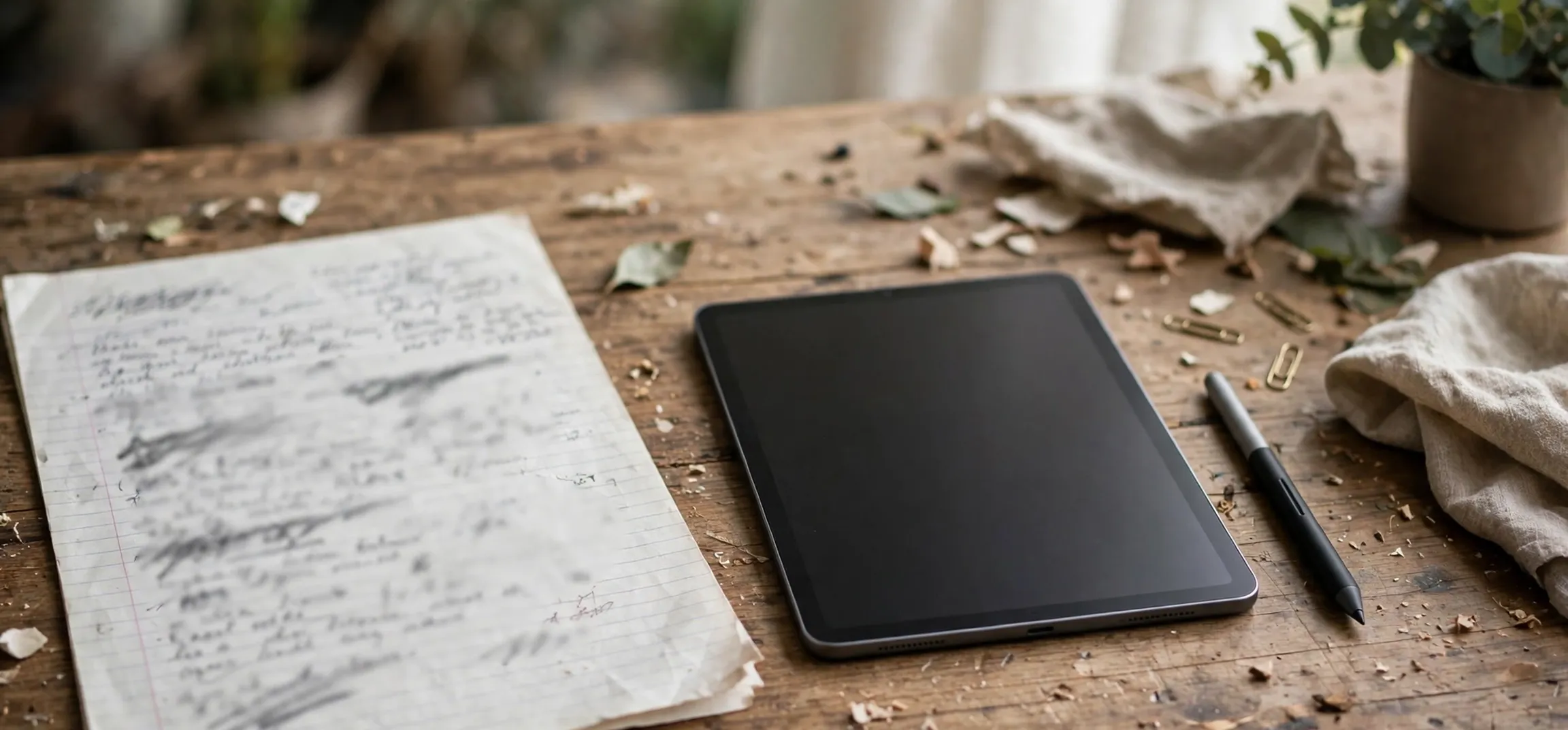
If you searched for goodnotes writing to text, you are looking for the way to turn handwritten notes in the Goodnotes app into typed, editable text. Goodnotes is a popular digital note-taking app, most often used on a tablet with a stylus, and its handwriting-to-text conversion is one of the features that makes handwritten notes far more useful after you have written them. Instead of leaving an idea trapped as ink on a page, you can convert a selection of handwriting into text that you can paste into a document, search, edit, or share. This guide explains how the feature works in general, how to get a clean result, what to do when the conversion is imperfect, and how to organise the text once you have it.
It is worth setting expectations first. Handwriting recognition is not magic, and its accuracy depends on several things: how clearly you write, how much text you convert at once, the language you are writing in, and the version of the app and device you are using. Short, neatly written notes usually convert very well. Long, hurried pages with crossings-out, arrows, diagrams, and mixed handwriting styles are harder for any recognition system to read. That does not mean the feature is unreliable; it means the best workflow is to write with conversion in mind when you know you will need typed text later, and to proofread the result before you send it anywhere important.
Goodnotes Writing to Text: The Basic Idea
The core idea behind goodnotes writing to text is simple. You write by hand, you select the handwriting you want to convert, and the app uses handwriting recognition to produce typed text from it. In Goodnotes, this is normally done with the Lasso tool, which lets you draw around a region of handwriting to select it. Once the handwriting is selected, you can choose a convert option, and the app shows you the recognised text. From there you can copy it, paste it into another app, or use it within your notes. The exact wording of the menu options can change between app versions, so if a button label looks slightly different on your device, look for a convert or text-related option in the selection menu rather than assuming the feature has been removed.
There is also a distinction worth understanding between converting handwriting and using system-level handwriting input. On some tablets, the operating system itself can turn stylus writing into typed text as you write, for example in a text field. That is a different mechanism from converting existing handwritten notes inside Goodnotes. The Goodnotes conversion feature works on ink that is already on the page, which is useful because it means you can take notes freely in a meeting or lecture, without worrying about typing, and decide later which parts are worth converting. You do not have to choose at the moment of writing whether a note will end up as handwriting or as text.
Goodnotes Writing to Text Step by Step
Start by opening the notebook and page that contains the handwriting you want to convert. Take a moment to check that the page is the right one, especially if you keep several notebooks for different subjects, because converting the wrong page and pasting it elsewhere is an easy mistake to make when you are in a hurry. Zoom in if the writing is small, so that you can select it accurately. Selection accuracy matters: if your selection accidentally includes a doodle, a diagram label, or a neighbouring paragraph, the recognised text may include stray characters or merge two separate thoughts into one block.
Next, choose the Lasso tool and draw a loop around the handwriting you want to convert. Try to keep the selection tight, and convert in sensible chunks, such as one paragraph or one list at a time, rather than selecting a whole page in one go. Smaller selections are easier to check, and if one word is misread, you can fix that chunk without re-checking an entire page. Once the selection is active, open the selection menu and look for the convert option. The app will then display the recognised text, usually with a chance to review it before you copy it. Read that preview carefully, even if it looks right at a glance, because handwriting recognition errors are often small: a similar-looking letter, a missed word ending, or a number read as a letter.
After conversion, copy the text and paste it where you need it. You might paste it into a word processor, a task manager, a message, or a study document. If you plan to keep using the original handwritten page, consider leaving the ink in place and treating the typed version as a separate, searchable copy, rather than deleting the handwriting straight away. Keeping both versions for a while gives you a fallback if you later spot an error in the converted text, and it preserves any sketches, arrows, or emphasis that typed text cannot capture. For longer notes, repeat the process section by section, pasting each chunk under a heading in your destination document so the structure of the original note survives the move from ink to text.
Writing Clearly When You Plan to Convert Later
If you know in advance that you will convert a set of notes, a few small habits make a large difference. Leave a little space between lines, because cramped lines are harder for recognition software to separate. Avoid writing over the same words twice to correct them; cross a word out cleanly and rewrite it nearby instead, or better still, leave the correction until after conversion and fix it in the typed version. Keep diagrams and their labels separate from body text where possible, and write proper names, technical terms, and abbreviations as clearly as you can, since these are the words recognition systems most often struggle with. None of this requires beautiful handwriting. Consistent, spaced, ordinary handwriting converts far better than rushed, overlapping script, even if the rushed version looks more natural in the moment.
Choosing What Is Worth Converting
Not every handwritten page needs to become typed text. A quick sketch, a brainstorm, or a page of rough working may be more useful left as handwriting. Conversion earns its effort when the text needs to be searched, quoted, edited by someone else, pasted into a formal document, or read by a screen reader. Lecture summaries, meeting action points, draft paragraphs, and revision notes are strong candidates. If you are unsure, convert the summary or the final version of a note rather than every draft, and keep the handwritten originals as your archive. This keeps your typed documents clean and avoids spending time proofreading conversions that nobody will ever need to search.
Improving Goodnotes Writing to Text Accuracy
When a conversion comes out wrong, the fix is usually straightforward. First, check whether the selection included anything extra, such as a margin note or part of an adjacent line, and try again with a tighter selection. Second, try converting a smaller chunk, because a single difficult word can sometimes distort the recognition of the words around it. Third, look at the original handwriting with fresh eyes: is a letter genuinely ambiguous, is a word abbreviated in a way only you would understand, or did two words run together? If so, the software is not really at fault, and the fastest fix is to correct the typed result by hand. Proofreading is part of the workflow, not a sign that it has failed.
Language settings also matter. Handwriting recognition works best when it knows which language you are writing in, so check that the recognition language matches the language of your notes. Mixed-language notes, with technical terms or names from another language sprinkled through, are naturally harder to convert, and you may need to correct those words manually. Similarly, numbers, units, and symbols deserve a second look: a handwritten digit can easily be read as a letter, and a decimal point can vanish. If a converted note contains figures, dates, or measurements that matter, verify each one against the original ink before you rely on the typed version. A short checklist at the end of this article covers the most common checks.
Device and app version differences are another source of confusion. Goodnotes is updated regularly, and the placement of tools and menu options can shift. If a tutorial you watched shows a button in a different place, use the app’s own help material or search within the app for the feature name, rather than assuming your version lacks the feature. Likewise, stylus behaviour can differ between devices: a stylus that works beautifully for writing may still produce slightly different ink thickness or pressure on another tablet, and that can affect recognition. If conversion suddenly gets worse after an update or a device change, try a small test page with a few sentences of your normal handwriting to see whether the issue is the writing, the selection, or the settings.
Practical Uses for Converted Text
Once your handwriting becomes typed text, several everyday tasks get easier. Students can turn lecture notes into revision documents that can be searched for a key term the night before an exam, rather than flicking through pages of ink. Professionals can turn meeting notes into action lists that can be pasted into a shared document, so colleagues who were not in the room can follow what was agreed. Writers can draft by hand, which many people find freer and less distracting than typing, and then convert the draft for editing on a computer. The point is not that typed text is better than handwriting in some absolute sense; it is that each form has strengths, and conversion lets you move a note from one form to the other when the task changes.
Converted text is also easier to reuse. A paragraph converted once can be pasted into an essay plan, a report, and a set of flashcards without rewriting it each time. A list of action points can be pasted into a task app and ticked off one by one. A quote or definition copied from a lecture can be searched for months later, long after you have forgotten which notebook it was in. For people who take notes on a tablet, this reuse is one of the main reasons to learn the conversion workflow at all. It turns a notebook from a place where notes sit into a source you can draw on repeatedly. For more on working with a tablet for study and writing, see our guide to finding your way around an iPad and our writing guide with four tips from a published author, both of which cover habits that pair well with a digital notebook.
Goodnotes Writing to Text: What Converts Well
The table below summarises which kinds of handwriting tend to convert cleanly and which need extra care. Use it as a quick reference when you are deciding how to write a note that you plan to convert.
| Type of handwriting | Conversion quality | Tip |
|---|---|---|
| Short, spaced paragraphs | Usually very good | Convert one paragraph at a time |
| Numbered or bulleted lists | Usually good | Keep each item on its own line |
| Proper names and technical terms | Mixed | Write clearly and proofread these words |
| Numbers, dates, and units | Mixed | Check every figure against the original |
| Diagrams with labels | Often poor as a block | Convert labels separately, keep the diagram as ink |
| Hasty, overlapping notes | Often poor | Rewrite key lines neatly, then convert |
Goodnotes Writing to Text: Frequently Asked Questions
Should I delete the handwriting after converting it?
There is no need to delete it straight away, and keeping it is usually wiser. The handwritten page is your original record, including sketches and emphasis that typed text loses. Keep it until you have proofread the converted text and are sure the typed version is complete and correct. If storage or tidiness later becomes a concern, you can archive the notebook rather than deleting individual pages.
Can converted text be searched?
Yes, once handwriting has been converted and pasted into a document or note that supports text search, it can be searched like any other typed text. This is one of the main benefits of conversion. Note that searching within the original handwritten page depends on the app’s own handwriting search capabilities, which are separate from conversion, so if searchability matters, producing a typed copy is the reliable route.
What should I do when a word is repeatedly misread?
Try a smaller selection around that word, write the word more distinctly on a test page, and check the recognition language setting. If the word is a name, abbreviation, or technical term, accept that you may need to correct it manually each time. Keeping a short personal list of words that need checking saves time, because you can scan converted text for those terms specifically during proofreading.
Conclusion
Goodnotes writing to text is at its best when it is treated as a simple two-step habit: write freely by hand, then convert in small, proofread chunks when typed text is actually needed. Select with the Lasso tool, review the recognised text before you copy it, check names and numbers against the original ink, and keep the handwritten page as your archive. Used that way, conversion bridges the gap between the freedom of handwriting and the flexibility of typed text, and it turns a tablet notebook into a genuinely searchable, reusable workspace. If you take one habit from this guide, make it the proofreading pass: a minute spent checking a conversion now saves confusion later, when the original page may be much harder to find.



