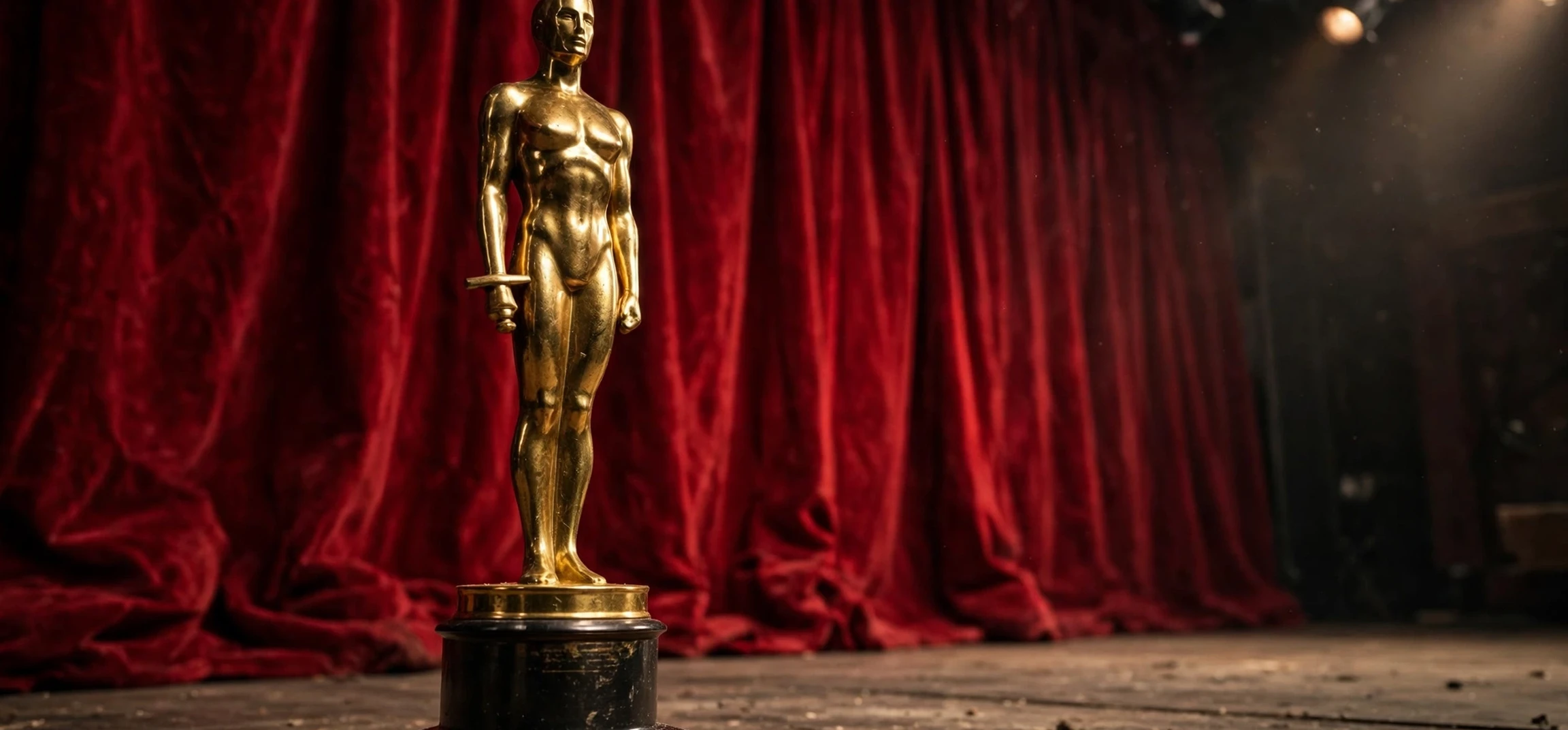
If you searched for oscar award nominees 2014, you are most likely looking for the films honoured at the 86th Academy Awards, the ceremony held in 2014 for films released in 2013. That distinction matters, because the Academy’s year labels can be confusing: the “2014 Oscars” celebrated 2013 cinema, while the “2013 Oscars” had celebrated 2012 cinema. This guide focuses on the Best Picture race at the 86th Academy Awards, the nine nominated films, the winner, and the other major awards from that night, with the history kept strictly to what the record shows.
The 86th Academy Awards took place on 2 March 2014 at the Dolby Theatre in Hollywood, Los Angeles, and were hosted by Ellen DeGeneres. It was a ceremony remembered for its mix of prestige drama, space spectacle and broad comedy, and for a Best Picture field that reflected an unusually strong year. The nine Best Picture nominees ranged from a harrowing historical drama to a science-fiction romance, a space survival story and a sprawling tale of financial excess. The winner, announced at the end of the night, was 12 Years a Slave.
This article covers each Best Picture nominee, what made it notable, and how the major awards were distributed. It is a historical guide, not a review of current releases, and it avoids the kind of retrospective hype that sometimes rewrites awards history. Where a film’s later reputation has grown or faded, that is noted as opinion and reception, not as fact about the night itself.
What “oscar award nominees 2014” Means
The phrase oscar award nominees 2014 is used in two slightly different ways. Strictly, it refers to the nominees announced in January 2014 for the 86th Academy Awards. More loosely, people use it to mean the films competing at the ceremony held in 2014. Both readings point to the same set of films, because the nominations and the ceremony belong to the same awards cycle. What the phrase does not mean is films released in 2014, which were honoured at the following year’s ceremony, the 87th Academy Awards.
Understanding the Academy’s calendar helps when searching for older ceremonies. Films qualify for a given ceremony based on their release in the previous calendar year, with a qualifying run in Los Angeles County. Nominations are voted on by the Academy’s branches, and the Best Picture field at this time could include up to ten films, with the number varying according to a preferential voting system. In 2014, the field settled at nine nominees, which was itself a sign of how many strong contenders there were that year.
It is also worth noting the related article in our archive on the previous year’s race, which covers the 2013 Academy Award nominations for Best Picture. Comparing the two years shows how quickly the Academy’s tastes can shift, from a year dominated by historical drama to one that balanced drama, comedy and genre filmmaking.
The “oscar award nominees 2014” Best Picture Field
The nine films nominated for Best Picture at the 86th Academy Awards were 12 Years a Slave, American Hustle, Captain Phillips, Dallas Buyers Club, Gravity, Her, Nebraska, Philomena and The Wolf of Wall Street. That list alone tells a story about 2013 cinema. Three of the nominees were based on real people and events, two were original stories by distinctive writer-directors, one was a technical marvel of space filmmaking, and one was a deliberately provocative comedy-drama about greed. No single genre dominated, and that variety is part of why the year is still discussed.
American Hustle and Gravity led the nominations overall, with ten nominations each. 12 Years a Slave followed with nine. The nomination tallies are often read as a guide to the eventual winners, but they are not a reliable predictor. A film can collect many nominations across craft categories and still lose Best Picture, as Gravity did, while a film with fewer nominations can win the top prize on the strength of support across the Academy’s branches. That is exactly what happened in 2014.
Before looking at each film in turn, it helps to know the shape of the night. 12 Years a Slave won three awards: Best Picture, Best Supporting Actress for Lupita Nyong’o, and Best Adapted Screenplay for John Ridley. Gravity won seven awards, the most of any film that night, but they were concentrated in directing and technical categories, including Best Director for Alfonso Cuarón. Dallas Buyers Club won three, including both male acting awards. The spread of awards across several films, rather than a sweep by one title, is characteristic of this ceremony.
The Winner: 12 Years a Slave
12 Years a Slave, directed by Steve McQueen, is based on the memoir of Solomon Northup, a free Black man from New York who was kidnapped and sold into slavery in Louisiana in the 1840s. Chiwetel Ejiofor played Northup, with Michael Fassbender, Benedict Cumberbatch and Brad Pitt in supporting roles, and Lupita Nyong’o in her breakthrough role as Patsey. The film is unsparing in its depiction of slavery, and it was widely praised for refusing to soften its subject or to offer easy consolation.
The film’s Best Picture win was historically significant. Steve McQueen became the first Black director of a Best Picture-winning film, and the win was seen as a landmark moment for the Academy. John Ridley’s adapted screenplay award and Nyong’o’s supporting actress award completed a set of wins that recognised the film’s writing and performances alongside its overall achievement. The film had earlier won Best Motion Picture (Drama) at the Golden Globes and Best Film at the BAFTAs, which had made it a frontrunner, though not an unchallenged one.
For viewers coming to the film today, it remains a demanding watch, and that is the point. It is best approached as a historical drama based on a first-person account, not as light entertainment. Its power lies in its restraint: long takes, quiet performances and a refusal to look away. Teachers, students and reading groups often pair it with Northup’s memoir, which is in the public domain and widely available through libraries.
Gravity and American Hustle: The Leading Challengers
Gravity, directed by Alfonso Cuarón and starring Sandra Bullock and George Clooney, was the technical sensation of the year. Set almost entirely in orbit, it followed a medical engineer and a veteran astronaut struggling to survive after their shuttle is destroyed by debris. The film’s long, apparently unbroken takes and its realistic depiction of weightlessness were achieved through years of technical development, and the film won seven Academy Awards, including Best Director, Best Cinematography, Best Film Editing, Best Original Score, Best Sound Editing, Best Sound Mixing and Best Visual Effects.
American Hustle, directed by David O. Russell, was a fictionalised crime comedy-drama inspired by the Abscam operation of the late 1970s. Its ensemble cast included Christian Bale, Amy Adams, Bradley Cooper, Jennifer Lawrence and Jeremy Renner. The film earned ten nominations, including all four acting categories, but won none of them, a result that surprised many observers at the time. Its nominations recognised its performances, its screenplay and its period design, and it remains a useful example of how a heavily nominated film can leave the ceremony empty-handed.
The contrast between Gravity and 12 Years a Slave shaped the narrative of the night. Gravity was the most awarded film, but 12 Years a Slave took the top prize. That split between Best Director and Best Picture is not unusual in Academy history, and it often reflects a difference between rewarding technical and directorial achievement on one hand and recognising a film’s overall impact on the other. In 2014, both outcomes were widely seen as deserved, which is rarer than it sounds.
True Stories: Captain Phillips, Dallas Buyers Club and Philomena
Three of the nominees were grounded in real events, each from a different angle. Captain Phillips, directed by Paul Greengrass and starring Tom Hanks, told the story of the 2009 hijacking of the container ship Maersk Alabama by Somali pirates. Hanks played Captain Richard Phillips, and Barkhad Abdi, in his acting debut, played the pirate leader Muse. The film was praised for its tension and for its refusal to simplify the pirates into caricatures, and it won Best Film Editing.
Dallas Buyers Club, directed by Jean-Marc Vallée, starred Matthew McConaughey as Ron Woodroof, a Texan who, after an HIV diagnosis in the 1980s, began smuggling unapproved treatments into the United States. Jared Leto played Rayon, a transgender woman who becomes Woodroof’s business partner. McConaughey won Best Actor and Leto won Best Supporting Actor, and the film also won Best Makeup and Hairstyling. Both actors were widely noted for their physical transformations, but the awards also recognised performances that carried a film made on a modest budget.
Philomena, directed by Stephen Frears, starred Judi Dench as Philomena Lee, an Irish woman searching for the son who had been taken from her decades earlier, with Steve Coogan as the journalist who helped her. Based on a non-fiction book, the film balanced humour and anger, and it was praised for Dench’s performance and for its humane treatment of its subject. It received four nominations, including Best Picture, Best Actress for Dench, Best Adapted Screenplay and Best Original Score, but did not win.
Original Visions: Her, Nebraska and The Wolf of Wall Street
Her, written and directed by Spike Jonze, was the most original nominee in conception. Joaquin Phoenix played Theodore, a lonely writer in a near-future Los Angeles who develops a relationship with an artificial intelligence operating system, voiced by Scarlett Johansson. The film won Best Original Screenplay for Jonze, and it was praised for treating a science-fiction premise as a gentle, melancholy love story rather than a thriller. Its production design, with its soft colours and retro-future technology, influenced how later films imagined the near future.
Nebraska, directed by Alexander Payne and shot in black and white, starred Bruce Dern as Woody Grant, an elderly man convinced he has won a million dollars in a magazine sweepstake, and Will Forte as his son David, who drives him to Nebraska to claim it. June Squibb played Woody’s wife Kate. The film was a quiet, funny and sad portrait of family, ageing and small-town America, and it earned six nominations, including Best Picture, Best Director for Payne, Best Actor for Dern and Best Supporting Actress for Squibb.
The Wolf of Wall Street, directed by Martin Scorsese, starred Leonardo DiCaprio as Jordan Belfort, a stockbroker whose rise and fall involved fraud, excess and spectacular self-destruction. Jonah Hill and Margot Robbie co-starred. The film was deliberately excessive in length, language and behaviour, and it divided critics, with some finding it exhilarating and others finding it indulgent. It received five nominations, including Best Picture, Best Director for Scorsese and Best Actor for DiCaprio, but won none. Its reputation has grown in the years since, and it is now one of the most quoted and referenced films of the decade.
The Acting Winners of the Night
| Category | Winner | Film |
|---|---|---|
| Best Actor | Matthew McConaughey | Dallas Buyers Club |
| Best Actress | Cate Blanchett | Blue Jasmine |
| Best Supporting Actor | Jared Leto | Dallas Buyers Club |
| Best Supporting Actress | Lupita Nyong’o | 12 Years a Slave |
| Best Director | Alfonso Cuarón | Gravity |
| Best Picture | 12 Years a Slave | Directed by Steve McQueen |
Cate Blanchett’s Best Actress win, for Woody Allen’s Blue Jasmine, is worth noting because Blue Jasmine was not a Best Picture nominee. Blanchett played a New York socialite whose life collapses, and her performance was the consensus favourite throughout awards season. Her win is a reminder that the acting races do not always follow the Best Picture field, and that a single outstanding performance can carry a film to Oscar success on its own.
The supporting races also produced two of the night’s most memorable speeches. Nyong’o, in her feature film debut, spoke about the history the film depicted and about dreams coming true. Leto dedicated his award in part to people affected by HIV and AIDS. Both speeches were widely shared afterwards, and both reflected the serious subjects at the heart of two of the year’s most honoured films.
The Legacy of the 2014 Race
Looking back, the 86th Academy Awards are remembered as a strong year rather than a controversial one. There was no single dominant winner sweeping every category, no major upset that overshadowed the films themselves, and the Best Picture result was broadly welcomed. The ceremony’s lighter moments, including DeGeneres’s hosting and a famous group selfie involving several stars, also entered popular culture, sometimes overshadowing the awards themselves in later retellings. That is a pity, because the films deserve to be the story.
The year also marked a point of change. Gravity’s technical awards pointed toward the growing importance of digital filmmaking and visual effects, even in prestige drama. Her pointed toward a new kind of science fiction, interested in emotion rather than spectacle. 12 Years a Slave pointed toward a willingness to confront difficult national history in mainstream cinema. Each of those directions continued in the years that followed, which is one reason the 2014 field still feels modern rather than dated.
For a fuller picture of how the Academy’s Best Picture race looked in other years, our archive includes coverage of the 2008 Best Picture nominees and the Academy Award nominations for Best Picture in general. Comparing years is the best way to see patterns: which genres the Academy favours, how often the directing and picture winners split, and how a year’s nominees look a decade later.
Frequently Asked Questions
Which film won Best Picture at the 2014 Oscars?
12 Years a Slave won Best Picture at the 86th Academy Awards, held on 2 March 2014. The film, directed by Steve McQueen, is based on the memoir of Solomon Northup.
How many films were nominated for Best Picture in 2014?
Nine films were nominated: 12 Years a Slave, American Hustle, Captain Phillips, Dallas Buyers Club, Gravity, Her, Nebraska, Philomena and The Wolf of Wall Street.
Which film won the most awards that night?
Gravity won seven awards, the most of any film at the ceremony, including Best Director for Alfonso Cuarón. 12 Years a Slave won three, including Best Picture.
Who hosted the 2014 Academy Awards?
Ellen DeGeneres hosted the 86th Academy Awards at the Dolby Theatre in Hollywood, Los Angeles.
Do the 2014 Oscars honour 2014 films?
No. The ceremony held in 2014 honoured films released in 2013. Films released in 2014 were honoured at the 87th Academy Awards in 2015.
Conclusion
The oscar award nominees 2014 field remains one of the strongest Best Picture line-ups of recent decades, balancing historical drama, technical innovation, comedy and original storytelling. 12 Years a Slave’s win recognised a film of rare seriousness and power, while Gravity’s seven awards recognised a leap forward in filmmaking craft, and Dallas Buyers Club’s acting wins recognised two remarkable performances. Revisiting the nine nominees today is a reminder of how rich a single year of cinema can be, and a good starting point for anyone exploring the films of 2013.



