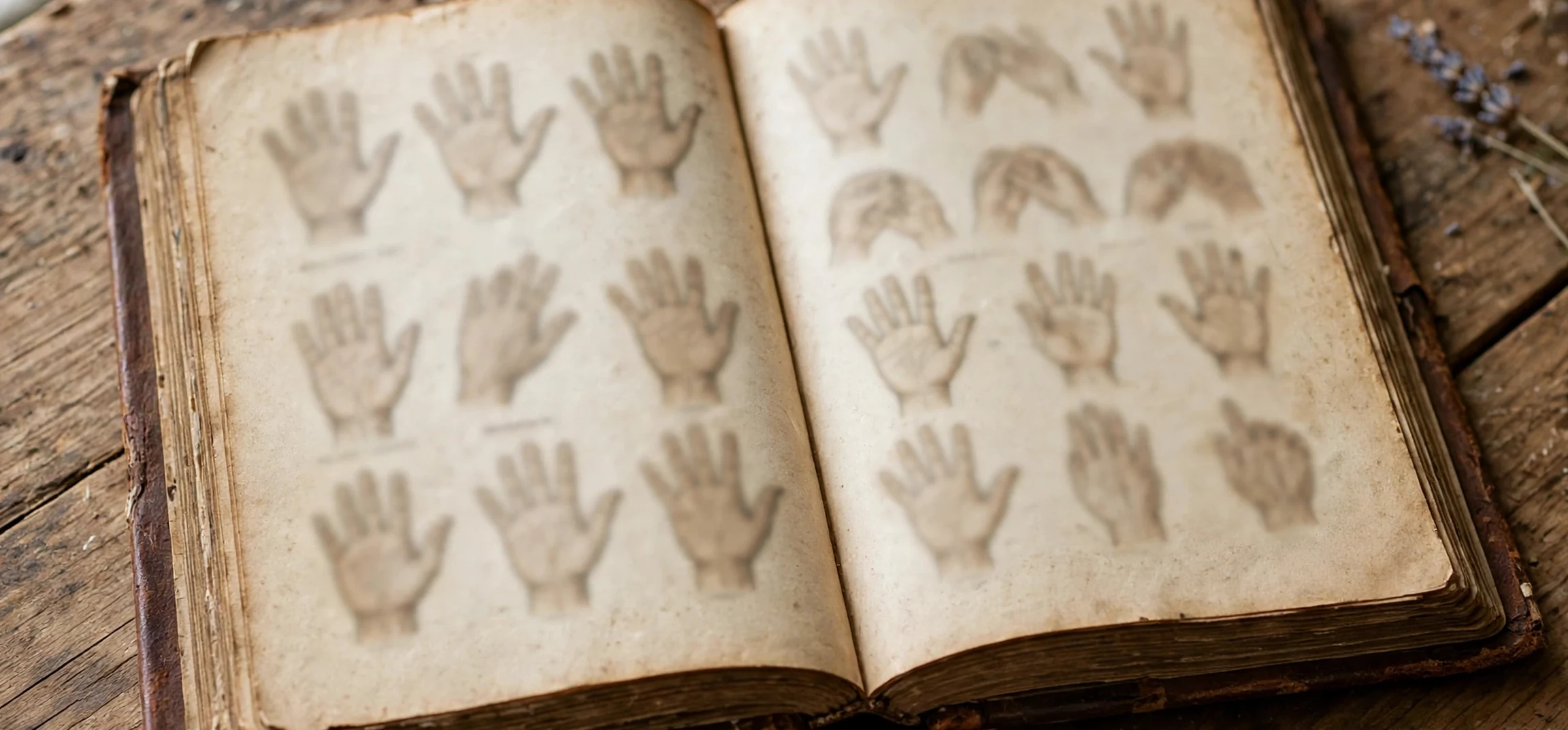
If you typed “palm reading lones” into a search engine, you were almost certainly looking for information about the lines on the palm — the search term is a misspelling of “palm reading lines”. Palm reading, also called palmistry or chiromancy, is the traditional practice of interpreting the lines, shapes, and mounts of the hand as reflections of personality and possible life patterns. It has been practised for thousands of years across India, China, Egypt, and Europe, and it remains popular today as a form of entertainment, cultural tradition, and personal reflection. This guide explains the major lines, what practitioners say they mean, and — importantly — what palm reading cannot do.
Palm Reading Lones: The Major Lines Explained
When people ask about palm reading lones, they usually mean the four major lines that palmists read first. The heart line runs horizontally across the top of the palm, below the fingers, and is said to reflect emotional life, relationships, and attitudes toward love. A long, curved heart line is traditionally read as openness and warmth; a short, straight one as reserve or a practical approach to relationships. The head line runs across the middle of the palm and is associated with thinking style, decision-making, and intellectual interests — a long, straight head line with analytical thinking, a curving one with creativity and imagination.
The life line curves around the base of the thumb, and despite its name, palmists do not read it as a prediction of lifespan. Instead, it is traditionally interpreted as reflecting vitality, major life changes, and physical energy. A common misconception is that a short life line means a short life; traditional palmistry explicitly rejects that reading, and breaks or changes in the line are interpreted as periods of transition rather than danger. The fate line, also called the career line, runs vertically up the centre of the palm toward the middle finger, and is said to reflect career path, life direction, and the influence of external circumstances. Not everyone has a clearly visible fate line, which palmists interpret as a life shaped more by personal choice than by external structure.
Which hand do palmists read?
Tradition varies. Some palmists read the dominant hand as the “present” hand — reflecting what you have made of your life — and the non-dominant hand as the “potential” hand, showing innate tendencies. Others read both and compare them. In practice, the lines on your two hands differ, and those differences are part of what makes a reading feel personal. There is no scientific basis for choosing one hand over the other, but the convention of reading both is standard in most traditions.
Palm Reading Lones: Minor Lines, Mounts, and Hand Shape
Beyond the major lines, palmistry recognises minor lines and the mounts — the fleshy pads at the base of each finger and along the palm’s edges. The sun line, running parallel to the fate line, is associated with success and recognition. The Mercury line, or health line, runs from the base of the palm toward the little finger and is linked in tradition to health and communication. Marriage lines, the short horizontal lines on the edge of the palm below the little finger, are said to reflect significant relationships, not a literal count of marriages, despite popular claims.
The mounts are named after planets in the older astrological tradition: Mount of Jupiter below the index finger (ambition, leadership), Mount of Saturn below the middle finger (responsibility, seriousness), Mount of Apollo below the ring finger (creativity, success), Mount of Mercury below the little finger (communication, wit), Mount of Venus at the base of the thumb (energy, affection), and Mount of Luna on the outer edge (imagination, intuition). A prominent mount is read as strength in that area; a flat one as less emphasis. Hand shape also plays a role in some systems: square “earth” hands, long “air” hands, and so on, each associated with a temperament. These categories are traditional and symbolic, not scientific, but they form the vocabulary of a reading.
The History and Culture of Palm Reading
Palmistry’s roots reach back to ancient India, where it appears in Hindu texts, and to China, where hand reading developed alongside other divination traditions. It travelled through Egypt, Persia, and Greece into medieval Europe, where it was studied alongside astrology and medicine — in an era when the boundaries between those fields were far less sharp than they are today. Gypsy and Romani communities preserved and popularised palm reading in Europe, and by the nineteenth century it had become a fashionable parlour pursuit, complete with published manuals and professional readers.
Different cultures emphasise different elements, as with many traditional beliefs and practices. Indian palmistry, sometimes called hast rekha shastra, places strong emphasis on the mounts and on detailed line variations. Chinese palmistry integrates hand reading with face reading and the five-element system. Western palmistry, as practised today, is a blend of these traditions with later psychological interpretations, notably the work of twentieth-century writers who reframed palmistry as a tool for self-reflection rather than fortune-telling. That reframing matters: many modern practitioners present readings as conversation starters about personality and choices, not as predictions of fixed fate.
What Palm Reading Cannot Do: A Necessary Honesty
It is important to be clear: there is no scientific evidence that the lines on your palm predict your future, your lifespan, your wealth, or your relationships. Controlled studies have found no reliable link between palm features and life outcomes, and the lines themselves change over time as skin ages and hands are used. Dermatoglyphics — the scientific study of fingerprints and palm patterns — is a real field, but it concerns identification and some medical correlations, not fortune-telling. Any reader who claims certainty about your future, pressures you to pay for “curse removal” or additional services, or uses fear to extract money is running a scam, and should be avoided.
That does not mean palm reading has no value. As entertainment, as cultural tradition, and as a prompt for reflection, it can be enjoyable and even useful. A reading that suggests you are “at a crossroads” may genuinely help you think about a decision, not because the line revealed it, but because the conversation gave you space to reflect. The honest way to enjoy palmistry is to treat it like a horoscope or a personality quiz: fun, sometimes thought-provoking, and never a substitute for real decisions about health, money, or relationships. If a reading raises genuine worries about health or safety, consult a qualified professional, not a palmist.
| Line | Location | Traditional interpretation |
|---|---|---|
| Heart line | Top of palm, below fingers | Emotions, relationships, love style |
| Head line | Middle of palm | Thinking style, decisions, intellect |
| Life line | Curving around thumb base | Vitality, major changes, energy |
| Fate line | Vertical, centre of palm | Career, life direction, external influences |
| Sun line | Parallel to fate line | Success, recognition, creativity |
Frequently Asked Questions About Palm Reading Lines
What does a short life line mean?
In traditional palmistry, nothing about lifespan. It is read as relating to vitality and life changes, not length of life.
Which hand should be read?
Most traditions read both: the dominant hand for the present life and the non-dominant hand for innate potential.
Do palm lines change over time?
Yes. Skin changes with age and use, and minor lines can appear, fade, or shift, which is one reason predictive claims are unreliable.
Is palm reading scientifically proven?
No. There is no scientific evidence that palm lines predict future events or personality traits.
Palm Reading Today: Entertainment, Apps, and Ethics
Palm reading today lives in several worlds at once. Traditional readers still work at fairs, markets, and private consultations, often as part of a broader practice that includes tarot or astrology. Smartphone apps now offer automated readings from a photograph of your palm, using image recognition to trace lines and generate generic interpretations. These apps are entertainment products, and their readings are necessarily vague — the same few paragraphs recycled for thousands of users — but they have introduced palmistry to a new generation who might never visit a fairground reader. Social media has added another layer, with short videos explaining line meanings to millions of viewers, sometimes accurately and sometimes with invented claims designed to go viral.
Ethics matter in all of these settings. A responsible reader, human or digital, frames interpretations as possibilities rather than certainties, avoids frightening predictions, and never uses a reading to sell further services. Readers should be especially careful with vulnerable clients — people who are grieving, ill, or facing major decisions — since such clients may take even casual remarks very seriously. If you enjoy palmistry, enjoy it with that awareness: appreciate the tradition, the symbolism, and the conversation, and keep real decisions grounded in evidence, professional advice, and your own judgement.
Conclusion
So, “palm reading lones” leads to the lines of the palm: heart, head, life, fate, and their companions, each carrying centuries of traditional interpretation about emotion, thought, vitality, and direction. Enjoy palmistry for what it is — a rich cultural tradition and a prompt for reflection — while keeping its limits clearly in view. Your future is shaped by your choices, not etched into your hand, and the most valuable part of any reading is the thinking it inspires. For more guides to traditional beliefs and their histories, explore the cultural and historical explainers on this site.



