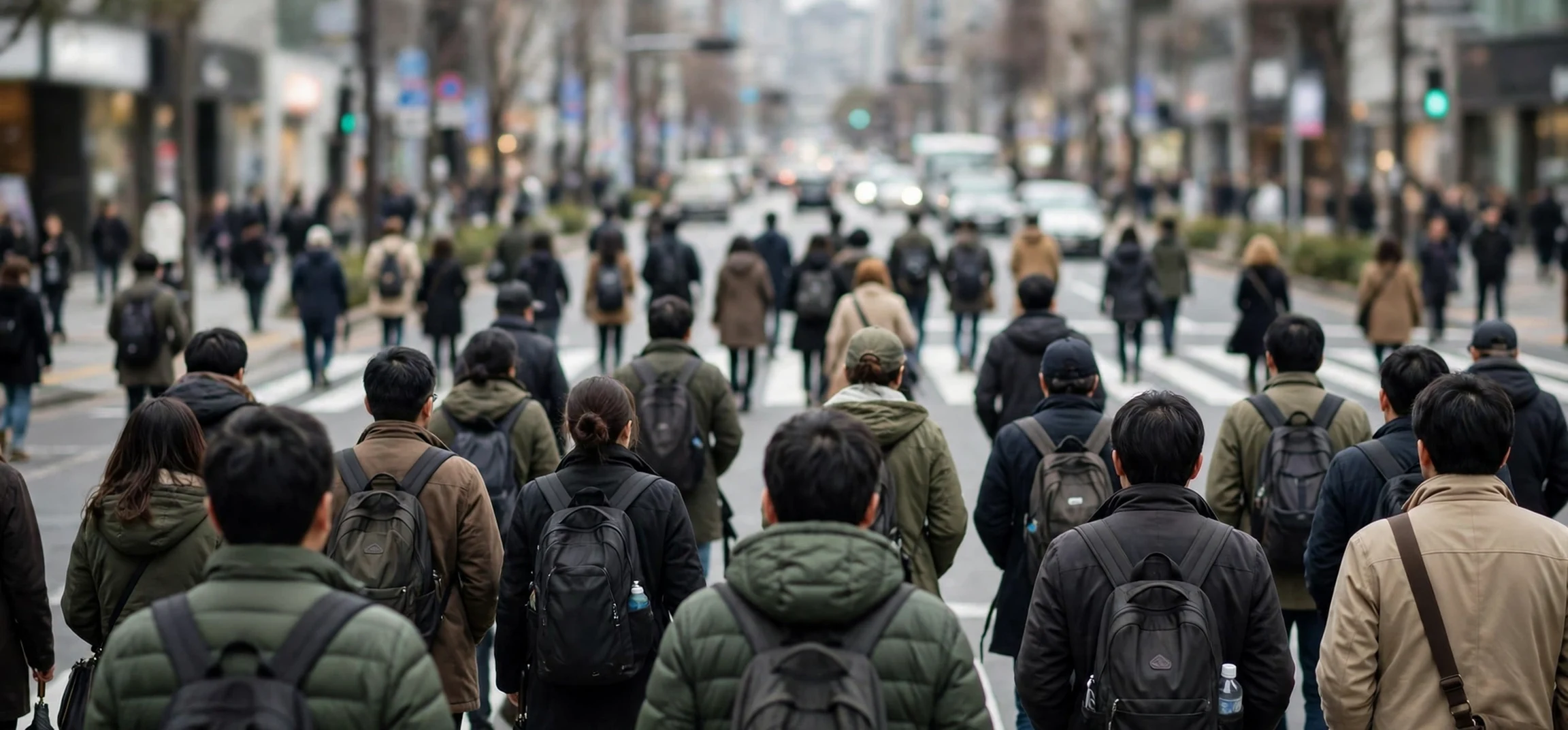
Population is a word used so often — in news reports, school lessons, and policy debates — that its precise meaning is easy to take for granted. When someone asks you to population define, they are asking for more than a dictionary entry: they want to understand what counts as a population, how populations are measured, why they change, and why the number matters for everything from city planning to wildlife conservation. This guide defines population clearly, explains its uses in demography, biology, and statistics, and shows how population figures shape the world around us.
Population Define: The Core Meaning
To population define in the most general sense: a population is the total number of individuals of a defined group living in a defined area at a defined time. The three qualifiers matter. “Defined group” might mean all humans, all residents of a city, all members of an ethnic community, or all individuals of a species. “Defined area” might be a country, a neighbourhood, or a habitat. “Defined time” matters because populations change constantly through births, deaths, and migration. A population figure without those qualifiers — “the population is ten million” — is incomplete, since it leaves the reader guessing about who, where, and when.
In everyday use, “population” usually means the human population of a place: the population of India, the population of London, the world population. Demographers, the scientists who study human populations, refine this further with concepts like the de facto population (everyone physically present) versus the de jure population (legal residents, including those temporarily away). Censuses, the great population counts conducted by governments, aim to capture one of these precisely, and the choice affects funding, representation, and planning. That is why census questions — who counts, where they are counted, and how often — are politically significant, not merely technical.
Population in Demography: Size, Structure, and Change
Demographers study three things about populations, building on the same careful definition work used across the social sciences: size, structure, and change. Size is the headline number. Structure describes composition — age, sex, ethnicity, education, occupation — often shown in population pyramids, the bar charts that display how many people fall into each age group. A pyramid with a wide base indicates many children and rapid growth; a more rectangular shape indicates an ageing, slow-growing population. Japan’s pyramid, for example, is top-heavy, reflecting low birth rates and long life expectancy, while Nigeria’s is bottom-heavy, reflecting high birth rates and a young population.
Change comes from three drivers: births add, deaths subtract, and migration moves people in or out. The balance of births and deaths is called natural increase (or decrease, when deaths exceed births). When migration is added, the result is total population change. Demographers also track rates that make comparison possible: the crude birth rate and death rate (per thousand people per year), the total fertility rate (average children per woman), and life expectancy at birth. These rates let analysts compare a city of fifty thousand with a country of fifty million on equal terms, and they reveal trends that raw numbers hide.
The demographic transition
One of demography’s most powerful ideas is the demographic transition model, which describes how societies move from high birth and death rates to low ones as they develop. In the first stage, both rates are high and population is stable. In the second, death rates fall (better food, medicine, sanitation) while birth rates stay high, causing rapid growth. In the third, birth rates fall too, and growth slows. In the fourth, both rates are low and population stabilises or declines. Most countries are somewhere along this path, and their position explains much about their economies, politics, and futures. Understanding the model turns population headlines from isolated numbers into parts of a larger story.
Population in Biology and Statistics
In biology, a population is a group of individuals of the same species living in the same area and interbreeding — a wolf pack’s region, a school of fish, or all the oak trees in a wood. Ecologists study population dynamics: how populations grow, shrink, and interact with predators, prey, and resources. Concepts like carrying capacity (the maximum population an environment can sustain) and logistic growth (rapid growth that levels off as resources limit) come from this field, and they apply, with caution, to human debates about resources and sustainability. Conservation biology depends on population counts to decide which species are endangered and which interventions work.
In statistics, “population” has a different, technical meaning: the entire set of items or individuals about which conclusions are drawn, as opposed to a sample, the subset actually studied. A poll of one thousand voters aims to describe the population of all voters; a quality-control check of one hundred products aims to describe the population of all products made that day. This statistical meaning is the foundation of survey science, and confusing population with sample is one of the most common errors in interpreting research. When a headline says “a study of five hundred people found…”, the five hundred are the sample, and the population is the larger group the study claims to describe.
Why Population Figures Matter in Daily Life
Population figures shape decisions that touch everyone. Governments use them to allocate funding, draw electoral boundaries, plan schools, hospitals, roads, and housing, and forecast pension and healthcare needs. Businesses use them to choose store locations, size markets, and target advertising. Public health officials use them to calculate disease rates, plan vaccination campaigns, and spot outbreaks. International organisations use them to track development goals, from poverty reduction to food security. An inaccurate population count can therefore mean underfunded schools, misdrawn districts, or misjudged markets — which is why censuses and population estimates receive so much attention and, sometimes, controversy.
Population debates also carry ethical weight. Discussions about “overpopulation” touch on resource use, climate change, women’s education and reproductive rights, and the gap between rich and poor countries’ consumption. Responsible discussion distinguishes between population size and consumption patterns: a small population with high consumption can strain resources more than a large population with low consumption. Similarly, ageing populations raise questions about care, work, and intergenerational fairness that have no easy answers but demand informed debate. Clear definitions are the starting point for all of it — which is why asking someone to population define is never a trivial question.
| Field | Population means | Key measure |
|---|---|---|
| Demography | People in a place at a time | Census count, birth and death rates |
| Biology | Individuals of one species in an area | Population size, carrying capacity |
| Statistics | Entire set under study | Population parameters vs sample statistics |
| Policy | Residents served by a government | Funding formulas, representation |
Frequently Asked Questions About Population
What is the world population today?
The world population passed eight billion in late 2022 and continues to grow, though the rate of growth has slowed. For the latest figure, check the United Nations population estimates.
What is the difference between population and sample?
In statistics, the population is the entire group being studied, while the sample is the subset actually observed. Conclusions about the population are inferred from the sample.
What causes population change?
Three factors: births, deaths, and migration. Births and deaths determine natural change; migration adds movement in and out.
What is a population pyramid?
A chart showing a population’s age and sex structure, with age groups on the vertical axis and numbers of males and females on either side.
Population Define: Projections and Their Limits
Population projections — forecasts of future size and structure — are among demography most influential products, and also among its most misunderstood. The United Nations publishes world population prospects projecting to 2100, with variants based on different fertility assumptions. The medium variant currently expects world population to peak near ten to eleven billion later this century before stabilising or declining. These projections are not predictions set in stone: they are conditional statements — if fertility follows recent trends, then this follows — and they are revised as new data arrives. Small changes in fertility assumptions compound over decades into differences of billions, which is why responsible reporting always mentions the variant and the uncertainty range.
National projections matter just as much. A country expecting rapid growth must plan schools and jobs; one expecting decline must plan pensions and care for an ageing population. Both face political choices that projections inform but cannot make. Immigration policy, family support, retirement ages, and urban planning all respond to projected change, and public debate about those policies goes better when citizens understand that projections are scenarios, not destinies. A projection that assumes no policy change is not an argument against policy change; it is a baseline for deciding what change is needed.
Conclusion
To population define is to name a group, a place, and a time — and then to study how that group is structured and how it changes. Whether the population in question is a city, a species, or a statistical universe, the same discipline applies: define carefully, measure honestly, and interpret with context. Population figures are never just numbers; they are the raw material of planning, science, and democratic representation, and understanding them is a basic civic skill. For more clear definitions of foundational concepts, explore the definition guides on this site.



