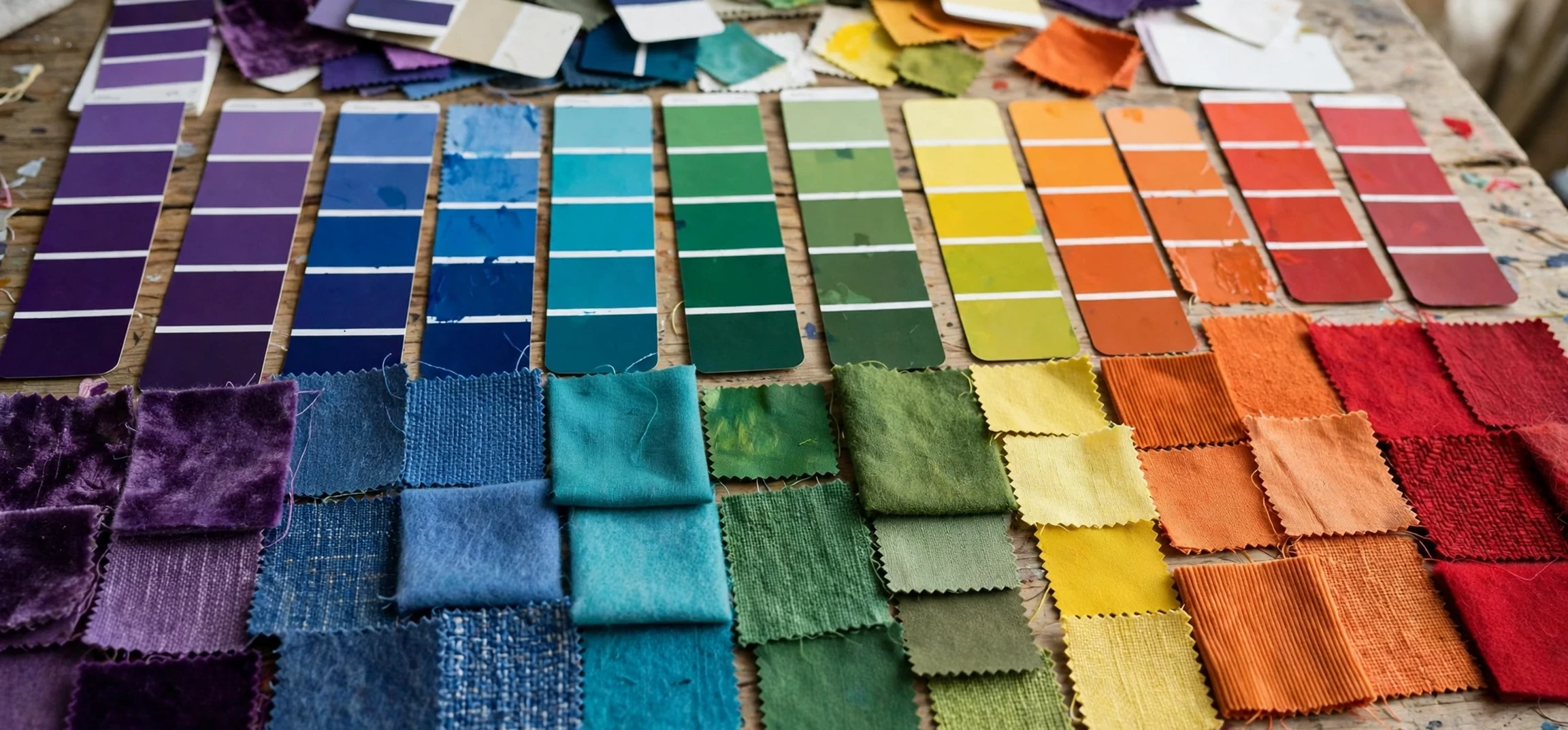
If you have ever searched for every single colour, you were probably looking for one thing: a complete, easy-to-browse list of colour names that goes beyond the dozen basic shades everyone learns as a child. This guide brings together the most widely used colour names across the main colour families, explains how colour names work, and shows how to use them in design, art, writing, and everyday conversation. You will find familiar names, less common shades, and practical tips for telling similar colours apart.
Before diving in, it helps to set expectations honestly. There is no single official list that contains literally every colour, because new shades are named all the time and many colours sit on the border between two families. A blue-green shade, for example, could reasonably be called teal, turquoise, or aqua depending on who is naming it. What this guide offers instead is a thorough, organised collection of the colour names people actually search for and use, grouped by family so you can find the shade you mean quickly.
Table of Contents
- Every Single Colour: Why One List Can Never Be Truly Complete
- Every Single Colour Grouped by Family
- How to Use This Colour Name List
- Colour Names in Design, Art and Everyday Life
- Colour Families at a Glance
- Frequently Asked Questions About Every Single Colour
- Conclusion
every single colour: why one list can never be truly complete
The idea of listing every single colour sounds simple until you try it. Colour is a spectrum, not a set of separate boxes. Between pure red and pure yellow there is a smooth slide through orange shades, and each tiny step along that slide could be given a name. Paint companies, fashion brands, and web designers all invent names for marketing reasons, which is why the same shade might be called dusty rose by one brand, vintage pink by another, and blush by a third. None of them is wrong; they are simply different labels for a similar point on the spectrum.
Language adds another layer. English colour vocabulary has grown over centuries, borrowing words from flowers, foods, minerals, places, and animals. Lavender comes from a flower, salmon from a fish, turquoise from a stone, and magenta from a place name with a long history. Because of this, colour names carry associations that go beyond the shade itself. Saying burgundy suggests wine and richness, while saying sky blue immediately brings a clear day to mind. Good colour names work because they connect a shade to something familiar.
There is also the difference between British and American spelling. Colour and color refer to the same thing, and grey and gray are the same shade with two spellings. This guide uses the colour spelling to match the search, but you will see both spellings in shops and design tools. The same applies to related words: a shade described as a colour in one country may be labelled a color in another, with no change to the shade itself.
Basic Colours and Extended Shades
Most people start with around eleven basic colour words: red, orange, yellow, green, blue, purple, pink, brown, black, white, and grey. These are the terms children learn first and the ones used most often in everyday speech. Beyond them sits a much larger set of extended shades. Crimson, scarlet, and ruby are all reds, but they differ in depth and warmth. Navy, sky, and royal are all blues, but they differ in darkness and brightness. Learning the extended names helps you describe exactly what you see instead of settling for a rough approximation.
Designers often organise colours by three qualities: hue, lightness, and saturation. Hue is the basic family, such as red or green. Lightness describes how close a shade is to white or black, which is why pastel pink and deep maroon both belong to the red family but look very different. Saturation describes how vivid or muted a shade is. A highly saturated red shouts for attention, while a muted, greyish red feels calm and understated. When you understand these three qualities, you can guess what an unfamiliar colour name probably looks like from its family and its modifiers, such as light, dark, pale, deep, or bright.
every single colour grouped by family
Grouping colours by family is the fastest way to browse a long list. The sections below cover the main families, with well-known names and some less common ones worth knowing. Read through the families that matter most to you, or use the list as a reference whenever you need a precise name for a shade.
Red Colour Names
Red is one of the richest families, ranging from bright and fiery to dark and wine-like. Common red names include crimson, scarlet, ruby, cherry, coral, rose, burgundy, maroon, brick, rust, vermilion, and wine. Lighter reds move toward pink, with shades such as salmon, blush, and rose pink sitting on the border. Warmer reds lean toward orange, like tomato red and flame, while cooler reds lean toward purple, like raspberry and claret. If you need a red that feels elegant, burgundy and wine are reliable choices. If you need energy, scarlet and cherry red deliver it instantly.
Orange and Yellow Colour Names
Orange shades include tangerine, peach, apricot, amber, burnt orange, pumpkin, coral orange, and terracotta. Peach and apricot are soft, warm shades often used in interiors and weddings, while burnt orange and pumpkin feel autumnal and bold. Yellow shades include lemon, gold, mustard, honey, butter, canary, saffron, and chartreuse, which sits between yellow and green. Gold deserves a special note: it is both a colour name and a finish, so gold paint or fabric often has a metallic sheen that a flat yellow does not. Mustard and honey are muted yellows that work well in clothing and home decor because they add warmth without overpowering a room.
Green Colour Names
Green covers everything from fresh spring leaves to deep forest tones. Popular green names include emerald, olive, sage, mint, lime, forest green, teal green, moss, jade, pistachio, seafoam, and chartreuse. Mint and seafoam are pale, cool greens that feel fresh and clean. Sage and olive are muted greens that pair well with neutrals and are popular in interior design. Emerald and jade are rich, jewel-like greens, while lime is bright and attention-grabbing. Because green sits in the middle of the visible spectrum, it is also the family where the eye notices small differences most easily, which is why there are so many distinct green names.
Blue Colour Names
Blue is the most popular favourite colour in many surveys, and its name list is correspondingly long. Key blue names include navy, royal blue, sky blue, baby blue, cobalt, azure, cerulean, turquoise, teal, sapphire, steel blue, powder blue, midnight blue, and indigo. Navy and midnight blue are dark and formal, often used in uniforms and business clothing. Sky blue and baby blue are light and gentle, while cobalt and royal blue are vivid and confident. Turquoise and teal sit between blue and green, and the exact border between them is a matter of debate, which is why both names remain popular. For a deeper dive into one part of this family, see the guide to names of different blue colours.
Purple, Pink and Brown Colour Names
Purple shades include violet, lavender, lilac, plum, mauve, orchid, magenta, and amethyst. Lavender and lilac are pale purples with a soft, floral feel, while plum and amethyst are deeper and richer. Magenta is a vivid pinkish-purple that stands out in print and digital design. Pink shades include hot pink, blush, rose, fuchsia, coral pink, baby pink, and dusty rose. Hot pink and fuchsia are bold and playful, while blush and dusty rose are muted and romantic. Brown shades include chocolate, coffee, caramel, tan, beige, chestnut, walnut, cinnamon, and taupe. Beige and taupe are versatile neutrals, while chocolate and coffee are deep, warm browns that pair well with cream and gold.
Black, White, Grey and Neutral Colour Names
Neutrals may sound plain, but they have a surprisingly rich vocabulary. Black shades include jet black, charcoal, ebony, onyx, and midnight. White shades include pure white, ivory, cream, snow, pearl, and off-white. Ivory and cream are warm whites with a hint of yellow, while snow and pure white are cooler and brighter. Grey shades include silver, slate, ash, smoke, pewter, and charcoal grey. Silver is both a colour and a metallic finish, like gold. Neutrals are the backbone of design because they let brighter colours shine, and choosing the right neutral, warm or cool, can change the whole feel of a room, an outfit, or a website.
How to Use This Colour Name List
Start by identifying the family, then narrow down by lightness and warmth. If you are describing a paint shade, a dress, or a website colour, ask three questions. Is it light or dark? Is it warm or cool? Is it bright or muted? A light, warm, muted red is probably blush or dusty rose. A dark, cool, muted blue is probably slate or steel blue. Answering those three questions usually lands you within one or two names of the shade you mean.
When you need precision, pair the name with a description. Instead of just saying teal, say deep teal with a green leaning. Instead of just saying beige, say warm sandy beige. This habit helps enormously when ordering online, where screens show colours differently, or when explaining a shade to someone else. Colour names are a starting point for communication, not a perfect match, and a short description closes the gap between the name and the real shade.
It also helps to know how colours relate to each other. Analogous colours sit next to each other on the colour wheel and create calm, harmonious combinations, such as blue, teal, and green. Complementary colours sit opposite each other and create contrast, such as blue and orange. Learning these relationships turns a simple name list into a practical design tool, and you can read more about harmonious combinations in the guide to analogous colours. For flag and symbol colours, the guide to what the colours of the Mexican flag mean shows how colour names carry cultural meaning too.
Colour Names in Design, Art and Everyday Life
In interior design, colour names help clients and designers agree on a vision before any paint is bought. A request for sage green walls produces a very different room from a request for lime green walls, even though both are green. Designers therefore use precise names, sample swatches, and natural light checks together. A shade that looks perfect under shop lighting can look different at home, so always test a sample in the actual room before committing.
In fashion, colour names signal mood and season. Pastel shades suggest spring, jewel tones suggest winter elegance, and earth tones suggest autumn. Fashion brands often invent seasonal names, such as a particular autumn rust or a summer coral, to make a collection feel fresh. Knowing the standard names underneath those marketing labels helps you shop smarter, because you can recognise that this season’s new shade is close to a classic you already own.
In writing and everyday speech, precise colour names make descriptions vivid. A character wearing a crimson coat feels different from one wearing a pink coat, and a sky described as cerulean feels different from one described as grey. Writers use colour names to set mood quickly, and readers respond because colour carries emotional associations: red for passion or danger, blue for calm or sadness, green for nature or growth, and yellow for warmth or caution. Choosing the right name is therefore a small decision with a large effect on how your words land.
Colour Families at a Glance
| Colour family | Light shades | Mid shades | Dark shades |
|---|---|---|---|
| Red | Blush, salmon | Crimson, cherry | Burgundy, maroon |
| Orange | Peach, apricot | Tangerine, amber | Burnt orange, rust |
| Yellow | Butter, lemon | Gold, honey | Mustard, saffron |
| Green | Mint, sage | Emerald, jade | Forest, olive |
| Blue | Sky blue, baby blue | Royal blue, azure | Navy, midnight blue |
| Purple | Lavender, lilac | Violet, orchid | Plum, amethyst |
| Pink | Baby pink, blush | Rose, coral pink | Hot pink, fuchsia |
| Brown | Beige, tan | Caramel, chestnut | Chocolate, walnut |
| Neutrals | Ivory, cream | Grey, taupe | Charcoal, jet black |
Use this table as a quick reference. Find the family, then move from light to dark until you reach the depth that matches your shade. If your shade sits between two columns, combine the names: light-mid reds become rose pink, while mid-dark blues become deep royal blue. This simple method works for almost any shade you encounter.
Frequently Asked Questions About Every Single Colour
How many colours are there in total?
There is no fixed total. The human eye can distinguish millions of shades, and new names are created regularly by brands and designers. A practical list covers the hundreds of names people actually use, grouped by family, rather than pretending to count every possible shade.
What is the difference between a colour and a shade?
In everyday speech the words are often swapped, but strictly a shade is a colour mixed with black, making it darker, while a tint is a colour mixed with white, making it lighter. A tone is a colour mixed with grey, making it more muted. Knowing these terms helps you describe light, dark, and muted versions of any colour precisely.
Why do the same colours have different names in different shops?
Brands create their own names for marketing, and different industries use different naming systems. Paint, fabric, cosmetics, and web design each have their own conventions. The shade may be identical even when the name differs, so compare swatches rather than relying on the name alone.
What are the best colours for beginners to learn first?
Start with the basic eleven, then add a few popular extended names per family: crimson and burgundy for red, navy and sky blue for blue, emerald and sage for green, and lavender and plum for purple. That small set covers most everyday descriptions.
Conclusion
Searching for every single colour is really a search for precision: the right word for the exact shade you see. While no list can capture every possible shade, a well-organised list by family, with light, mid, and dark examples, gets you close enough for design, shopping, art, and writing. Start with the family, narrow by lightness and warmth, and pair the name with a short description when accuracy matters. Keep this guide as a reference, and the next time a shade catches your eye, you will have the words to name it with confidence.