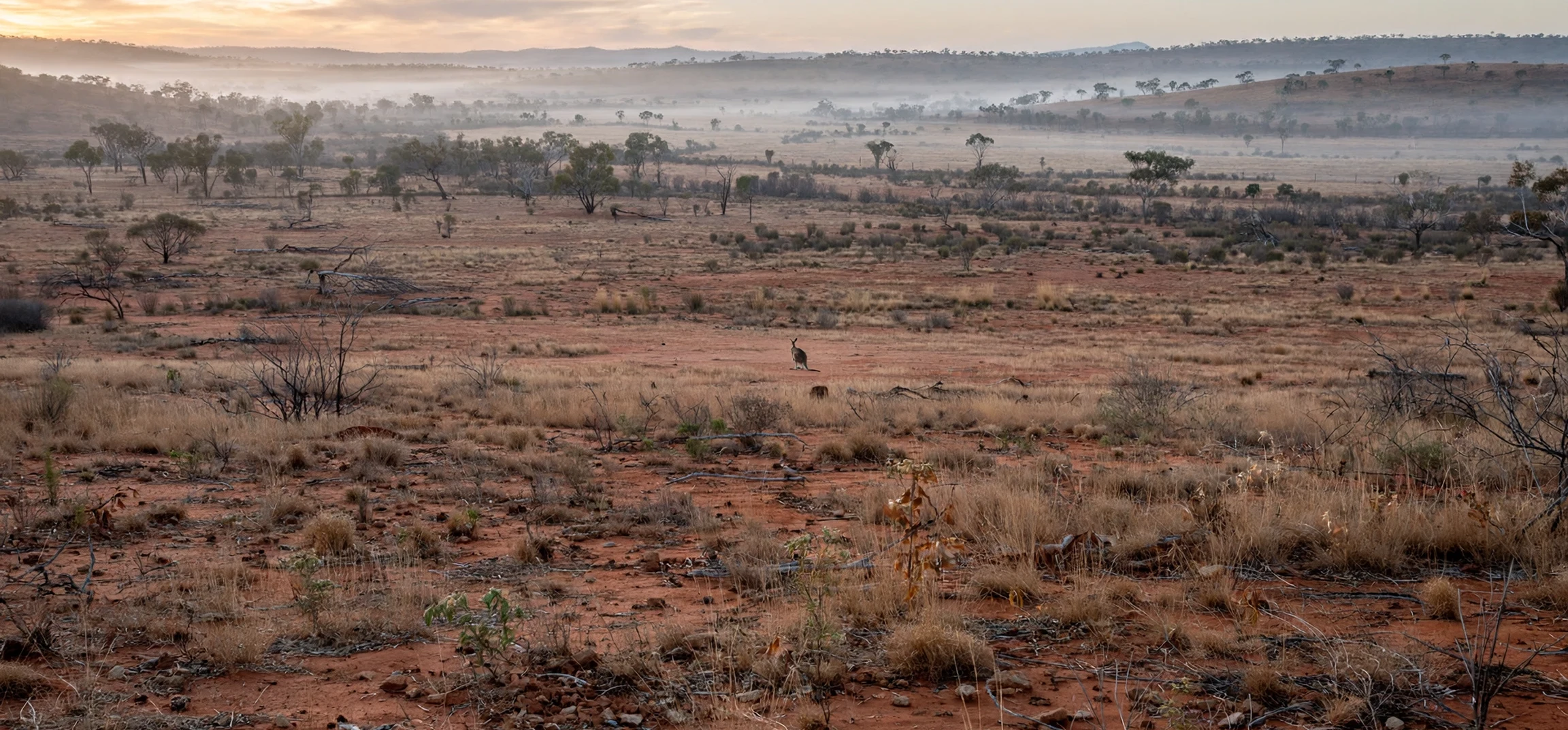
Kangaroos are among the most recognisable animals on Earth, famous for their powerful hind legs, long tails, and the pouch in which females carry their young. Yet a simple question often causes confusion: what is the scientific name kangaroo actually refers to? The honest answer is that there is no single scientific name for every kangaroo, because “kangaroo” is a common name for a whole group of related animals, not one species. The red kangaroo, the best-known species, has the scientific name Macropus rufus. Other kangaroos have different scientific names, and understanding why that is so opens a window onto how scientists classify life.
Scientific names exist to solve a problem that common names create. A single animal may have dozens of local names in different languages, and one common name may be used for several different animals. A scientific name, written in Latin form and recognised internationally, gives every species one unique label. When researchers in different countries write Macropus rufus, they know they are talking about exactly the same animal, no matter what it is called in their own language. That precision matters for conservation, research, and wildlife management.
scientific name kangaroo: the short answer
If you need one answer, Macropus rufus is the scientific name of the red kangaroo, the largest kangaroo and the largest marsupial alive today. The genus name Macropus comes from Greek words meaning “long foot,” a fitting description for an animal whose hind feet are strikingly elongated. The species name rufus is Latin for reddish, referring to the rusty-red coat of the males. Female red kangaroos are often blue-grey rather than red, which is a useful reminder that a species name describes the species as a whole, not every individual within it.
For the group as a whole, kangaroos belong to the family Macropodidae, a name that also comes from the Greek for “large foot.” This family includes kangaroos, wallabies, wallaroos, and related marsupials. So when someone asks for the scientific name kangaroo in general, the most accurate response is to explain the levels: Macropodidae is the family, Macropus is a genus within it, and Macropus rufus is one particular species. Giving only the species name without that context can mislead, because it implies that all kangaroos are the same animal.
How Scientific Names Work
The system used today is called binomial nomenclature, introduced in the eighteenth century by the Swedish naturalist Carl Linnaeus. Every species receives a two-part name: the genus name, written first with a capital letter, followed by the species name, written in lower case. In print, scientific names are traditionally italicised, as in Macropus rufus. The genus groups together closely related species, while the species name picks out one particular kind within that genus. Together, the two parts form a unique identifier that is recognised by scientists worldwide.
Above the genus sit broader ranks: family, order, class, and so on. Kangaroos illustrate the ladder nicely. Their order is Diprotodontia, a group of marsupials characterised by a particular arrangement of teeth. Their class is Mammalia, because they are mammals that nurse their young with milk. Their phylum is Chordata, and their kingdom is Animalia. Each step up the ladder includes more animals and fewer shared details, while each step down narrows the group until only one species remains. This hierarchy lets scientists show relationships at a glance: animals that share a genus are more closely related than animals that share only a family.
Why scientific names sometimes change
Scientific names are not fixed forever. As researchers learn more from genetics, fossils, and field studies, they sometimes discover that a species belongs in a different genus, or that what was thought to be one species is actually two. When that happens, the name is revised, and older names become synonyms. The red kangaroo, for example, was once placed in a different genus by some classifications, and older literature may show a different combination. Modern references settle on Macropus rufus, but encountering an older name in a book or article does not necessarily mean the book is wrong; it may simply predate a revision. This is normal in science, where names follow evidence.
scientific name kangaroo species by species
The kangaroo family contains many species, and the best-known ones each have their own scientific name. The eastern grey kangaroo is Macropus giganteus, a name that reflects its large size. The western grey kangaroo is Macropus fuliginosus, from a Latin word meaning sooty, referring to its darker coat. The antilopine kangaroo of northern Australia is Macropus antilopinus. Wallaroos, which are stockier relatives often found in rocky country, include the common wallaroo, Macropus robustus. Tree-kangaroos, which live in forests and climb rather than hop across open plains, belong to the genus Dendrolagus, a name meaning “tree hare.”
Wallabies are smaller members of the same family and are not a separate scientific group; the distinction between kangaroo and wallaby is based largely on size and common usage rather than a formal taxonomic boundary. The red-necked wallaby, for instance, is Macropus rufogriseus, placing it in the same genus as the great red kangaroo. This surprises many people, because common language suggests a sharp divide that taxonomy does not recognise. It is a good example of why scientific names are more reliable than everyday labels when precision matters.
| Common name | Scientific name | Notes |
|---|---|---|
| Red kangaroo | Macropus rufus | Largest kangaroo and largest living marsupial |
| Eastern grey kangaroo | Macropus giganteus | Common in eastern Australia, often seen in open country |
| Western grey kangaroo | Macropus fuliginosus | Found in southern and western Australia |
| Antilopine kangaroo | Macropus antilopinus | Northern Australia, named for its antelope-like build |
| Common wallaroo | Macropus robustus | Stocky build, often in rocky habitats |
| Red-necked wallaby | Macropus rufogriseus | Smaller relative in the same genus |
What Makes a Kangaroo a Marsupial?
Kangaroos are marsupials, a group of mammals whose young are born at a very early stage of development and continue growing in a pouch. A newborn kangaroo, called a joey, is tiny and underdeveloped when it makes its way to the pouch, where it attaches and feeds for months. This reproductive strategy differs from that of placental mammals, whose young develop longer inside the body before birth. Marsupials are especially diverse in Australia, where they evolved in relative isolation, but they also occur in the Americas, where opossums are the best-known examples.
The pouch is only one part of the marsupial story. Kangaroos also have distinctive dentition, with a gap between the front teeth and the cheek teeth, and a digestive system adapted to tough, fibrous grasses. They are herbivores, grazing on grasses and shrubs, and they can survive in arid country by conserving water efficiently. Their famous hopping gait is an energy-efficient way to travel long distances across open landscapes, and their long, muscular tail acts as a counterbalance and a support when they stand or move slowly.
Habitat, Behaviour, and Daily Life
Different kangaroo species occupy different parts of Australia. Red kangaroos favour the arid and semi-arid interior, where they range widely in search of food and water after rain. Eastern grey kangaroos prefer the more fertile east, including grasslands and open woodlands. Western grey kangaroos occupy the south and west. All of them are social to varying degrees, often seen in groups called mobs, though the size and stability of these groups vary with species and conditions. Males may compete for dominance, sometimes in the upright boxing displays that have become famous in popular culture.
Kangaroos are most active in the cooler hours around dawn and dusk, resting during the heat of the day. This pattern, known as being crepuscular, helps them conserve water and avoid the worst of the sun. Their diet of grasses means they spend much of their active time grazing, and their specialised stomachs ferment tough plant material with the help of microbes, much as a cow does. Understanding these habits helps explain their distribution: kangaroos thrive where grasses grow after rain, and their numbers can rise and fall with the seasons.
Conservation and the Role of Names
Accurate scientific names are essential for conservation. Laws, reserves, and management plans all refer to species by their scientific names, because a common name alone could be ambiguous. If a management plan protects Macropus rufus, there is no doubt which animal it covers. If it merely said “kangaroo,” it would be unclear whether wallabies, wallaroos, or tree-kangaroos were included. Some kangaroo species are abundant, while others, particularly certain tree-kangaroos and smaller wallabies, face pressure from habitat loss and introduced predators. Precise naming ensures that protection and research effort reach the right animals.
For readers interested in how names and meanings are recorded in reference works, our guides to science meaning of matter and fault science meaning show how scientific language is explained for general readers. The same principle applies here: a scientific name is a tool for clarity, not a barrier to understanding, and learning a few of them makes wildlife reading far more rewarding.
Frequently Asked Questions
Is there one scientific name for all kangaroos?
No. Kangaroo is a common name for a group of species in the family Macropodidae. Each species has its own scientific name, such as Macropus rufus for the red kangaroo and Macropus giganteus for the eastern grey kangaroo.
What is a baby kangaroo called?
A baby kangaroo is called a joey. The term is also used for the young of other marsupials, including wallabies and koalas. A joey spends months in the pouch before it begins to spend extended periods outside.
What is the difference between a kangaroo and a wallaby?
The difference is mainly one of size and common usage. Wallabies are generally smaller members of the kangaroo family, but there is no strict scientific line separating the two groups, and some wallabies share the genus Macropus with large kangaroos.
Where do kangaroos live in the wild?
Kangaroos live wild in Australia and, for some species, in nearby New Guinea. Different species occupy different habitats, from arid interior plains to eastern grasslands and forests, and they are not naturally found wild on other continents.
Conclusion
The scientific name kangaroo question has a richer answer than a single label. Macropus rufus is the correct scientific name for the red kangaroo, the species most people picture when they hear the word. Behind that name sits a family, Macropodidae, containing many species, each with its own two-part Latin name, from the eastern grey kangaroo to the tree-kangaroos of the forest canopy. Learning how those names work, why they change, and what they reveal about relationships turns a simple trivia question into a useful introduction to taxonomy. The next time you see a kangaroo, whether in a documentary or in the wild, you will know that its common name is only the beginning of its scientific story.



