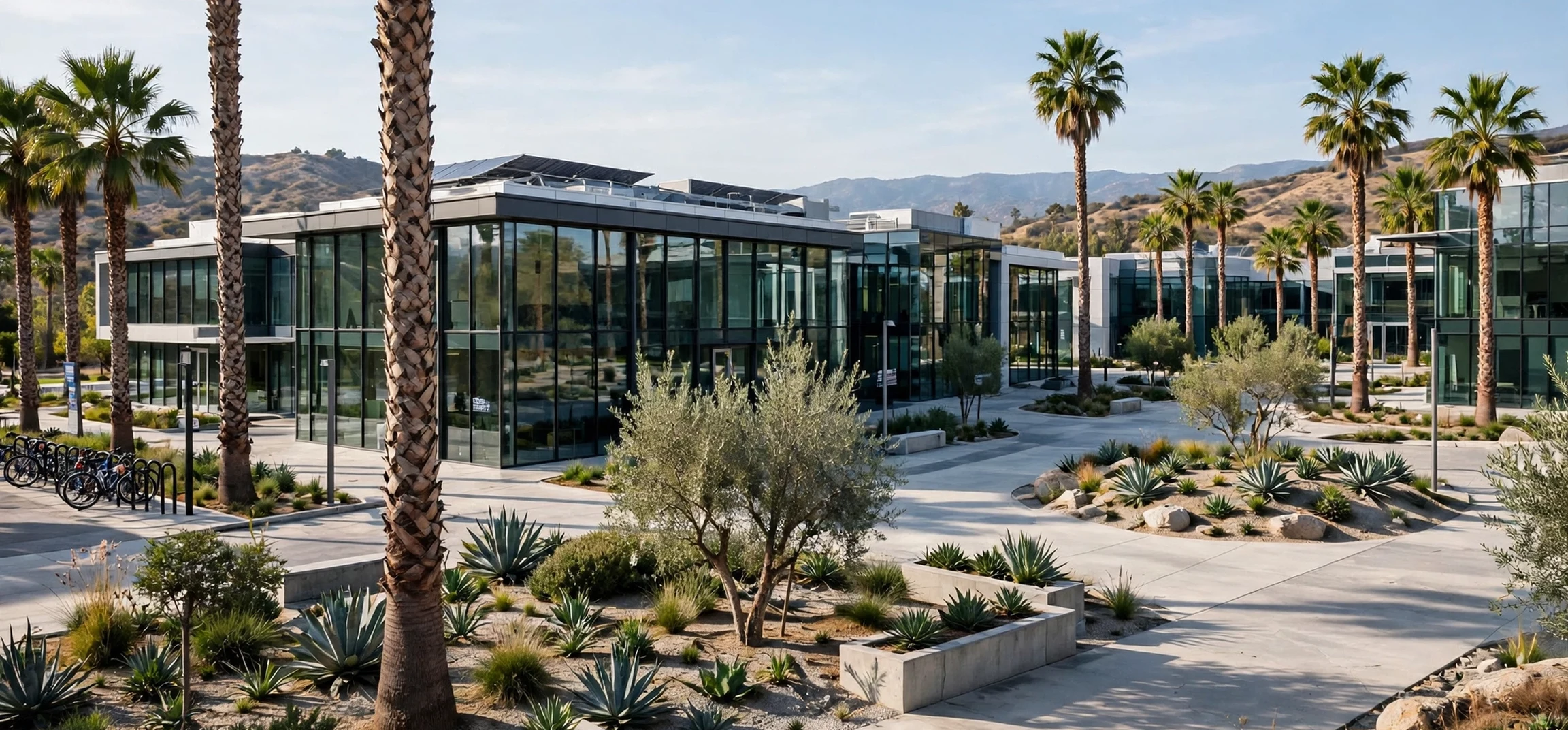
If you have ever wondered why do they call it silicon valley, you are asking about one of the most successful nicknames in modern history. Silicon Valley is the southern part of the San Francisco Bay Area in California, home to many of the world’s largest technology companies, and its name sounds like a place on a map. In fact, it began as a journalist’s shorthand, caught on because it described exactly what the region made, and then outgrew its original meaning to become a global symbol for innovation itself.
The direct answer to why do they call it silicon valley is that the region’s early electronics industry was built on silicon, the chemical element used to make semiconductor chips, and the valley in question is the Santa Clara Valley. A 1971 series of articles in a trade newspaper, titled Silicon Valley USA, gave the nickname its first wide audience, and the name stuck because it was accurate, memorable and easy to say. The sections below trace that story from orchards to chips, from the first transistor companies to the giants of today, and explain why the name still fits even though the region now does far more than make silicon.
why do they call it silicon valley: the 1971 headline that named it
Before it was Silicon Valley, the Santa Clara Valley was known as the Valley of Heart’s Delight, a name that reflected its orchards of prunes, apricots and cherries. The change from fruit to electronics did not happen overnight. It began with radio and electronics work in the early twentieth century, grew through wartime and post-war research, and accelerated when engineers began working with silicon to make transistors and then integrated circuits. By the late nineteen sixties, the valley’s economy was already shifting decisively from agriculture to electronics, but it did not yet have a name that captured that shift.
That name arrived in 1971, when journalist Don Hoefler wrote a three-part series for Electronic News titled Silicon Valley USA. Hoefler used the phrase to describe the growing concentration of semiconductor companies in the Santa Clara Valley, and readers adopted it immediately. The timing was perfect: the industry was expanding fast, the companies were becoming famous, and the region needed a label that distinguished it from other parts of California. Silicon Valley did that job in two words, and because it appeared in a trade publication read by the very people it described, it spread through the industry before it spread to the general public.
Why silicon, and why a valley?
Silicon is a chemical element found in sand and quartz, and it became the foundation of modern electronics because it is a semiconductor: a material whose ability to conduct electricity can be precisely controlled. Transistors and integrated circuits made from silicon power almost every electronic device, from phones to computers to cars. The valley part of the name is simpler: the Santa Clara Valley is a real geographical valley, running south from San Francisco Bay, and the early chip companies clustered there because of land, universities and an existing electronics workforce. Put the material and the place together, and the nickname explains itself.
why do they call it silicon valley: from orchards to semiconductors
The deeper history begins with Stanford University and the engineers who stayed in the area after studying there. Frederick Terman, a Stanford professor often called the father of Silicon Valley, encouraged students to start companies near the university rather than moving east, and he helped create the Stanford Industrial Park, where young firms could rent space close to research. The most famous early result was Hewlett-Packard, founded in a Palo Alto garage in 1939 by Bill Hewlett and Dave Packard, a story that has become part of the region’s founding myth. The garage itself is now a landmark, and it symbolises the idea that a world-changing company can start small.
The semiconductor era began in earnest with Shockley Semiconductor in the nineteen fifties, followed by Fairchild Semiconductor, whose engineers went on to found many of the next generation of companies, including Intel in 1968. Intel’s microprocessors, and the chips made by its rivals, turned silicon into the defining material of the age. The valley’s companies did not just make chips; they made the tools, the software and the business models that grew around chips, and each success attracted more engineers, investors and suppliers. That clustering effect, where companies benefit from being near each other, is a large part of why the valley kept growing while other regions struggled to copy it.
What Silicon Valley Means Today
Today, Silicon Valley means much more than silicon chips. The region is home to giants in software, internet services, social media, artificial intelligence and venture capital, and its name is used as shorthand for the technology industry worldwide. People talk about the Silicon Valley model, Silicon Valley culture and even Silicon Valleys in other countries, meaning a place where startups, universities and investors work closely together. The original material meaning has not disappeared, since chips remain essential, but the nickname now carries a second meaning: a way of working, fast, risk-taking and focused on scale.
That expansion has also brought criticism. Housing costs in the valley are among the highest in the world, the gap between technology wealth and other work is stark, and the region’s dominance raises questions about concentration of power. Understanding the name helps to understand those debates, because the valley’s identity was built on a specific industry in a specific place, and its success has changed that place profoundly. The orchards are largely gone, the land is expensive, and the companies that once made chips now shape how billions of people communicate, work and shop. The nickname that began as a trade-press label now describes one of the most influential regions on earth.
Can other places be a Silicon Valley?
Many regions have tried to copy the valley’s success, and some have earned nicknames such as Silicon Roundabout in London or Silicon Wadi in Israel. These names borrow the original’s prestige, but they also show how hard the model is to copy. The valley’s advantage was never just silicon or geography; it was the combination of a great university, a culture that tolerated failure, a deep pool of engineers, and investors willing to fund risky ideas. Regions that build only one of those ingredients rarely reproduce the whole effect, which is why the original name still carries more weight than its imitators.
Visiting the Valley and Using the Name Correctly
For visitors, Silicon Valley is not a single city with a welcome sign, but a region covering cities such as San Jose, Palo Alto, Mountain View, Cupertino and Menlo Park. The landmarks that most visitors seek out are the company campuses, the Computer History Museum in Mountain View, Stanford University, and the Hewlett-Packard garage in Palo Alto, which is a private home and should be viewed respectfully from outside. The best way to understand the valley is to see it as a working region rather than a theme park: the innovation happens in offices and labs, and the public face of the place is its museums, universities and downtowns.
In writing, Silicon Valley takes capital letters because it is a proper name for a specific region, even though it began as a nickname. Writers should be careful not to use it as a synonym for the whole technology industry, since that blurs the difference between the place and the sector. A company can be part of the technology industry without being based in Silicon Valley, and a company based in the valley may work in fields far from chips. Used precisely, the name tells a reader where something happens and hints at the culture behind it, which is exactly why it has lasted for more than fifty years. Readers interested in the hardware at the heart of the story may enjoy this explainer on DRAM components, while the history of the name Nguyen shows how a different kind of naming story, a family name, can carry its own deep history.
| Era | What changed | Why it mattered |
|---|---|---|
| Before 1900s | Santa Clara Valley known for orchards | The Valley of Heart’s Delight, an agricultural economy |
| 1930s to 1950s | Stanford-linked electronics firms grow | Hewlett-Packard and early radio and electronics work |
| 1950s to 1960s | Silicon transistors and integrated circuits | Fairchild and Intel make silicon the key material |
| 1971 | Hoefler’s Silicon Valley USA series | The nickname reaches a wide audience and sticks |
| Today | Software, internet and AI giants | The name becomes global shorthand for innovation |
Frequently Asked Questions
Why do they call it Silicon Valley?
Because the region’s early electronics industry was built on silicon semiconductor chips, and the companies clustered in the Santa Clara Valley, a combination a 1971 headline captured perfectly.
Who coined the name Silicon Valley?
Journalist Don Hoefler popularised it with his 1971 Electronic News series titled Silicon Valley USA, although the industry it described had been growing for decades.
Is Silicon Valley a real valley?
Yes. It refers to the Santa Clara Valley in California, running south from San Francisco Bay, including cities such as San Jose and Palo Alto.
Does Silicon Valley still make silicon chips?
Chip design and related work remain important there, but the region’s economy now covers software, internet services, artificial intelligence and venture capital as well.
Conclusion
Silicon Valley got its name because it earned it: silicon was the material that made its industry possible, the Santa Clara Valley was where that industry gathered, and a journalist’s headline in 1971 gave the combination a name the world could remember. The region has since grown far beyond chips, but the name still fits, because it captures the place where a material, a university and a culture of risk-taking came together to change the world.



