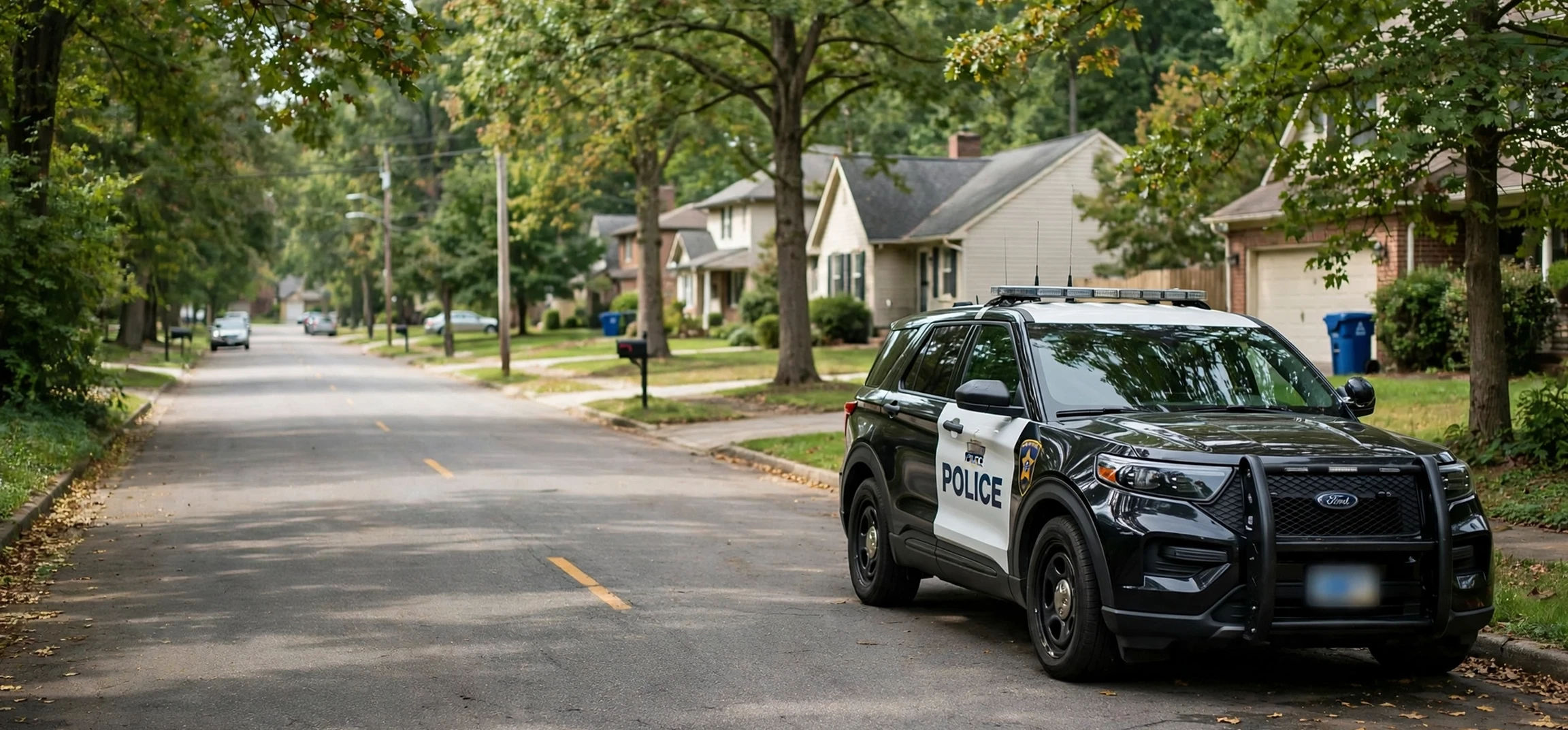
If you searched for 10 7 meaning dead, it helps to start with a clear correction: in police radio language, 10-7 does not itself mean that someone has died. The ten-code 10-7 traditionally means out of service, meaning an officer or unit is temporarily unavailable for calls, for example while on a break, refuelling, completing paperwork, or otherwise off the radio. The confusion behind the query 10 7 meaning dead is understandable, because police codes appear in films, television, and online discussions without explanation, and because a unit going out of service can happen in many different situations, including serious ones, but the code itself does not report a death.
Ten-codes are short number codes once widely used by police, fire, and emergency services to communicate quickly over radio. Instead of saying a long sentence, a dispatcher or officer could say a short code and be understood by others on the same system. The code 10-7 was one of the most common in that system. Saying 10-7 told everyone listening that the unit was stepping away from active duty for a time, and that calls should go to another unit.
This guide explains the ten-code system, what 10-7 means, why people link it with death, how usage varies today, and what other codes are commonly confused with it. It contains no graphic detail and no individual cases. Its aim is to give a factual, calm answer to the search behind 10 7 meaning dead, so readers can understand what they heard and why the code does not carry the meaning they feared.
10 7 Meaning Dead: The Direct Answer
The direct answer to 10 7 meaning dead is that 10-7 means out of service, not deceased. When an officer says they are 10-7, they are saying they are temporarily unavailable. That could be for a meal break, a vehicle check, a report, a court appearance, or the end of a shift. The code gives no information about why the unit is unavailable, and it certainly does not, on its own, announce a fatality.
Why, then, does the association with death appear online? There are a few likely reasons. First, ten-codes are often heard out of context. A listener may hear 10-7 during coverage of a serious incident and assume the code describes the incident, when it actually describes the unit’s availability. Second, some fictional shows and online lists mix up codes or invent dramatic meanings. Third, other emergency codes and phrases do relate to serious medical situations, and listeners may merge them in memory with 10-7. Untangling those threads matters, because a mistaken meaning can cause real distress if someone believes a loved one is involved.
If you ever hear a code in a real emergency context and you are worried about someone, the safest step is not to guess from the code alone. Official statements from the agency involved, or a direct check with a trusted source, will give accurate information. Radio codes are shorthand for professionals on a shared system, not public announcements, and they are easily misread by listeners outside that system.
What Ten-Codes Are and How 10-7 Fits In
Ten-codes, also called ten signals, were developed in the mid-twentieth century for radio communication. Radio channels were often noisy, and short codes reduced misunderstanding and saved time. The best-known code, 10-4, means acknowledged or understood. Other familiar codes include 10-20 for location, 10-27 for licence information, and 10-28 for vehicle registration information, although exact meanings have varied by agency and region.
Within that system, 10-7 sits alongside its opposite, 10-8, which means in service or available for calls. The pair makes sense together: an officer goes 10-7 when stepping away and 10-8 when returning. Dispatchers use the pair to track which units are available, so calls can be assigned efficiently. A unit that is 10-7 is not ignoring calls; it is formally recorded as unavailable, and the dispatcher knows to send someone else.
It is important to note that ten-codes were never fully standard across all agencies. The Association of Public-Safety Communications Officials once published a list, but many departments adapted codes for local needs, and some codes had different meanings in different places. That variation is another reason to be cautious about any single online list that presents ten-codes as universal. For 10-7, however, the out of service meaning is widely consistent across the classic lists.
Why 10-7 Meaning Can Vary by Agency and Era
Emergency communication has changed a great deal since ten-codes were at their peak. Many agencies now prefer plain language, saying out of service in full rather than using 10-7, because plain language is clearer for mutual aid, for new staff, and for agencies working together during large incidents. National guidance in the United States, for example, has encouraged plain language in incident communication, precisely to avoid the confusion that comes from local code variations.
As a result, a listener today may hear 10-7 in one place, plain language in another, and a completely different local code in a third. Some agencies still use ten-codes daily, others use them only in certain contexts, and others have dropped them entirely. Films and television, meanwhile, often keep using classic codes because audiences recognise them, even when real practice has moved on. That gap between fiction and current practice adds to the confusion behind queries like 10 7 meaning dead.
Regional differences also affect related codes. A code that means one thing in one state or country may mean something else elsewhere, or may not be used at all. Readers should therefore treat any ten-code list as a general guide to classic usage, not as a definitive dictionary for every department. When accuracy matters, the agency’s own published guidance, if available, is the reliable source.
| Classic ten-code | Common meaning | Notes |
|---|---|---|
| 10-4 | Acknowledged, understood | One of the most widely recognised codes |
| 10-7 | Out of service | Temporarily unavailable; does not mean a death |
| 10-8 | In service, available | The opposite of 10-7 |
| 10-20 | Location | Often asked as what is your 10-20 |
| 10-27 | Licence or permit information | Meaning can vary by agency |
Where the Death Association May Come From
Several distinct ideas may feed the belief behind 10 7 meaning dead. One is the phrase out of service itself. In everyday language, out of service can sound final, as if something has stopped working for good. In radio language, it is temporary and routine. An officer can be out of service for lunch and back in service an hour later. The everyday meaning and the radio meaning are different, and that difference alone can create a misunderstanding.
Another source of confusion is the way serious incidents are covered. During a major incident, many units may go in and out of service, take breaks, or be reassigned. A listener following a live feed may hear 10-7 repeatedly during a difficult night and link the code with the seriousness of the night, rather than with the routine status changes it actually describes. Correlation in time does not mean the code describes the incident.
A third source is online content that repeats errors. Once a mistaken definition appears on a forum, video, or list, it can be copied many times. Readers who see the same claim in several places may assume it is confirmed, even when every copy traces back to one error. Checking a definition against classic ten-code lists and against the logic of the code pair 10-7 and 10-8 helps break that cycle. If 10-7 meant a death, its everyday pairing with 10-8 as a return to service would make little sense.
Other Codes and Phrases People Confuse With 10-7
Emergency services use many codes beyond ten-codes, including signal codes, penal codes, and medical codes, and these systems are separate. A medical code used in a hospital, for example, has nothing to do with a police radio ten-code, even if numbers look similar. Mixing systems is a common source of error in online definitions.
Some police and fire systems use codes for specific incident types, and some use plain language for fatalities, such as reporting a death through formal channels rather than a short radio code. There is no single universal radio code that announces a death in the way that 10-7 is sometimes imagined to do. When a death occurs in the course of duty or in a community, it is handled through formal notification and reporting, not through a brief status code that also covers meal breaks.
Listeners should also be careful with scanner apps and live audio feeds. These feeds often lack context, use local codes, and may include several agencies at once. A code heard on one channel may belong to a different agency’s system from the one a listener assumes. Enjoying scanner listening as a hobby is fine, but drawing conclusions about individual incidents from a single code is unreliable and can be upsetting.
Is 10-7 Still Used Today?
Yes, in some places, but less universally than in the past. Many departments still use 10-7 and 10-8 as quick status updates, especially where staff are used to them and where radio traffic is heavy. Other departments have moved to plain language for all status updates, saying available or unavailable in full. Both approaches aim at the same goal: clear, fast communication that everyone on the channel understands.
The shift toward plain language has been driven by large, multi-agency incidents, where responders from different areas must work together at short notice. If each agency uses different codes, misunderstandings can slow the response. Plain language reduces that risk. It also helps the public understand official communications when they are shared, because there is no code to decode.
For writers, researchers, and curious listeners, the practical lesson is to note the date and place of any code use. A code list from one era or region may not match current practice elsewhere. The classic meaning of 10-7 as out of service remains the best general answer, but local practice is the final authority for any specific department.
Frequently Asked Questions About 10 7 Meaning Dead
Does 10-7 mean someone has died?
No. In classic police ten-code usage, 10-7 means out of service, or temporarily unavailable. It does not report a death.
What is the opposite of 10-7?
The opposite is 10-8, meaning in service or available for calls. An officer goes 10-8 when returning to availability after being 10-7.
Why do people search for 10 7 meaning dead?
People often hear the code out of context, see a mistaken definition online, or link it with a serious incident happening at the same time. The code itself, however, describes availability, not an incident outcome.
Do all police departments use 10-7 the same way?
Not always. Classic lists agree on out of service, but many agencies now use plain language instead, and local variations have always existed. Local guidance is the most reliable source for a specific department.
How to Explain 10 7 Meaning Dead to Someone Else
If a friend asks about 10 7 meaning dead, start with the correction, then give the real meaning. Explain that 10 7 meaning dead is a mistaken reading, and that 10-7 actually means out of service. When people search for 10 7 meaning dead, they are usually worried or curious after hearing a code without context, so a calm answer helps more than a long technical lecture. Say that 10 7 meaning dead confuses a status update with an incident report, and that the code itself says nothing about what happened.
You can also explain 10 7 meaning dead by pointing to its pair, 10-8. A unit that goes 10-7 later goes 10-8, back in service. That pairing shows why 10 7 meaning dead cannot be the standard meaning: a unit cannot return to service after the meaning people fear. If you remember that pair, you will remember the answer to 10 7 meaning dead whenever you hear the code again, and you can pass that clear explanation on to others.
Conclusion
The query 10 7 meaning dead deserves a calm, factual answer: 10-7 means out of service. It is a routine status code, paired with 10-8 for in service, and it tells listeners that a unit is temporarily unavailable, not that a death has occurred. Confusion arises from hearing codes out of context, from fiction, and from online lists that repeat errors, but the classic meaning is consistent and the logic of the code pair supports it.
If you heard 10-7 and worried about what it meant, you now have the standard explanation, and you can check local practice if you need department-specific detail. For more plain-language explainers, see crime and legal terms explained, court terms in plain language, and how technical terms are defined.