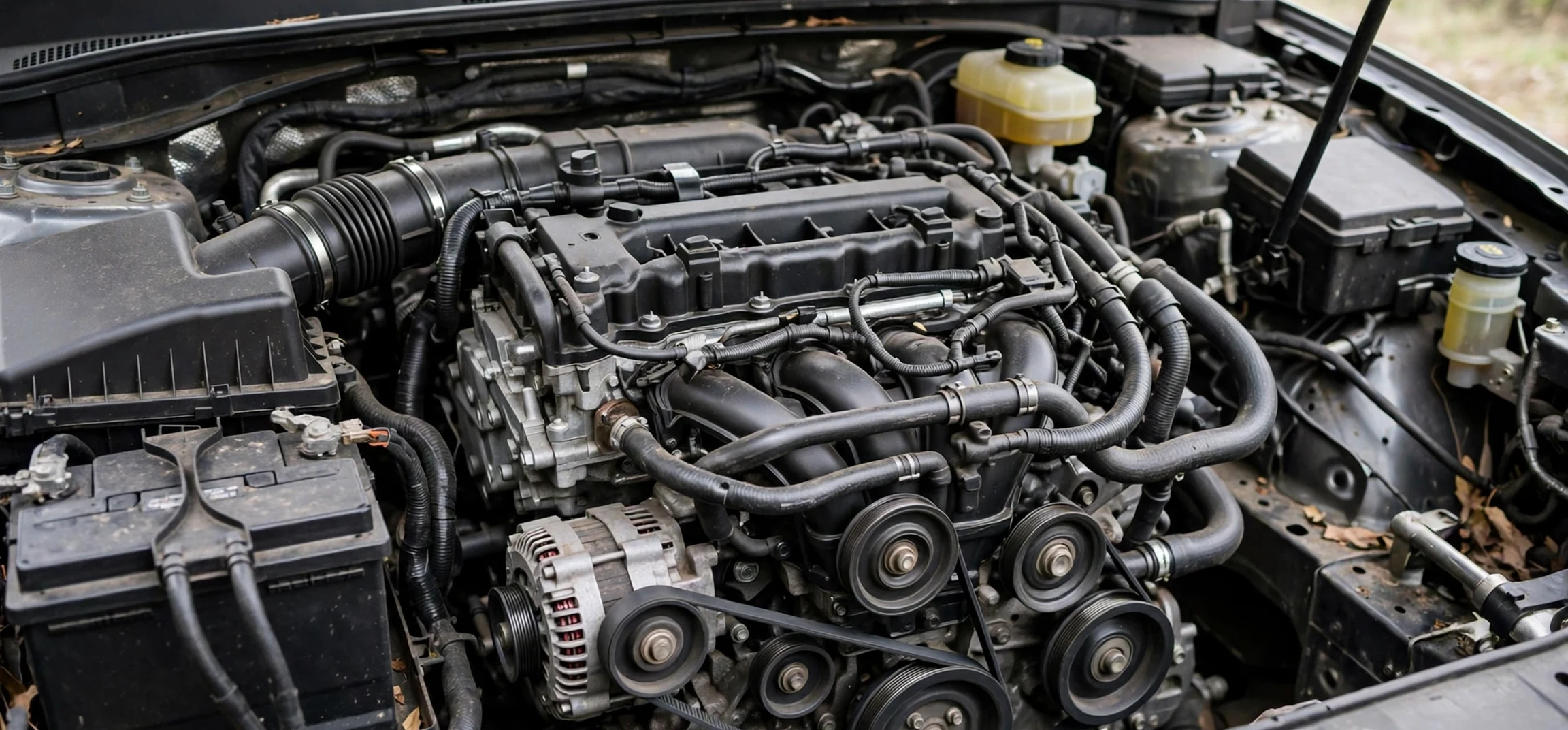
If you searched for ‘bhp means’, you have almost certainly seen the letters BHP next to a car, motorcycle, or engine specification and wondered what they stand for. In motoring, BHP means brake horsepower, a measure of how much power an engine produces before losses through the gearbox, drivetrain, and other parts of the vehicle reduce the power that actually reaches the wheels. It is the headline power figure quoted by manufacturers, the number that appears in brochures and reviews, and the figure that drivers compare when they talk about how powerful a car feels. This guide explains brake horsepower in plain language, how it differs from other power measures, how to convert it, and what else BHP can stand for in other contexts.
Power figures can be confusing because the same engine can be described by several different numbers, each measured in a different way. A car might be listed at 150 BHP, 110 kilowatts, and a lower wheel horsepower figure on a dynamometer test, and all three can be correct at the same time. The differences come from where the power is measured, what equipment is attached to the engine during the test, and which unit is used. Once you understand brake horsepower, the rest of the system falls into place, and you can compare vehicles fairly instead of being misled by a single headline number.
What ‘bhp means’ in Motoring
To answer ‘bhp means’ directly: BHP stands for brake horsepower. The word brake in this context does not refer to the brakes that stop the car. It refers to a brake dynamometer, a device that applies a controlled load to an engine to measure its output. In early engine testing, a friction brake was used to resist the engine’s rotation, and the power needed to overcome that resistance was the brake horsepower. Modern testing uses more sophisticated equipment, but the name has stayed, and brake horsepower remains the standard way to describe an engine’s power output at the crankshaft, before drivetrain losses.
Horsepower itself is an older unit, invented in the eighteenth century to compare steam engines with the work of horses. One horsepower was defined as the power needed to lift a certain weight over a certain distance in a certain time, and later standardised in mechanical terms. Brake horsepower is simply horsepower measured at the engine’s output shaft under test conditions, with accessories such as the alternator and cooling system accounted for in a defined way. That standardisation is what allows a buyer to compare a small hatchback, a family saloon, and a sports car on the same scale.
Why ‘bhp means’ Appears in Search Results
Searches for ‘bhp means’ appear whenever people shop for cars, read reviews, or try to understand a specification sheet. A buyer comparing two models may see one listed at 120 BHP and another at 150 BHP and want to know whether the difference will be noticeable on the road. A new driver may see BHP on an insurance or licensing document and want a plain explanation. A student or enthusiast may meet BHP alongside kilowatts, PS, and torque and want to know how the units relate.
The abbreviation also appears in search because it is used outside motoring. BHP can stand for other things in other fields, including a well-known mining and resources company, and various technical and organisational terms. A searcher who meets BHP in a business article will need a different answer from a searcher who meets it in a car review. This guide gives the motoring meaning first, because it is by far the most common use in everyday search, and then covers the other meanings briefly so you can tell them apart by context.
Brake Horsepower Versus Wheel Horsepower
The most important distinction for car buyers is between brake horsepower and wheel horsepower. Brake horsepower is measured at the engine, while wheel horsepower is measured at the wheels, after power has passed through the clutch, gearbox, driveshafts, and differential. Each of those components absorbs a small amount of energy through friction and inertia, so wheel horsepower is always lower than brake horsepower for the same vehicle. A typical loss might be around ten to twenty percent, depending on the drivetrain layout, with all-wheel-drive systems often losing more than front-wheel-drive systems.
This difference explains why two cars with the same BHP can feel different on the road, and why a dynamometer test at a tuning shop may report a lower figure than the manufacturer’s brochure. Neither figure is wrong; they are measured at different points in the system. Manufacturers quote brake horsepower because it describes the engine itself, independent of the vehicle it is fitted to. Tuners and testers quote wheel horsepower because it describes what the car actually delivers to the road. Knowing which figure you are looking at prevents unfair comparisons and unrealistic expectations.
BHP, PS, and Kilowatts: How the Units Compare
Brake horsepower is not the only unit for engine power. In continental Europe, PS, from the German Pferdestärke, meaning horse strength, is common, and it is very close to, but not identical to, horsepower. One PS is slightly smaller than one mechanical horsepower, so a car rated at 150 PS is roughly 148 BHP. Kilowatts, the metric unit of power, are used in many official documents and in electric vehicle specifications. One mechanical horsepower is about 0.746 kilowatts, so 150 BHP is about 112 kilowatts. Electric cars are usually quoted in kilowatts rather than BHP, although reviewers often convert the figure for comparison.
For everyday comparison, exact conversion matters less than consistency. If you compare two cars, make sure both figures use the same unit, or convert one to match the other. A difference of a few units between PS and BHP is rarely noticeable in driving, but a mix-up between kilowatts and horsepower can be large, because the numbers look very different even when they describe the same power. The table below gives the approximate conversions that are most useful for reading specification sheets.
| Unit | What it measures | Approximate conversion |
|---|---|---|
| BHP | Engine power at the crankshaft | 1 BHP is about 0.746 kilowatts |
| PS | Metric horsepower, common in Europe | 1 PS is about 0.986 BHP |
| Kilowatt (kW) | Metric power, used for electric cars | 1 kilowatt is about 1.34 BHP |
| Wheel horsepower (WHP) | Power at the wheels after drivetrain losses | Usually 10 to 20 percent below BHP |
BHP and Torque: Why Both Matter
Power alone does not tell the whole story of how a car drives. Torque, the twisting force produced by the engine, matters just as much, especially for acceleration from low speeds, towing, and climbing hills. A simple way to think about it is that torque is the strength of each push, while horsepower is how often and how effectively those pushes are delivered as speed rises. An engine with high torque but modest BHP may feel strong and responsive in town, while an engine with high BHP but lower torque may need to rev higher to feel fast.
Diesel engines, for example, often produce strong torque at low revs, which makes them feel effortless in everyday driving even when their BHP figure is not especially high. Small turbocharged petrol engines can produce impressive BHP for their size, but may feel less relaxed at very low speeds. Electric motors produce maximum torque instantly, which is why electric cars often feel quick off the line even when their power figures look modest on paper. A good review will discuss both BHP and torque, and a wise buyer will consider both rather than choosing on BHP alone.
Does More BHP Always Mean a Faster Car?
More BHP usually means more potential speed, but it does not guarantee a faster car in real driving. Weight is a crucial factor: a light car with 120 BHP can feel quicker than a heavy car with 150 BHP, because each unit of power has less mass to move. Aerodynamics, gearing, tyre grip, and driver skill also matter. That is why the power-to-weight ratio, BHP per tonne, is often a better guide to performance than BHP alone. It explains why a small, light sports car can out-accelerate a much heavier, more powerful saloon.
Driving conditions matter too. On a motorway, high BHP helps with overtaking and maintaining speed uphill. In a city, torque, gearing, and responsiveness matter more than peak BHP, which is only reached at high engine speeds that are rarely used in traffic. For most buyers, the sensible approach is to test drive cars with different power outputs, rather than choosing the highest BHP figure on a list. A car that feels right, with smooth power delivery and comfortable cruising, is usually a better choice than a car that wins only on paper.
Other Meanings of BHP
Outside motoring, BHP is most famously the stock market ticker and short name for BHP Group, a large global mining and resources company headquartered in Australia, originally known as Broken Hill Proprietary. In business news, BHP almost always refers to that company, not to horsepower, and the context, share prices, mining, and commodities, makes the meaning clear. No investment judgement is offered here; the point is simply that the same letters can mean very different things in different fields, and context is the guide.
BHP can also appear as an abbreviation in technical, medical, and organisational contexts, where its expansion depends entirely on the subject. In those cases, the surrounding text will usually define it on first use, or the field will make the meaning obvious. If you meet BHP in a car review, a specification sheet, or a discussion of engines, brake horsepower is the safe interpretation. If you meet it in a financial report, the company is the likely meaning. When in doubt, check the topic of the article before assuming either one.
Related Motoring Guides
If you want to build on this explanation, our other motoring and meaning guides may help. See our guide to what AMG means for another famous motoring abbreviation, our round-up of car emblems and names for the badges you see on the road, and our explanation of car insurance terms for a different kind of motoring vocabulary.
Frequently Asked Questions
What does BHP mean?
BHP means brake horsepower, the measure of an engine’s power output at the crankshaft, before drivetrain losses reduce the power reaching the wheels.
Is BHP the same as horsepower?
Brake horsepower is a type of horsepower, measured with a brake dynamometer at the engine. It is close to, but not identical to, metric PS, and it is higher than wheel horsepower for the same car.
How do I convert BHP to kilowatts?
Multiply BHP by about 0.746 to get kilowatts. For example, 150 BHP is about 112 kilowatts.
Does higher BHP always mean a better car?
No. Weight, torque, gearing, and aerodynamics all affect real performance. Power-to-weight ratio and a test drive are better guides than BHP alone.
Conclusion
So, if you searched for ‘bhp means’, the answer in motoring is brake horsepower: the power an engine produces at its output shaft, measured under test conditions, and quoted by manufacturers as the headline figure for a car or motorcycle. It differs from wheel horsepower, which is lower after drivetrain losses, and from PS and kilowatts, which are simply different units for the same idea. More BHP generally means more potential performance, but weight, torque, and gearing decide how that potential feels on the road. Keep the context in mind as well: in business news, BHP usually means the mining company, while in a car review it always means brake horsepower. With that distinction clear, specification sheets become much easier to read, and comparing cars becomes a fairer, more useful exercise.



