Family symbols are images, objects, and patterns that represent family bonds: love, loyalty, protection, unity, and the ties that connect generations. Across cultures and centuries, people have used trees, knots, circles, hands, birds, and animals to say something simple and powerful without words: we belong to each other. A symbol can be worn as jewellery, carved into a home, inked as a tattoo, planted in a garden, or passed down as an heirloom. Its meaning often feels obvious to those who share it and mysterious to outsiders, which is part of its power. This guide explores the most widely recognised family symbols, what each one means, and how people use them today to honour the people they love.
Why do families need symbols at all? Because family feeling is hard to put into words, and because families change over time. Children grow up, members move away, elders pass on, and new members arrive through birth, marriage, or adoption. A symbol gives all of that change a fixed point. A family tree on a wall, a ring passed from parent to child, or a matching tattoo can hold a whole history in a single image. Symbols also work across languages, which is why travellers often recognise a family emblem in a foreign country even when they cannot read the words beside it. They are a visual shorthand for belonging.
Family Symbols and What They Mean
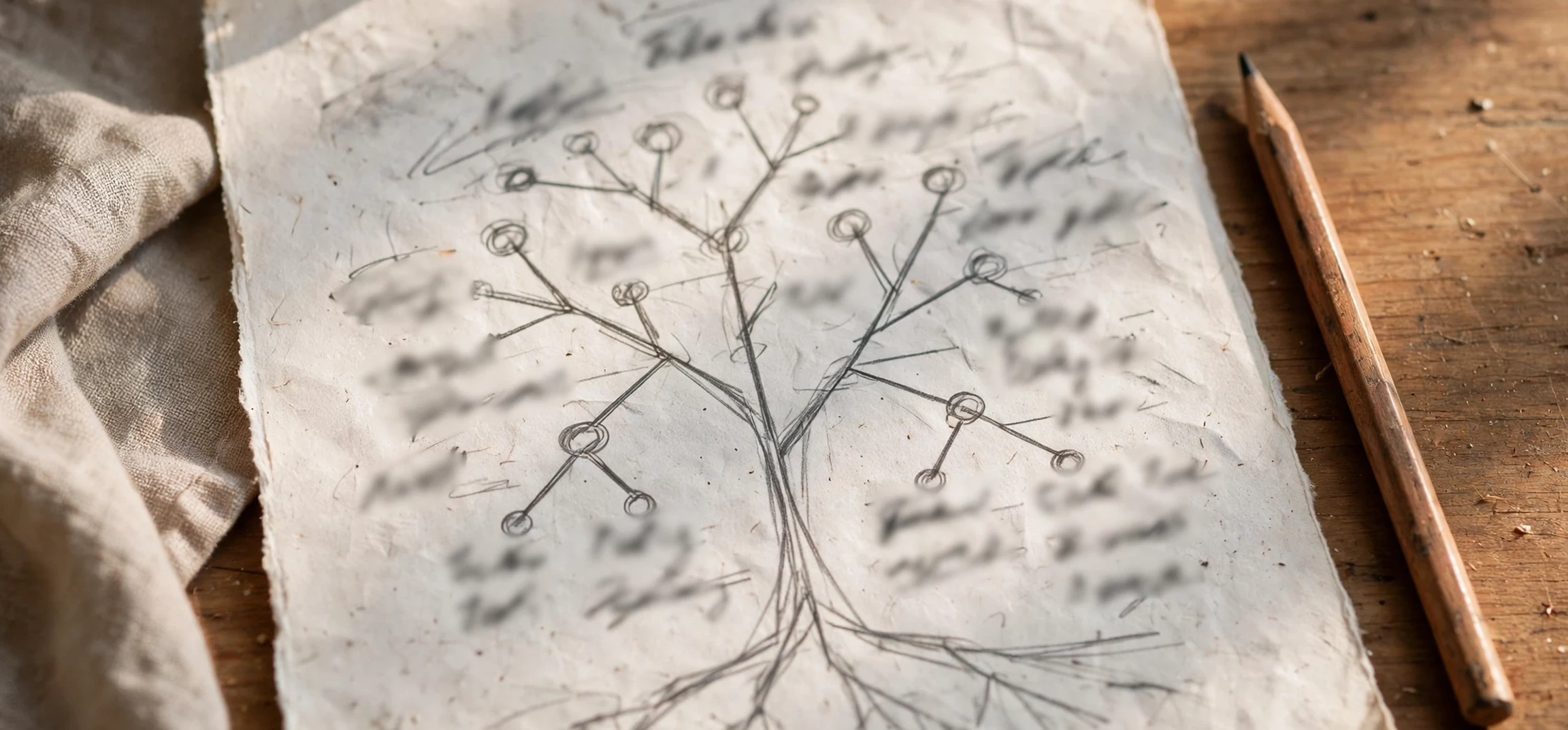
Most family symbols draw on nature, because nature offers ready images of growth, shelter, and connection. The tree is the most famous example. A tree has roots that anchor it, a trunk that supports it, and branches that reach outward, much like a family across generations. That is why the phrase family tree is used for diagrams of ancestry as well as for living trees planted to mark a birth or a marriage. The circle is another powerful image. With no beginning and no end, it suggests unending love and unity, which is why rings and circular wreaths appear in weddings and family celebrations around the world. Knots, links, and braids work the same way: separate strands woven into something stronger than any single thread alone.
Animals also appear often as family symbols. Elephants are associated with loyalty, memory, and protection of the young, and elephant families in the wild stay together and care for calves collectively. Wolves are linked to loyalty to the pack and to raising young together. Birds, especially those that mate for life or return to the same nest, suggest devotion and home. Lions can stand for strength and protection of the family group. None of these meanings is universal in every culture, but the pattern is consistent: people choose animals whose behaviour mirrors the family values they admire, and the animal becomes a reminder of those values.
The Tree of Life
The Tree of Life is perhaps the most widely used of all family symbols. In many traditions, it represents growth, strength, wisdom, and the connection between generations, with roots reaching into the past and branches reaching toward the future. Jewellery featuring the Tree of Life is a popular gift for mothers, grandmothers, and new parents, because it honours both ancestors and descendants in one image. In home decor, a metal or wooden Tree of Life can serve as a centrepiece that gathers the family story into a single object. Its appeal lies in its flexibility: it can feel spiritual, natural, or simply decorative, depending on who owns it.
The Celtic Knot and the Trinity Knot
Celtic knots, with their endless interlacing lines, are classic family symbols in Irish and Scottish tradition. Because the line has no clear start or finish, the knot suggests eternity and unbreakable connection. The triquetra, or trinity knot, with its three interlocking arcs, is often used to represent family in its threefold form: past, present, and future, or parent, child, and the bond between them. These knots appear on rings, pendants, tattoos, and gravestones. They are especially popular for family jewellery because they are beautiful, compact, and rich with meaning without needing words.
Family Symbols Across Cultures
Every culture has its own family symbols, and comparing them shows both differences and surprising similarities. In Chinese culture, the character for family and images of togetherness at reunion dinners carry deep meaning, and the dragon can represent strength and good fortune for the family line. In Japanese culture, family crests known as kamon identify a household and its history, appearing on clothing, banners, and formal documents. In many African cultures, symbols such as the Adinkra symbol Sankofa, which looks back while moving forward, express the importance of learning from ancestors. In Native American traditions, specific animals, feathers, and patterns can represent clan identity and kinship. These examples remind us that family symbols are never just decoration: they are records of who a people understand themselves to be.
In Western cultures, the coat of arms and family crest once served a similar purpose, identifying a household on shields, seals, and buildings. Today, most families do not have an official crest, but many create their own: a shared surname sign on a front porch, a family motto on a wall, or a custom emblem for reunions and matching shirts. In Scandinavian tradition, the home itself, with its hearth and table, is a symbol of family warmth. In Mediterranean cultures, the olive tree, with its deep roots and long life, stands for peace and family endurance. The details differ, but the impulse is the same everywhere: to make belonging visible.
Hands, Hearts, and the Home
Some of the simplest family symbols are also the most moving. Two hands clasped together suggest support, trust, and the promise to hold on through difficulty. The Claddagh ring from Ireland combines hands, a heart, and a crown to represent love, loyalty, and friendship, and it is often passed down within families. A heart alone, especially a heart formed by two hands or held within a circle, speaks of love that protects. The house or hearth is another universal symbol: a roof over a family suggests safety, welcome, and a place to return to. These images appear in children’s drawings, wedding art, and family tattoos because they are instantly understood, even by people who have never studied symbolism.
Birds, Nests, and Flight
Birds and nests are tender family symbols. A nest suggests care, nurture, and a safe place for growth, while birds leaving the nest capture the bittersweet moment when children become independent. Swallows, which return to the same place year after year, are linked to homecoming and loyalty. Doves suggest peace within the family. A mother bird with chicks is a common image in art about parenthood. These symbols are popular in nurseries, memorial art, and tattoos that honour parents, because they balance two truths at once: family gives shelter, and family also gives the courage to fly.
| Symbol | Common Meaning | Where You Often See It |
|---|---|---|
| Tree of Life | Growth, roots, generations, strength | Jewellery, wall art, tattoos |
| Celtic knot | Eternity, unbreakable bonds | Rings, pendants, carvings |
| Circle or ring | Unity, unending love | Wedding rings, wreaths |
| Elephant | Loyalty, memory, protection | Art, tattoos, home decor |
| Claddagh | Love, loyalty, friendship | Rings passed through families |
| Home or hearth | Safety, welcome, belonging | Signs, drawings, embroidery |
Family Symbols in Tattoos and Jewellery
Tattoos are one of the most personal ways people carry family symbols. A small tree, a set of birth flowers, a parent’s handwriting, or a cluster of birds can serve as a permanent tribute. Matching tattoos between siblings or between a parent and an adult child are also popular, using the same symbol in different sizes or styles to show both unity and individuality. Before choosing a family tattoo, most artists advise thinking about placement, size, and whether the design will still feel right decades later. A symbol with personal meaning, rather than a trendy image alone, tends to age better, both on skin and in memory.
Jewellery offers a less permanent but equally meaningful option. Birthstone rings can represent each child, engraved bracelets can carry names or dates, and lockets can hold photographs of loved ones. Family symbols in jewellery are often given at milestones: a birth, a graduation, a wedding, an anniversary, or the loss of a loved one. Because jewellery can be passed down, it becomes part of the family story itself. A grandmother’s Tree of Life pendant, worn by a granddaughter, is no longer just a symbol of family. It is a piece of the family, carrying its history in metal and stone.
Birth Flowers, Birthstones, and Names
Some families build symbols from the details of their members: a bouquet combining each person’s birth flower, a ring set with each child’s birthstone, or a tree whose leaves are engraved with names. These personalised symbols are popular because they are unique to one family and cannot be mistaken for anyone else’s. They also grow naturally: a new leaf or stone can be added when a child is born or a partner joins the family. For inspiration on how names themselves become symbols of identity, see our list of names associated with a famous fictional family, which shows how strongly a surname can shape a family’s public image.
Tattoo symbolism more broadly also rewards careful reading. If you are considering a design that mixes family meaning with body art traditions, our guide to the meaning behind a popular number tattoo shows how a simple image can carry layers of interpretation. The lesson applies to family tattoos too: research the symbol, choose an artist who understands it, and make sure the design says what you intend it to say.
How to Choose a Family Symbol
Choosing a family symbol works best as a shared activity rather than a solo decision. Start by asking what your family values most: endurance, loyalty, faith, humour, adventure, or care for each other. Then look for images that naturally express those values. A family that has weathered hardship may feel drawn to an oak tree or an anchor. A family spread across countries may prefer birds, stars, or a compass. A family with a strong sense of humour may choose something playful rather than solemn. There is no correct answer, and the best symbol is the one that feels true when you explain it to someone else.
It also helps to think about where the symbol will live. A symbol for a home might be large and visible, such as a carved sign or a wall hanging. A symbol for jewellery should be simple enough to read at small size. A symbol for a tattoo should work in the chosen style, whether fine line, traditional, or watercolour. Testing the idea helps: sketch it, live with a printed version for a few weeks, and see whether it still moves you. Family symbols are meant to last, so taking time over the choice is part of honouring what the symbol represents.
Creating Your Own Family Emblem
Many families today design their own emblem, combining elements that matter to them: a tree for roots, a star for guidance, a wave for a coastal home, or an animal that has family significance. Digital tools make this easy, and a simple design often works better than a complicated one. Keep the number of elements small, choose colours with intention, and make sure the emblem is recognisable even when printed small. Some families add a motto, a short phrase that captures their spirit, while others let the image speak alone. Either way, the process of designing together can itself become a family memory, as members debate, laugh, and finally agree on an image they all recognise as theirs.
Frequently Asked Questions
What is the most common symbol for family?
The tree, especially the Tree of Life, is the most widely recognised family symbol. Its roots, trunk, and branches map naturally onto ancestors, the present generation, and descendants, which is why it appears across cultures and art forms.
What tattoo symbolises family?
Common family tattoos include trees, Celtic knots, elephants, birds, and birth flowers. The best choice depends on personal meaning, since a symbol that reflects your own family story will matter more than a generic design.
What Celtic symbol means family?
The Celtic knot, particularly the triquetra or trinity knot, is often used to represent family. Its endless interlacing lines suggest bonds that do not break, and its three arcs can stand for past, present, and future.
Do colours change a family symbol’s meaning?
Colours can add nuance: green often suggests growth, blue suggests loyalty and calm, and gold suggests value and endurance. The core image usually carries the main meaning, with colour adding a personal layer.
Conclusion
Family symbols turn invisible bonds into something you can see, touch, and pass on. Whether it is a Tree of Life pendant, a Celtic knot ring, an elephant carving, a nest in a nursery, or a custom emblem designed around your own kitchen table, the symbol works because it gathers a whole history into a single image. The most powerful family symbols are not necessarily the oldest or the most elaborate. They are the ones that feel true to the people who share them, that honour both roots and branches, and that remind everyone who sees them of a simple truth: family is not only about who you are related to, but about who you choose to hold close, protect, and remember.