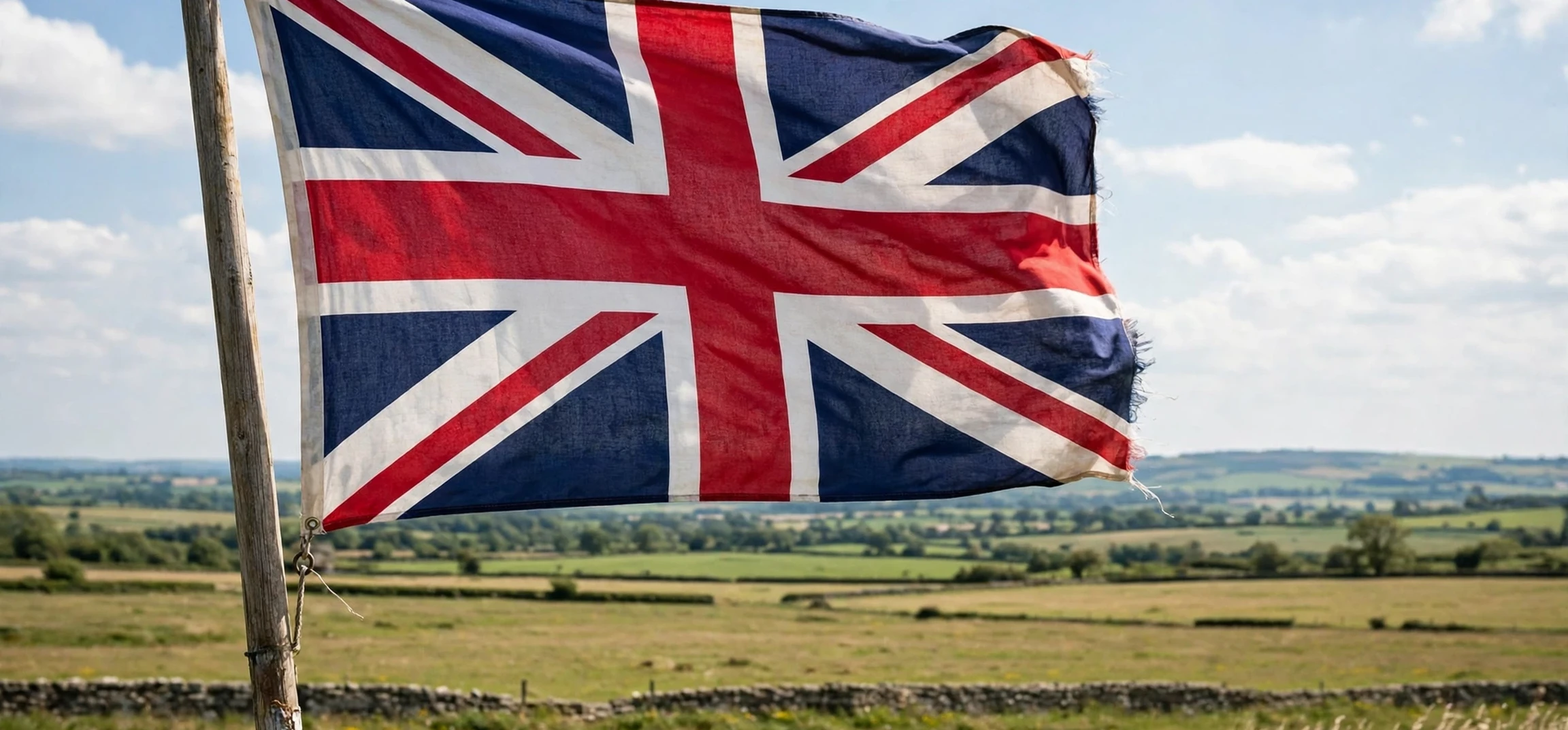
So, what is the flag of the United Kingdom called? The short answer is that it is called the Union Jack, and it is also called the Union Flag, and both names are widely used. Most people say Union Jack in everyday speech, while Union Flag is the more formal name that appears in many official descriptions. The flag itself is one of the most recognisable designs in the world: a blue field crossed by red and white stripes that combine three older saints’ crosses into a single pattern. This guide explains what the flag is called, why it has two names, what each part of the design means, and how the name is used in everyday language.
The confusion about the name is understandable, because the two names sound as if they must refer to two different flags. They do not. They refer to the same flag, and the difference is mostly about tradition and context. Union Jack is the name most people learn first, because it is the name used in songs, newspaper headlines, and casual conversation. Union Flag is the name preferred in formal and official writing, because it describes exactly what the flag is: the flag of the Union, the political union of the countries that make up the United Kingdom. Knowing both names means you will never be caught out, whichever one appears in a quiz, a textbook, or a conversation.
What Is the Flag of the United Kingdom Called in Everyday Use?
When someone asks what is the flag of the United Kingdom called, the answer they usually expect is Union Jack. That name has been in use for centuries, and it is firmly established in British English and in English around the world. You will see it on souvenirs, in sports coverage, in fashion, and in the names of pubs, products, and events. It is a friendly, familiar name, and there is nothing wrong with using it. If a child asks what the flag is called, Union Jack is the natural first answer, and it is the answer most adults will give without thinking.
At the same time, it is useful to know that Union Flag is equally correct. Official guidance in the United Kingdom has long accepted both names, and many institutions use Union Flag when they want to sound formal or precise. The reason is simple: the word Jack in this context originally referred to a small flag flown at the front of a ship, called a jack staff, and some people argued that the name Union Jack should strictly apply only when the flag is flown at sea. In practice, however, that distinction has faded, and Union Jack is now used for the flag on land and at sea alike. The safest summary is this: Union Jack is the popular name, Union Flag is the formal name, and neither is a mistake.
Which name should you use?
Use Union Jack in conversation, in creative writing, and whenever you want to sound natural. Use Union Flag in formal essays, official documents, and contexts where precision matters most. If you are writing for an international audience, you can mention both names on first use, for example by writing that the flag is known as the Union Jack, also called the Union Flag, and then using one name consistently afterwards. That approach covers every reader, from the casual fan to the careful examiner, and it shows that you understand the naming history rather than simply repeating one term.
What Is the Flag of the United Kingdom Called: A Short History
The history of the flag explains why it looks the way it does. The story begins with the individual flags of the patron saints of the countries involved. England’s flag is the cross of St George, a red cross on a white background. Scotland’s flag is the cross of St Andrew, a white diagonal cross on a blue background. Ireland’s flag, in the sense used for this design, is the cross of St Patrick, a red diagonal cross on a white background. The Union Flag combines these three crosses into one design, layering them so that each remains visible. That layering is why the flag looks so intricate: the red diagonals are offset slightly, so that the white diagonals of Scotland’s cross are not completely covered by the red diagonals of Ireland’s cross.
The first version of the combined flag appeared in the early seventeenth century, after the crowns of England and Scotland came together under one monarch. That early version combined only the crosses of St George and St Andrew, because the union at that stage involved England and Scotland. The present version, which adds the cross of St Patrick, dates from the early nineteenth century, when Ireland became part of the United Kingdom. Wales does not have a separate cross in the design, because Wales was already united with England when the first combined flag was created, and its red dragon does not appear in the pattern. This is a point that often surprises people, and it is worth remembering for quizzes: the Union Flag represents England, Scotland, and Ireland through their saints’ crosses, while Wales is not separately represented in the design.
Understanding this history also explains why the flag is a symbol of union rather than of a single country. Each cross stands for one part of the union, and the combined design stands for the whole. That is why the flag appears on so many official buildings, ships, and uniforms: it signals the United Kingdom as a single state, rather than any one of its parts alone. It is also why the flag has been adopted, adapted, and referenced in flags around the world, from former territories to modern designs that borrow its crosses and colours.
Reading the Design Cross by Cross
Reading the Union Flag is like reading a layered picture. Start with the background: the deep blue field comes from Scotland’s flag. Next, look for the broad white diagonal cross: that is St Andrew’s cross for Scotland. Then look for the thinner red diagonal cross, offset so that it does not simply sit on top of the white one: that is St Patrick’s cross for Ireland. Finally, look for the bold red upright cross in the centre, with its white border: that is St George’s cross for England, laid over the top of the other two. The white border around the red upright cross is called fimbriation, a heraldic term for a narrow border that separates one colour from another so that each stays clear.
The offset of the red diagonals is the detail that most people miss, and it is the detail that shows the designer’s care. If the red diagonal cross were placed exactly over the white diagonal cross, the white would disappear on one side. By shifting the red slightly, the designer made sure that both crosses remain visible, with white showing on one side of each red stripe and red showing on the other. The flag is therefore not symmetrical in the way a simple pattern would be: the top and bottom halves differ in the arrangement of red and white diagonals. That asymmetry is deliberate, and it is one of the reasons the flag is so interesting to study closely.
Colour also carries meaning in a general sense, although the specific shades have changed slightly over time as dyes and printing methods have improved. The blue is a strong navy blue, the red is a bold scarlet, and the white is plain white. Together, they create a high-contrast design that is visible from a distance, which matters for a flag that was originally flown at sea and needed to be recognised quickly. Modern versions standardise the shades for consistency, but the essential pattern has remained stable for more than two centuries, which is a remarkable record for any national symbol.
| Part of the design | Represents | Appearance |
|---|---|---|
| Red upright cross on white | St George, patron saint of England | Bold red cross across the centre |
| White diagonal cross on blue | St Andrew, patron saint of Scotland | Broad white diagonals on a blue field |
| Red diagonal cross on white | St Patrick, patron saint of Ireland | Thinner red diagonals, offset from the white |
| Blue field | Background from the Scottish flag | Deep navy blue across the whole flag |
The Union Jack in Culture and Language
Beyond its official use, the Union Jack has become a cultural icon. It appears on clothing, album covers, posters, and merchandise around the world, often as a shorthand for British style, music, or attitude. In the nineteen sixties, it became associated with pop culture and fashion, and that association has never fully faded. Today, you can find the pattern on everything from cushions to guitar cases, and most people recognise it instantly, even if they have never visited the United Kingdom. That instant recognition is part of why the name Union Jack travels so well: it is short, punchy, and tied to a vivid image.
The flag also appears in language in ways that go beyond its literal meaning. People talk about waving the flag for a cause, wrapping themselves in the flag, or flying the flag for a team or a country. These phrases use the flag as a symbol of support, pride, or identity, and they work because the image is so familiar. In sport, the flag is waved by supporters, printed on kits and banners, and displayed in stadiums, where it signals national backing rather than any detailed political statement. In all these uses, the name Union Jack is the one that feels natural, because it belongs to popular culture as much as to official ceremony.
For readers who enjoy flag meanings in general, the same curiosity applies to other national flags. Learning what the colours of the Italian flag mean or what the colours of the Mexican flag mean shows how different countries pack history, geography, and values into simple stripes and crosses. The Union Jack is unusual in combining three older flags into one, but the impulse behind it is universal: a flag tells a story about who a people are and how they came together.
Frequently Asked Questions About the Union Flag
Is it Union Jack or Union Flag?
Both are correct. Union Jack is the popular everyday name, and Union Flag is the formal name. Official guidance accepts both, so you can use either with confidence, and you can mention both on first use if you want to be extra clear.
Why is Wales not represented in the Union Flag?
Wales was already united with England when the first combined flag was created, so it did not have a separate cross added to the design at that stage. Its red dragon, while famous, does not appear in the pattern, which is why the flag represents England, Scotland, and Ireland through their saints’ crosses.
Can the Union Flag be flown upside down?
Yes, in the sense that the design is not fully symmetrical, so it is possible to fly it the wrong way up. The clue is in the diagonals: in the correct orientation, the broader white stripe appears above the red diagonal in the upper corner nearest the flagpole. Flying it upside down is traditionally treated as a distress signal at sea, but on land it is usually just a mistake worth correcting.
Conclusion
So, what is the flag of the United Kingdom called? It is called the Union Jack, and it is also called the Union Flag, and both names describe the same blue, red, and white design. Behind the name sits a layered history: the crosses of St George, St Andrew, and St Patrick combined into a single pattern that stands for a union of countries. Whether you use the popular name or the formal name, you are referring to one of the world’s most recognisable flags, a design that has carried history, culture, and identity for more than two centuries, and that continues to be recognised instantly wherever it is flown.



