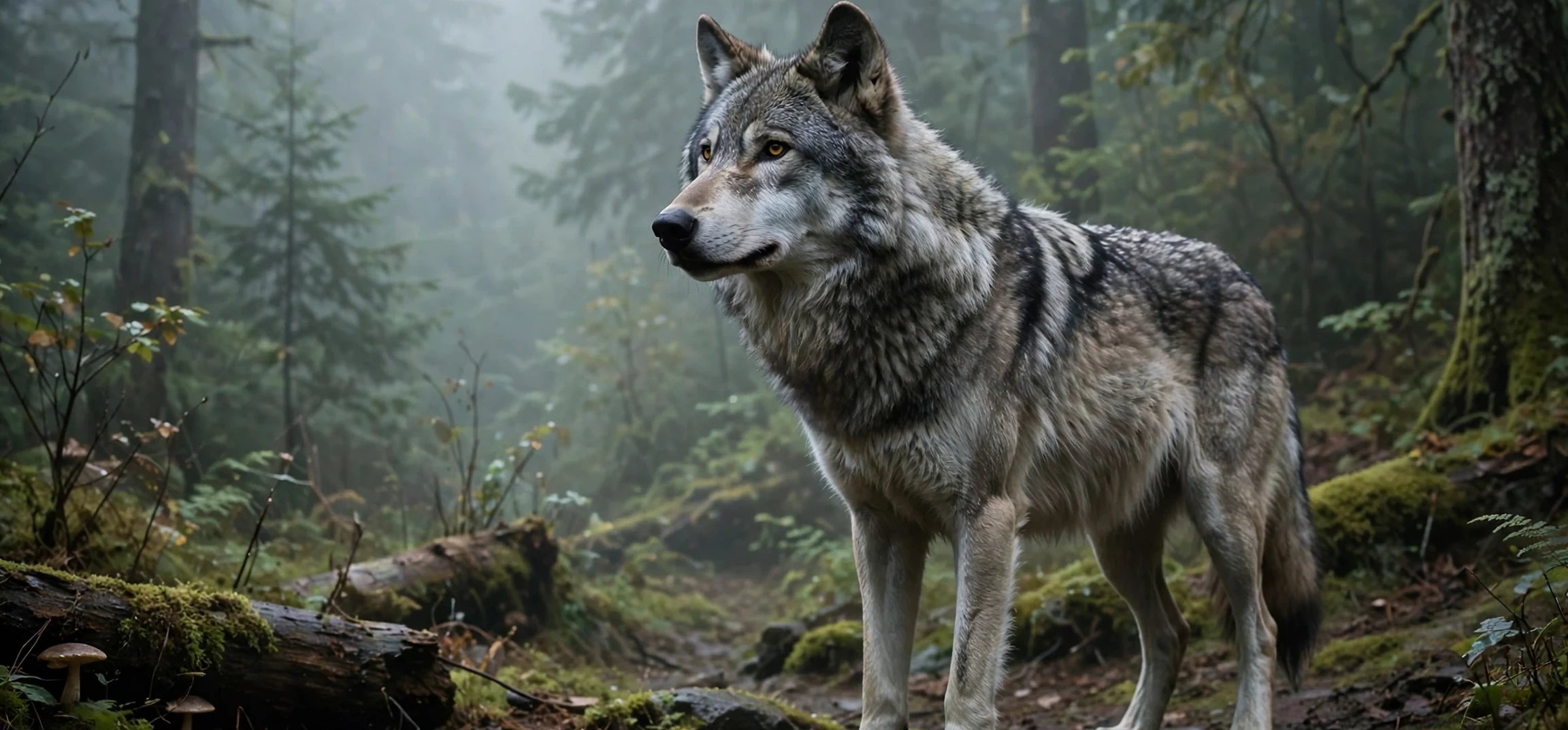
If you have searched for therian in english, you are asking what the word therian means and how it is used by the community that identifies with it. In plain English, a therian is a person who identifies, in a deep and personal sense, as a non-human animal, or who experiences a strong inner connection to a particular animal, often called a theriotype. The word comes from the Greek root ther, meaning wild animal or beast, combined with the suffix therian, meaning relating to or resembling that animal. The term is used mainly within an online and social community, and it describes an identity and an inner experience, not a claim to be biologically an animal, and not a costume or a hobby on its own.
This guide explains the term neutrally and respectfully, in the way its community generally uses it. It covers the origin of the word, the difference between therians and related identities, how therians describe their own experiences, how the community organises itself online, and how outsiders can talk about the topic respectfully. It does not mock, diagnose, or debate the validity of anyone inner experience. The aim is understanding: what the word means, how it is used, and what respectful conversation about it looks like.
Therian in English: The Basic Definition
Therian in english is most simply defined as a person who identifies as a non-human animal on a deep, personal level. That identification is often described as an identity, similar in structure to how people describe other core aspects of who they are, rather than as a passing interest. A therian may feel that their inner sense of self aligns with a particular animal, such as a wolf, a cat, a fox, a horse, or a bird, and that animal is often called their theriotype. Some people have one theriotype, while others describe more than one over time, or a theriotype that changes as they learn more about themselves.
It is important to distinguish identification from imitation. Many people enjoy animals, admire them, dress up as them for fun, or feel a strong affection for a pet. Those experiences, on their own, do not make someone a therian in the community sense of the word. Therians generally describe something more persistent and inward: a sense of being, in some inner way, that animal, or of sharing its instincts, behaviours, or way of perceiving the world, even while living a normal human life. That distinction is central to how community members define themselves.
The word therian is a shortened form of therianthrope, a term built from Greek roots meaning wild animal and human. In older, academic contexts, therianthropy could refer to mythological or shapeshifting beings, part human and part animal. In the modern community sense, the word has a narrower, personal meaning, and it is used as an identity label chosen by the person themselves. As with many identity labels, self-identification is the key principle: a person is a therian if they identify that way, not because an outsider assigns the label to them.
Therian in English: How Therians Describe Their Experience
Therians describe their experiences in varied ways, and no single description fits everyone. Some talk about phantom limbs or phantom sensations, such as a feeling of ears, a tail, or wings that are not physically present. Others talk about mental shifts, moments when their mindset feels more animal-like, for example feeling more alert, more playful, more territorial, or more drawn to certain movements or sounds. Still others describe a quieter, constant sense of connection, rather than dramatic shifts, and say they simply feel most themselves when they think of themselves in animal terms.
Many therians also describe behaviours that feel natural to them, such as enjoying quadrupedal movement, making animal-like sounds in private, wearing animal-themed accessories, or spending time in nature. Those behaviours are expressions of identity for some people, and they are not required for others. The community generally emphasises that there is no test, no uniform, and no single correct way to be a therian. The shared element is the inner identification, not a checklist of outward behaviours.
It is also common for therians to describe a process of discovery. A person may first notice a strong, lasting affinity for a particular animal in childhood, then later encounter the term therian online and recognise their experience in other people descriptions. That moment of recognition can be meaningful, because it gives a name to something that previously felt private or hard to explain. For others, the identification develops gradually, and the theriotype may become clearer over years of reflection.
Therians, Otherkin, and Furries: Related but Distinct
Therians are sometimes confused with two related groups: otherkin and furries. Understanding the differences helps avoid misunderstandings. Otherkin is a broader umbrella term for people who identify as non-human in a wider sense, which can include mythical beings, fictional characters, or other non-human entities, as well as animals. In that sense, therians can be seen as a subgroup within a wider non-human identity community, focused specifically on real, earthly animals, while otherkin includes a broader range of identifications.
Furries, by contrast, are primarily a fandom and creative community centred on anthropomorphic animal characters: animals with human traits, as seen in art, stories, costumes, and conventions. Many furries enjoy creating animal characters, called fursonas, and wearing fursuits, but they do not necessarily identify as animals in the inner sense that therians describe. A person can be both a therian and a furry, and many people are, but the two labels describe different things: one is primarily an identity, the other is primarily a fandom and creative interest.
There is also a distinction from roleplay. Roleplay involves temporarily adopting a character or persona for fun, performance, or storytelling, and stepping out of it afterwards. Therian identity, as described by community members, is not a temporary role. It is a persistent sense of self that continues outside any performance or costume. That does not mean therians never roleplay or never enjoy creative expression. It means the identity itself is not reducible to a game or a costume.
The Therian Community Online and Offline
The modern therian community grew largely online, through forums, social media groups, video platforms, and chat servers where people could share experiences, ask questions, and support each other. Those spaces serve several purposes: education for newcomers, discussion of theriotypes and experiences, creative sharing such as art and writing, and mutual support. Many community spaces have rules about respect, privacy, and consent, including rules against pressuring others to prove their identity or to disclose personal details.
Offline, therians live ordinary lives as students, workers, parents, and friends. Their identity may be visible to close friends or family, or it may remain private, shared only in trusted online spaces. Some people wear subtle accessories, such as animal-themed jewellery or clothing, while others keep their identity entirely private. There is no expectation that a therian must be visible or public about their identity, and respecting privacy is a core community value.
Community language reflects that culture. Terms such as theriotype, for the animal identified with, and shift, for a change in mindset or sensation, are used as shorthand within the community. Newcomers are often encouraged to take their time, to read and listen before labelling themselves, and to understand that questioning is normal. That patient approach contrasts with the fast, meme-driven version of therians sometimes seen in short videos, where the identity can be reduced to a costume or a trend.
How to Talk About Therians Respectfully
Respectful conversation starts with using the language people use for themselves. If someone says they are a therian, referring to them as a therian, and using their chosen name and pronouns, is a basic courtesy, just as with any other identity. Avoid mocking language, animal noises directed at a person as a joke, or questions designed to embarrass. Curiosity is welcome in most community spaces, but it is best expressed as a genuine question, not as a challenge to prove something.
It also helps to avoid assumptions. Not every therian wears a costume, not every therian has the same theriotype or experience, and not every person who enjoys animal costumes is a therian. Asking open questions, such as what the identity means to that person, is more respectful than assuming a single story. If someone does not want to discuss their identity, accept that boundary without pressure. Privacy is a personal choice, not a sign that an identity is less real.
For parents, teachers, and friends, the most helpful response is usually calm and non-judgmental. Listen, ask what support the person wants, and avoid rushing to label the experience as a phase, a disorder, or a problem. If a young person is distressed, the appropriate step is supportive, professional help focused on their wellbeing, not on debating their identity label. Most therians describe their identity as a neutral or positive part of themselves, not as a source of distress on its own.
Identity Language in a Wider Context
Therian identity belongs to a wider conversation about how people describe who they are, using language that has developed within communities themselves. Many identity terms begin in small communities, gain wider use online, and then enter general discussion, where they may be misunderstood or simplified. That pattern is not unique to therians. It applies to many fandoms, subcultures, and identity communities, where insider language carries nuances that outsiders may miss at first.
A useful parallel is the way identity is discussed in other contexts. A guide to an identity list shows how identity terms are collected, debated, and used in public discussion, even when the context is satirical or political. The lesson is general: identity language is best understood by listening to how the people who use it define it, rather than by relying on outside summaries alone. That principle applies to therians as much as to any other group.
Language also changes over time. Terms gain new shades of meaning, communities refine their definitions, and younger members may use a word slightly differently from older members. A guide that explains therian in english today captures the current, common usage, but it is not a final or official dictionary entry. For the most current community usage, community-run resources and the words of therians themselves remain the best sources. Cats are among the animals most often mentioned as theriotypes, and animal characters are also a familiar part of popular stories, as shown in this guide to the Alice in Wonderland cat name.
Frequently Asked Questions About Therians
Do therians believe they are physically animals?
No, in the community sense. Therians describe an inner identification with an animal, while understanding that they are human in body and in everyday life. The identity is about inner experience, not a claim about physical biology.
Is a therian the same as a furry?
Not necessarily. Furry is primarily a fandom around anthropomorphic animal characters and creative expression. Therian is primarily an identity involving an inner connection to a real animal. A person can be one, the other, or both.
Can someone choose to become a therian?
Community members generally describe therian identity as something discovered or recognised, rather than chosen as a hobby. A person may explore the term and realise it fits, but the community does not treat it as a role adopted for fun alone.
What is a theriotype?
A theriotype is the animal, or animals, that a therian identifies with. Examples commonly mentioned include wolves, cats, foxes, dogs, horses, and birds, but any real animal can be a theriotype.
Therian Terms at a Glance
| Term | Meaning | Notes |
|---|---|---|
| Therian | A person who identifies as a non-human animal | Focus is on real, earthly animals |
| Theriotype | The animal identified with | A person may have one or more |
| Shift | A change in mindset or sensation toward the theriotype | Experiences vary widely |
| Otherkin | Broader non-human identity umbrella | Includes mythical and fictional identifications |
| Furry | Fandom around anthropomorphic animal characters | Primarily creative and social, not necessarily identity |
Conclusion
Therian in english, at its simplest, means a person who identifies, in a deep and personal way, as a non-human animal, most often a real animal such as a wolf, a cat, or a fox. The term comes from Greek roots for wild animal, it is used as a self-chosen identity label, and it is distinct from furry fandom, from roleplay, and from a simple love of animals, even though those experiences can overlap. The community that uses the term values self-identification, privacy, and respectful conversation, and it describes a wide range of inner experiences rather than a single uniform story. Whether you encounter the word online, in a classroom, or in a conversation with a friend, the most respectful approach is the simplest one: listen to how the person defines it for themselves, use their language, and treat their identity with the same ordinary courtesy you would extend to any other aspect of who someone is.



