The meaning of veil is richer than a single definition, because the word names both a physical object and a powerful metaphor. At its simplest, a veil is a piece of fabric worn to cover part of the face or head, or hung to screen or divide a space. In everyday language, however, people also speak of a veil of secrecy, a veil of mist, or lifting the veil on a hidden truth, and in those phrases the veil stands for anything that conceals, softens, or separates one thing from another. This guide explains the literal meaning first, then traces how the word is used in religion, weddings, fashion, literature, and modern slang, so that you can recognise which sense is intended whenever you meet the word in a sentence, a song, a meme, or a news report.
Understanding the word starts with its core image: something thin enough to suggest what lies behind it, but present enough to change how that thing is seen. A veil does not usually make something invisible. It filters it. That is why the metaphor is so flexible. A veil can protect privacy, signal modesty or reverence, create ceremony, hide an identity, or suggest mystery. It can also be a barrier that needs to be removed before truth is clear. When writers use the word, they are often borrowing that tension between concealment and revelation, and the surrounding context tells you whether the veil is welcome, unwanted, or simply descriptive.
The Literal meaning of veil: Cloth, Covering, and Screen
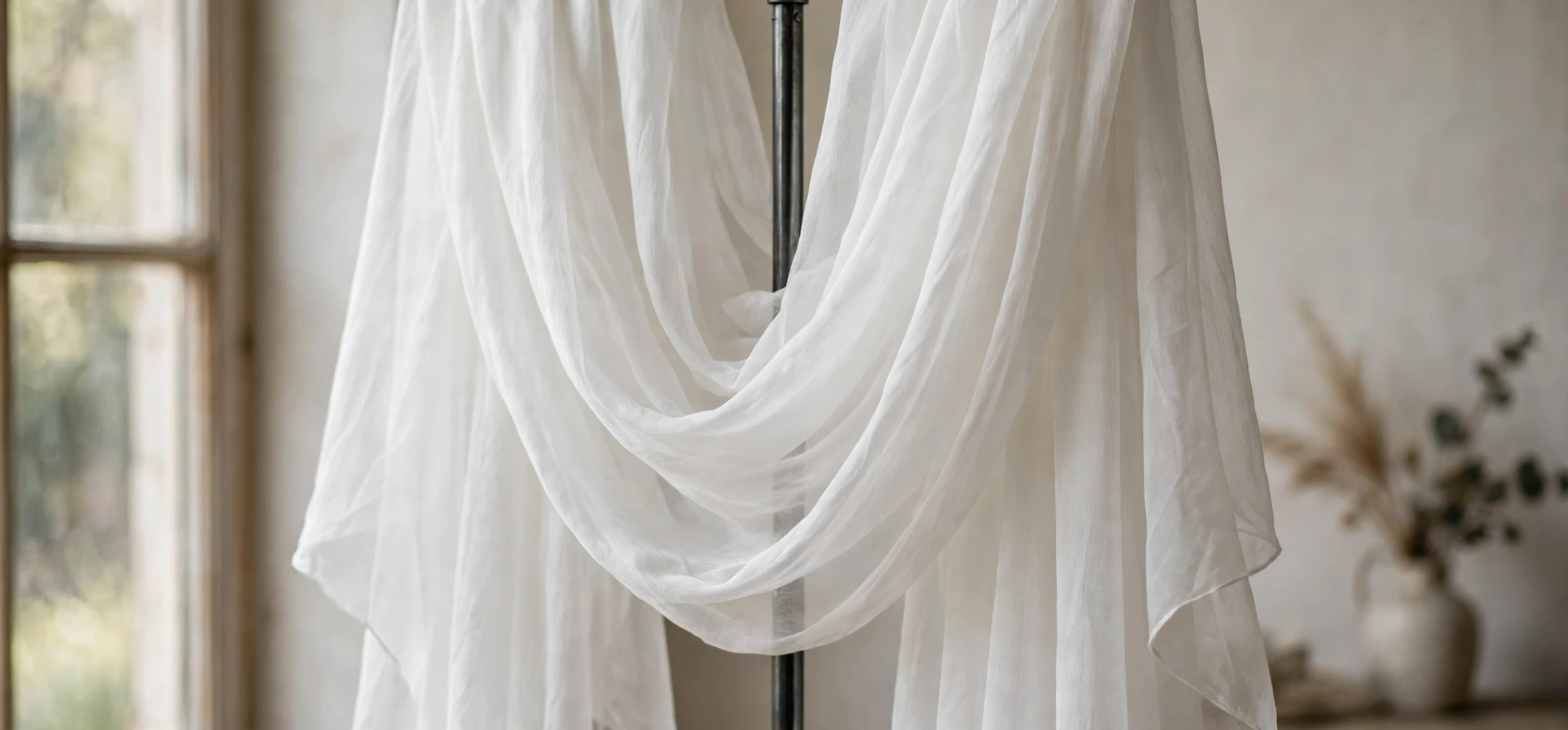
In its most literal sense, a veil is a light covering, usually of fabric, net, or lace, worn over the head or face or used to screen something from view. Historically, veils have been made from linen, silk, muslin, tulle, and other light materials that allow some light and movement through while still providing coverage. They have been worn for practical reasons, such as protection from sun, dust, wind, and insects, and for social and ceremonial reasons, such as marking a rite of passage, showing respect in a sacred space, or signalling a particular status or occasion. The same word is also used for a curtain or screen in a room, a piece of fabric over a statue or object, and, by extension, any thin layer that partly covers a surface.
The physical qualities of a veil explain much of its symbolic life. Because a veil is light, it can be lifted easily, which makes it a natural image for revelation. Because it is semi-transparent, it can suggest a truth that is partly visible but not yet fully clear. Because it moves with air and movement, it can suggest something delicate, temporary, or easily changed. Writers and artists exploit all three qualities. A veil in a painting may suggest modesty, mystery, or mourning, depending on its colour, length, and how it is worn. A veil in a story may mark a character who is hiding, grieving, celebrating, or transitioning from one stage of life to another.
Veils in Clothing and Fashion
In fashion history, veils have appeared in many forms, from long mourning veils to short birdcage veils worn for weddings and formal occasions, and from headscarves worn daily to dramatic veils used on runways and in photography. Each form carries different associations. A short, structured veil often reads as vintage or formal, while a long, flowing veil often reads as ceremonial or romantic. Colour also matters: white and ivory veils are strongly associated with weddings in many Western traditions, while black veils have historically been associated with mourning. In contemporary fashion, designers also use veils as artistic statements, playing with transparency, layering, and the way a veil frames a face without fully hiding it.
It is important not to generalise about veils worn for religious or cultural reasons, because practices, meanings, and styles vary widely between communities and individuals. For some people, a head covering is a daily expression of faith, identity, or modesty. For others, it is worn only on specific occasions. For others still, it is a cultural or family tradition rather than a religious requirement. The respectful approach is to describe what you can actually see and to avoid assuming a single motive for everyone who wears a similar covering. The word veil itself is broad, and in careful writing it is often better to name the specific garment or practice when you know it, rather than using veil as a catch-all term.
The meaning of veil in Weddings and Ceremonies
One of the most familiar uses of the word is the bridal veil, and its meaning in weddings is layered. In many Western wedding traditions, a veil is part of the bridal outfit, worn during the ceremony and sometimes lifted at a symbolic moment, such as a first kiss or a blessing. Interpretations of that moment vary: some see it as a symbol of a new chapter, some as a traditional gesture of unveiling, and some simply as a beautiful custom without a fixed theological meaning. Modern couples often choose whether to wear a veil, what length and style to choose, and when to lift or remove it, based on personal taste, family tradition, photography, and comfort, rather than following a single rule.
Veil lengths have their own vocabulary in bridal fashion, and that vocabulary can be confusing for first-time buyers. Short veils may end at the shoulders or elbows, medium veils may reach the waist or fingertips, and long veils may extend to the floor or trail behind the wearer. Each length creates a different visual effect and practical experience: longer veils are more dramatic in photographs but require more care when walking, dancing, or moving through doorways, while shorter veils are easier to manage and often suit simpler dresses or outdoor ceremonies. The choice is aesthetic and practical, not a test of tradition, and many modern bridal guides emphasise comfort and personal style over strict symbolism.
| Context | What a veil often signals | What to watch for in the wording |
|---|---|---|
| Wedding | Celebration, tradition, new chapter | Style, length, and moment of lifting |
| Mourning | Grief, privacy, respect | Colour, length, and occasion |
| Religious observance | Modesty, reverence, identity | Specific garment and community practice |
| Everyday language | Concealment, mystery, partial truth | Phrases like veil of secrecy or mist |
| Literature and film | Hidden identity, revelation, separation | Whether the veil is lifted or remains |
| Nature writing | Soft covering, atmosphere, distance | Veil of mist, rain, or cloud |
The meaning of veil as a Metaphor
Beyond clothing, the most common modern use of veil is metaphorical. A veil of secrecy suggests information deliberately hidden from public view. A veil of mist or fog suggests a natural covering that makes a landscape soft, distant, or hard to read. A veil between two worlds, in fantasy and religious writing, suggests a boundary between the ordinary and the supernatural, the living and the dead, or the known and the unknown. In each case, the metaphor works because the reader already understands the physical object: something that can be drawn aside, lifted, pierced, or allowed to fall back into place.
Common phrases show how flexible the metaphor is. To lift the veil means to reveal something previously hidden, whether that is a secret, a process, or a truth. To draw a veil over something means to conceal it, often politely or deliberately, as if to spare embarrassment or to close a chapter. To see through a veil means to perceive a truth despite an attempt to hide it. Behind the veil suggests a hidden reality, a private world, or a group whose workings are not public. In political and business writing, a veil often refers to a corporate or institutional structure that obscures who is really responsible for a decision, while in personal writing it can refer to grief, illness, or emotion that colours how a person experiences the world.
Veils in Literature, Religion, and Philosophy
Religious texts and traditions use veils in several distinct ways, and those uses should not be collapsed into one meaning. In some traditions, a veil or curtain separates a sacred space from an ordinary space, marking a boundary that only certain people cross at certain times. In other traditions, a veil is part of personal dress and devotion. In philosophical writing, the veil has become a famous thought experiment image: imagining decisions made behind a veil of ignorance, where the decision maker does not know their own position in society, is a way of testing fairness. That philosophical use has nothing to do with fabric, but it borrows the same logic: remove knowledge of personal advantage, and see what rules seem just.
In literature, a veil is a versatile device. It can hide a character’s face and therefore their identity, creating suspense about who they really are. It can mark a character in mourning, signalling grief without lengthy explanation. It can separate a dream world from waking life, or a past life from a present one. It can also be used ironically: a character who wears a veil to hide may become more noticeable, not less, because the veil draws attention to the act of concealment. Readers who notice that irony are reading the symbol well, because the best literary veils do more than hide; they comment on the act of hiding itself.
For other word meanings explained in plain language on this site, see 888 tattoo meaning explained and all-encompassing meaning explained. Both follow the same approach used here: start with the literal sense, then separate the figurative senses by context, so that a single word does not collapse into a single, misleading definition.
Veils in Modern Slang, Memes, and Everyday Speech
In online culture, veil appears less often as slang than as a visual and caption device. A meme may use a veil image to suggest a hidden truth, a dramatic reveal, or a before-and-after transformation, often with a caption about lifting the veil on a topic. In fashion and beauty content, veil is also used for products and techniques that create a light, sheer layer, such as a veil of powder, a veil of colour, or a sheer overlay in clothing. Those uses borrow the physical idea of a thin covering that changes appearance without completely obscuring what lies beneath, and they are usually positive, suggesting softness, finish, and polish rather than secrecy.
When you meet veil in a meme or social post, context is again the key. Is the veil being lifted, suggesting revelation? Is it being drawn over something, suggesting concealment or an ending? Is it simply describing a sheer fabric or makeup effect? Is it part of a wedding photograph, a costume, or a historical image? Each context points to a different meaning, and the caption, image, and comments together usually resolve the ambiguity. If a post uses veil in a way that seems deliberately mysterious, that mystery is often the point: the word is chosen precisely because it suggests something hidden without saying what it is.
How to Use the Word Veil Correctly
Using veil well means matching the sense to the sentence. For a physical covering, be specific when you can: say bridal veil, mourning veil, or face veil, rather than leaving the reader to guess. For a metaphor, pair the word with a clear object: veil of secrecy, veil of mist, veil of silence, veil of tears. That pairing prevents the metaphor from floating free and confusing the reader. Avoid using veil as a vague synonym for cover or curtain in technical writing, where a more precise term will serve better. In creative writing, by contrast, vagueness can be intentional, but even then the surrounding sentences should give the reader enough clues to feel the intended sense.
Common confusions are worth noting. Veil is not the same as vale, a valley, although the two words sound alike and are sometimes mixed up in spelling. Veil is also distinct from vail, an older verb meaning to lower or let fall, which appears in historical texts but is rare in modern English. In most modern sentences, if you mean a covering, veil is the correct spelling. If you are unsure, read the sentence aloud with covering substituted: if covering makes sense, veil is likely correct, whether literal or metaphorical.
Frequently Asked Questions
What is the simple meaning of veil?
Simply, a veil is a light covering, often of fabric, worn over the head or face or used to screen something, and by extension any thin layer or barrier that partly conceals what lies behind it. The context tells you whether the use is literal, ceremonial, or metaphorical.
Why do brides wear a veil?
Brides wear veils for a mix of tradition, style, ceremony, and personal choice. In many Western weddings the veil is part of the bridal outfit and may be lifted during the ceremony, but modern couples choose length, style, and timing based on taste and comfort rather than a single fixed rule.
What does lift the veil mean?
To lift the veil means to reveal something previously hidden, such as a secret, a process, or a truth. It borrows the physical act of lifting a fabric veil to show what was behind it, and it is used in journalism, business, and everyday speech.
Is a veil always religious?
No. Veils appear in weddings, mourning, fashion, theatre, and everyday language, as well as in religious observance. The meaning depends on the community, the occasion, and the individual, so avoid assuming a single religious motive for every veil you see.
Conclusion
The meaning of veil begins with cloth and ends with imagination: a light covering that filters rather than erases, and a metaphor for everything that stands between seeing and knowing. In weddings it can mark celebration and a new chapter. In mourning it can mark privacy and respect. In religious life it can mark devotion and identity, in ways that vary by community and person. In language it can mark secrecy, atmosphere, or a boundary waiting to be crossed. Learning to separate those senses, and to read the context around the word, is the real skill behind understanding veil, and it is a skill that transfers to many other words whose literal and figurative lives have grown apart over time.