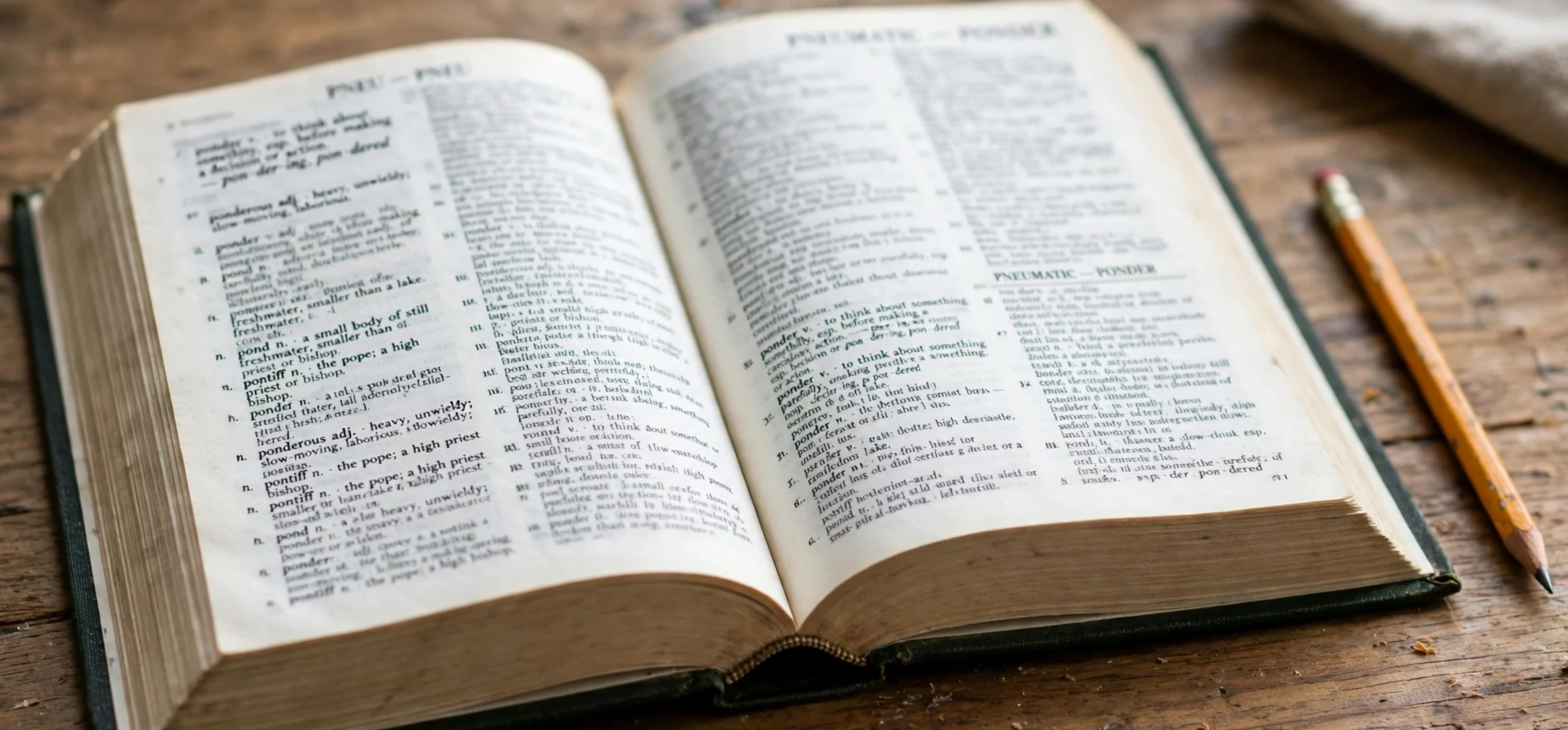
Some search phrases are questions in themselves, and the phrase what does it mean in simple words is one of the most common. People type it when they meet an unfamiliar word in a school lesson, a work email, a news article, or a form, and they want a plain explanation without jargon. This guide answers that need directly: it explains what does it mean in simple words as a way of asking for a clear, everyday definition, and it shows you how to turn any difficult word into a simple explanation yourself. By the end, you will have a reliable method for decoding new vocabulary, whether you are a student, a new English learner, or simply someone who wants to understand what they just read.
The reason this phrase is so popular is that most dictionary definitions are written for people who already know a lot of words. A dictionary might define one hard word using three more hard words, which sends the reader in circles. Asking what does it mean in simple words is a request to break that circle: use short words, give a concrete example, and connect the new idea to something familiar. Teachers call this plain language, and it is a skill, not a shortcut. A good simple explanation keeps the true meaning intact while removing unnecessary complexity, so the reader understands the idea well enough to use the word correctly afterwards.
What what does it mean in simple words Really Asks For
When someone asks what does it mean in simple words, they are usually asking for three things at once. First, a definition in everyday vocabulary, ideally using words a school student would already know. Second, an example that shows the word in action, because an example often teaches more than a definition alone. Third, a sense of when the word is used and what feeling or tone it carries, since many words with similar definitions are not interchangeable. For instance, the words happy, delighted, and ecstatic all relate to feeling good, but they describe very different strengths of feeling, and a simple explanation should make that difference clear.
The phrase also signals something about the reader: they want help, not a lecture. That is why the best answers to what does it mean in simple words start with the simplest version of the idea, then add one layer of detail, and then stop. A reader who wants more can always ask for more, but a reader who is overwhelmed by a long technical answer will simply stop reading. Good plain-language writing therefore respects the reader’s time. It uses short sentences, active verbs, and familiar comparisons, and it avoids showing off vocabulary that the reader has just admitted they do not know.
How to Answer what does it mean in simple words for Any Word
A reliable method has five steps, and it works for almost any word you meet. Step one is to find the word’s core idea: strip away decoration and ask what the word is really about. Step two is to say that idea in the simplest sentence you can, using common words only. Step three is to add a concrete example from everyday life, such as school, home, sport, or work. Step four is to note a close synonym and one word that means almost the opposite, because contrasts sharpen meaning. Step five is to test your explanation by using the word in a new sentence of your own; if the sentence sounds natural, you probably understand the word.
Consider the word reluctant as a worked example. The core idea is not wanting to do something. In simple words: reluctant means you do not really want to do something, even if you might do it in the end. An example: she was reluctant to speak in front of the class because she felt nervous. A close synonym is unwilling, and a rough opposite is eager. That short chain, definition plus example plus contrast, is exactly what a reader wants when they ask what does it mean in simple words. The same pattern works for abstract nouns, technical verbs, and idioms, although idioms need one extra step: explain the phrase as a whole, because the individual words often do not add up to the meaning.
Simple Words Versus Dictionary Definitions
Dictionaries and simple explanations serve different purposes, and neither replaces the other. A dictionary aims for precision: it records every sense of a word, its part of speech, its origin, and its formal usage. A simple explanation aims for understanding: it picks the most common sense, explains it in familiar language, and gives the reader a way to use it. When you meet a word in a legal form or a scientific paper, the dictionary’s precision matters, because small differences can change rights or results. When you meet a word in a story, a lesson, or a conversation, the simple explanation is usually enough to keep you reading with confidence.
The table below compares the two approaches so you can choose the right one for your situation. Notice that simple explanations are not less accurate; they are accurate about the most common meaning, while dictionaries are accurate about all meanings. If a simple explanation and a dictionary seem to disagree, trust the dictionary for formal writing and trust the simple version for everyday understanding, then check the context to see which sense the writer intended. Context is the final judge: the same word can mean different things in a science lesson and a sports report, and the surrounding sentences almost always reveal which sense is meant.
| Approach | Strength | Best used for |
|---|---|---|
| Dictionary definition | Precise, covers all senses | Formal writing, exams, legal or technical texts |
| Simple-words explanation | Fast, clear, memorable | Reading, homework, conversations, learning English |
| Example sentence | Shows real usage and tone | Checking you can use the word yourself |
| Synonym and opposite | Sharpens the boundary of meaning | Avoiding near-miss word choices |
Common Reasons People Search what does it mean in simple words
Students are the largest group. A textbook introduces a term like photosynthesis, democracy, or inflation, and the student understands the surrounding lesson but not the term itself. A simple explanation lets them keep learning instead of stopping at one word. English learners form the second large group: they may know the grammar of a sentence but not one key word, and a simple definition in words they already know is far more helpful than a translation that introduces new unknowns. A third group is professionals reading outside their field, such as a nurse reading a legal letter or a teacher reading a financial report, who need a quick bridge into unfamiliar vocabulary without a full course in the subject.
Parents helping with homework, readers following the news, and workers decoding workplace jargon all share the same need: a fast, trustworthy, jargon-free answer. That is also why simple-word guides should be careful about accuracy. Simplifying must never mean inventing a meaning, dropping an important qualification, or turning a neutral term into a loaded one. A responsible simple explanation says when a word has more than one common meaning, flags the most common one, and invites the reader to check the context. For more on how word meanings are explained in depth, see our guide to the meaning of acceded and our explainer on the meaning of all-encompassing, both of which show how a single word can carry several related senses.
Building a Simple-Words Habit for Reading and Writing
The best way to get better at simple explanations is to practise both sides: reading them and writing them. When you read, keep a small vocabulary notebook, paper or digital, and record each new word with a simple definition in your own words, an example sentence, and the place you found it. Reviewing that notebook weekly moves words from short-term recognition into lasting knowledge far better than re-reading a long word list. When you write, try explaining your topic to an imagined twelve-year-old: if the explanation works for them without losing the truth, it will work for almost any adult reader too. This is the same discipline professional editors use when they rewrite technical documents in plain language.
Writers should also watch for false simplicity. Replacing a hard word with a vague word does not help; it only hides the gap. Saying a complicated process is just a thing that happens explains nothing. A genuinely simple explanation names the actors, the action, and the result in plain terms. Compare a vague version, inflation is when things get bad, with a simple but accurate version, inflation means prices in general rise over time, so the same money buys less than before. The second version is still simple, but it gives the reader a testable idea they can apply to real prices. That standard, simple and testable, is the goal of every good answer to what does it mean in simple words.
Frequently Asked Questions About what does it mean in simple words
What does it mean in simple words as a question?
It is a request for a plain-language definition: explain a word or phrase using short, familiar words and a clear example, without technical jargon.
Is a simple explanation the same as a dictionary definition?
Not exactly. A dictionary aims to record every sense precisely, while a simple explanation focuses on the most common sense in everyday language. Both are useful, and they complement each other.
How do I explain a word in simple words myself?
Find the core idea, say it in one short sentence with common words, add an everyday example, note a synonym and an opposite, and test your understanding with a new sentence of your own.
What if a word has more than one meaning?
Start with the most common meaning, mention that other meanings exist, and use the surrounding sentences to decide which sense fits. Context almost always resolves the ambiguity.
Where can I practise with real word meanings?
Try our explainer on what annexation means, which walks through a complex term step by step, and then practise the same five-step method on the next unfamiliar word you meet in your reading.
Conclusion
Asking what does it mean in simple words is one of the smartest reading habits you can build. It turns a moment of confusion into a moment of learning, and it works for school, work, and everyday reading alike. Every time you ask what does it mean in simple words, you practise turning a hard idea into a clear one, and each answer to what does it mean in simple words makes the next unfamiliar word easier. Keep asking what does it mean in simple words whenever a text stalls, and simple explanations will become a habit rather than a rescue. Find the core idea, say it plainly, anchor it with an example, and test it with your own sentence. Do that often enough, and unfamiliar words will stop being obstacles and start becoming tools you can use with confidence.



