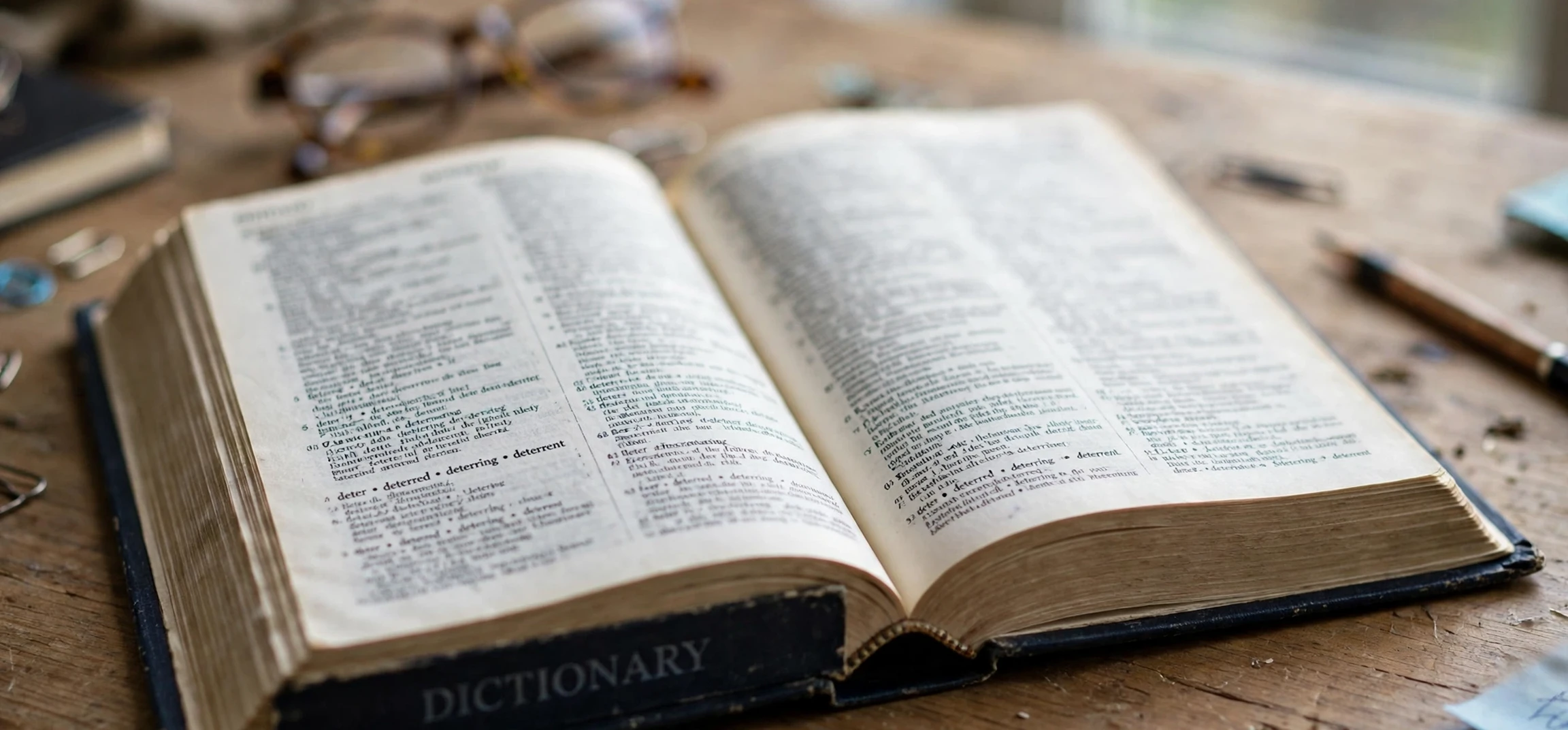
If you have ever paused mid-sentence wondering whether a word is spelled with one letter or two, or how it is actually pronounced, webster’s online dictionary is one of the fastest places to settle the question. Webster’s online dictionary gives you definitions, pronunciation audio, example sentences, and synonyms in a single search, without the need to leaf through a heavy print volume. This practical guide explains how to use the site well: how to search smartly, how to read an entry, how to use the pronunciation tools, and how to make the word of the day and other daily features part of your routine.
The appeal of an online dictionary is speed, but speed only helps if you know where to look. Many people type a word, glance at the first definition, and move on, which works for a quick spelling check but misses most of what the entry offers. A full entry usually includes several senses of the word, notes on its part of speech, example sentences that show it in context, and links to related words. Learning to read the whole entry takes only a few extra seconds and often changes your understanding of a word completely, especially for words with several distinct meanings.
Webster’s Online Dictionary: How to Search Like a Pro
Start with the search box at the top of the homepage, and type the word exactly as you think it is spelled. If you are unsure of the spelling, type your best guess anyway: the site is good at suggesting the word you probably meant, and the suggestions list is often the fastest route to the right entry. You can also search for a phrase, such as an idiom, and the site will return the entry for the phrase itself where one exists. For writers, this is useful for checking whether an expression is standard or whether a more precise alternative exists.
Once the entry loads, resist the urge to stop at the first definition. Words often carry several numbered senses, arranged from the most common to the more specialised. Read through them and pick the sense that matches your context. For example, a word used in a science article may carry a technical sense that sits well below the everyday meaning. Checking the part of speech matters too: the same spelling can be a noun in one sense and a verb in another, and using the wrong form is a common source of awkward sentences. If you want to sharpen the sentences around the words you look up, our writing guide with four practical tips offers habits that pair well with regular dictionary use.
The search history and saved words features are worth using if you look words up often. Saving a word lets you return to it later, which is ideal for students building vocabulary for an exam or professionals learning the terminology of a new field. Revisiting saved words a day or two later is far more effective than looking a word up once and forgetting it. Think of the dictionary not just as a reference for emergencies, but as a study tool you return to on purpose.
Webster’s Online Dictionary: Pronunciation and Audio Tools
One of the strongest advantages of webster’s online dictionary over a print dictionary is audio pronunciation. Next to the headword you will usually find a speaker icon; tapping it plays a recorded pronunciation by a real speaker, not a computer-generated voice. This is invaluable if you need to say a word aloud in a presentation, a class, or a meeting and want to be confident about stress and vowel sounds. Listen more than once, and try repeating the word immediately after hearing it, which helps your mouth learn the shape of the sound.
Alongside the audio, entries show a written pronunciation guide using a simplified respelling system, with syllable breaks and stress marks. Learning to read these respellings takes a little practice, but it pays off: you can work out a pronunciation even when you cannot play audio, such as in a quiet library or during an exam revision session. Pay attention to the stressed syllable, usually marked clearly, because putting the stress on the wrong syllable is the most common reason a familiar word suddenly sounds unfamiliar when spoken aloud.
Some entries also offer variant pronunciations, which reflect the fact that a word can legitimately be said more than one way in different regions. Do not treat one variant as “wrong” just because it differs from your own habit. Instead, note which variant is listed first, since that is typically the most widely used, and choose the one that fits your audience. For public speaking, consistency matters more than perfection: pick one pronunciation and use it throughout your talk.
Webster’s Online Dictionary: Word of the Day and Daily Features
The word of the day feature is the easiest way to build vocabulary without setting aside study time. Each day the site highlights a single word with its definition, pronunciation, and example sentences, and often a short note about its history or usage. Reading that one entry with your morning coffee takes under a minute, and over a month you will have met thirty new words. The trick is to use the word yourself the same day, in a message, a note, or a conversation, because a word you use once is far more likely to stick than a word you only read.
Beyond the daily word, the site regularly publishes short articles, quizzes, and vocabulary games that explore word origins, commonly confused pairs, and tricky spellings. These are genuinely useful for learners, because they tackle the exact confusions that trip people up, such as words that sound alike but mean different things, or pairs where one letter changes the meaning entirely. A few minutes with a quiz can reveal gaps in your vocabulary that you did not know you had, and the explanations usually stick because they are tied to a mistake you just made.
Teachers and parents can also use these daily features as low-effort classroom material. Sharing the word of the day with a class, asking students to write a sentence using it, or running a quick quiz as a warm-up activity all take minutes to prepare and give learners a reason to engage with language daily. The key is regularity: a small daily habit beats an occasional long study session, and the site’s daily rhythm is designed to support exactly that kind of routine.
Webster’s Online Dictionary: Synonyms, Antonyms, and Related Words
Every entry links to synonyms and antonyms, and learning to use this section well will improve your writing quickly. When you look up a word, the synonym list offers alternatives, but they are rarely perfect substitutes: each synonym carries its own shade of meaning, level of formality, and typical context. A good habit is to click through to a promising synonym and read its own entry before using it, checking that it fits your sentence as well as the original word did. Swapping in a synonym blindly is a classic way to produce sentences that sound impressive but mean something slightly off.
The related-words section is also useful for exploring a topic. If you are writing about a subject and keep reusing the same word, browsing its neighbours can suggest fresher phrasing and help you discover more precise terms. For example, a writer describing a feeling might start with a general word and, through the synonym network, land on a term that captures the exact nuance they meant. This kind of browsing turns the dictionary from a checking tool into a discovery tool, which is where its real value for writers lies.
It is worth noting what the dictionary does not do. A dictionary entry gives you meanings, not full usage guidance for every situation, and it will not tell you whether a word suits a formal report or a casual message. For that judgement, example sentences are your best guide: they show the word in real contexts, and you can match your own sentence to a similar register. If you are unsure about a word’s meaning in a particular context, our guide to understanding word meanings in context shows how surrounding sentences can clarify which sense a writer intends.
Tips for Students, Writers, and Everyday Users
Students get the most from the dictionary by using it actively rather than passively. When you meet an unfamiliar word in a textbook, look it up, read the full entry, say the word aloud, and write a sentence of your own using it. Then save the word and review your saved list before tests. This four-step routine, lookup, pronunciation, personal sentence, review, takes about two minutes per word and builds vocabulary that lasts beyond the exam. It also improves reading comprehension, because you stop glossing over words you half-understand.
Writers should use the dictionary as a precision tool. Before publishing or submitting a piece, check any word you hesitated over while drafting, especially words you use rarely or words with similar-looking neighbours. Also check words you use very often: a quick synonym browse can break repetitive phrasing and sharpen your style. Editors do this routinely, and it is one of the quiet habits that separates polished writing from first-draft writing. Keeping the dictionary open in a browser tab while you draft makes these checks almost effortless.
For everyday users, the dictionary is simply a confidence tool. Whether you are writing a work email, helping a child with homework, settling a friendly argument about a word’s meaning, or preparing for a job interview, a thirty-second lookup removes doubt. There is no need to memorise the whole dictionary; the skill is knowing how to find the right entry fast, read it fully, and apply what it says. That skill, practised a little each day, quietly improves every kind of communication you do.
Frequently Asked Questions About the Online Dictionary
Is the online dictionary free to use?
Basic lookups, definitions, pronunciation audio, and the word of the day are freely available to visitors. Some sites also offer optional premium features, such as an ad-free experience or extra learning tools, but the core dictionary functions do not require payment, so webster’s online dictionary remains free for everyday lookups.
How do I find a word I cannot spell?
Type your best guess into the search box and check the suggestions that appear. The site will usually propose the correct spelling, and browsing those suggestions is often faster than guessing repeatedly.
Can I trust the first definition I see?
The first definition is usually the most common sense, but it may not be the sense you need. Always scan the numbered senses and pick the one that matches your context, and read the example sentences to confirm.
Does it cover American and British English?
The dictionary reflects American English usage first, but many entries note British variants and spelling differences. If you write for a British audience, check the variant notes before settling on a spelling.
Webster’s Online Dictionary: Building a Daily Lookup Habit
A daily habit makes webster’s online dictionary far more useful than occasional emergency lookups. Start by opening webster’s online dictionary each morning and reading the word of the day aloud, including its pronunciation. Then, during the day, whenever you meet an unfamiliar word, check webster’s online dictionary instead of guessing from context. Ending the day by reviewing your saved words in webster’s online dictionary turns isolated lookups into lasting vocabulary.
Students often ask how much time this takes. In practice, webster’s online dictionary rewards even two minutes a day, because repeated short visits beat rare long sessions. Writers can use webster’s online dictionary as a drafting companion, checking one uncertain word per paragraph rather than saving every doubt for the end. Over a month, webster’s online dictionary becomes a familiar tool rather than a chore, and using webster’s online dictionary daily quietly raises both accuracy and confidence.
Conclusion
Used well, webster’s online dictionary is much more than a spelling checker. It is a pronunciation coach, a vocabulary builder, and a writing companion, all available in a single search. Learn to read full entries, use the audio tools, follow the synonym links with care, and make the word of the day a daily habit, and you will find, with webster’s online dictionary as a daily companion, that your vocabulary, confidence, and precision all grow steadily. The best dictionary habit is a small one, repeated daily, and this site is built to reward exactly that.