Learning the different types of hats and names is the fastest way to shop with confidence, describe exactly what you want, and pick a style that suits your face, your outfit, and the weather. Hats have been worn for centuries for sun protection, warmth, work, ceremony, and fashion, and each style has a distinct shape, crown, brim, and history. When you know the difference between a fedora and a trilby, a beanie and a bucket hat, or a baseball cap and a snapback, you stop guessing and start choosing well. This guide explains the different types of hats and names in plain language, with practical advice on fit, fabric, and occasion, so you can find the right hat for everyday wear, outdoor adventures, and formal events alike.
Before you buy, it helps to know the basic parts of a hat when you are studying the different types of hats and names. The crown is the top section that sits on your head, the brim is the edge that extends outward, the band is the decorative strip around the base of the crown, and the lining is the inner material that affects comfort. Crown height, brim width, and overall shape change how a hat looks on you. A tall crown adds height, a wide brim gives more sun coverage, and a structured crown holds its shape while an unstructured crown feels softer and more relaxed. Keep those details in mind as you explore the different types of hats and names below.
Different Types of Hats and Names for Everyday Wear
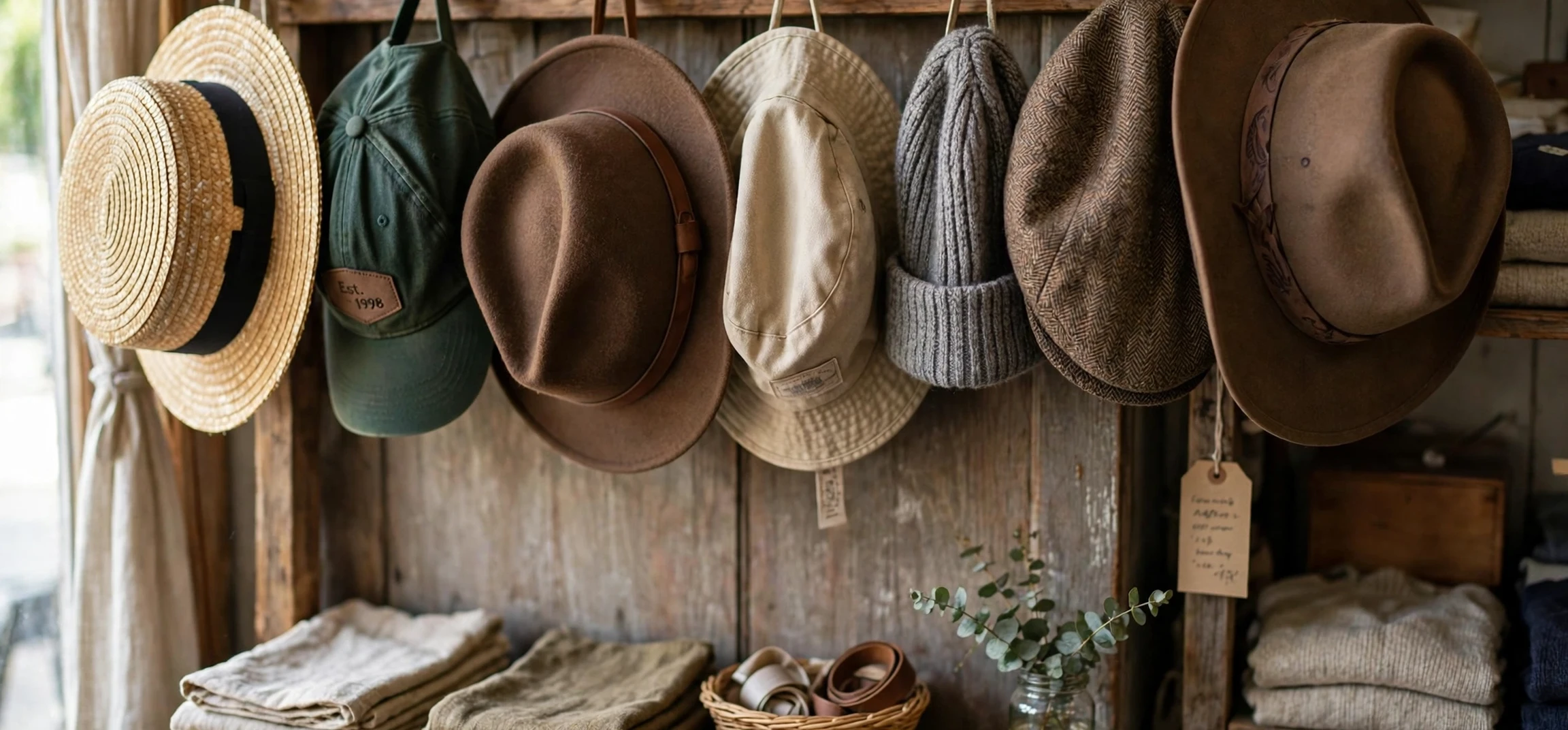
In the different types of hats and names for everyday wear, the styles most people reach for daily, and they are usually comfortable, easy to pack, and simple to pair with casual clothing. The baseball cap is the most popular of all, with a rounded crown, a stiff front peak, and an adjustable strap at the back. It suits sports, errands, and outdoor walks, and it comes in countless colours and fabrics, from cotton twill to performance mesh. A dad hat is a softer, unstructured version of the baseball cap, with a slightly curved brim and a relaxed fit that works well for a low-key, vintage-inspired look.
The snapback is another everyday favourite, recognised by its flat brim and adjustable snap closure at the back. It has a structured, boxy crown and is closely linked to streetwear and hip-hop culture. A trucker hat, also called a mesh cap, has a foam front panel and mesh sides and back, which makes it breathable in warm weather. A fitted cap, by contrast, has no adjustment strap and must be bought in your exact size, giving a cleaner, more tailored finish. For cooler days, the beanie is the go-to choice: a close-fitting knitted cap that covers the ears and comes in cuffed, slouchy, and bobble styles.
The bucket hat deserves a place in any everyday rotation too. It has a soft, downward-sloping brim all the way around and a relaxed crown, and it suits festivals, beach days, and casual summer outfits. Unlike a baseball cap, which shades only the face, a bucket hat gives all-round coverage. If you want something a little smarter for daily wear, consider a flat cap, sometimes called an Ivy cap. It has a low, rounded profile and a short, stiff brim at the front, and it pairs well with jackets, knitwear, and smart-casual outfits. A newsboy cap is similar but fuller and rounder, with eight panels and a button on top, giving it a vintage, storybook charm.
Different Types of Hats and Names for Sun and Outdoor Use
When sun protection is the priority, the different types of hats and names for outdoor use show that brim width and fabric matter more than fashion alone. A wide-brim sun hat is designed to shade the face, ears, and neck, and it is often made from straw, cotton, or lightweight synthetic fabric with ventilation. A Panama hat, despite its name, is traditionally woven from toquilla straw and has a classic, elegant shape with a pinched crown and a medium brim. It is breathable, packable, and ideal for holidays, garden parties, and summer weddings.
A boonie hat is the practical outdoor option, with a wide, floppy brim, a chin strap, and loops around the crown for holding small items. It was developed for military and field use and is now popular for hiking, fishing, and gardening. A safari hat is similar but often has a slightly stiffer brim and a more structured crown, and it is a good match for travel and wildlife watching. For water sports and beach trips, a surf hat or legionnaire hat adds a neck flap at the back for extra coverage, while a straw lifeguard hat, with its very wide brim, is a classic beach staple.
For active outdoor use, look for hats with moisture-wicking sweatbands, adjustable chin cords, and UPF-rated fabrics. A running cap with mesh panels keeps you cool, while a waterproof rain hat with a wide brim keeps rain off your face without needing an umbrella. Whatever outdoor style you choose, make sure the brim does not block your vision when you are walking, cycling, or driving, and choose a colour that reflects heat in summer and absorbs a little warmth in winter.
Classic and Formal Hat Styles Worth Knowing
Among the different types of hats and names, formal hats have a long history and instantly elevate an outfit. The fedora is the most famous of all, with a pinched crown, a crease down the centre, and a medium brim that can be snapped up or down. It suits suits, overcoats, and smart evening wear. A trilby looks similar but has a shorter brim that is angled sharply upward at the back, giving it a racier, more modern feel. A homburg has a single dent running down the centre of the crown and a brim with a turned-up edge, and it is often worn with formal daytime suits.
The bowler hat, also called a derby hat, is a hard, rounded hat with a small brim and no dents or pinches, and it was once standard business wear in cities. The top hat, with its tall, flat crown and narrow brim, is now reserved for weddings, formal ceremonies, and period occasions. For women, classic formal styles include the pillbox hat, a small, round hat with a flat top and no brim, and the fascinator, a decorative headpiece often worn at weddings and race days. A cloche hat, with its bell shape that hugs the head, is a vintage style from the 1920s that still appears in retro fashion.
Cultural and ceremonial hats are also important to recognise. The sombrero, with its very wide brim and high, conical crown, is a traditional Mexican style. The beret, a soft, flat, round cap, is associated with French fashion, artists, and military uniforms. The turban, the hijab, and other head coverings carry cultural and religious meaning and are worn for reasons that go far beyond fashion. Learning these names with respect helps you talk about hats accurately and appreciate their wider significance.
How to Choose the Right Hat for Your Face and Occasion
Choosing among the different types of hats and names starts with measuring your head. Wrap a soft tape measure around your head just above your eyebrows and ears, where the hat will sit, and compare the result with the brand size chart. A hat that is too tight will leave marks and cause discomfort, while one that is too loose will blow off in the wind or slide down over your eyes. Many casual hats are adjustable, but formal and fitted styles need an accurate measurement. If you are between sizes, the larger size is usually more comfortable, and you can add sizing tape inside the band for a snugger fit.
Face shape also plays a role, though it should never be a strict rule. People with round faces often suit hats with taller crowns and wider brims, which add angles and length. People with long faces often suit wider brims and lower crowns, which balance proportions. People with oval faces can usually wear most styles. The most important test is simple: try the hat on, look in the mirror, and check that it feels comfortable and looks like you. Confidence matters more than any style rule.
| Hat style | Best for | Fit tip |
|---|---|---|
| Baseball cap | Sport, errands, casual days | Adjust the strap so it sits snugly without pinching |
| Beanie | Cold weather, relaxed outfits | Choose cuffed for warmth or slouchy for a relaxed look |
| Bucket hat | Summer, festivals, beach days | Pick a soft fabric that packs without creasing |
| Fedora | Smart occasions, evening wear | Match the brim width to your shoulders |
| Panama hat | Holidays, summer weddings | Look for genuine woven straw and a comfortable inner band |
| Boonie hat | Hiking, fishing, gardening | Use the chin cord on windy days |
Occasion matters as much as fit. A baseball cap is perfect for a weekend walk but may look out of place at a formal dinner, just as a top hat would look odd at the gym. Think about the dress code, the weather, and what you will be doing. For travel, packable hats made from crushable straw, felt, or fabric are ideal. For work outdoors, prioritise sun protection and a secure fit over style alone. For photographs and special events, try the hat with the full outfit beforehand so there are no surprises on the day.
Hat Materials, Care, and Storage Tips
Across the different types of hats and names, materials affect comfort, durability, and care. Wool felt is warm, structured, and classic for fedoras and formal hats, while straw is light and breathable for summer. Cotton and canvas are easy to wash and good for casual caps, and leather hats are durable and weather-resistant for outdoor work. Synthetic performance fabrics wick moisture and dry quickly, which makes them ideal for sport. Always check the care label before cleaning: felt and straw hats should usually be brushed and spot-cleaned rather than soaked, while many cotton caps can be hand-washed and air-dried.
Storage matters too when you collect the different types of hats and names. Keep structured hats on a shelf or in a hat box rather than crushing them into a bag, and store them crown-down or on a hook to protect the brim shape. A soft brush removes dust from felt, and a damp cloth cleans most straw styles. Avoid leaving hats in hot cars or damp rooms, where heat and moisture can warp the shape or cause mildew. With a little care, a good hat can last for years and become a signature part of your personal style. For a complete look, grooming and accessories matter as well, and guides such as our beard line-up guide and uniform style guide can help you put the finishing touches on a polished outfit.
Frequently Asked Questions About Hat Styles
What is the most popular hat style in the world?
The baseball cap is widely considered the most popular entry among the different types of hats and names, thanks to its comfort, adjustability, and versatility for sport and casual wear.
What is the difference between a fedora and a trilby?
A fedora has a wider brim that can be worn up or down, while a trilby has a shorter brim that is sharply turned up at the back, giving it a sleeker, more modern silhouette.
Which hat gives the best sun protection?
Wide-brim hats, boonie hats, and legionnaire hats give the best coverage, especially when made from UPF-rated fabric and worn with sunscreen on exposed skin.
How should a hat fit?
Among the different types of hats and names, any hat should sit comfortably just above your eyebrows and ears, stay in place in a light breeze, and not leave deep marks on your forehead when you take it off.
Different Types of Hats and Names: Quick Reference Checklist
A final tip for learning the different types of hats and names is to save photos of styles you like and note the name beside each one, so you can describe exactly what you want when shopping. When you compare the different types of hats and names side by side, you will quickly see which crown heights, brim widths, and fabrics suit you best. Keep this list of the different types of hats and names with you when you shop, try each style on with the outfit you plan to wear, and remember that the different types of hats and names are only useful when the fit is right: comfort, coverage, and confidence matter more than any single trend.
Conclusion
Knowing the different types of hats and names turns hat shopping from guesswork into a simple, enjoyable choice. From everyday baseball caps, beanies, and bucket hats to sun-smart Panama and boonie hats and timeless fedoras, bowlers, and top hats, every style has a purpose, a shape, and a story. Measure your head, think about the occasion and the weather, and choose a material you can care for easily. With the right fit and a style you genuinely like, your hat will protect you, complete your outfit, and last for years to come.