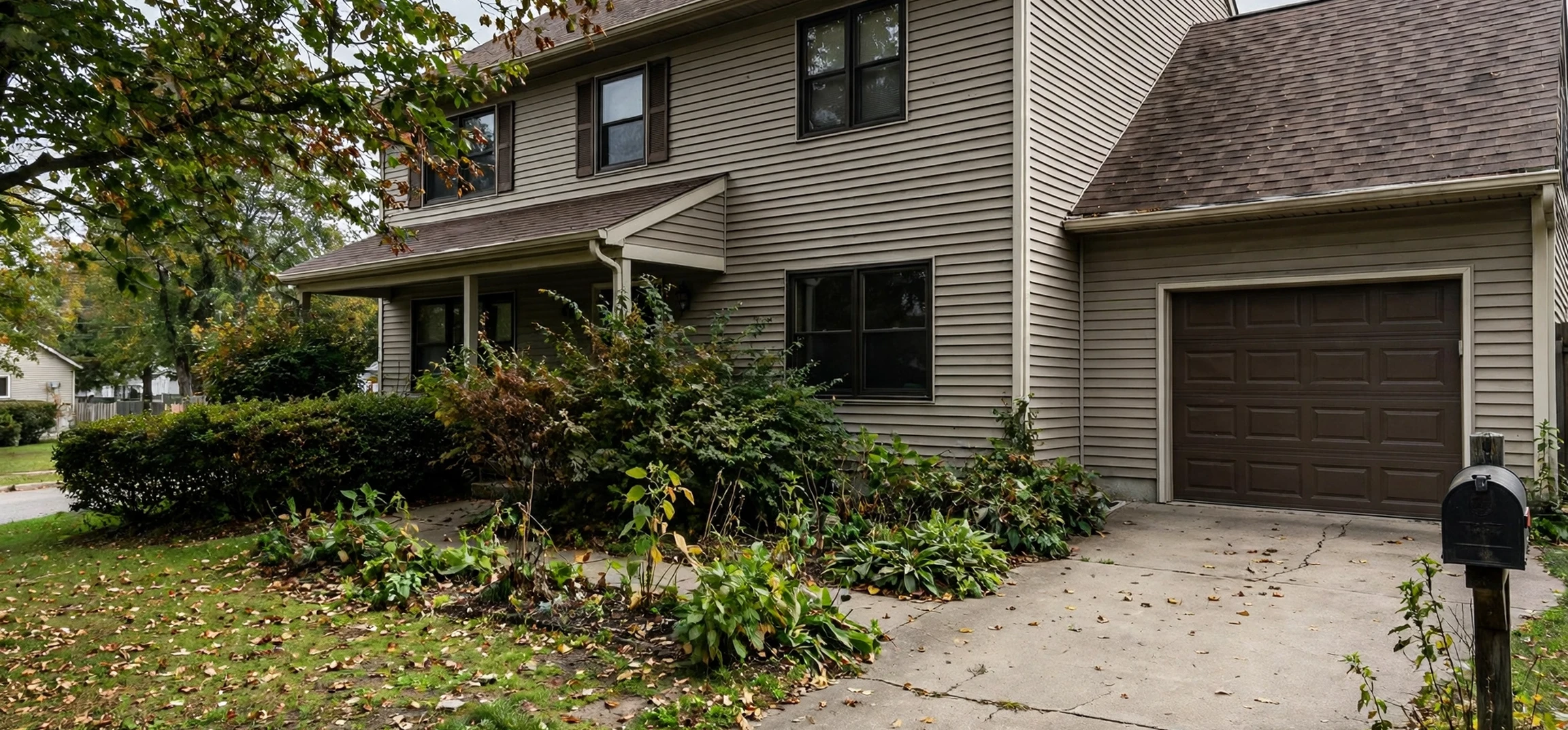
When people search for who owns property at an address, they sometimes mean something quite different from investigating a stranger: they want to sort out their own records, confirm details about a home they own or are responsible for, or make sure their mail reaches the right place. This guide is about that legitimate side of the question. It explains how to use official channels for your own property records and your own mail, what documents you should keep, and how to deal with common problems such as letters for a previous occupant or a mismatch between records. It does not explain how to obtain another person’s private details, and it should not be used for that purpose. If your need concerns your own home, however, the official routes below will help you stay organised and in control of your own information, which is exactly what a search for who owns property at an address should lead to when the property is yours.
The first principle is simple: start with your own paperwork. Before contacting any authority, gather what you already hold. Your purchase documents, mortgage statements, council tax or local property tax bills, insurance policies, and any correspondence from the land registry all contain consistent reference details for your property, such as a title number, a parcel reference, or an account number. Having one of those references ready makes every official enquiry faster and reduces the risk of confusion with a similarly named street or a neighbouring property. If you cannot find a reference, your solicitor or conveyancer from the time of purchase will usually hold a copy of the key documents, and your mortgage lender can confirm the property details on your account.
Who Owns Property at an Address: Checking Your Own Title Through Official Channels
Your own title is the authoritative record of ownership for a property you own, and the land registry or equivalent body in your country is the official source for it. Most registries allow owners to obtain a copy of their own title register and title plan, usually for a modest fee, through an online request or a written application. The title register confirms the registered owner, the extent of the property, and any registered charges or restrictions, such as a mortgage. The title plan shows the general boundaries of the property. Together, these documents answer most questions an owner has about their own property, and they are the documents a solicitor will ask for if you later sell, remortgage, or deal with a boundary matter.
When you request your own title documents, use the official registry service rather than a third-party reseller. Resellers often charge a large markup for the same document and may store your personal details unnecessarily. The official service will ask you to identify yourself and the property, and it may ask for a title number or a full postal address for your own home. That identification step is a privacy protection, not an obstacle: it ensures that title documents are released to people with a legitimate connection to the property. Keep the documents you receive in a safe place, and note the date you obtained them, since a title can change if a sale, transfer, or new charge is registered later.
It is also worth checking that the registry holds your current contact details for your own property. Many registries allow owners to add an up-to-date postal address and an email address for correspondence, and some offer a property alert service that notifies you if activity is registered against your title. These alerts are a useful safeguard against fraud and against missed correspondence, particularly if you own a property you do not live in, or if you are away for long periods. Updating your contact details is a small task that prevents larger problems, and it is entirely within your control as the owner.
Who Owns Property at an Address: Your Own Tax and Local Authority Records
Beyond the title, your local authority and tax body hold records about your own property that are worth keeping current. Council tax, property tax, or an equivalent local charge is usually billed to the occupier or owner, and the billing authority will hold your name, the property address, and the band or valuation applied. If you move, buy, sell, or change occupancy, tell the billing authority promptly: an out-of-date record can lead to bills sent to the wrong address, missed payments, and unnecessary correspondence. The same applies to water, planning, and building control records, which are tied to the property and may be relevant if you later apply for permission for an extension or alteration.
Planning records for your own property are also worth understanding. If previous owners obtained permission for an extension, a conversion, or a change of use, those permissions will usually be recorded by the planning authority and may affect what you can do next. Checking the planning history for your own home before starting work can save time and expense, and the planning authority’s own search service is the reliable source. Again, the focus here is your own property: you are checking the history of a home you own, through the authority that holds the record, for a practical purpose connected to that home. That is precisely the kind of legitimate use that official channels are designed to support.
Keeping Your Own Property File
A simple property file, kept in paper or digital form, makes all of this easier. Include a copy of your title register and plan, your purchase documents, mortgage statements, insurance policies, tax bills, planning permissions, and guarantees for major work such as roofing or damp proofing. Store the file securely, back up any digital copy, and tell a trusted person where it is kept in case of an emergency. When you need to answer a question about your own home, the file is your first stop, and it will usually contain the reference numbers that official services ask for. A well-kept file also makes selling far simpler, since your solicitor will need many of the same documents.
When Your Own Records Disagree
Occasionally, two records for the same property will disagree: a tax bill may show an old name, a plan may show a boundary slightly differently from a fence line, or a registry entry may still show a previous mortgage that has been repaid. Do not ignore a disagreement, but do not try to correct it by contacting a neighbour or a third party. Contact the body that holds the record, explain the discrepancy, and provide your own supporting documents. Most bodies have a correction process, and a solicitor can help if the discrepancy affects a sale or a boundary. Patience matters here: land and tax records are updated through formal processes, and a correction may take several weeks.
Who Owns Property at an Address: Sorting Your Own Mail Properly
Mail is the most common everyday property problem, and it is also the easiest to handle correctly. When you move, arrange a postal redirection for your own mail through the official postal service, for a period that gives you time to update your address with every important sender. Redirection is a service for your own mail: it forwards letters addressed to you at your old address to your new address, and it does not give you access to anyone else’s mail. Update your address directly with banks, insurers, employers, public bodies, and subscription services as soon as you can, since redirection is a bridge, not a permanent substitute for updating your records.
At your new home, you may receive mail for a previous occupant. The correct response is simple and does not require any investigation into that person. Mark the envelope clearly as no longer at the address, or as not known at the address if that is accurate, and return it through the postal system. Do not open mail addressed to someone else, even if you are curious or concerned, and do not keep it in the hope of passing it on personally. The postal service has a process for undeliverable mail, and the sender will be notified through that process. If large volumes of mail for a previous occupant continue over many months, contact the postal service for advice, and let the senders know through returned mail that the addressee has moved.
For your own outgoing mail, accuracy matters too. Use your full registered postal address, including any flat or unit number, and check that the address held by each sender matches it. A missing flat number is a common cause of misdelivery in multi-occupancy buildings, and it can lead to sensitive letters, such as bank or medical correspondence, reaching a neighbour. If you live in a building with shared mailboxes, consider whether a locked mailbox or a parcel collection point would suit you better. These small choices protect your own privacy without affecting anyone else.
Who Owns Property at an Address: Official Channels for Your Own Records at a Glance
It helps to keep the official channels in one place. The land registry or equivalent body handles your own title and title plan, and often offers alert services for your own title. The local billing authority handles your own tax or charge account. The planning authority handles planning history and permissions for your own property. The postal service handles redirection of your own mail and the return of mail for previous occupants. Your solicitor handles legal questions about your own title, boundaries, and transactions. Each channel has a defined purpose, and using the right channel for the right question is faster than a general search, because the staff handling your enquiry can see the relevant record immediately.
For related reading on protecting the personal information connected to your home, see our guides on removing your name from search results, removing your name from the internet, and, for context on how other property record topics are handled, property record searches by address. Those guides share the same principle as this one: your own information is yours to manage, and other people’s information is not yours to seek out.
| Your need | Official channel | What to have ready |
|---|---|---|
| Copy of your own title | Land registry official service | Your identity and property reference |
| Update your tax account | Local billing authority | Your account number and new details |
| Planning history for your home | Planning authority search | Your property address and approximate dates |
| Redirect your own mail | Official postal service | Old and new addresses, and identification |
| Mail for a previous occupant | Return through the postal system | The unopened envelope, marked appropriately |
Who Owns Property at an Address: A Checklist for Your Own Records
A short annual checklist keeps your own records in good order and prevents most of the confusion that leads people to search for who owns property at an address in the first place. Once a year, confirm that the land registry holds your current correspondence details, that your local billing authority has your correct name and address, and that your insurer and mortgage lender hold the same details. If you have moved, changed your name, or changed your contact details during the year, update each body in turn, and keep a note of the date of each update. That note is surprisingly useful: if a letter later goes astray, you can show exactly when you notified each organisation.
The same checklist should cover your property file. Add any new planning permissions, guarantees, or major invoices during the year, and remove or archive documents that are no longer current, keeping the originals for any transaction that is still open. If you rent out a property you own, keep the tenancy agreement and the agent’s details with the file, and confirm that the agent holds your current contact details too. A complete file answers most questions about who owns property at an address when the property is yours, because the answer is in your own documents, obtained through official channels, rather than in a general search.
Finally, review your mail handling once a year as well. Confirm that redirection, if you still need it, is active, that your bank and insurer have your current address, and that mail for any previous occupant has stopped or is being returned correctly. If you share a building, check that your mailbox is secure and that your flat or unit number appears on every account. These checks take less than an hour in total, and they protect the privacy and accuracy of your own records, which is the legitimate purpose behind a search for who owns property at an address when it concerns your own home.
Who Owns Property at an Address: Starting From Your Own Home
When a property question arises, the most reliable starting point is always your own home and your own file, rather than a general search. A search for who owns property at an address returns a mixture of advice, advertising, and people-search services, and it rarely distinguishes between your own records and someone else’s. Your own file, by contrast, contains the exact documents that matter: your title, your tax account, your planning permissions, and your correspondence. Starting there saves time, avoids misleading results, and keeps your enquiry within the official channels designed for owners.
That starting point also clarifies what to do next. If your own file answers the question, no further step is needed. If it does not, the gap itself tells you which authority to contact: a missing title document points to the registry, a missing tax detail points to the billing authority, and a mail problem points to the postal service. Framing the search for who owns property at an address around your own home, rather than around a neighbour, turns a vague query into a precise enquiry, and precise enquiries are answered more quickly by every official body.
Who Owns Property at an Address: Frequently Asked Questions
How do I get a copy of my own title?
Apply through the official land registry service for your country, identifying yourself and the property. A modest fee usually applies, and you will receive the title register and, in most cases, a title plan. Use the official service rather than a reseller, and keep the documents in your property file.
I have moved, but my mail still goes to my old address. What should I do?
Check that your postal redirection is still active, and update your address directly with each sender, starting with banks, insurers, and public bodies. Redirection is temporary, so direct updates are essential. If a particular sender keeps using the old address after you have updated it, contact that sender with proof of your new address.
What should I do with mail for a previous occupant?
Do not open it and do not investigate the addressee. Mark it as no longer at the address and return it through the postal system. If the volume is large or persistent, ask the postal service for advice. The sender will be notified through the normal undeliverable mail process.
What if an official record about my property is wrong?
Contact the body that holds the record, explain the error, and provide supporting documents from your own file. Most bodies have a correction process. If the error affects a sale, a mortgage, or a boundary, ask your solicitor for advice before taking further steps.
Conclusion
A search for who owns property at an address has a legitimate and useful answer when the property is your own: use official channels, keep your own file current, and handle mail through the postal system. Your title, tax, planning, and postal records are all available to you through the bodies that hold them, provided you identify yourself and the property correctly. Those channels exist precisely so that owners can manage their own affairs without needing to involve neighbours or third parties. By contrast, another person’s ownership details are private, and everyday problems involving neighbours are best handled through solicitors, local authorities, and the postal service acting as intermediaries. Keep that distinction in mind, keep your own records organised, and the property side of your life will stay straightforward, private, and properly documented.