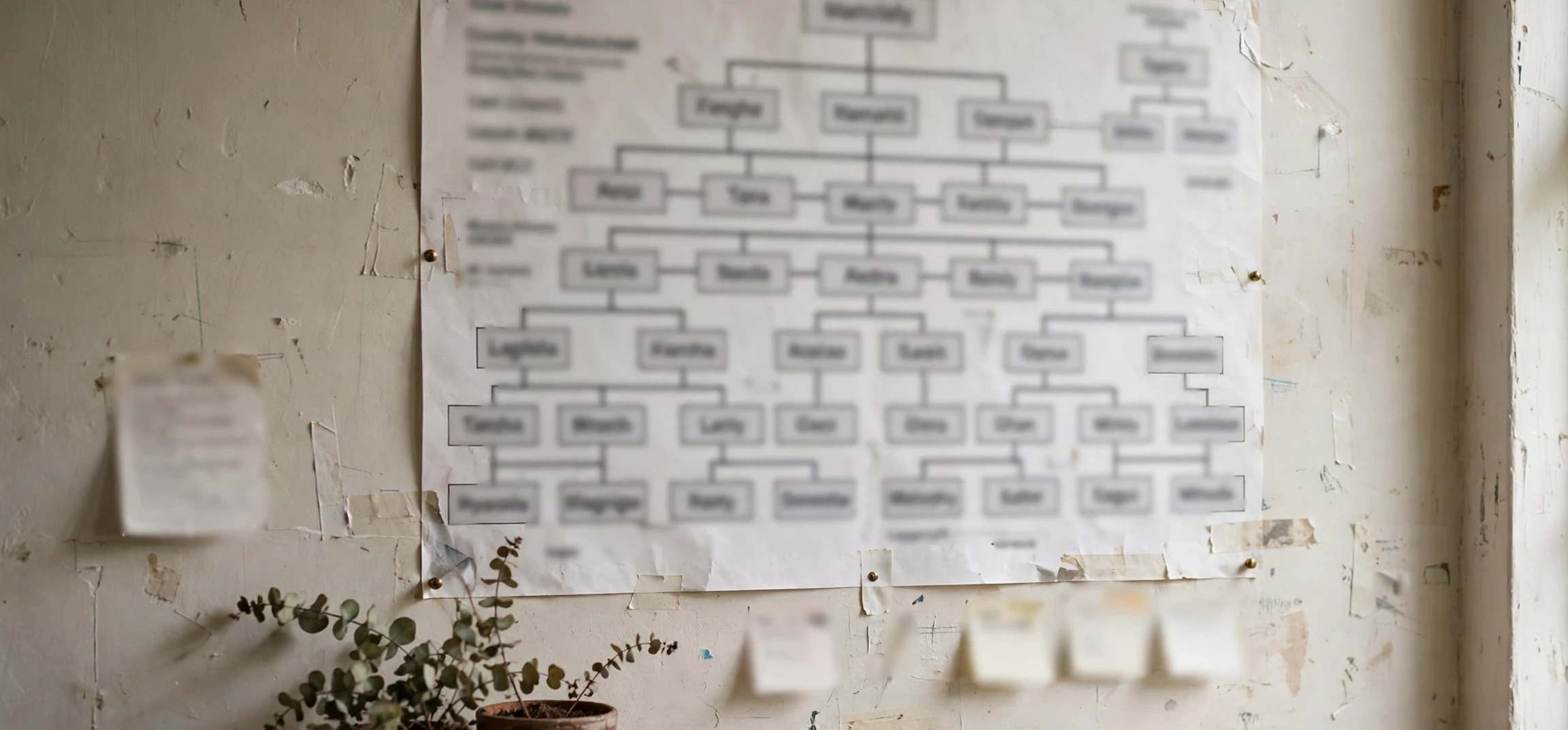
If you have a rare family name and want to find out where it came from, this guide to uncommon hispanic surnames takes the practical route: how to research your own surname history and map its regional distribution. While a companion guide covers origins and meanings in general, this one is about method. It walks through the records, maps, and free research habits that help you move from a single surname to a credible picture of where your family lived, when the name first appears in documents, and how widely it is spread today.
Researching uncommon hispanic surnames has one big advantage: rarity makes searching easier. A very common surname returns thousands of unrelated results, but a rare one narrows the field dramatically, so even a simple search can reveal clusters in particular towns or provinces. The challenge is different. With few bearers, records may be scattered, spellings may vary, and a single wrong assumption can send you down the wrong branch. The method below is designed to keep your research checkable at every step, so each discovery rests on a document rather than a guess.
Uncommon Hispanic Surnames: Start With What You Know
Every surname project should begin at home, with facts rather than theories. Write down the full names, birthplaces, and approximate dates of your parents, grandparents, and great-grandparents, and note every spelling of the surname you have seen in family papers. Old letters, certificates, photographs with captions, and family bibles are often more reliable than memory, and they frequently preserve a spelling that later documents simplified.
Interview older relatives while you can, and ask open questions rather than leading ones. Instead of asking whether the family came from a particular town, ask where the oldest relatives anyone remembers were born, what work they did, and whether anyone remembers the name being spelled differently. Record the answers with names and dates attached, because an anecdote without a source is a clue, not a conclusion. For uncommon hispanic surnames, even a single remembered village name can unlock the whole search, since the name may cluster tightly around that place.
Build a Simple Research Log
A research log sounds formal, but it can be a single notebook page per ancestor. For each person, note what you know, what you want to find, which sources you have checked, and what each source actually said. This habit prevents the most common beginner error, which is checking the same source twice while believing a different source has been checked. It also makes it easy to pause a project for months and pick it up again without losing your place.
Keep variant spellings in the log from the start. If your surname appears with and without an accent, with a doubled letter, or with b swapped for v, list every variant you find and search each one separately. Databases are literal: they return what matches your spelling, not what you meant, and a generation of your family may be hiding under a variant you have not tried yet.
Uncommon Hispanic Surnames: Use Civil and Church Records
The backbone of Hispanic genealogy is a pair of record systems: church registers and civil registration. Catholic parish registers of baptisms, marriages, and burials often reach back centuries before civil records began, and they are the key source for tracing uncommon hispanic surnames into the 1700s and earlier. Civil registers, which most Spanish-speaking countries introduced during the 1800s, record births, marriages, and deaths in a standardised form and are often easier to read than older parish handwriting.
Start with the most recent generation you cannot yet document and work backwards one step at a time. A marriage record is particularly valuable because it usually names both sets of parents, which gives you two new surnames and two new lines to follow. A baptism record may name godparents, who were often relatives, and a burial record may give an age that helps estimate a birth year. Each document should confirm the next step before you move on; jumping straight to a same-named person three centuries earlier is how false family trees are built.
Many parish and civil records are now digitised and searchable through major genealogy platforms and national archives, and much of this material can be consulted without paying for a subscription, although some collections sit behind institutional access. Work through free catalogues first, note exactly which collection each record came from, and save a copy or a full citation for every find. If a record is in old handwriting, transcribe it slowly and ask for a second opinion on difficult words rather than guessing a surname spelling.
Uncommon Hispanic Surnames: Map the Regional Distribution
Once you have a few generations documented, mapping the regional distribution of your surname turns a list of names into a geography. Plot each ancestor’s birthplace on a map, and look for clustering. With uncommon hispanic surnames, the cluster is often strikingly tight: several generations in neighbouring villages, followed by a sudden move to a city or another country. That pattern tells you where to concentrate further record searches, because the parish registers of the cluster villages are where earlier generations are most likely to appear.
Modern surname distribution tools can add a second layer to your own map. Several free websites show how frequently a surname occurs in each province or country today, based on census or telephone data, and those present-day hotspots often match the historical cluster. Treat these tools as pointers, not proof: they show where bearers live now, which reflects recent migration as well as old settlement. When the modern hotspot and your documented ancestors point to the same region, however, you have a strong lead worth following.
Read the Map With Care
A distribution map can mislead if it is read too quickly. A surname may appear in two distant regions because two unrelated families developed the same name independently, or because one branch migrated long ago. Always check whether the distant cluster connects to your family through documents before merging it into your tree. Similarly, the absence of a surname from a modern map does not mean the family died out; spelling changes, small numbers, and data gaps can all hide bearers.
Regional languages matter here too. In Galicia, the Basque Country, Catalonia, and Asturias, a surname’s distribution may follow a linguistic boundary rather than a modern administrative one. If your name clusters in one of these regions, learning a little about its local naming traditions will sharpen your reading of the map and may explain variant spellings that otherwise look like errors. The Anton name origin guide is a useful reminder of how one name root can spread across regions in different forms.
Uncommon Hispanic Surnames: Census and Migration Records
Census returns, passenger lists, and border records are the tools that explain how a rare surname travelled. Census records place a family in a particular town at a particular date and often list occupations, literacy, and household members, which helps confirm you have the right family rather than a same-named stranger. Passenger lists record departures and arrivals, and they are essential for families who crossed the Atlantic, whether from Spain to the Americas or between Latin American countries.
When using these records, search by surname variant and by first name plus birthplace, not by surname alone. A passenger list may misspell a rare surname badly, but the combination of a first name, an age, and a home village is usually enough to identify the right person. Note the names of fellow travellers as well, because families often migrated in groups, and a travelling companion may be a relative whose records fill gaps in your own line.
Military records, notarial records, and land records can also help. A will may name children and property in a home village, a land sale may fix a family to a place at a date when no census survives, and a military enlistment may give a birthplace for an ancestor who left no other trace. These sources take more effort to find, but for uncommon hispanic surnames they are often decisive, because a rare name makes even a brief mention easy to spot.
Uncommon Hispanic Surnames: Avoid Common Traps
The biggest trap in surname research is the ready-made history. Many websites sell or display a “family history” for any surname, complete with a coat of arms and a stirring origin story, but these are usually generic texts attached to a spelling, not research into your family. A coat of arms, where one genuinely exists, belongs to a specific person and their descendants, not to everyone sharing a surname. Treat any site that offers instant history for every spelling with scepticism, and prefer sources that cite actual records.
A second trap is assuming that a famous bearer of your surname must be a relative. Sharing an uncommon surname raises the odds of a connection, but it does not prove one, and many rare surnames have several unrelated branches. Only documents linking the branches can establish kinship. A third trap is trusting a single online family tree. Other researchers’ trees are leads, not evidence, and copying them without checking their sources imports their errors into your own work.
| Research step | Best source | What it proves |
|---|---|---|
| Confirm recent generations | Family papers and civil records | Names, dates, and places |
| Push back before civil registration | Parish registers | Earlier generations in one place |
| Find the geographic cluster | Birthplaces plus distribution maps | Where to search next |
| Explain a move | Census and passenger lists | When and why a branch travelled |
| Test a family story | Original documents, not retellings | Whether the story survives evidence |
Uncommon Hispanic Surnames: Frequently Asked Questions
How far back can I trace a rare surname?
It depends on the region and the survival of records. In many Spanish parishes, registers reach the 1500s or 1600s, while in parts of Latin America the practical limit may be the 1700s or 1800s. Rarity helps, because fewer same-named people means less confusion, but damaged or missing registers set a hard limit that no amount of searching can pass.
Should I take a DNA test for surname research?
DNA testing can support documentary research, particularly for confirming recent relationships and finding living cousins, but it does not replace documents for surname history. A DNA match suggests a shared ancestor; only records can name that ancestor and place them in a particular village. If you test, keep your expectations modest and your privacy settings in mind.
What if my surname changed spelling?
Spelling change is normal, especially after migration, and it should be treated as part of the story rather than a problem. Document each spelling with its source and date, search all variants, and be ready for the possibility that the modern spelling differs from the form your earliest documented ancestor used.
Uncommon Hispanic Surnames: Conclusion
Researching uncommon hispanic surnames is a satisfying project precisely because the name is rare: every document you find is likely to matter, and a small cluster of villages often holds the whole early story. Begin with what your family can prove, work backwards through civil and church records one generation at a time, map the places you find, and test every appealing story against an original document. If you also want the general background on what these names mean, the companion guide on origins and meanings explains the patterns behind them, and the Annalise meaning of name guide and the Afton family names list show how name research rewards patience. Keep your log tidy, search every spelling variant, and let the records, not the romance, write your surname’s history.