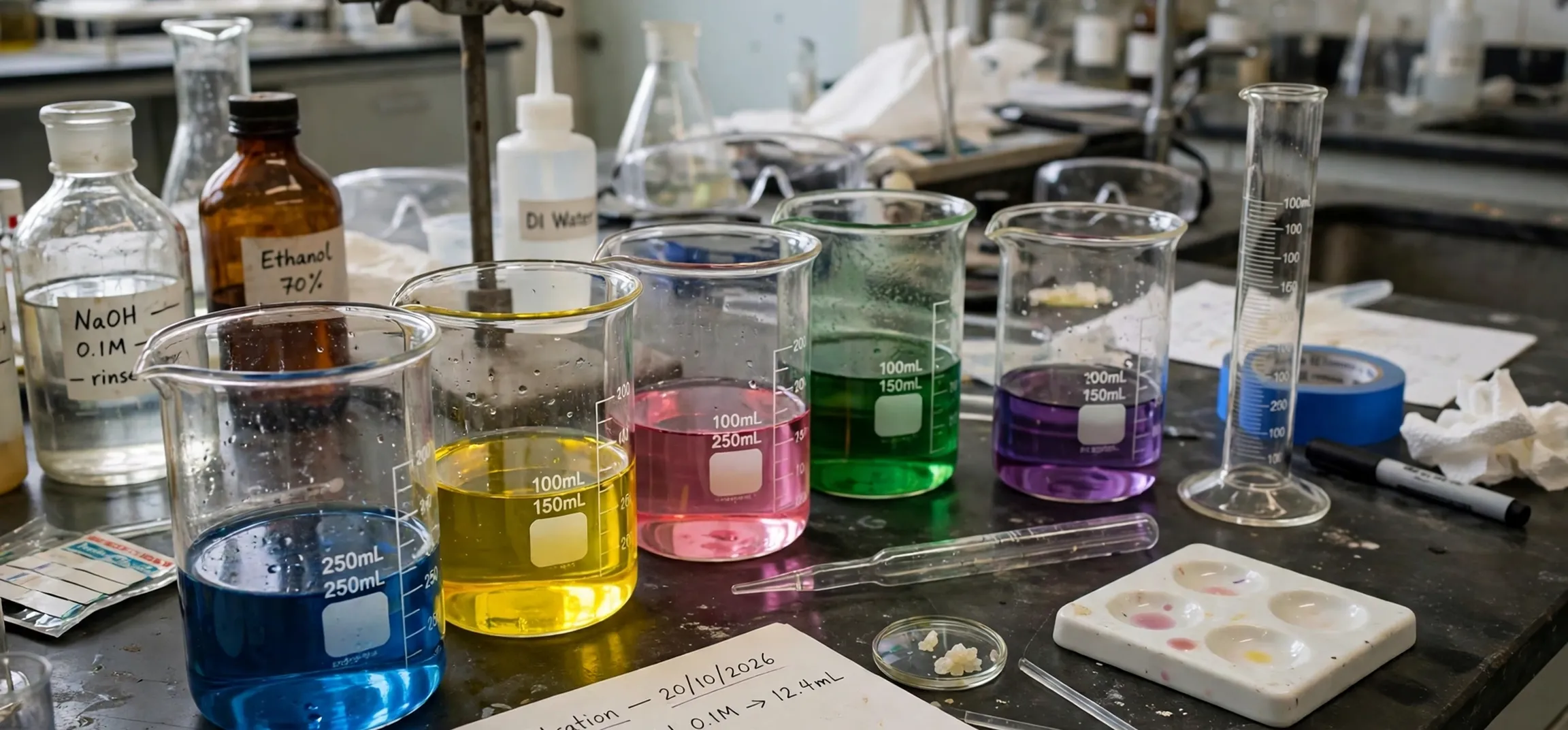
If you searched for “chemistry matter definition”, you have come to the right place for a clear, plain-English explanation. The chemistry matter definition used in school and university science is simple to state: matter is anything that has mass and takes up space. That short sentence covers an enormous range, from the air you breathe to the oceans, from a grain of sand to a star. If something has mass, meaning it is made of particles that give it weight under gravity, and it occupies volume, then in chemistry it counts as matter. Energy, such as light and heat on their own, does not count as matter under this definition, because energy does not have mass or occupy space in the same way, even though energy and matter are closely connected in physics.
This guide works through the chemistry matter definition step by step. It explains what mass and volume mean in practice, describes the states of matter and how they change, introduces atoms and molecules as the building blocks of matter, and explains the difference between pure substances and mixtures. It also clears up common confusions, such as the difference between mass and weight, and between a physical change and a chemical change. By the end, you should be able to use the chemistry matter definition confidently, whether you are revising for an exam, helping with homework, or simply curious about how science describes the stuff the world is made of.
Chemistry Matter Definition: The Basics
The chemistry matter definition rests on two tests. First, does the thing have mass? Mass is a measure of how much material is present, and it stays the same wherever you are, whether you are on Earth, on the Moon, or floating in space. Second, does the thing take up space? Everything made of matter occupies volume, even gases that are invisible. Air in a balloon takes up space, which is why the balloon grows as you blow into it, and water in a glass takes up space, which is why the level rises when you add a stone.
Weight is related to mass but is not the same thing. Weight is the force of gravity acting on a mass, so your weight would change on the Moon even though your mass would not. Chemistry uses mass rather than weight in its definition precisely because mass does not depend on where you happen to be. When scientists say that matter has mass, they mean that it is made of particles, and those particles give it a measurable amount of material, however small.
It helps to test the definition against everyday examples. A wooden chair has mass and volume, so it is matter. A glass of water is matter. The air in a room is matter, even though you cannot see it. Sunlight, by contrast, is energy travelling in waves and particles of light, but a beam of light on its own does not occupy space as a material object does, so it is not classified as matter. Sound is also energy, a vibration travelling through matter, rather than matter itself. These distinctions are the reason the chemistry matter definition is worded so carefully.
Chemistry Matter Definition and the Particle Model
Underneath the chemistry matter definition sits the particle model, which says that all matter is made of tiny particles. Those particles are atoms and molecules, and they are always moving. In a solid, particles are packed closely together and vibrate in fixed positions, which is why a solid keeps its shape. In a liquid, particles are close but can slide past one another, which is why a liquid flows and takes the shape of its container. In a gas, particles are far apart and move freely and quickly, which is why a gas spreads out to fill its container.
Temperature affects how fast particles move. Heating a substance gives its particles more energy, so they move more vigorously. That is why a solid melts into a liquid when heated, and why a liquid boils into a gas. Cooling reverses the process. These changes of state are physical changes, because the particles themselves do not change into different substances; they simply rearrange and move differently. Understanding the particle model makes the chemistry matter definition much easier to remember, because the definition is really a summary of what particles do.
Atoms are the smallest units of an element that keep that element’s properties. A molecule is formed when two or more atoms join together by chemical bonds. Water, for example, is a molecule made of two hydrogen atoms and one oxygen atom. The study of how atoms combine, and how molecules behave, at the heart of the chemistry matter definition, is closely linked to understanding what a molecule means in chemistry, and it builds directly on the particle picture described here.
The States of Matter Explained
Most introductory courses describe three common states of matter: solid, liquid, and gas. Solids have a fixed shape and a fixed volume. Liquids have a fixed volume but no fixed shape, so they flow. Gases have neither a fixed shape nor a fixed volume, so they expand to fill whatever container they are in. These differences come entirely from how their particles are arranged and how much energy they have.
There are also less familiar states. Plasma, for example, is a state in which a gas is heated so much that its atoms lose electrons, and it is found in stars, lightning, and neon signs. Some materials, such as glass, behave in ways that do not fit neatly into the simple three-state picture, and scientists continue to study unusual states under extreme pressure or temperature. For most school and everyday purposes, however, solid, liquid, and gas cover the cases you will meet, and the chemistry matter definition applies to all of them equally.
Changes of state have everyday names worth learning. Melting is solid to liquid, freezing is liquid to solid, evaporation is liquid to gas, condensation is gas to liquid, and sublimation is solid straight to gas. Each of these is a physical change, because no new substance is formed. When ice melts, it is still water, just in a different state. That point is important, because it separates changes of state from chemical changes, where new substances really do appear.
Pure Substances and Mixtures
Chemists divide matter into pure substances and mixtures. A pure substance is made of only one kind of particle. Elements, such as oxygen, iron, and gold, are pure substances made of one kind of atom. Compounds, such as water and salt, are pure substances made of one kind of molecule, formed when different elements combine in a fixed ratio. A pure substance has fixed properties, such as a fixed melting point and boiling point, which is one way scientists test purity.
A mixture, by contrast, contains two or more substances that are not chemically combined. Air is a mixture of gases, mainly nitrogen and oxygen. Sea water is a mixture of water and dissolved salts. A bowl of mixed nuts is a mixture in the most obvious sense, because you can separate the parts physically. Mixtures can be separated by physical methods such as filtration, evaporation, or using a magnet, whereas compounds can only be separated by chemical methods that break bonds.
This distinction, which follows from the chemistry matter definition, matters beyond the classroom. When a label says a product is pure, it is making a claim about its composition. When a scientist tests a sample, the first question is often whether it is a pure substance or a mixture, because that decides which tests and techniques will work. The chemistry matter definition is the starting point for all of that work, because you first have to establish that you are dealing with matter at all, and then ask what kind of matter it is.
Physical Changes and Chemical Changes
A physical change alters the form of matter without creating a new substance. Tearing paper, dissolving salt in water, melting ice, and crushing a can are all physical changes. The material may look different, but its chemical identity stays the same, and in many cases the change can be reversed. A chemical change, also called a chemical reaction, produces one or more new substances with different properties. Burning wood, rusting iron, baking a cake, and digesting food are chemical changes.
Signs of a chemical change include a colour change that is not simply dyeing, the production of a gas, the formation of a solid from two liquids, a temperature change without heating or cooling, or a change in smell. None of these signs is proof on its own, but together they are strong clues. Chemists confirm a chemical change by testing the products and showing that they are different substances from the starting materials.
Properties of materials also come in two kinds. A property such as malleability, the ability of a metal to be hammered into a thin sheet without breaking, is a physical property, and readers can find a detailed account of what malleable means in chemistry as a useful companion to this section. Chemical properties, such as flammability or the tendency to react with acids, describe how a substance behaves in a chemical change. Both kinds of property help chemists identify and classify matter.
Matter in Everyday Life
Once you know the chemistry matter definition, you start to see it everywhere. Cooking is a practical chemistry lesson. Heating changes the state of butter from solid to liquid, dissolving sugar in tea is a physical change, and baking involves chemical changes that create new flavours and textures. Cleaning works by using substances that can dissolve dirt or react with it, and then be washed away. Even breathing is a matter story: you take in a mixture of gases, your body uses oxygen in chemical reactions that release energy, and you breathe out a different mixture containing more carbon dioxide.
Technology depends on the same ideas. Engineers choose materials by their properties as matter: metals for wiring because they conduct electricity, plastics for insulation because they do not, and glass for windows because it lets light through while keeping out wind and rain. Recycling depends on separating mixtures and recovering pure materials, which is why sorting and processing matter so much. In medicine, understanding matter helps explain how drugs dissolve, travel through the body, and react in controlled ways, although any health decision should always be discussed with a qualified clinician rather than based on a general science article.
The environment is also a matter story. The water cycle moves water between states and places. The carbon cycle moves carbon between the air, living things, rocks, and oceans. Pollution is, in chemical terms, matter in the wrong place or in the wrong amount, and cleaning it up means understanding the substances involved and how they can be separated, changed, or contained. The chemistry matter definition therefore connects directly to some of the largest questions facing society.
Matter at a Glance
| Concept | Simple meaning | Example |
|---|---|---|
| Matter | Anything with mass that takes up space | Water, air, iron, wood |
| Mass | Amount of material in an object | Measured in grams or kilograms |
| Volume | Amount of space an object occupies | Measured in litres or cubic centimetres |
| Element | Pure substance of one kind of atom | Oxygen, gold, carbon |
| Compound | Pure substance of one kind of molecule | Water, table salt, carbon dioxide |
| Mixture | Two or more substances not chemically combined | Air, sea water, salad |
| Physical change | Form changes, substance stays the same | Melting ice, dissolving salt |
| Chemical change | New substances are formed | Burning wood, rusting iron |
Keep this table beside you when revising. If you can explain each row in your own words and give a second example of your own, you have understood the chemistry matter definition well enough to use it, not just to repeat it.
Frequently Asked Questions
Is air really matter if I cannot see it?
Yes. Air has mass and takes up space, which is why a balloon inflates and why compressed air can push a piston. Invisibility is not a test for matter; many gases are colourless, and some solids and liquids are transparent too.
What is the difference between mass and weight?
Mass is the amount of material in an object and does not change with location. Weight is the force of gravity on that mass, so it changes if gravity changes. That is why chemistry defines matter using mass rather than weight.
Is light matter?
No. Light is energy. It can behave in ways that resemble particles in advanced physics, but it does not have mass or occupy space as material does, so it falls outside the chemistry matter definition.
Does the chemistry matter definition apply to everything in the universe?
It applies to all material things, from atoms to planets. Dark matter and dark energy, which cosmologists study, are separate ideas in advanced physics and do not change the definition used in chemistry teaching.
Conclusion
The chemistry matter definition is short, but it opens the door to the whole of chemistry. Matter is anything that has mass and takes up space, and everything else in the subject, from atoms and molecules to states, mixtures, and reactions, is an exploration of how matter is arranged, how it changes, and how it can be identified. Learn the chemistry matter definition, test it against examples from daily life, and practise telling physical changes from chemical ones, and you will have a solid foundation for everything that follows. For a broader view of how this idea is described in other guides, readers may also enjoy a general science explanation of the meaning of matter, which complements the chemistry-focused account given here.